


.png)
• At its most recent monetary policy meeting, the US Federal Reserve left its key interest rates in the range of 3.50% to 3.75%
• There were 4 dissenters, a record since 1992, as Stephen Miran dissented in favour of cutting rates while 3 other FOMC members did not want to keep the “easing bias” in the statement
• The statement changed only a little but calls current inflation as “elevated” instead of “somewhat elevated” and added that this is only “in part reflecting the recent increase in global energy prices”
• As Kevin Warsh was finally confirmed by the US senate, he will take over as Chair of the Federal Reserve replacing Jerome Powell who plans to remain on the Board of Governors “for a period to be determined”
• As long as Powell remains on the board, he ensures that there is no majority in favour of the governors nominated by President Trump, and will keep the bar high for any relaxation of banking regulations – as Trump is calling for
• Amid the high uncertainty stemming from the conflict in the Middle East, we still expect the Fed to keep the key rate steady until later this year, when we forecast a next rate cut in one of the last three meetings of the year
The Federal Reserve’s Open Market committee kept the key rate steady at 3.50%-3.75% and also sticked to the “easing bias” in its written statement. This provoked 3 voting members (Logan, Hammack and Kashkari) to dissent from the statement as they wanted to cancel the easing bias, while one dissenter, Stephen Miran, voted to cut rates by a quarter of a percentage point. The dissent by three regional Fed presidents may signal to incoming Chair Kevin Warsh that committee members remain committed to maintaining independence in both their views and voting decisions.
The monetary policy statement adapted by calling current inflation “elevated” instead of “somewhat elevated” and also added that this is only “in part reflecting the recent increase in global energy prices”. This suggests that the Fed sees other drivers than the energy price surge responsible for the current “misbehaviour of inflation”, Jerome Powell stated at the press conference. Like the March meeting, the April statement also stresses the high uncertainty, which the current conflict around Iran and the Strait of Hormuz is creating.
How is the Fed assessing the current state of the US economy?
During the press conference, Jerome Powell explained that the Fed is currently less worried about the labour market than they were in H2 2025, and that he sees the weakening trend to have stabilised. Recent positive macro data came from the “hard” indicators rather than from “soft” ones like surveys on business consumer sentiment, which have weakened somewhat. Hard data like housing starts rose 11% month-on-month in March, the highest since December 2024, while nondefence capital goods orders excluding aircraft increased 3.3%, the strongest since June 2020.This, combined with an ongoing consumption despite higher gasoline prices and a solid labour market, does not speak for a cut in the next meetings. On the other side, the latest news that President Trump rejected Iran’s proposal to reopen the Strait of Hormuz, leading oil prices to further rise, is fuelling fears about a prolonged period of elevated energy prices. At some point, this could translate into price pressures in other parts of the economy. Powell did state, however, the Fed would want to see clear signs of such a “spillover” from energy prices into the broader economy before considering any rate hikes.
Jerome Powell will stay for now on the Board of Governors – does it matter?
Jerome Powell congratulated Kevin Warsh on being named the next Fed Chair, but added that he will remain on the Board of Directors until the investigations against him have been fully concluded. This remains unchanged even after the US Department of Justice (DOJ) dropped its criminal investigation into Federal Reserve Chair Jerome Powell, referring the matter to the Office of Inspector General (OIG) for further review of the multibillion-dollar renovation of the Fed’s Headquarters in Washington. Powell added “my decisions on these matters will continue to be guided entirely by what I believe is in the best interest of the institution and the people we serve after my term as chair ends on May 15, and will continue to serve as a governor for a period of time to be determined”. Powell can stay on the board until his official term as governor ends at the beginning of 2028. This matters because of the potential shift in the power balance of the Board of Governors. If Powell remains on the board, there would be four more traditional central bankers—Barr, Jefferson, Cook and Powell—all less inclined toward deregulation. On the other side, there are three governors—the new Chair Warsh, Waller and Bowman—who will likely vote in favour of a more dovish monetary policy and favour more de-regulation within the financial sector, in line with President Trump’s agenda. If Powell leaves the board, President Trump could nominate another governor and shift the power balance in his favour, four to three. However, aside from deregulation, the Fed's decision on key interest rates is made by the twelve members of the FOMC, which consists of the seven Fed governors and five regional Fed voting members. Hence, the key interest rate decision cannot be substantially influenced with one more dovish member at the Board of Governors, even if it is the chair. So, while relevant for banking regulation, it matters less for monetary policy—especially decisions on key rates.
How did financial markets react?
In the first few hours following the decision and the press conference, the yield of the US 2-and 10-year US government bonds rose by around 4 bps, while the US dollar index strengthened slightly. The US stock market continued its downward trend that day. Overall, market moves were very subdued, as the unchanged policy rate was widely expected.
What comes next?
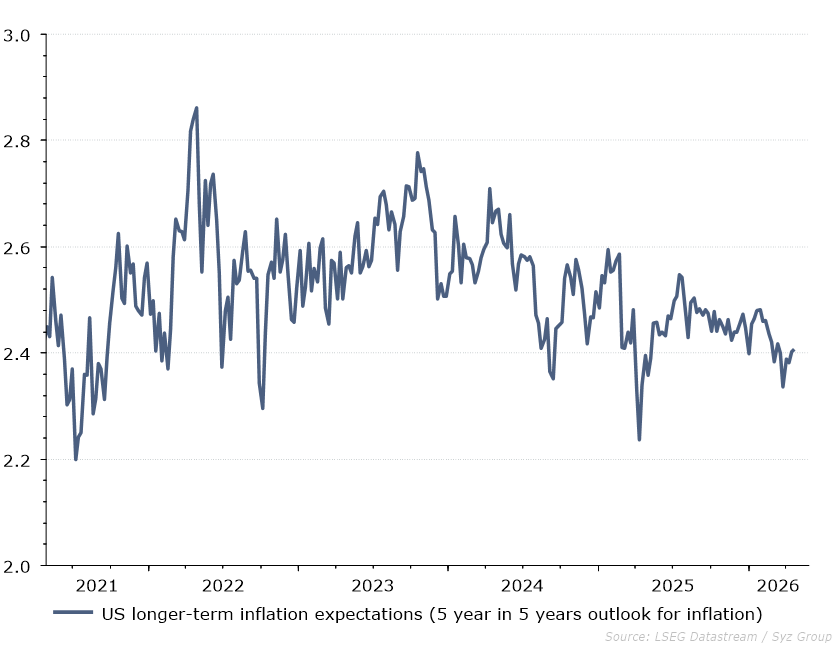
We expect the Fed to keep rates steady until later this year, when we forecast a next rate cut in one of the last three meetings of the year. This is based on our current baseline scenario that the Middle East conflict will be de-escalated substantially towards the end of May at the latest, and that energy prices will fall to more normal levels in the second quarter of the year. Our view of “no rate change” in the next Fed meetings and its “look through” approach is currently supported by the very modest reactions of the longer-term inflation expectations in the market. Of course, this view is highly uncertainty given the latest developments in the Middle East conflict and any further escalation and substantial prolongation of the crisis can lead to a different outcome, potentially calling for rates hikes. On the other hand, a marked de-escalation leading to a sharp decline in oil prices—potentially driven, for example, by a weakening of OPEC following a UAE exit—could result in a different scenario, in which the Fed may cut rates more than currently expected. The same would apply if an energy price spike were to trigger a recession. We are monitoring the crisis closely and will adjust our outlook accordingly.
Chart 1: The Fed keeps the key rates steady amid the surge in energy prices and the rising headline inflation
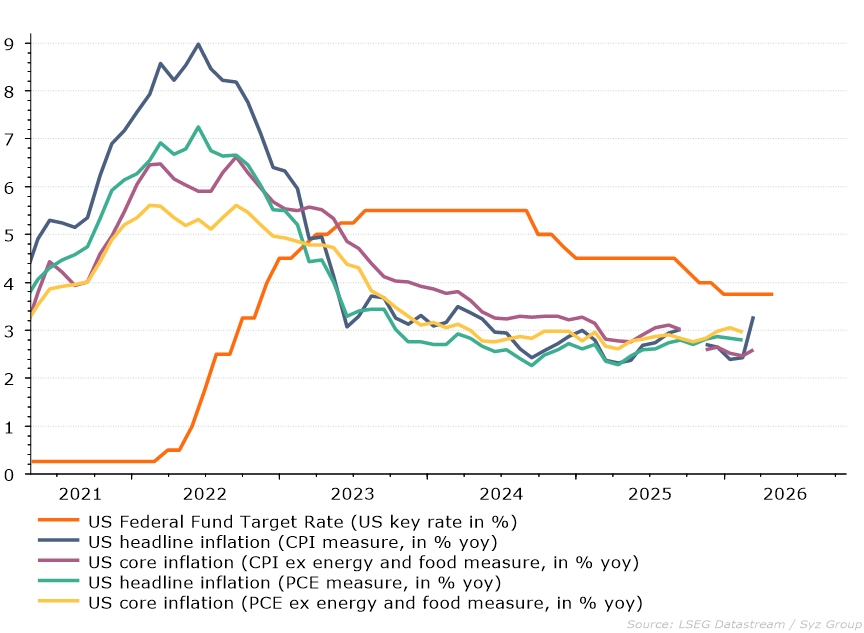
Chart 2: US long-term inflation expectations did not react significantly to the energy price surge so far and are still around the levels from end 2025
Disclaimer
This marketing document has been issued by Bank Syz Ltd. It is not intended for distribution to, publication, provision or use by individuals or legal entities that are citizens of or reside in a state, country or jurisdiction in which applicable laws and regulations prohibit its distribution, publication, provision or use. It is not directed to any person or entity to whom it would be illegal to send such marketing material. This document is intended for informational purposes only and should not be construed as an offer, solicitation or recommendation for the subscription, purchase, sale or safekeeping of any security or financial instrument or for the engagement in any other transaction, as the provision of any investment advice or service, or as a contractual document. Nothing in this document constitutes an investment, legal, tax or accounting advice or a representation that any investment or strategy is suitable or appropriate for an investor's particular and individual circumstances, nor does it constitute a personalized investment advice for any investor. This document reflects the information, opinions and comments of Bank Syz Ltd. as of the date of its publication, which are subject to change without notice. The opinions and comments of the authors in this document reflect their current views and may not coincide with those of other Syz Group entities or third parties, which may have reached different conclusions. The market valuations, terms and calculations contained herein are estimates only. The information provided comes from sources deemed reliable, but Bank Syz Ltd. does not guarantee its completeness, accuracy, reliability and actuality. Past performance gives no indication of nor guarantees current or future results. Bank Syz Ltd. accepts no liability for any loss arising from the use of this document.
Related Articles
Meanwhile, earnings growth, not valuation expansion, is doing the heavy lifting behind the S&P 500’s rally. Each week, the Syz investment team takes you through the last seven days in seven charts.
Meanwhile, what does Anthropic’s $2tn valuation assume about future growth? Each week, the Syz investment team takes you through the last seven days in seven charts.
Meanwhile, US earnings growth leaves the rest of the world behind. Each week, the Syz investment team takes you through the last seven days in seven charts.