
.png)
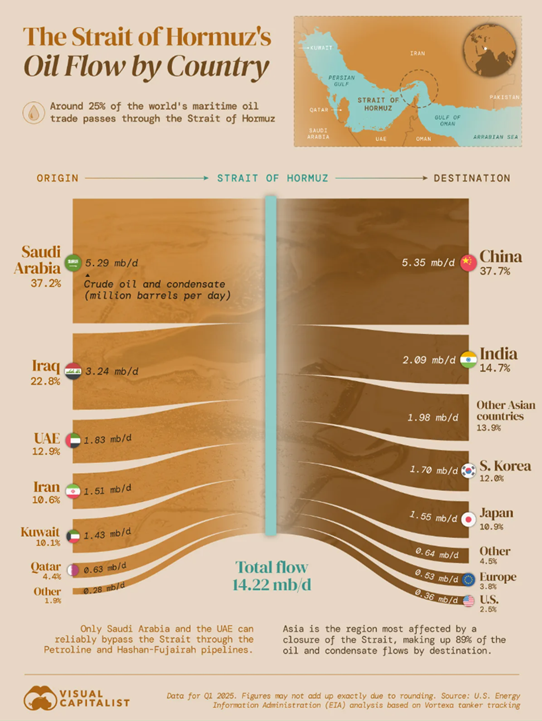 Source: Visual Capitalist

We are sorry that for legal reasons we are not able to help US citizens or Canadian residents other than in Ontario, Quebec, or Alberta. Best wishes for the future…
We are sorry that for legal reasons we are not able to help US citizens or Canadian residents other than in Ontario, Quebec, or Alberta. Best wishes for the future…
You chose the following profile. If you made a mistake, please change here USA
This marketing document has been issued by Bank Syz Ltd. It is not intended for distribution to, publication, provision or use by individuals or legal entities that are citizens of or reside in a state, country or jurisdiction in which applicable laws and regulations prohibit its distribution, publication, provision or use. It is not directed to any person or entity to whom it would be illegal to send such marketing material.
This document is intended for informational purposes only and should not be construed as an offer, solicitation or recommendation for the subscription, purchase, sale or safekeeping of any security or financial instrument or for the engagement in any other transaction, as the provision of any investment advice or service, or as a contractual document. Nothing in this document constitutes an investment, legal, tax or accounting advice or a representation that any investment or strategy is suitable or appropriate for an investor's particular and individual circumstances, nor does it constitute a personalized investment advice for any investor.
This document reflects the information, opinions and comments of Bank Syz Ltd. as of the date of its publication, which are subject to change without notice. The opinions and comments of the authors in this document reflect their current views and may not coincide with those of other
Syz Group entities or third parties, which may have reached different conclusions. The market valuations, terms and calculations contained herein are estimates only. The information provided comes from sources deemed reliable, but Bank Syz Ltd. does not guarantee its completeness, accuracy, reliability and actuality. Past performance gives no indication of nor guarantees current or future results. Bank Syz Ltd. accepts no liability for any loss arising from the use of this document.
Jakub Dubaniewicz
Source: Visual Capitalist
Global markets
The Iran conflict and resulting oil shock completely reshaped markets last week, driving a broad risk‑off move, sharply higher energy prices, and heightened caution across cyclicals.
Global equity markets faced a volatile retreat during the week ending 6 March 2026, as geopolitical conflict in the Middle East and a sharp spike in energy prices triggered a broad risk-off sentiment. The military escalation involving the US, Israel, and Iran resulted in the de facto blockade of the Strait of Hormuz, and sent Brent crude prices surging toward $93 by the Friday close (from around $70 in the prior week), and triggering a dramatic rotation into energy and defensive sectors.
Reflecting this mounting anxiety, the VIX Index spiked toward 30, doubling from the 15 level recorded at the start of the year, although it remained below the extreme peak of 50 witnessed during the Liberation Day crisis.
Last week’s price action suggests that many participants initially viewed the crisis as a temporary disruption. The market positioning did not descend into a full-scale panic, but it did turn more defensive. Investors sought shelter in software, energy, and staples, while sectors such as semiconductors, consumer discretionary, small caps, and banks significantly underperformed.
However, the outlook for the coming week has turned decidedly more bearish following weekend developments; oil prices gapped higher on Monday morning, with Brent spiking above $115 and WTI pushing past $100 after Gulf producers warned of forced production halts within days due to escalating strikes.
US
In the US, the S&P 500 was down 2% and Nasdaq 100 down -1.2%. The index-level sell-off was relatively muted, suggesting that investors were not yet pricing in a permanent geopolitical shock. However the underlying sector dispersion told a different story: small caps and cyclicals bore the brunt of the weakness, while software and defensive sectors provided a buffer.
The US domestic landscape was defined by a startling shift in macroeconomic data and a palpable defensive pivot. Major indices like the S&P 500 and Nasdaq Composite were weighed down by a disappointing February non-farm payrolls report, which revealed a shock contraction of 92,000 jobs and pushed the unemployment rate up to 4.4%. The market now faces a precarious "higher for longer" energy environment that threatens to impair corporate margins and consumer spending if the $120–$150 oil tail scenarios materialise.
Europe
European indices recorded their steepest weekly declines in months, with the STOXX 600 and FTSE 100 both falling almost 6%, underperforming the US indices. The region’s acute sensitivity to energy input costs made it the focal point of stagflation fears, as surging natural gas and crude prices threatened to cement "sticky" inflation and complicate the European Central Bank’s easing cycle.
Luxury goods and consumer-discretionary sectors struggled under the weight of dampened growth expectations, while the defence and energy sectors provided rare pockets of green. The weekend reports of potential production shut-ins by Gulf producers have heightened the urgency in European markets, as a prolonged disruption to energy flows through the Strait of Hormuz would be unsustainable for the region's industrial base beyond a few weeks.
Rest of the world
Asian markets bore the heaviest brunt of the global volatility during the week, led by a 6% plunge in Japan’s Nikkei 225, which was exacerbated by a strengthening yen and a "bull steepening" of the government bond yield curve.
Emerging markets also faced intense pressure, with the MSCI Emerging Markets Index weighed down by a stronger US dollar and disruptions to global trade routes. South Korea and Taiwan, despite their technological leadership, saw heavy de-risking in semiconductor names as investors locked in profits amidst the geopolitical uncertainty. Hang Seng index was down -3.3%, which was relatively more resilient.
By the Monday open, these markets faced even steeper declines as the 30% surge in oil prices forced regional central banks into a sharp policy rethink, highlighting the vulnerability of energy-importing economies to a sustained Middle Eastern conflict.
POSITIVE in the current environment
We shift to a Negative stance on government bonds. Positive global growth dynamics, price pressures in the US and profligate fiscal policies reduce the attractiveness of long-term government bonds as a potential hedge for economic downturn and increase the risk of higher long-term yields. Limited prospects of further central banks’ rate cuts and unattractive yield curve slopes at the front-end also reduce the attractiveness of government bonds on short-to-medium term maturities.
POSITIVE as breath to increase
Earnings remain a tailwind for equities, supported by a strong third-quarter earnings season and expectations that growth will accelerate and broaden in 2026. Technology stocks should continue to deliver robust performance, while the “old economy” is set to recover.
NEUTRAL as US large caps remain expensive
US technology stocks remain expensive, although growth and profitability provide some support while international equities are more reasonably valued. Equity risk premia remains low in both the US and Europe.
This marketing document has been issued by Bank Syz Ltd. It is not intended for distribution to, publication, provision or use by individuals or legal entities that are citizens of or reside in a state, country or jurisdiction in which applicable laws and regulations prohibit its distribution, publication, provision or use. It is not directed to any person or entity to whom it would be illegal to send such marketing material. This document is intended for informational purposes only and should not be construed as an offer, solicitation or recommendation for the subscription, purchase, sale or safekeeping of any security or financial instrument or for the engagement in any other transaction, as the provision of any investment advice or service, or as a contractual document. Nothing in this document constitutes an investment, legal, tax or accounting advice or a representation that any investment or strategy is suitable or appropriate for an investor's particular and individual circumstances, nor does it constitute a personalized investment advice for any investor. This document reflects the information, opinions and comments of Bank Syz Ltd. as of the date of its publication, which are subject to change without notice. The opinions and comments of the authors in this document reflect their current views and may not coincide with those of other Syz Group entities or third parties, which may have reached different conclusions. The market valuations, terms and calculations contained herein are estimates only. The information provided comes from sources deemed reliable, but Bank Syz Ltd. does not guarantee its completeness, accuracy, reliability and actuality. Past performance gives no indication of nor guarantees current or future results. Bank Syz Ltd. accepts no liability for any loss arising from the use of this document.
The week was shortened by holidays (US Presidents’ Day and Lunar New Year in Asia) which resulted in thinner liquidity and heightened volatility. It opened under the shadow of softer macro data and hawkish Fed signals but ended on a strong note following the US Supreme Court’s landmark ruling on tariffs.
The week from 6 to 13 February 2026 saw U.S. tech drag global equities lower, as renewed pressure on mega-cap names weighed on sentiment and lifted volatility. In contrast, Asian equities outperformed, supported by strong gains in Japan, Korea, and Taiwan.
The week of 23-30 January 2026 was marked by sharp moves in Big Tech, ongoing outperformance of non-US equities and record high prices of gold and silver
Live feeds, charts, breaking stories, all day long.
Our latest research, commentary and market outlooks