


.png)
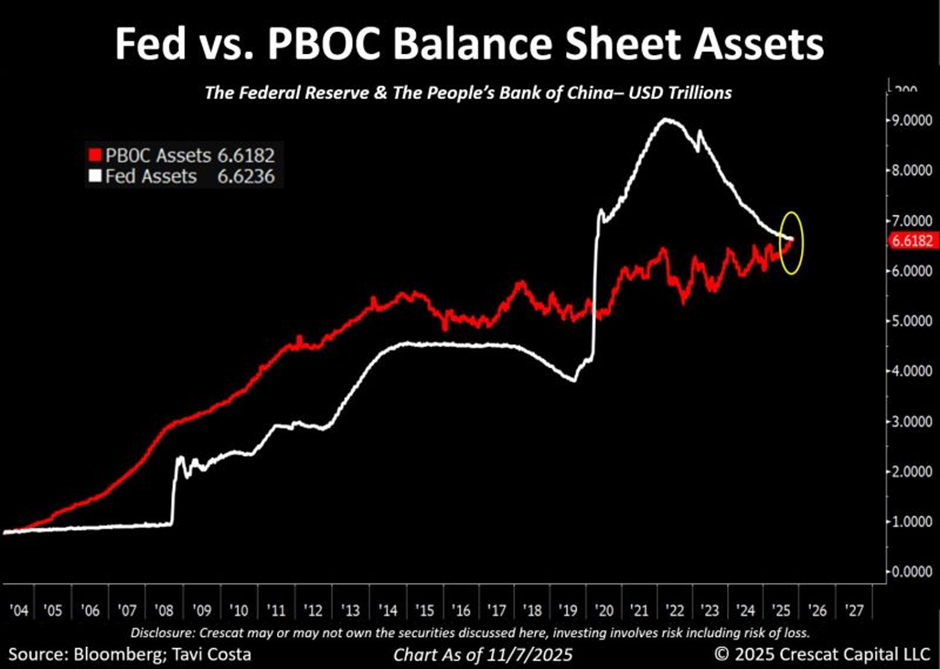 Source: Tavi Costa, Bloomberg
Chart #2 —
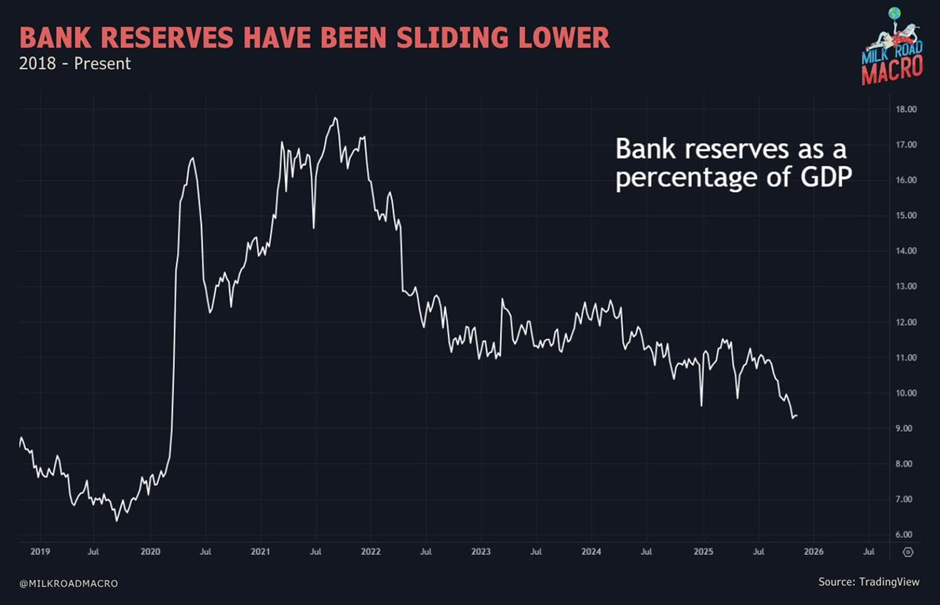
The main reason behind the quantitative easing comeback are bank reserves
The critical metric is the level of bank reserves relative to the size of the US economy. When that ratio drops too low, the system starts to creak—just like we saw in September 2019. As the economy grows, it naturally requires more reserves to operate without stress, yet reserves are currently drifting lower. The straightforward fix is to expand the Fed’s balance sheet again, or in other words, bring back quantitative easing.
 Source: Milk Road Macro
Chart #3 —
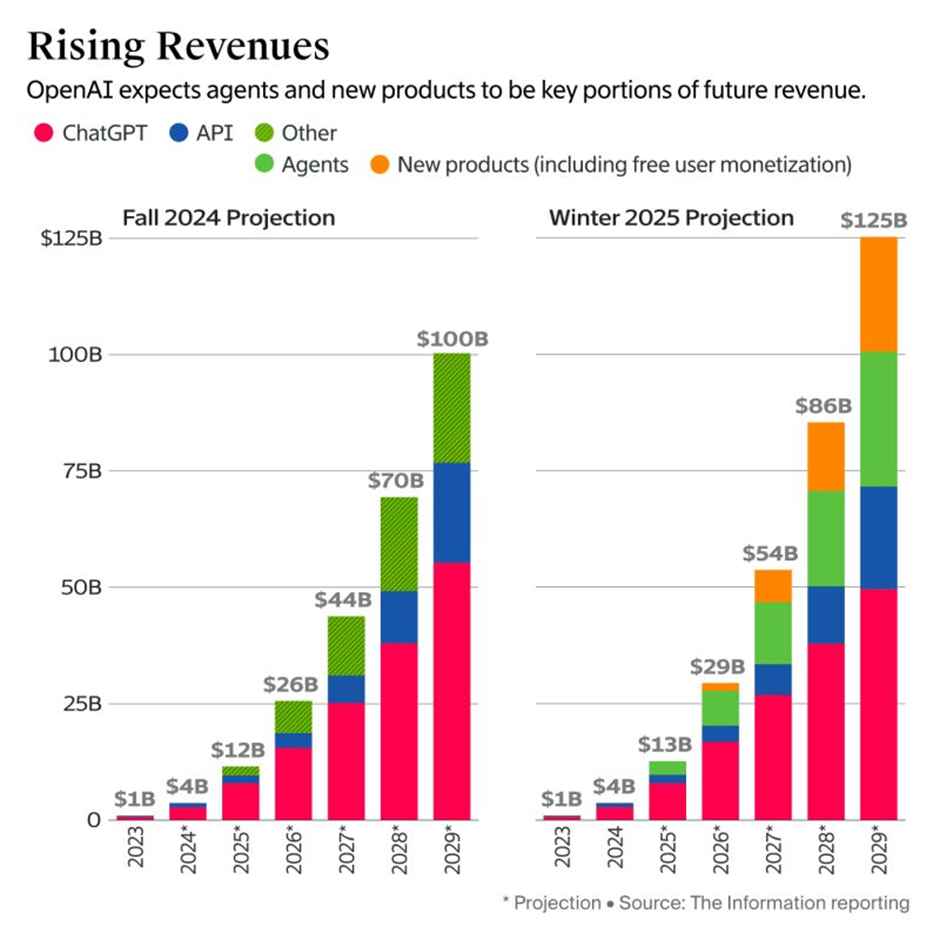
OpenAI’s “Go Big or Go Bust” strategy just went public
Leaked financials show the company is prepared to lose $74 billion in 2028 alone before expecting to reach meaningful profitability by 2030. For this year, the picture isn’t subtle either: roughly $13 billion in revenue, about $9 billion in cash burn, and a burn rate around 70% of revenue. It gets even more extreme: OpenAI expects that three-quarters of its 2028 revenue will be wiped out by operating losses. By contrast, Anthropic says it expects to break even that same year. Cumulatively, OpenAI is projected to burn $115 billion through 2029.
The commitments behind this are enormous: up to $1.4 trillion over eight years for compute deals, nearly $100 billion for backup data-centre capacity, and a target of $200 billion in revenue by 2030—roughly 15 times higher than today.
The implication is clear. This is the sharpest strategic divergence in the industry: Anthropic is scaling cautiously, OpenAI is pursuing moonshot economics. The bet from OpenAI is straightforward: lose tens of billions now to dominate the future. The problem is that 95% of businesses still extract essentially no real economic value from AI today, and OpenAI is financing this hyperscale expansion not with revenue like AWS did) but with investor capital, debt, and supplier-linked deals, while losing money on every ChatGPT interaction.
This ends one of two ways: the most valuable company ever built, or a cautionary tale about massively overestimating future demand. There’s no middle ground when you’re burning cash faster than any startup in history.
 Source: hedgie on X
Chart #4 —
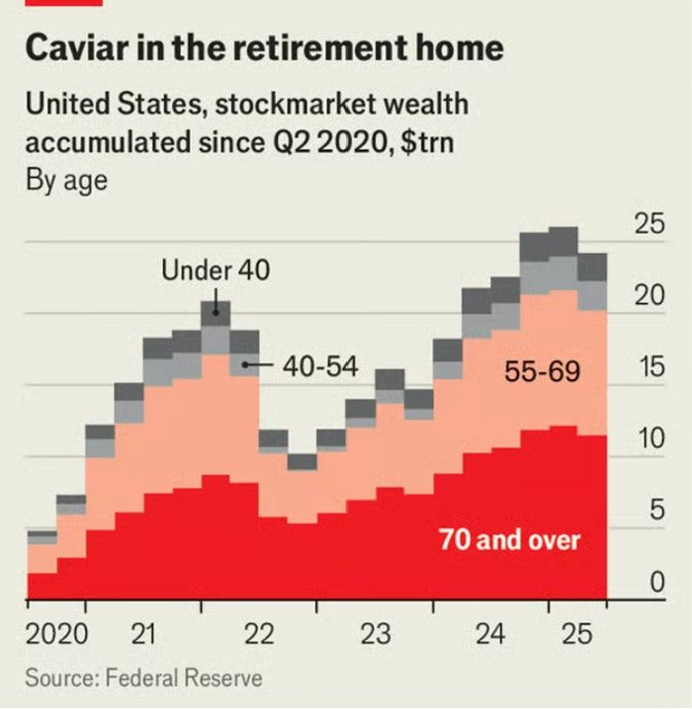
Old investors own the US equity market
According to The Economist, "America’s surging stock market has been driven, most of all, by old investors.... Americans aged 70 and above now own 39% of all stocks and mutual funds—which mostly invest in equities—almost twice as much as was common from 1989 to 2009. The trend reflects a shift in outlook as elderly Americans’ risk tolerance has shot up.
 Source: @TheEconomist thru Mo El Erian on X
Chart #5 —
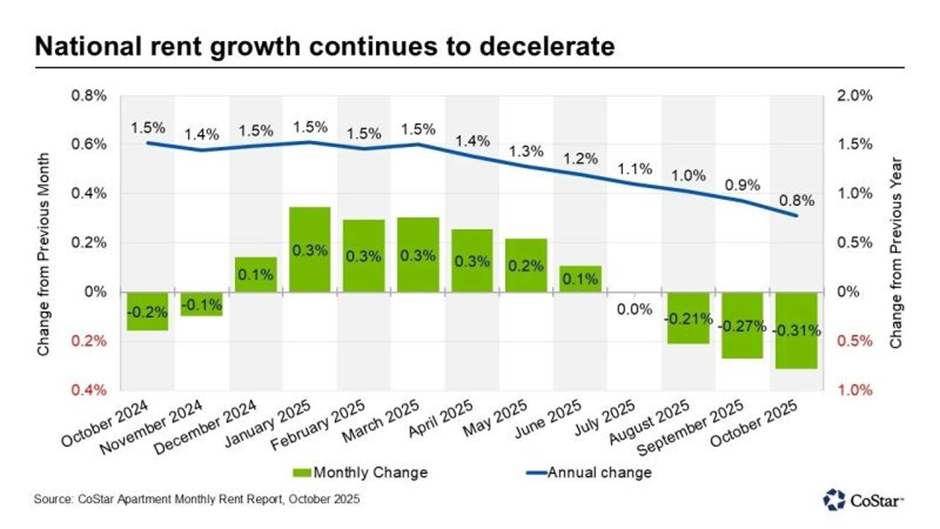
Is the US CPI decelerating?
While we might not get any data on CPI this week, it is worth highlighting that alternative data seems to indicate a meaningful deceleration of CPI amid big drop in rents. Note: over 33% of the inflation calculation is based on rental cost estimates.
According to CoStar, there was -0.31% rent "growth" in October, the biggest drop in over 15 years. The main cause behind this sudden drop in rents is the plunge in immigration into the US, and the resultant drop in demand for rental properties.
Reventure CEO Nick Gerli stated, "the weakness in the rental market right now is alarming. It suggests there's much more deflationary pressure in housing/economy than people understand." As the Fed's Stephen Miran echoes now, "2026 will be a year where CPI drops" even more.
But the disinflationary trend is not just visible in rents. OpenBrand, which tracks prices daily from online marketplaces, retail websites, and brick-and-mortar store listings, said price growth slowed across all groups but communications devices.
 Source: zerohedge
Chart #6 —
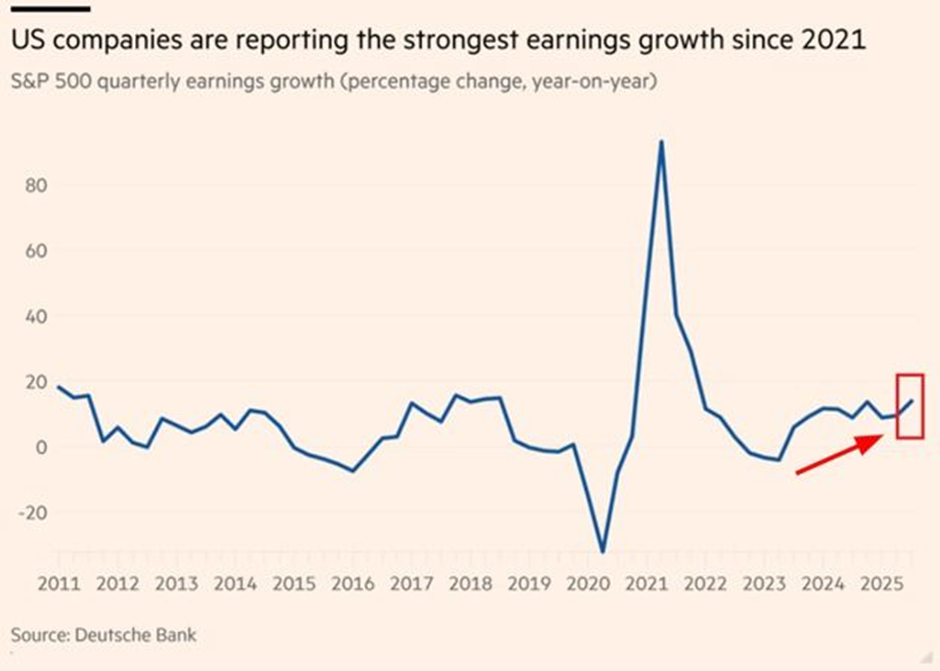
US corporate earnings growth is booming
S&P 500 quarterly earnings jumped 18% YoY in Q3 2025, the strongest pace since Q3 2021 and, outside the post-pandemic recovery, the best since 2018.
This comes as 6 of the 11 S&P 500 sectors reported positive average EPS growth in Q3, a material improvement from just 2 sectors in Q2. In the broader Russell 3000, median profit growth hit 11% YoY, also the highest since Q3 2021 and up from 6% the prior quarter. Overall, the share of companies beating expectations is now near record highs.
Earnings momentum is incredibly strong.
 Source: FT, Global Markets Investor
Chart #7 —
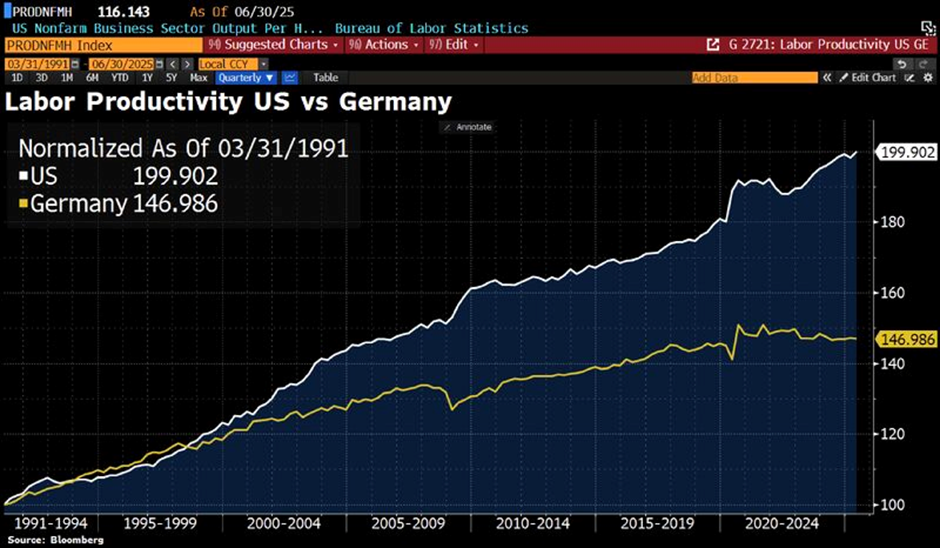
The gap in labour productivity between the US and Germany
Since the early 1990s, US productivity has almost doubled, while Germany has grown only half as much. The divergence is structural, long-running, and shows no sign of narrowing any time soon...
 Source: Bloomberg, HolgerZ
Disclaimer
This marketing document has been issued by Bank Syz Ltd. It is not intended for distribution to, publication, provision or use by individuals or legal entities that are citizens of or reside in a state, country or jurisdiction in which applicable laws and regulations prohibit its distribution, publication, provision or use. It is not directed to any person or entity to whom it would be illegal to send such marketing material. This document is intended for informational purposes only and should not be construed as an offer, solicitation or recommendation for the subscription, purchase, sale or safekeeping of any security or financial instrument or for the engagement in any other transaction, as the provision of any investment advice or service, or as a contractual document. Nothing in this document constitutes an investment, legal, tax or accounting advice or a representation that any investment or strategy is suitable or appropriate for an investor's particular and individual circumstances, nor does it constitute a personalized investment advice for any investor. This document reflects the information, opinions and comments of Bank Syz Ltd. as of the date of its publication, which are subject to change without notice. The opinions and comments of the authors in this document reflect their current views and may not coincide with those of other Syz Group entities or third parties, which may have reached different conclusions. The market valuations, terms and calculations contained herein are estimates only. The information provided comes from sources deemed reliable, but Bank Syz Ltd. does not guarantee its completeness, accuracy, reliability and actuality. Past performance gives no indication of nor guarantees current or future results. Bank Syz Ltd. accepts no liability for any loss arising from the use of this document.
Related Articles
Meanwhile, the Korean stock market surges to new levels. Each week, the Syz investment team takes you through the last seven days in seven charts.
Meanwhile, bitcoin and software equities are moving like twins. Each week, the Syz investment team takes you through the last seven days in seven charts.
While gold, silver and platinum were the best performing commodities over the past year, they took a hit at the end of last week. Each week, the Syz investment team takes you through the last seven days in seven charts.