


.png)
Scale. Revenue has more than tripled in two quarters, from about $4.8bn in Q1 to $11.5bn in Q2 and $16.8bn in Q3. Year-to-date sales are roughly $33bn. Adding 46% sequentially on a business already running at about $46bn annualised has no real precedent in corporate history.
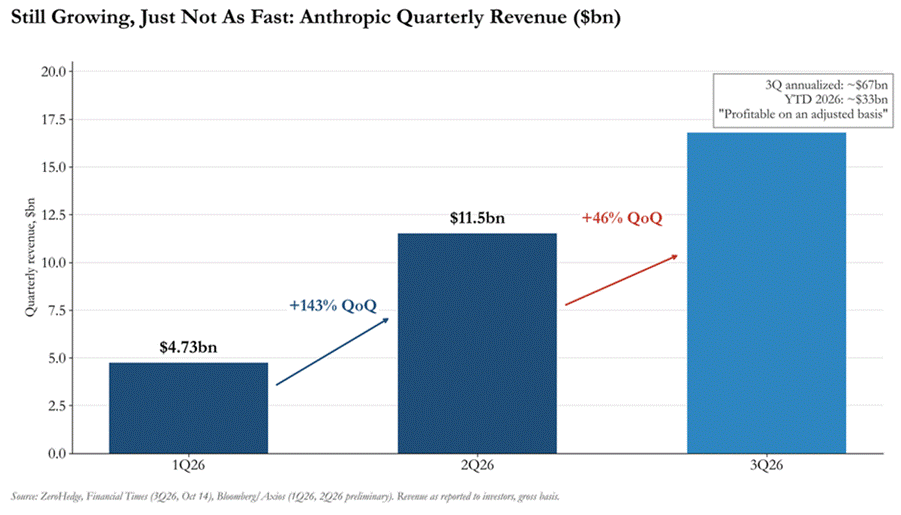
Anthropic quarterly revenue, 1Q26–3Q26. Source: ZeroHedge, FT, Bloomberg/Axios.
Profitability. Anthropic says it was profitable on an adjusted basis for the second straight quarter and cash-flow positive. It earned $1.70 of revenue for every $1 spent on compute, and adjusted operating margins (excluding stock-based compensation) were 11%. For a frontier lab, that is a structural shift: the model is starting to pay for itself.
Quality of the growth. The quarter was delivered against three headwinds. First, a price war: Anthropic and OpenAI have both cut prices to compete with each other and with cheaper Chinese models. Second, a deliberate clampdown on distillation, the practice of using a more powerful AI model to train a cheaper one to mimic its capabilities. Distillation accounted for 5–7% of revenue, which was cut back “materially” in Q3. Third, two large customers, Meta and Microsoft, leaning more on their own tools. Growing 46% while voluntarily shedding revenue and cutting prices is a sign of genuine demand. One investor told the FT that demand has already risen as efficiency improved.
Market leadership. Business spending data backs this up. On the Ramp AI Index, Anthropic remains the largest single share of token spend across Ramp's corporate customers, and total spend hit a new high in early October.
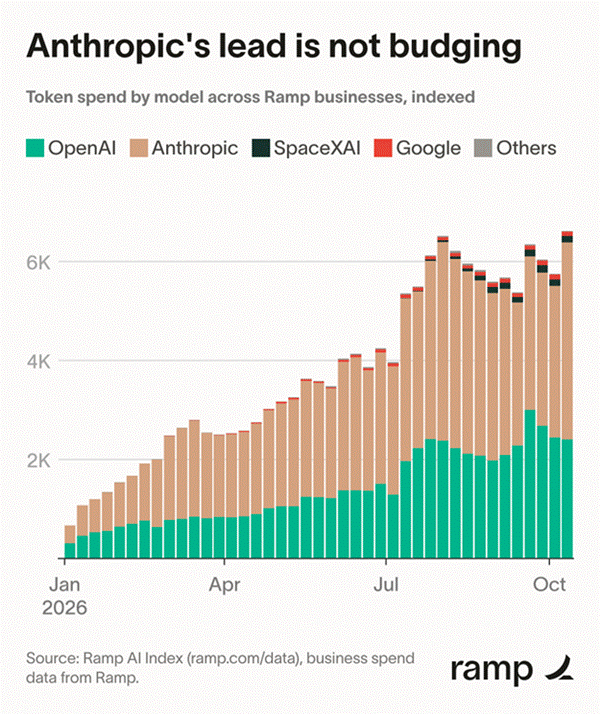
Token spend by model across Ramp businesses, indexed. Source: Ramp AI Index.
The bulls read this as acceleration, not fatigue. One widely shared view puts Anthropic above $70bn of annualised revenue by mid-October, with OpenAI at $60–70bn and the frontier labs together at $140–145bn. Agentic use cases, the argument goes, picked up visibly in the past month, and a combined $200bn run rate by year-end is within reach.
Valuation. On a ~$2 trillion IPO value, Anthropic trades at about 27x its implied September exit run rate. Two weeks ago, Reuters Breakingviews put the trailing multiple near 47x. Each quarter of this growth compresses the multiple fast.
Despite remarkable results, Anthropic’s Binance perpetual trades around 1,908, down 5% on the day and 14% below its all-time high. IPO odds have also slipped: investors are questioning whether growth can sustain the expectations embedded in a ~$2tn valuation.
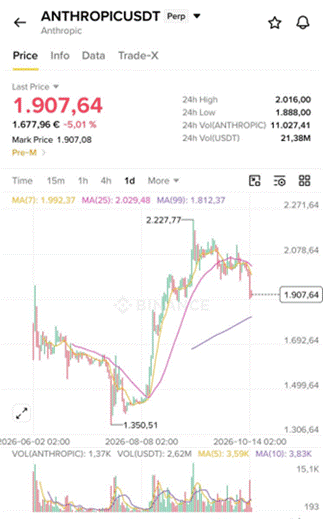
ANTHROPICUSDT perpetual, daily, June–October 2026. Source: Binance.
1. Growth has shifted down a gear
The headline growth rate hides a sharp change of pace inside the quarter. Annualise Q3 and you get about $67bn, barely above the $65bn run rate Anthropic reported at the end of July. Excluding July, the implied September exit rate is $69–74bn, broadly in line with the estimate of around $74bn from SemiAnalysis, an AI industry research firm. That means monthly run-rate growth fell from roughly 33% between January and July to 3.4–6.6% in August and September. Over the summer, several investors told the FT that Anthropic would far surpass $100bn by year-end. Getting there now requires 10.6–12.6% a month in Q4, roughly double the recent pace. On the current trend, the year ends nearer $89bn.
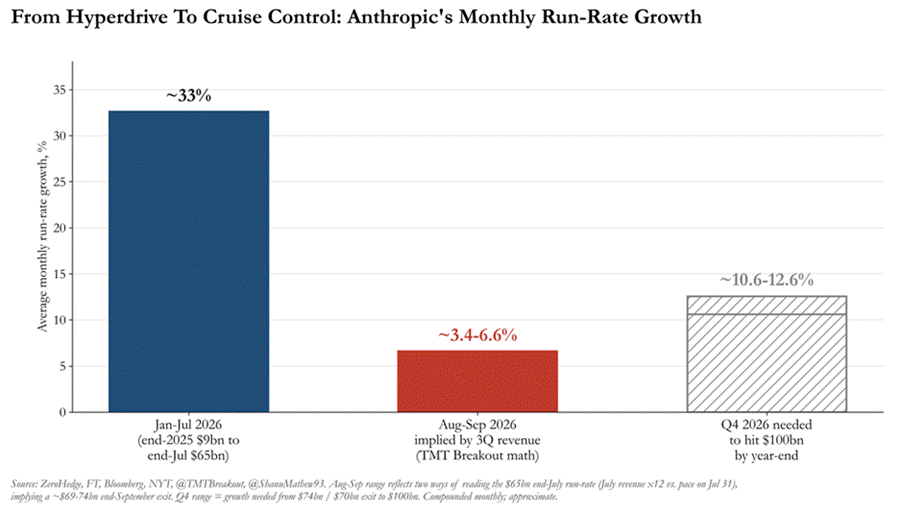
Average monthly run-rate growth. Source: ZeroHedge, FT, Bloomberg, NYT, TMT Breakout.
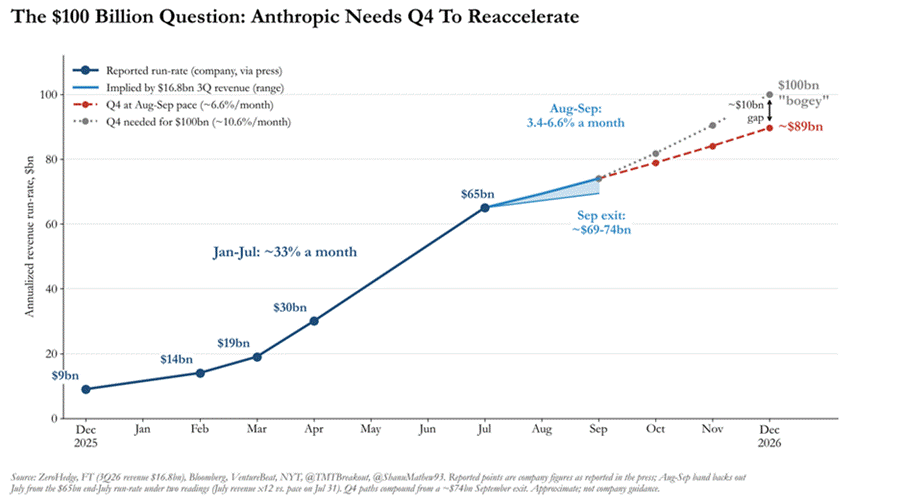
Run-rate path and Q4 scenarios. Source: ZeroHedge, FT, Bloomberg, VentureBeat, NYT.
The sceptics’ point is not that the business is weak. It is that the bar was set by Anthropic's own momentum, and the IPO is being priced off that bar.
2. Falling token prices versus rising volume
This is the central risk. Usage is rising fast, but the price of each token is falling faster. The Ornn Anthropic Token Price Index hit an all-time low of 0.84 in October, roughly half its level a month earlier. The pressure comes from Chinese open-weight models, OpenAI's own price cuts and Google's discounting.
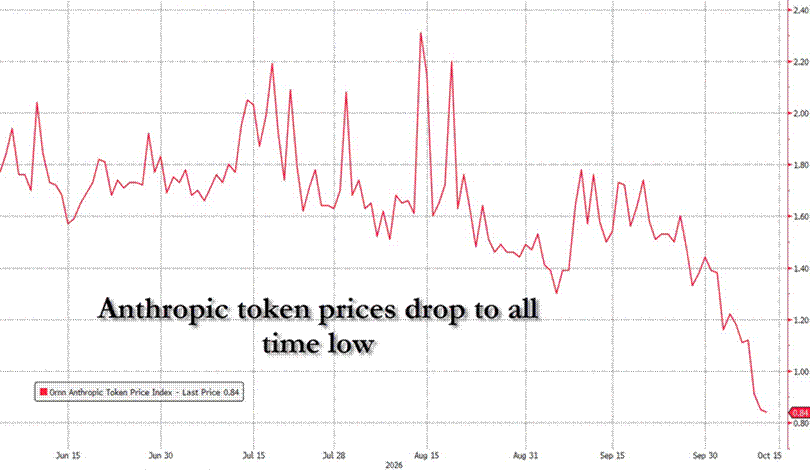
Ornn Anthropic Token Price Index. Source: Bloomberg, ZeroHedge.
Data from Ramp, which tracks AI expenditure across its business customers, show AI token volumes continuing to climb while total spending has remained flat or declined since its late-July peak, suggesting that increased usage is no longer translating into higher spending.
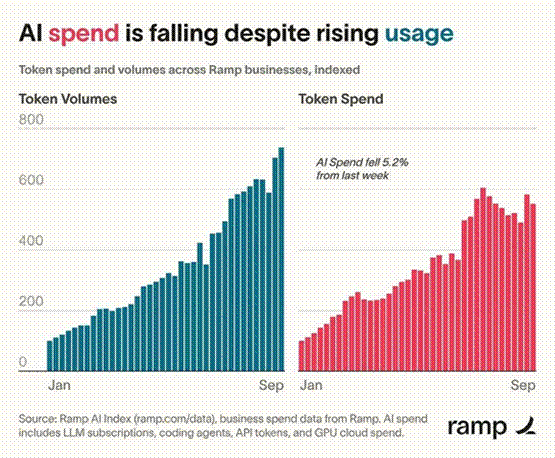
Token volumes vs token spend across Ramp businesses, indexed. Source: Ramp AI Index.
Cheaper tokens unlock new applications, and autonomous AI agents can consume far more tokens than conventional chatbot interactions. But the Aug–Sep slowdown happened while prices were still relatively firm. A Q4 reacceleration would now require a much larger increase in token volume to offset significantly lower prices. That is possible, but it would represent a different business model from the one that delivered 33% monthly growth.
3. A two-horse race, and customers who build their own
In the first half, Anthropic had the enterprise and coding market largely to itself. Since its July model release, OpenAI has become competitive again; SemiAnalysis calls it "a two-horse race, rather than the one-horse race in the first half." Google and SpaceX/xAI are now visible in corporate spend. Meanwhile Meta and Microsoft, both large customers, are shifting more workloads to in-house models.
4. What does "adjusted" mean?
The profit claim needs the fine print. The company has not explained what it means by “adjusted” in its results. Its public filing, which is expected around 25 October, should provide the full figures prepared under standard accounting rules (GAAP). The confidential prospectus, as reported by Reuters, showed:
-
A $42bn net loss in 2025, of which about $34bn was an accounting charge tied to financing, and an operating loss above $8bn
-
At least $518bn of compute and infrastructure commitments over the next decade, about 80% non-cancellable
-
Revenue booked closer to gross (full customer spend through cloud partners), which flatters the top line versus OpenAI's net reporting
The biggest compute bills also lie ahead. The Microsoft commitment only starts in November, and management itself warned that margins may change as it invests heavily in compute and biomedical research. One profitable quarter is a data point, not a track record.
5. The funding backdrop is tightening
Anthropic has committed more than $500bn to infrastructure over the next decade, leaving its growth ambitions heavily exposed to the cost of financing. That risk came into focus as its Q3 results were released on a difficult day for AI-related assets. US inflation came in hotter than expected, raising concerns that interest rates could stay higher for longer. Borrowing costs also rose for major players in the AI infrastructure market: Oracle’s credit spreads widened by 31 basis points, while CoreWeave’s increased by more than 100 basis points as its share price fell over 15%. Shares in companies providing cloud computing infrastructure to AI firms dropped around 12%, while semiconductor stocks fell for a sixth consecutive session. Meanwhile, an S&P basket excluding AI stocks rose even as the broader index declined. With much of the AI build-out debt-financed, higher rates and wider credit spreads could make it more expensive to fund the infrastructure Anthropic needs to sustain its growth. Anthropic says it was profitable on an adjusted basis for the second straight quarter and cash-flow positive. It earned $1.70 of revenue for every $1 spent on compute, and adjusted operating margins (excluding stock-based compensation) were 11%. For a frontier lab, that is a structural shift: the model is starting to pay for itself.