



.png)
Chart of the Week: French bonds under pressure
French spread over Germany, 10-year government bonds
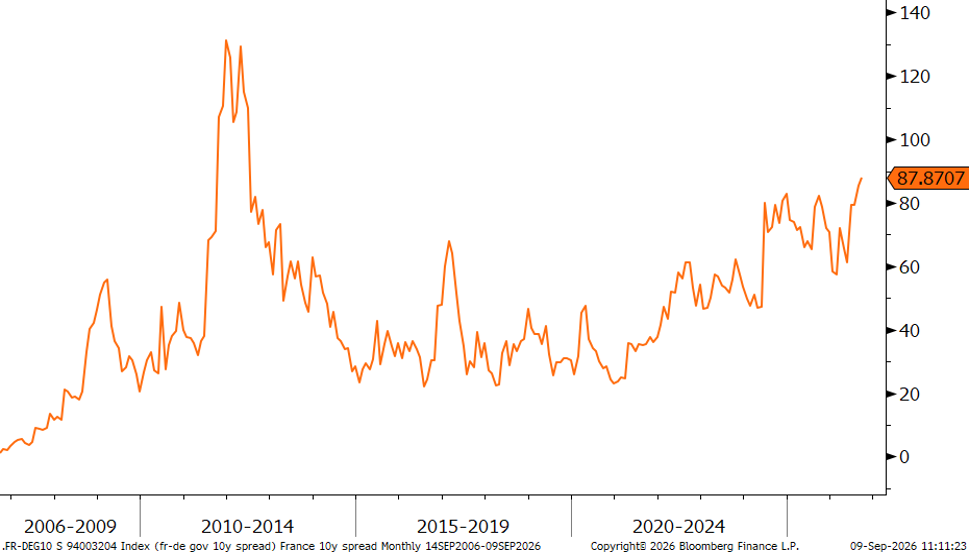
In the past few days, two lively debates around public debt illustrated the growing unease with fiscal profligacy in the US and France. The bottom line is that there is no magical solution to ease the burden of debt.
On August 19, the US Treasury announced it will at least double the maximum size of its liquidity-support buyback operations in the long end from USD 2 bn to at least 4 bn per operation. The change takes effect on September 9 and runs through the end of the current refunding quarter. The timing of the announcement was notable, as the 30-year yield had risen to a 19-year high in the previous days. On the news, the 10-year and 30-year yields immediately fell, but the moves were reversed in subsequent days. Fed chair Warsh’s hawkish speech at Jackson Hole on August 28 worked better to calm the long end of the bond market.
Buying cheap off-the-run issues and selling expensive on-the-run bonds benefits taxpayers and increases market liquidity. This is perfectly fine. It would be questionable for the Treasury to buy long-term debt and replace it with additional T-bills issuance, as this would shorten the average maturity of US debt. Even more questionable would be for the Fed to finance Treasury buybacks with additional money creation. There is no indication that this has been the intent of policymakers, however, and even the increased amounts announced are small relative to the size of the Treasury market.
Comments about “financial repression” seem unwarranted. After all, the central bank impacts markets much more than the Treasury’s buybacks by setting policy rates and conducting quantitative easing or tightening, yet no one frames monetary operations as “financial repression”. The discussion surrounding the buybacks highlights how sensitive the topic of long bond yields has become since investors showed their dissatisfaction with the Fed after it left rates on hold in late July.
France is another country whose fiscal outlook is worrisome, and French bonds have come under pressure relative to those of Germany. Politically motivated calls have arisen to cancel the French debt held by the ECB, which is around 20% of the total. These proposals are unrealistic and show a misunderstanding of monetary policy. Central bank purchases of government bonds do not reduce public debt. They merely swap long-dated securities for overnight liabilities. The money paid by the central bank to purchase the bonds appears as bank reserves among its liabilities. The central bank pays interest on bank reserves just like the Treasury pays coupons on bonds.
Even if the legalities and technicalities of the issue made it possible to cancel government securities held by the ECB, the consolidated debt of the government sector, money included, would remain unchanged. This would leave the ECB holding excess reserves it cannot easily manage, since it is not permitted to issue long-term debt. (In countries where the central bank is allowed to issue its own bonds, canceling securities would simply give the central bank a larger role in managing the public debt’s maturity profile.)
More telling than the proposal’s feasibility is what it says about the political environment. This debate is a negative signal for OAT holders as it reveals how far France remains from fiscal consolidation.
Both episodes are variations on the same theme. Market support mechanisms and accounting creativity are no substitute for improved fundamentals. Our view is that “bond vigilantes” will eventually force politicians to correct unsustainable fiscal trajectories through bouts of higher yields.