



.png)
Is the global interest rate repricing not over yet?
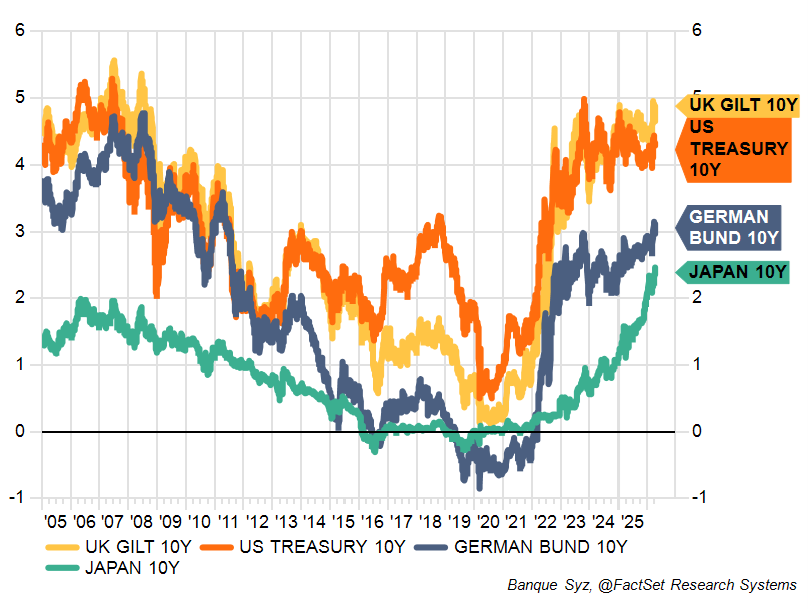
Markets have embraced a more constructive tone in recent weeks. The ceasefire announcement in the Middle East triggered a broad risk-on move: equities rebounded, oil and the US dollar retreated, credit spreads tightened, and expectations of further central bank tightening eased. Unsurprisingly, short-end government yields followed, declining alongside near-term inflation expectations.
And yet, one corner of the market remains almost unmoved: long-term sovereign rates. While US and UK 10-year yields have edged down from their late-March highs, they remain elevated relative to pre-conflict levels. In fact, the US 10-year Treasury yield is still hovering near its highest level since last summer, while the UK Gilt yield is not far from levels last seen in the aftermath of the Global Financial Crisis.
More striking still, core European and Japanese yields continue to grind higher. German 10-year Bund yields have pushed above 3%, a level not seen since 2011, while Japanese 10-year yields are venturing into territory last explored over two decades ago.
For long-term sovereign rates, the Middle East conflict and the spike in energy prices are just one more episode of a seemingly more fundamental and long-term adjustment initiated in 2022: the transition from a low growth/low inflation, globalized world where government and fiscal policy stand in the backseats, to a world of elevated nominal growth, where proactive fiscal policy supports growth and inflation dynamics at the expense of ever-rising public debt.
Recent announcements in Germany and across most European countries of fiscal measures to contain the impact of rising energy prices echo similar decisions in Asian countries. They lower the risk of a sharp economic growth slowdown ahead, but also risk sustaining inflationary pressures while surely weighting on public deficits and public debt burdens. Isn’t it the perfect cocktail to continue pushing long-term rates higher?