Charles-Henry Monchau

Chief Investment Officer

Chart #1 — 

Is this the most important countdown in the global economy right now?

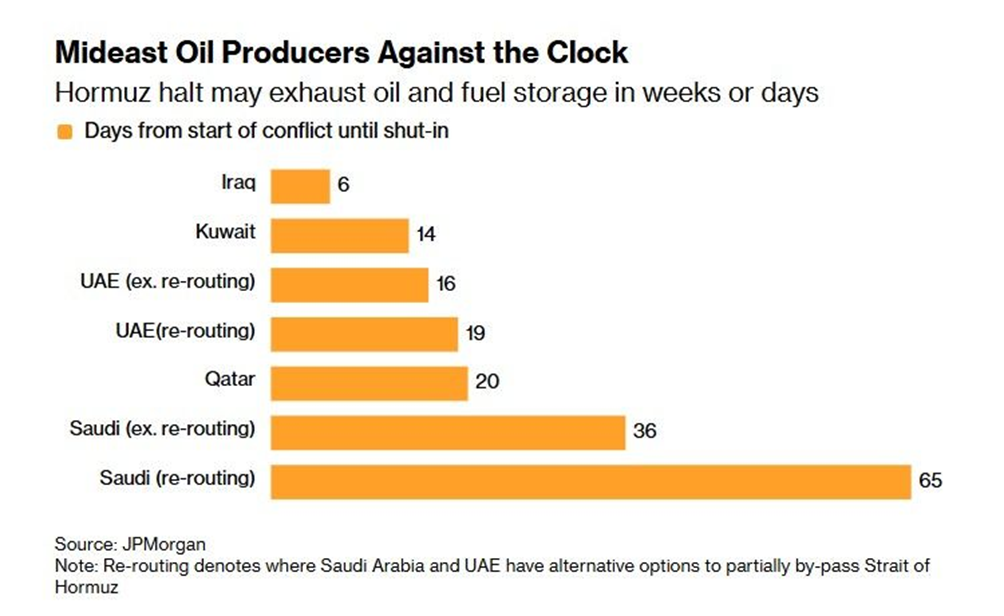
Gulf oil-exporting countries could soon face a risk that many markets may be underestimating. If exports remain disrupted through the Strait of Hormuz, several of the world’s largest oil producers could encounter a strict physical constraint: limited storage capacity. When oil cannot be shipped out of the Gulf and storage facilities begin to fill, producers may be forced to reduce or halt production at some of the world’s largest oil fields. Countries particularly exposed to this situation include Iraq, Kuwait, the United Arab Emirates, Qatar, and Saudi Arabia.

Shutting down oil wells, however, is not a simple process. Depending on the geological characteristics of reservoirs and the extraction technologies used, stopping production can damage oil fields and infrastructure, sometimes permanently. Restarting operations can be slow, costly, and in certain cases production may never return to previous levels.

As a result, the impact could go beyond a short-term disruption and lead to a medium- or long-term reduction in Middle Eastern oil supply. Markets would then begin pricing not only temporary disruptions but also the risk of actual scarcity, increasing the risk premium in global oil prices, particularly for regional crude.

Another key factor is that storage tanks are rarely filled beyond about 80% of capacity due to operational and safety limits, meaning production cuts could arrive sooner than expected. Although some producers, especially Saudi Arabia and the UAE, could redirect exports through alternative pipelines, these routes would quickly become strategic targets if tensions escalate. If Gulf production were forced to slow significantly, it could threaten the economic stability of major producers like Saudi Arabia and Iraq, increasing the risk of broader regional escalation.

Source:  Francesco Sassi, Bloomberg 
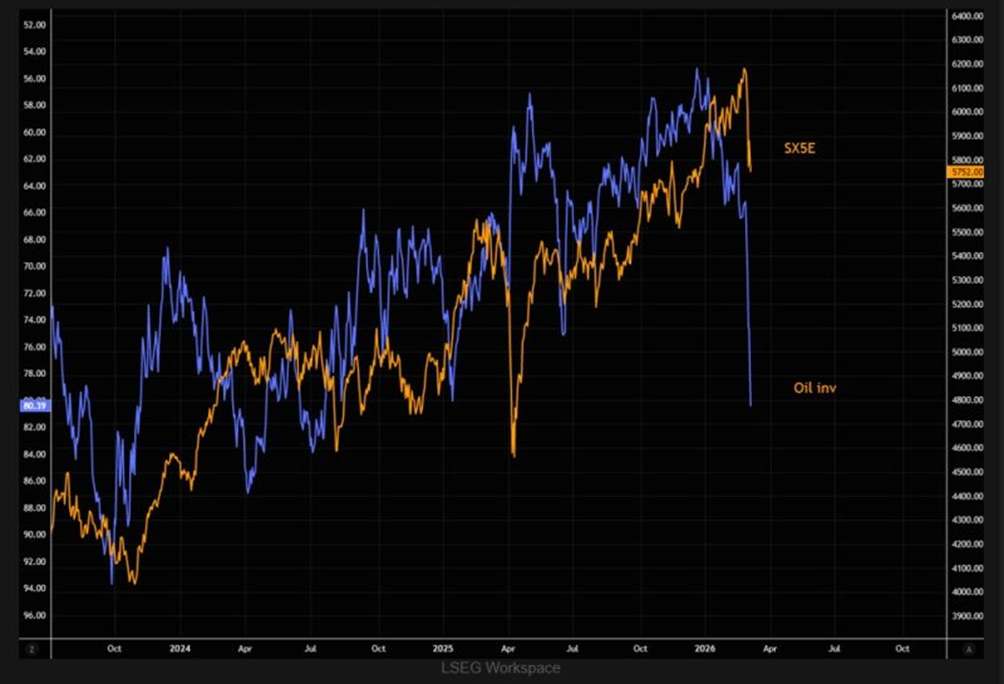

Chart #2 — 

EU stocks and natural gas prices

Europe is highly dependent on energy imports, making its economy particularly sensitive to changes in oil prices. The chart compares the SX5E index with oil prices displayed in an inverted format, highlighting the relationship between the two. This comparison does not necessarily imply that the SX5E must fall sharply to close the gap. However, it clearly illustrates how exposed and vulnerable the European economy is to fluctuations in energy costs.


Source: The Market Ear


Chart #3 — 

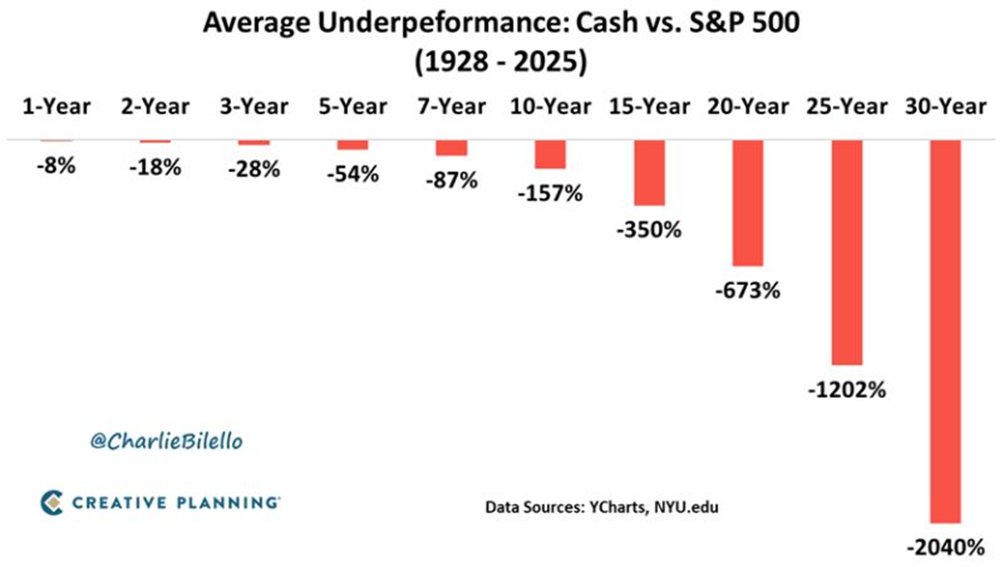
Sitting in cash is actually more dangerous than you think… 

Keeping money in cash instead of investing often leads to significant long-term underperformance. When funds remain in cash, they are highly exposed to inflation, which gradually erodes their purchasing power. In other words, by not investing, you risk seeing the value of your money decline over time as inflation driven by monetary and fiscal policies reduces what that cash can actually buy.


Source:  Peter Mallouk


Chart #4 — 

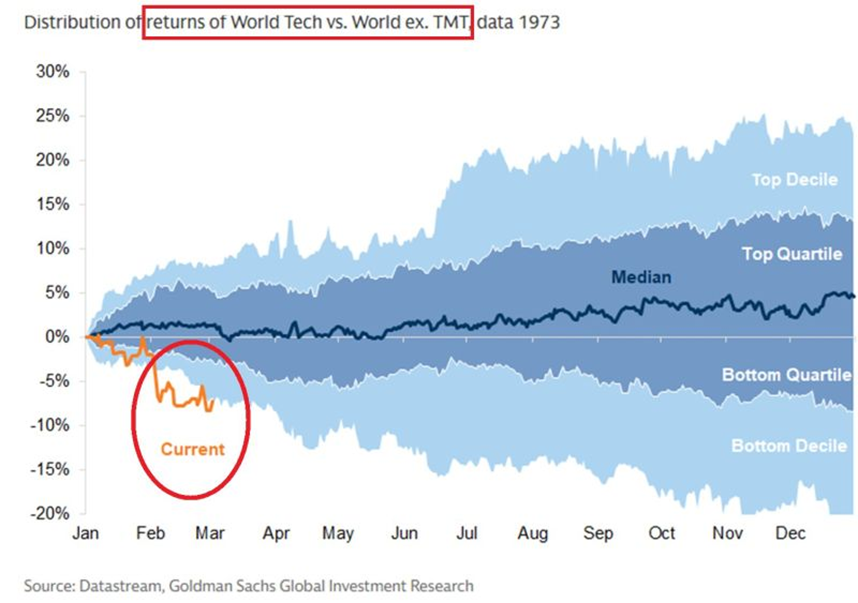
Technology stocks are struggling

Global technology stocks are lagging other equities by roughly 7 percentage points, marking one of the weakest starts to a year on record. Relative performance for tech is currently in the lowest 10% of years since 1973. Historically, the median outcome by the end of the year has seen tech outperforming by about 4 percentage points. The last time tech underperformed this severely was during the 2000’s dot-com bubble. This raises the question: is the tech sector’s long-running bubble beginning to burst?


Source: Goldman Sachs, Global Markets Investor 


Chart #5 — 

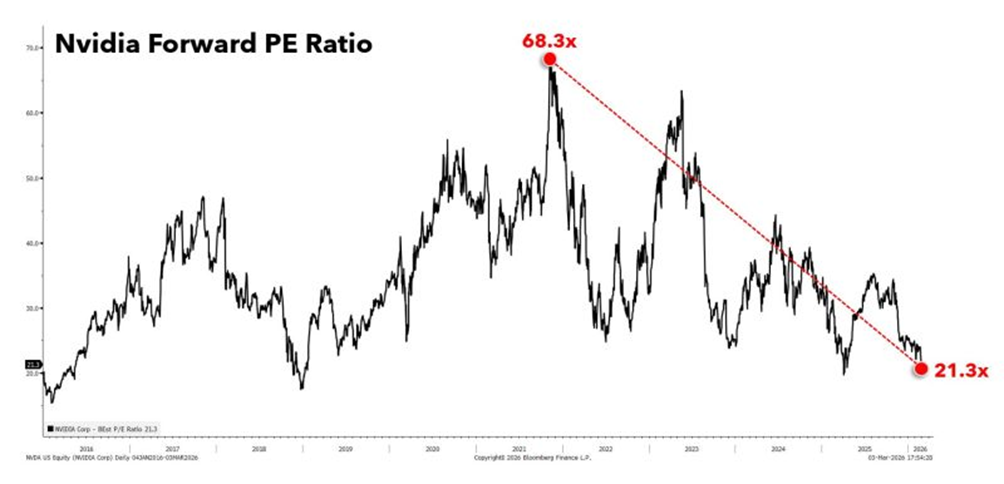
Nvidia now trades on 21x forward P/E

Nvidia’s forward price-to-earnings (PE) ratio has dropped dramatically, falling 47 points from 68.3× in November 2021 to 21.3× today. By comparison, Walmart currently trades at 43.1×more than twice Nvidia’s current valuation.

Source: Matt Cerminaro 


Chart #6 —

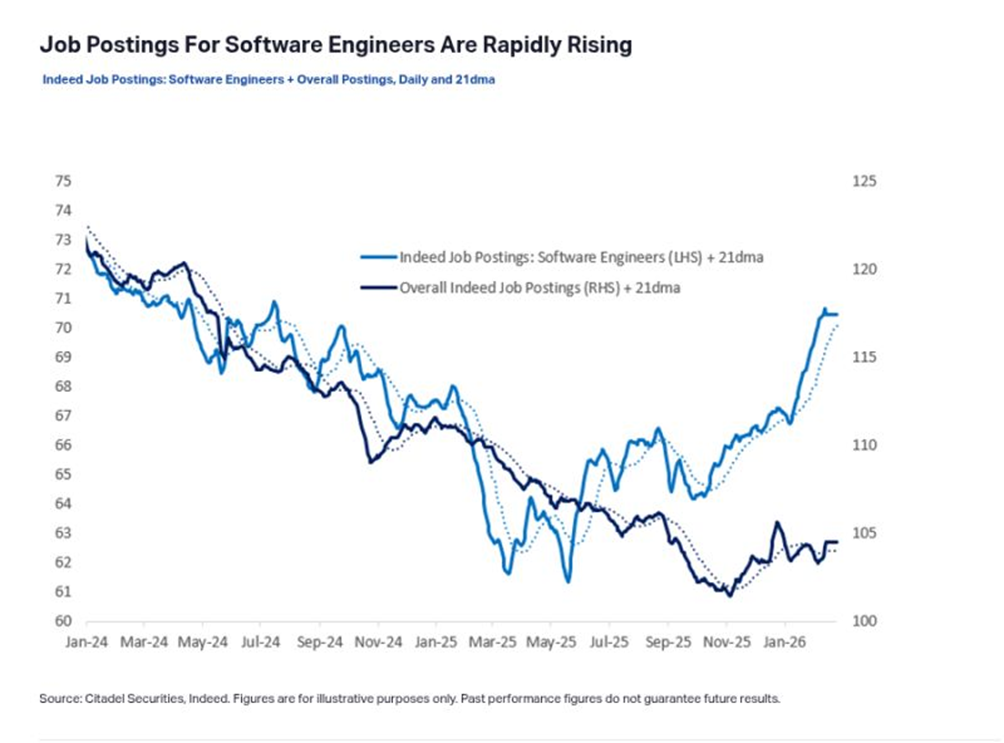
Believe it or not, job postings for software engineers are rising sharply…

Citadel Securities highlighted a notable trend: job postings for software engineers are climbing rapidly. This could reflect the Jevons paradox in action. As AI makes coding faster and cheaper, the demand for software development can actually rise instead of falling. Lower development costs encourage companies to build more software, integrating it into industries, products, and internal tools that were previously too costly to develop. As a result, the need for software engineers may grow rather than shrink.


Source: Rohan Paul, Citadel Securities  


Chart #7 — 

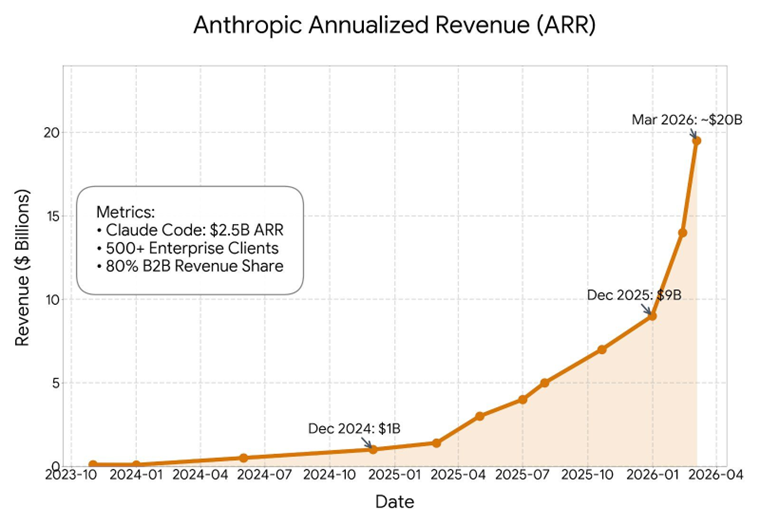
Claude is sprinting toward $20bn in annual recurring revenue

Everyone keeps calling AI a bubble, with repeated claims like “hyperscalers are overspending,” “AI demand is overstated,” or “the investments won’t pay off.” Maybe, but it’s worth pausing the debate for a moment. If you take a look at Anthropic’s ARR chart, the company behind Claude is accelerating rapidly toward $20bnin annual recurring revenue. The growth trajectory resembles a vertical take-off, and if it continues, Anthropic could become the fastest company ever to reach $20bn in ARR.

Source: Andreas Steno Larsen  


Disclaimer

This marketing document has been issued by Bank Syz Ltd. It is not intended for distribution to, publication, provision or use by individuals or legal entities that are citizens of or reside in a state, country or jurisdiction in which applicable laws and regulations prohibit its distribution, publication, provision or use. It is not directed to any person or entity to whom it would be illegal to send such marketing material. This document is intended for informational purposes only and should not be construed as an offer, solicitation or recommendation for the subscription, purchase, sale or safekeeping of any security or financial instrument or for the engagement in any other transaction, as the provision of any investment advice or service, or as a contractual document. Nothing in this document constitutes an investment, legal, tax or accounting advice or a representation that any investment or strategy is suitable or appropriate for an investor's particular and individual circumstances, nor does it constitute a personalized investment advice for any investor. This document reflects the information, opinions and comments of Bank Syz Ltd. as of the date of its publication, which are subject to change without notice. The opinions and comments of the authors in this document reflect their current views and may not coincide with those of other Syz Group entities or third parties, which may have reached different conclusions. The market valuations, terms and calculations contained herein are estimates only. The information provided comes from sources deemed reliable, but Bank Syz Ltd. does not guarantee its completeness, accuracy, reliability and actuality. Past performance gives no indication of nor guarantees current or future results. Bank Syz Ltd. accepts no liability for any loss arising from the use of this document.

Read More

Straight from the Desk

Syz the moment

Live feeds, charts, breaking stories, all day long.

Thinking out loud

Sign up for our weekly email highlighting the most popular posts.

Follow us

Thinking out loud

Investing with intelligence

Our latest research, commentary and market outlooks