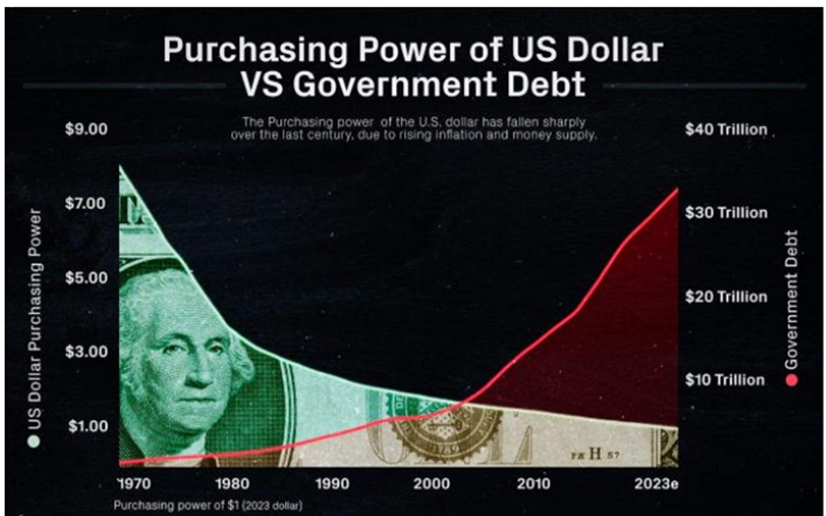
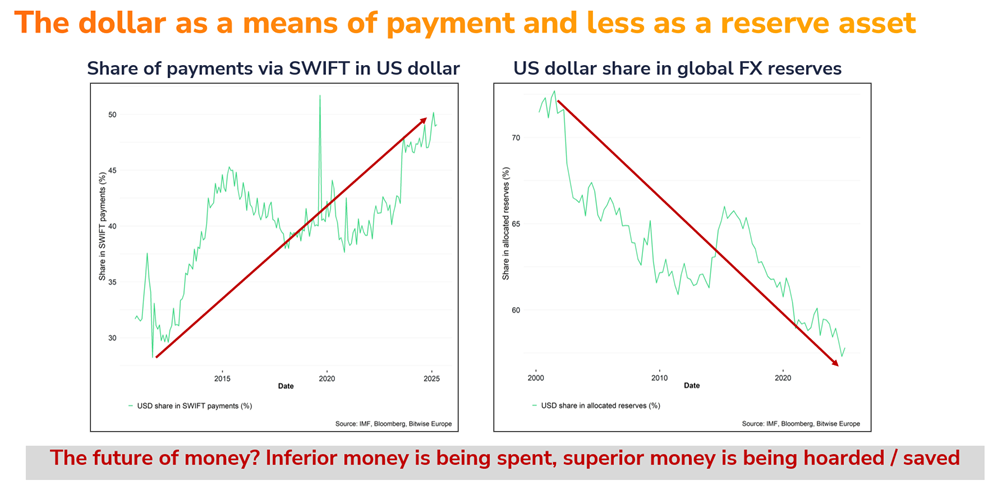
The broad trade-weighted dollar is down roughly 7% this year, and the forces driving that decline show no signs of reversing. The US is running large fiscal and current-account deficits simultaneously, and when unhedged foreign capital becomes harder to attract, the adjustment shows up in cheaper US assets or a weaker currency, usually both. The total US debt has now reached 37 trillion, and it doesn’t seem like its rise will stop anytime soon. While President Trump started his second mandate advocating for debt reduction and budget cuts through the D.O.G.E department, his “Big Beautiful Bill” turned that plan into an old story. President Trump still seeks to increase investments in defence and productive assets through more debt, as he avoids increasing taxes. To amortise this debt, he wants to use inflation and weaken the USD. The appointment of Stephen Miran at the US Federal Reserve board was a first step in this direction.
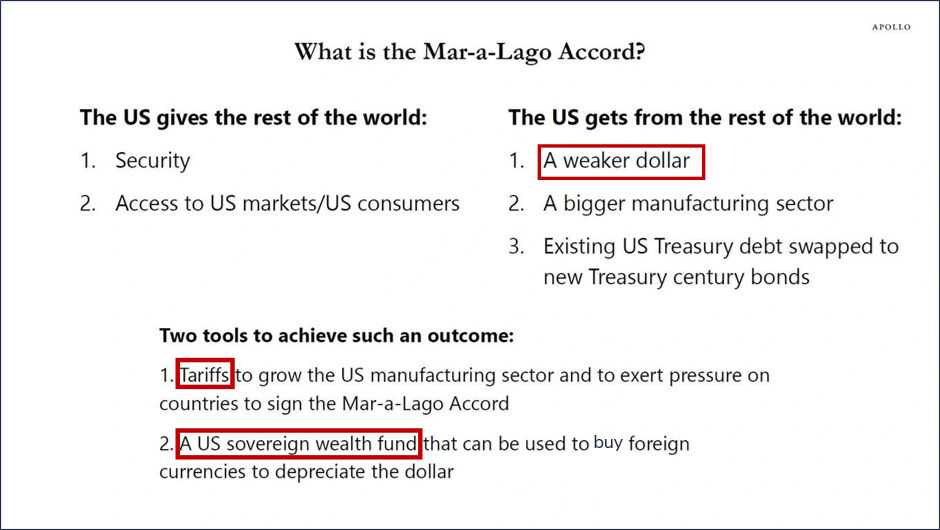
This is where the so-called “Mar-a-Lago Accord” comes in, an idea circulating in Trump’s economic circle that echoes the 1985 Plaza Accord. The core objective is to engineer a weaker dollar, restore US manufacturing competitiveness and deflate the real value of America’s ballooning debt.
Source: Apollo
The US would give the rest of the world security guarantees and access to US consumers, in exchange for concessions that align with Trump’s agenda: a cheaper dollar, a bigger domestic manufacturing base, and rolling over existing Treasury debt into much longer-dated “century bonds.”
Two tools could finance this strategy: tariffs, both as a stick to push countries into negotiations and as a direct tool to favour domestic industry, and a US sovereign wealth fund, which could intervene directly in currency markets to push down the dollar.
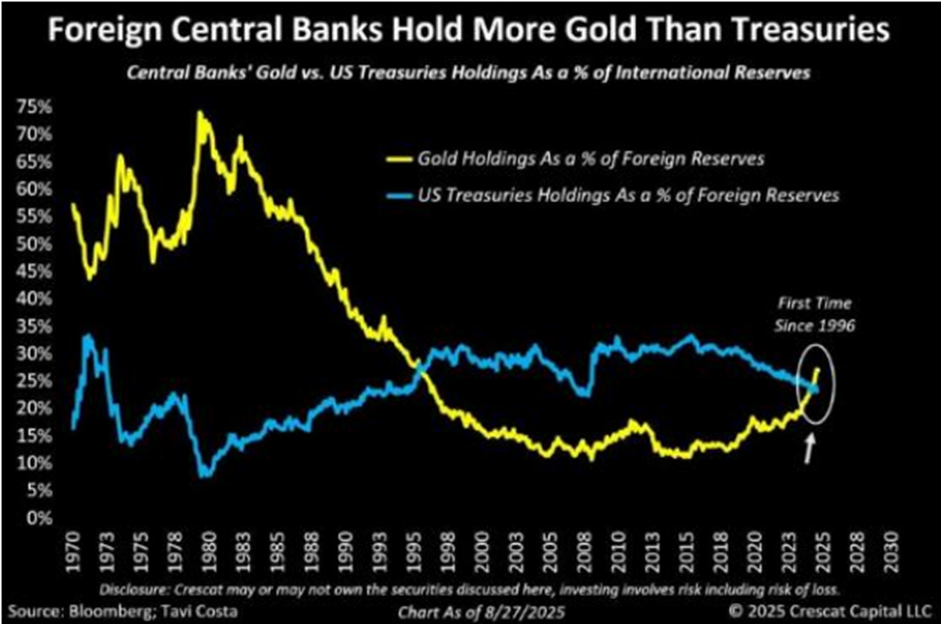
To finance its sovereign wealth fund, the US has one solution: gold revaluation. Treasury still values its gold stockpile at $42.22/oz, giving it an official balance-sheet value of $11 billion. At current market prices above $3,700/oz, that stash is worth over $800 billion. Simply re-marking it to market could unleash hundreds of billions in new funding capacity, which Trump allies like Senator Cynthia Lummis have already suggested could flow into a sovereign wealth fund, or even into a strategic bitcoin reserve.
However, a weaker dollar does not mean the end of the dollar dominance. In fact, its role as a means of payment has only been expanding in the past years. The share of payments via SWIFT in USD currently standing at nearly 50%.
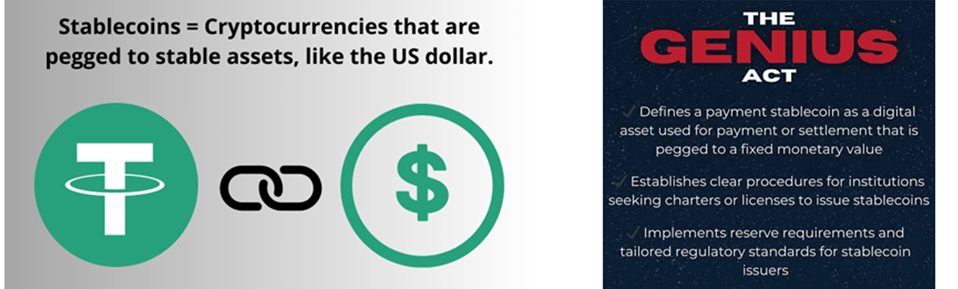
The expansion of the dollar as a means of payment could be further pushed by stablecoins. This is how the Genius act comes into play. In July of this year, President Trump signed a US federal legislation that establishes a comprehensive regulatory framework for stablecoins, a type of cryptocurrency designed to maintain a stable value by being pegged to a reference asset, commonly the US dollar.



.png)