It is worth noting that on October 12, the whale deposited 40 million additional USDC on their Hyperliquid address and re-increased their short position on BTC.
“The client holds a large amount of spot assets,” Jin wrote on X. “The short position is just a partial hedge. If the liquidity was enough, a bigger position would be placed.” He later added, “The client may be wrong, but they have strong expertise in managing risk.” In other words, Jin was only a researcher executing or advising on trades for someone else. The client, he implied, made the real decisions.
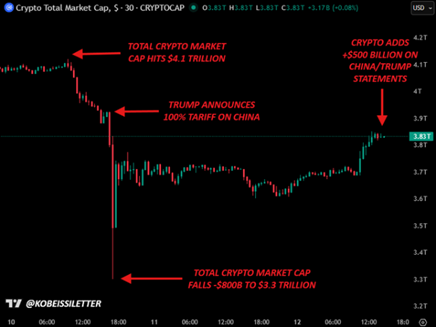
To defend himself further, Jin published a short market analysis explaining why shorting made sense from a macroeconomic perspective, rising tariffs, weakening sentiment, correlation with US tech stocks, and an overleverage in crypto markets. According to him, it was a risk-management trade, not a speculative position based on leaked information.
But in the court of public opinion, denial only fuels speculation. Eye continued to dig, claiming, in reference to the large amount of Bitcoin held in the whale’s other wallets, that “these are certainly BTC from multiple entities, but whoever moves them is the same person.” In other words, Jin might not own the funds but could still be the one controlling their movements, as an operator acting on behalf of powerful clients.
Other blockchain watchers, like Emmett Gallic, also weighed in. “For the record, I do not think the whale is Garrett,” he posted. “The connection is only a $40k transfer, which this whale usually moves with larger size. Still looking for further evidence on who it is.”
Even ZachXBT, one of the most respected blockchain investigators, cast doubt on the idea that Jin himself was the whale, suggesting it was “more likely a friend of Jin.”
Despite that, the timeline was suspicious enough to keep the story alive, and to open a new line of questioning.



.png)