.png)
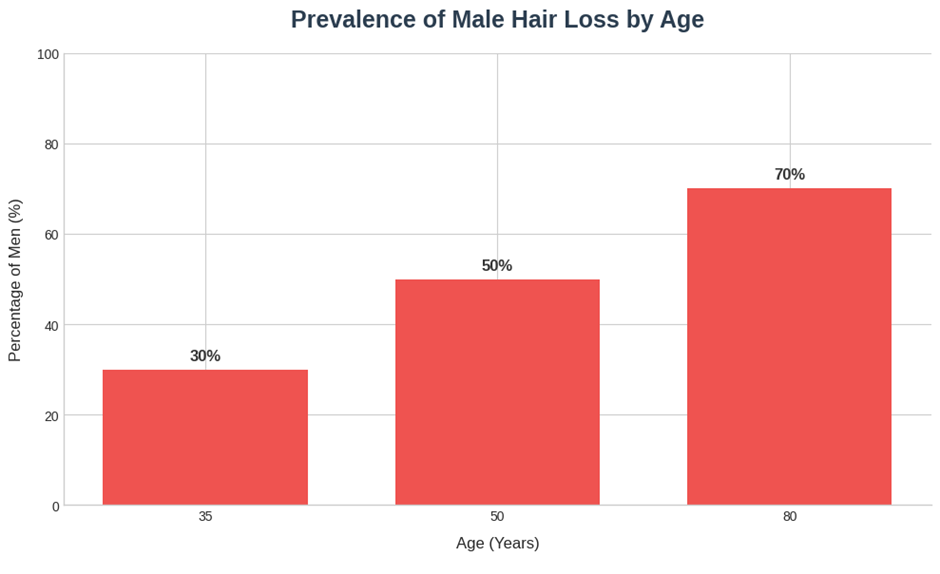
According to Medihair, hair loss will affect around 85% of men and 33% of women at some point in their lives. While shedding is a normal part of the hair growth cycle, it is clinically diagnosed as hair loss once daily fallout consistently exceeds 100 hairs. For decades, thinning hair was framed as a natural and harmless sign of aging. However, medical research has started shedding light on the underlying causes. Genetics play a role, especially in androgen-related hair loss. Hormonal sensitivity, rather than hormone levels themselves, drives the process. Aging progressively weakens hair follicles over time, and stress, illness, and certain medical treatments can further accelerate the loss. Even in the absence of physical pain, hair loss is increasingly recognised as a medical condition, and not a simple aesthetic concern.
 Source: Scandinavian Biolabs
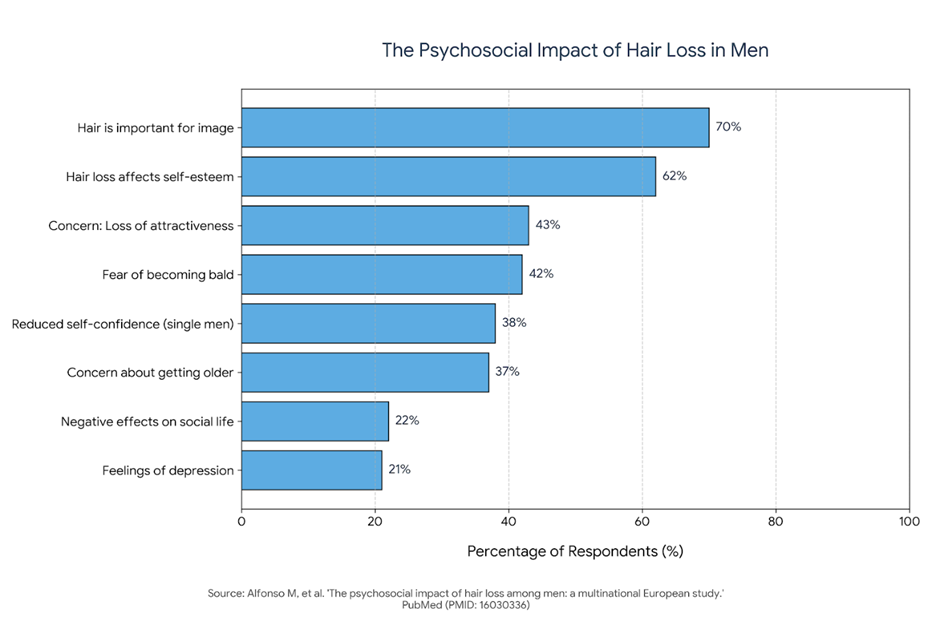
The impact of hair loss isn’t limited to physical appearance. Hair is strongly linked to identity, youth, and social perception. Studies show that hair loss is associated with anxiety, depression, social withdrawal, and a sense of lost femininity or masculinity, especially among younger people. In a European study of 729 men across several countries, 62% said hair loss lowered their self-esteem and 43% linked it to losing an important part of their attractiveness. For women, studies report even higher rates of distress, due to a heightened societal stigma that makes the loss feel less "acceptable" than it is for men.
 Source: PubMed
This carries over into professional life, where hair loss may influence perceptions of age, energy, or authority. This broader shift is visible at the policy level. In 2024–2025, South Korean President Lee Jae-myung asked officials to examine whether national health insurance should cover a wider range of hair loss treatments, including hereditary baldness, calling it “a matter of life and death” for many young people. The medical community raised concerns about cost and priority versus severe diseases, but the debate itself showed how socially significant alopecia, or hair loss, has become.
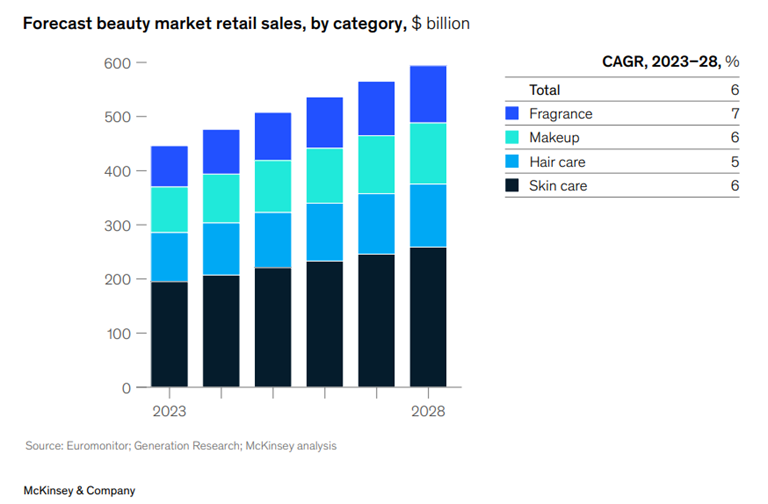
The hair care market is large and growing, driven by steady demand for both hair health and aesthetics. According to McKinsey, the hair care industry is expected to reach nearly USD $100bn by 2028, with hair care growing at a 5% annual rate between 2023 and 2028.
Hair loss treatments are largely unaffected by economic cycles. People continue to lose hair regardless of the economy, and they keep spending on solutions that work. Many invest in premium shampoos, specialised products, salon visits, and treatments, often totalling hundreds of dollars a year. Hair-loss treatment represents a large and diversified market with several core segments.
Medical treatments form a core part of the industry. Hair loss therapies such as topical minoxidil, oral finasteride, and injectable treatments like platelet-rich plasma (PRP) are common. These options address androgenetic alopecia the most frequent form of hair loss in both men and women.
In addition to drugs, laser therapy is an increasingly popular non-surgical option. Low-level laser devices stimulate hair follicles, improve circulation, and promote thicker, healthier hair.
Surgical solutions like hair transplants are another rapidly expanding segment. Procedures such as FUE—follicular unit extraction—have become widely accepted across age groups, and global clinics perform hundreds of thousands of transplants each year.
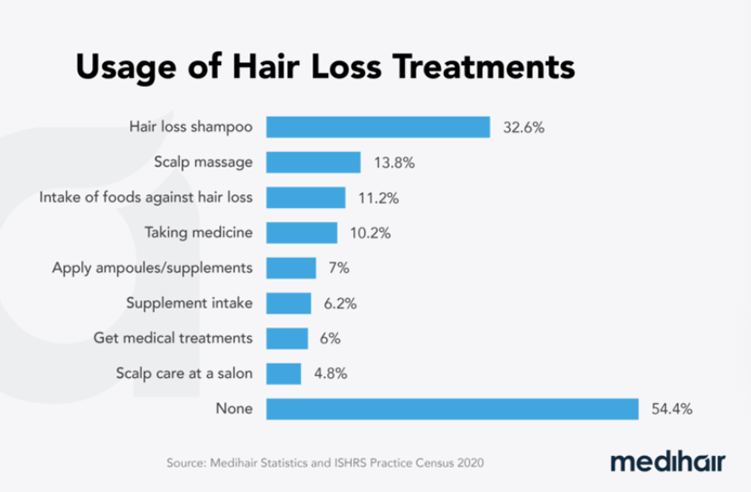
Online trends have become a major channel for hair loss treatments, especially among younger consumers who value convenience and personalised solutions. At the same time, there is growing interest in preventive care, wellness supplements, and scalp health routines, reflecting broader shifts in beauty, self-care, and lifestyle habits.
Major consumer brands are important players in the hair loss market. Consumer discretionary like Procter & Gamble, L’Oréal, and Unilever leverage their wide distribution networks and strong brand recognition to offer a range of products, including minoxidil-based treatments, shampoos, and conditioners designed to slow hair loss or promote regrowth. These products often compete with solutions from pharmaceutical companies and specialised hair care startups.
Notably, pharmaceutical companies are active in hair loss treatment, especially in prescription and medicinal markets. Large firms like Merck, Bayer, and Pfizer invest in research on next-generation therapies, aiming to go beyond over-the-counter products and standard drugs. Their work focuses on improving efficacy, reducing side effects, and exploring new mechanisms to treat androgenetic alopecia.
The hair loss healthcare market is being transformed by biotech and medtech innovations that extend traditional solutions. Biotech advances are creating new treatment options in addition to conventional drugs and devices. New biologics and molecular therapies target the root biological causes of hair loss, rather than just addressing the symptoms.
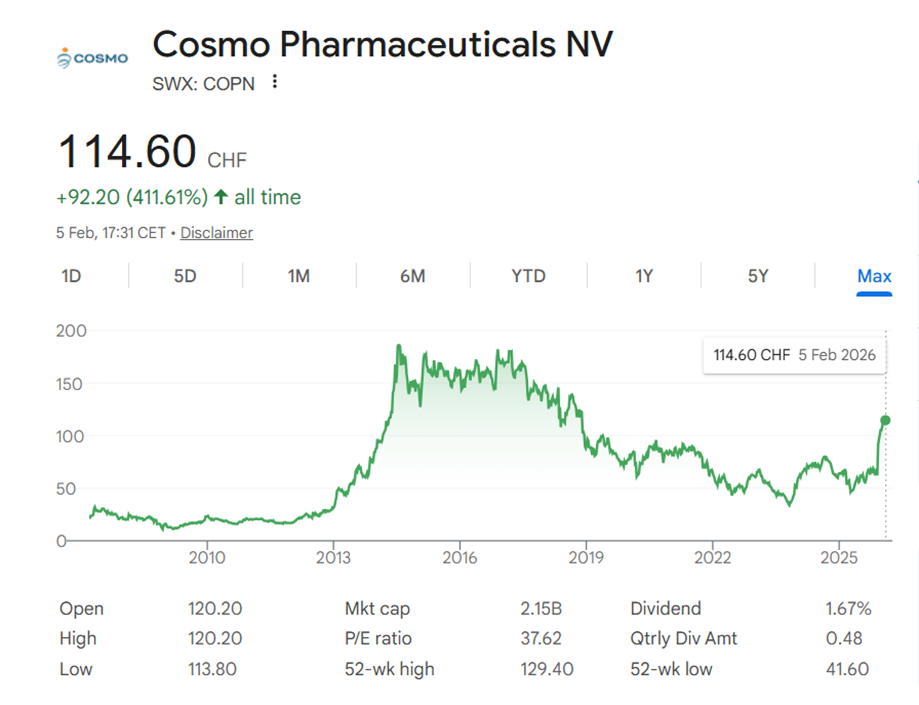
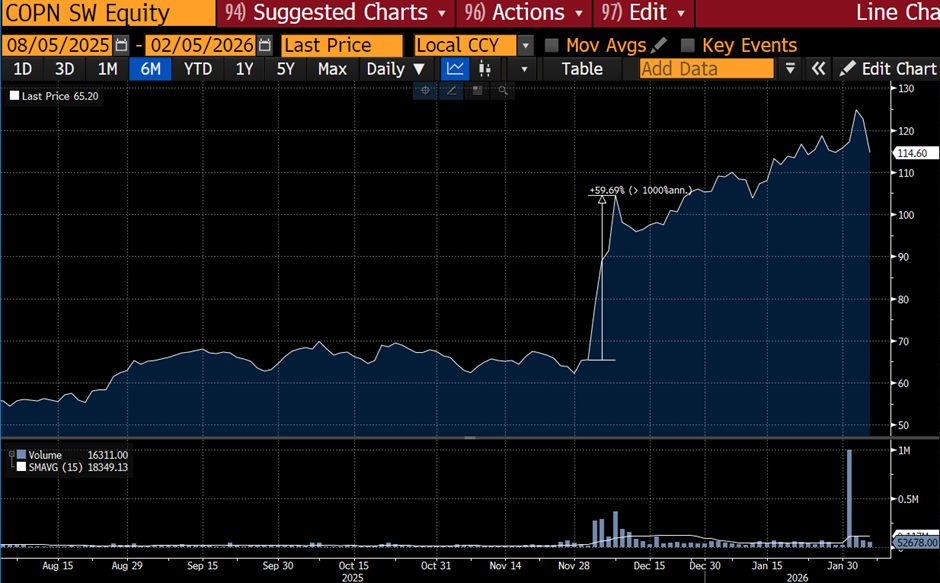
Specialty pharmaceutical firms are driving innovation that could reshape the hair loss market. Cosmo Pharmaceuticals N.V. is developing clascoterone 5% topical solution, Breezula, which blocks DHT-dihydrotestosterone, a hormone that shrinks hair follicles-with minimal systemic absorption. Phase III trials showed up to 539% improvement in hair count versus placebo. These results, announced in December, were well received, boosting Cosmo’s share price by 82% over the year and 10% year-to-date. Following the announcement, the Zurich-listed pharmaceutical group placed a 5.3% equity stake with Capital Group, strengthening its shareholder base and financial flexibility without diluting its shares.
 Source: Bloomberg
Investor interest is growing in this segment. Institutional capital, particularly from healthcare and life-sciences-focused funds, is increasingly flowing into companies developing innovative hair loss therapies. The success of clinical trials has reinforced confidence in this space.
Funding rounds are also moving markets. Pelage Pharmaceuticals, based in Los Angeles, raised $120mn in an October Series B co-led by Arch Venture Partners and Google Ventures. The news boosted market confidence in regenerative hair loss treatments, as Pelage prepares for Phase III trials.
On February 4, 2026, Veradermics, a late-stage biopharmaceutical company developing VDPHL01, a non-hormonal oral minoxidil, raised around $256mn in an IPO. The company jumped 122% in trading debut.
Other startups are drawing attention as well. OneSkin in San Francisco raised over $46mn for a lineup of scalp serums and self-care products. Meanwhile, Luminate Medical’s $21 million Series A for an at-home hair loss device reinforced investor interest in supportive therapies for chemotherapy patients.
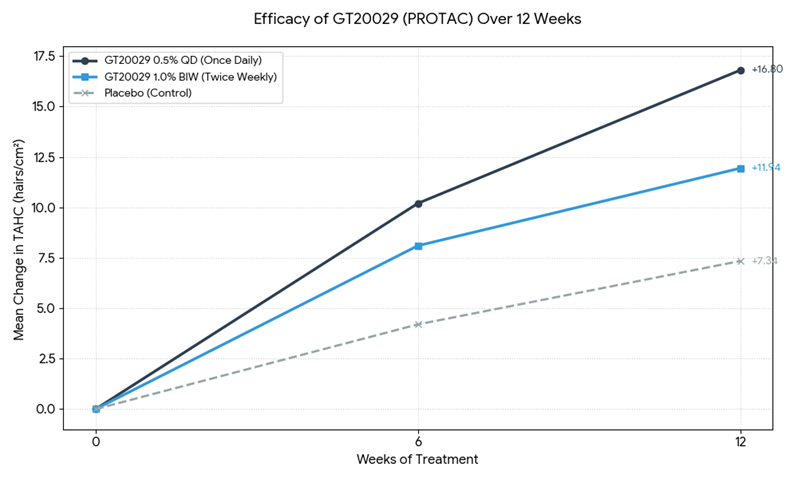
Chinese biotech Kintor Pharmaceutical is attracting attention with its GT 20029 (AR PROTAC) programme. The topical treatment targets androgen receptors in hair follicles to prevent miniaturisation, offering a novel approach to androgenetic alopecia. Phase II trials in China met their primary endpoint with strong results and good safety. The company is now preparing for Phase III studies in both China and the US.
 Source: Kintor Pharmaceutical Limited, PR Newswire
Medtech devices are also changing how hair loss is diagnosed and treated. AI-powered platforms, such as FotoFinder Trichoscale AI, map follicle density, scalp condition, and hair thinning with more than 94% accuracy. Already in clinical use, these tools help distinguish between different types of hair loss, such as androgenetic versus inflammatory, resulting in more informed treatment plans and improved patient outcomes.
Telehealth integration further enhances testing. Patients can submit scalp images from home, which AI systems analyse to generate clinical reports for doctors. This expands clinic reach, supports treatment adherence, and allows interventions based on objective data rather than guesswork.
By improving clinical testing, medtech not only increases accuracy but also streamlines workflow. Nurses and technicians spend less time on manual measurements, while doctors can focus on interpreting data and customising treatment plans. This leads to faster consultations, better patient experiences, and higher confidence in results.
For pharmaceutical companies, AI-enabled platforms are used not only for diagnostics and drug delivery but also to improve R&D and commercial processes. Companies such as Cosmo Pharmaceuticals apply machine learning to speed up the discovery of high-potency molecules, helping reduce development timelines across the biopharma space.