


.png)
1. PCE inflation remains too high
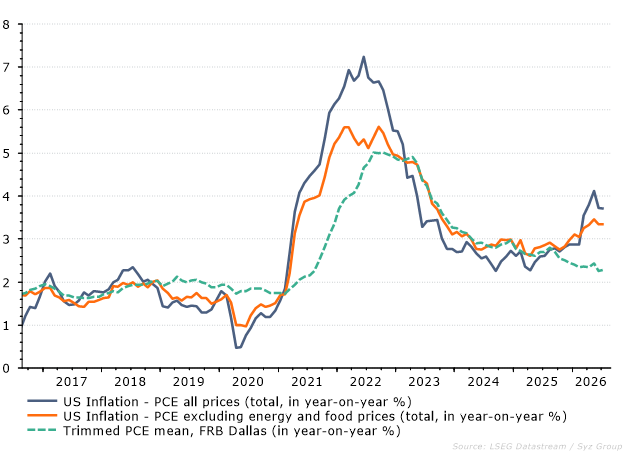
The inflation figures in July’s Personal Consumption Expenditure (PCE) report were mostly as expected by markets. It confirmed that US inflation remains well above the Federal Reserve’s target, despite some improvement in headline momentum. The headline PCE price index rose 0.16% month-on-month, following a small decline in June, while the annual rate remained at 3.7%. Core PCE, which excludes food and energy, increased by 0.25%, slightly more than expected, leaving the year-on-year rate unchanged at 3.34%.
The composition can be seen as somewhat more positive. Portfolio-management fees, which respond to earlier equity market gains with a lag, accounted for almost half of the monthly core increase. This component may be revised lower when the US Bureau of Economic Analysis (BEA) introduces its updated methodology in the next release. However, the trimmed-mean measures, edged up to around 2.28% year-on-year, suggesting that inflation is not yet convincingly returning towards the 2% target.
The main inflation measures remain significantly above the Federal Reserve’s target of 2% and underlying price trends also do not point to swift price declines
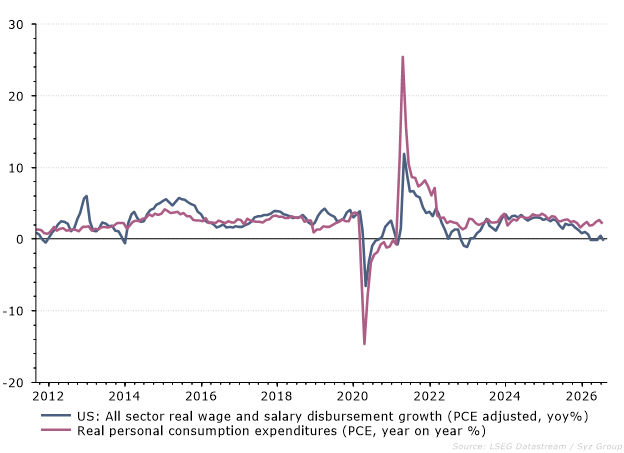
Other data from the BEA’s PCE report continue suggesting solid spending and consumption in the US. Personal spending rose 0.2% and income increased 0.4%, both above expectations. However, wages and salaries did not grow in real terms in July. Therefore, the release offered no hard evidence that demand or underlying price pressures are cooling soon enough to sufficiently remove the risk of further monetary tightening.
Real wage growth stands currently still, but consumption remains on very solid levels – we expect low real wage growth to pull down consumption but it will likely take some time
2. Warsh puts inflation firmly in the spotlight
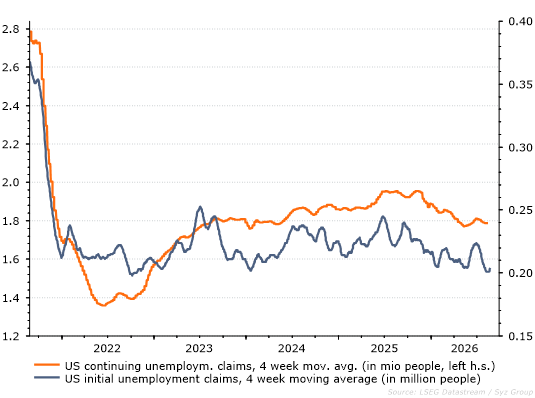
At Jackson Hole, Fed Chair Kevin Warsh delivered a hawkish assessment, offering his most detailed message yet on the key factors that will guide future interest-rate decisions. He described economic activity as resilient and possibly strengthening. Consumer spending remained healthy, private domestic final purchases grew at nearly 3% this year, business investment rose rapidly, and corporate profits increased strongly. He also judged the labour market to be stable and consistent with full employment, with unemployment at 4.1% and jobless claims historically low.
Fed Chair Warsh stressed the positive trend of the unemployment claims as a good short-term indicator for the solidity of the current labour market
Warsh likewise found little evidence that financial conditions were restrictive. Credit spreads remained narrow, issuance was strong and bank lending standards were relatively easy, although housing and agriculture continued to show strains. Having largely dismissed concerns over growth, employment and financial conditions, he placed the emphasis firmly on inflation.
Warsh noted that headline PCE inflation stood at 3.7%, with six-month inflation at 4.1%, and argued that recent better readings had not meaningfully improved the underlying trend. More than half of PCE components were still rising faster than 3%. His conclusion was uncompromising: the Fed must be confident that inflation is moving clearly and sufficiently quickly toward 2%. Otherwise, policymakers still have work to do.
3. September rate hike now more likely than no change but still a close call
Warsh’s speech changed our assessment of the near-term monetary policy outlook. We had previously considered a rate increase before the US midterm elections rather unlikely. However, his remarks and personal assessment of the current economic data in the US removed the case for patience based on weaker growth, labour market fragility, already restrictive monetary policy and tight financial conditions. Instead, he presented inflation as the Fed’s predominant concern and stressed the central bank’s responsibility for delivering price stability by “checking all the other boxes”.
This appeared designed to prepare markets for a possible September hike while preserving flexibility by emphasising policy discipline rather than committing to a specific decision. Market pricing moved accordingly: the implied probability of a September rate increase rose from around 35% to above 55%.
We now judge a September hike to be slightly more likely than unchanged rates, although the decision remains finely balanced and incoming data will be decisive. A clearly softer CPI reading or a weaker-than-expected labour market report ahead of the Fed’s September meeting could still argue for patience. Without convincing evidence that underlying inflation is tangibly cooling or the labour market is weakening, however, Warsh and a majority of the FOMC, the Fed’s rate-setting body, appear likely to favour a rate increase. We will monitor the upcoming US data closely and adjust our view if necessary.