

Disclaimer
This marketing document has been issued by Bank Syz Ltd. It is not intended for distribution to, publication, provision or use by individuals or legal entities that are citizens of or reside in a state, country or jurisdiction in which applicable laws and regulations prohibit its distribution, publication, provision or use. It is not directed to any person or entity to whom it would be illegal to send such marketing material. This document is intended for informational purposes only and should not be construed as an offer, solicitation or recommendation for the subscription, purchase, sale or safekeeping of any security or financial instrument or for the engagement in any other transaction, as the provision of any investment advice or service, or as a contractual document. Nothing in this document constitutes an investment, legal, tax or accounting advice or a representation that any investment or strategy is suitable or appropriate for an investor's particular and individual circumstances, nor does it constitute a personalized investment advice for any investor. This document reflects the information, opinions and comments of Bank Syz Ltd. as of the date of its publication, which are subject to change without notice. The opinions and comments of the authors in this document reflect their current views and may not coincide with those of other Syz Group entities or third parties, which may have reached different conclusions. The market valuations, terms and calculations contained herein are estimates only. The information provided comes from sources deemed reliable, but Bank Syz Ltd. does not guarantee its completeness, accuracy, reliability and actuality. Past performance gives no indication of nor guarantees current or future results. Bank Syz Ltd. accepts no liability for any loss arising from the use of this document.
Related Articles
Lufthansa is taking steps to address difficulties in sourcing kerosene at Frankfurt Airport, one of Europe’s main air traffic hubs. The German airline has put in place precautionary measures involving the loading of additional fuel on certain flights, with the aim of minimising the need to refuel upon arrival at the German airport. The decision, reported by the German newspaper *Bild*, concerns an operational strategy known as ‘tankering’: aircraft carry more fuel than is necessary for the flight they are about to undertake, so as to have a reserve available for the next flight and reduce their reliance on fuel supplies at the destination airport. Lufthansa has stated that, thanks to the measures taken, ‘no flight cancellations are currently planned’. The measures will remain in force until further notice and will be updated as the situation develops.
Despite renewed Iranian attacks, regional crude exports excluding Iran are holding at roughly 75% of pre-war levels, down from a late-September peak near 95%. Yet here’s the surprise: Average flows over October 1–10 remained above September’s average—and well above August’s. The disruption is making shipments more erratic: busy tanker crossings followed by quiet days. Kuwait is struggling most. Saudi Arabia, the UAE and Iraq are proving more resilient, with bypass routes providing crucial support. But the risks remain clear: continued attacks could disrupt both Hormuz and Red Sea traffic. The market signal to watch? Physical premiums for Middle Eastern crude have fallen to a near 2½-month low. For now, the physical market is signalling less scarcity—even as the security headlines worsen. Source: Javier Blas, Bloomberg
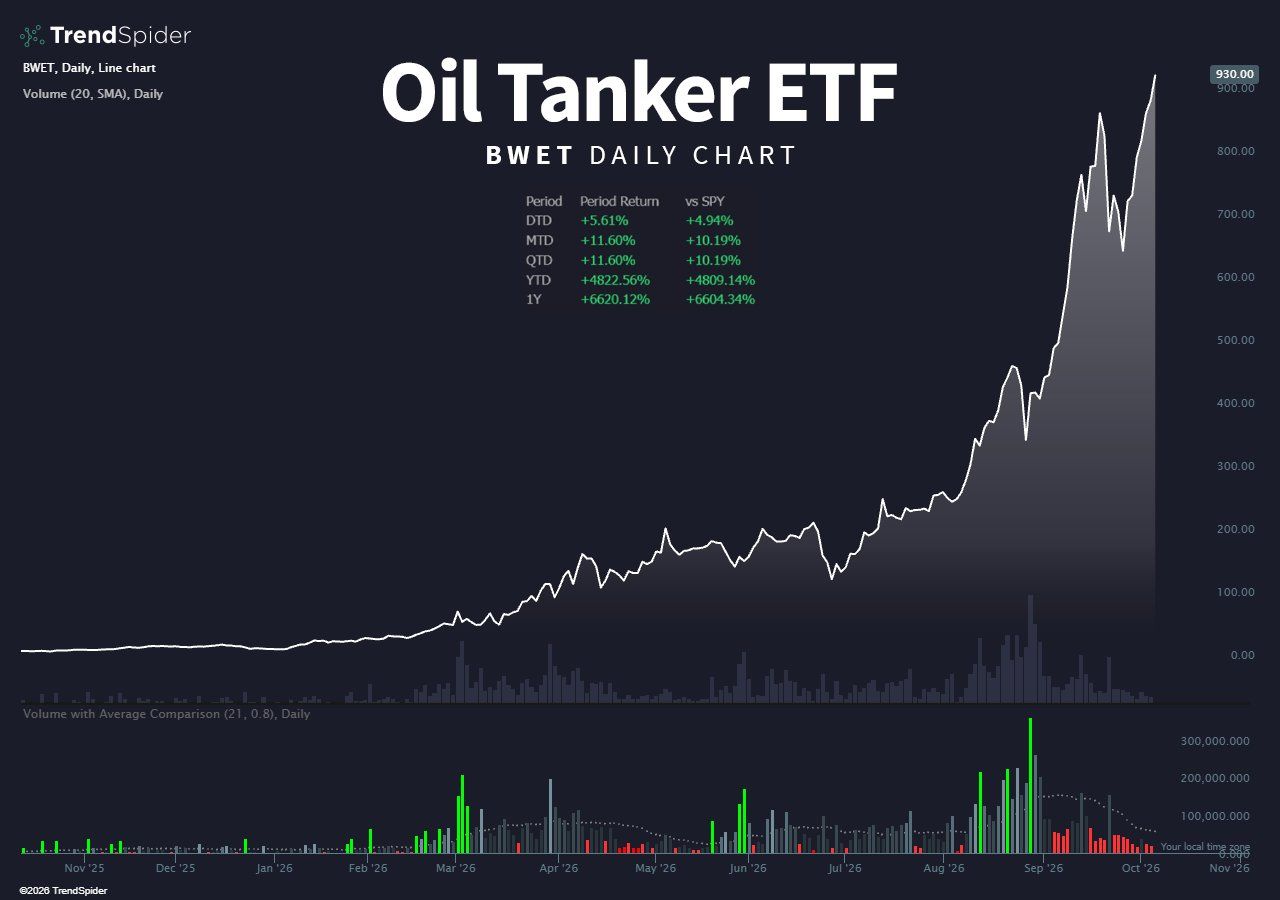
Daily tanker rates have surged to $1.068 million for voyages to India, $906,000 to China and $904,000 to Japan. Meanwhile, at least 10 empty very large crude carriers, alongside several Suezmax tankers, have stopped or reversed course while approaching Fujairah in the UAE amid escalating Iranian attacks. This threatens a key workaround that has helped Persian Gulf oil exports recover toward prewar levels, as shuttle tankers carry crude through the Strait of Hormuz to larger vessels waiting outside the waterway. The system is becoming harder to sustain as tanker availability tightens, ship-to-ship transfers keep vessels occupied for longer, and rising security risks make routes through the region more costly. If empty supertankers continue retreating, fewer receiving vessels could be available, forcing shuttle tankers to remain occupied longer and slowing crude shipments. The disruption comes as tanker availability is already tight, pushing shipping costs to record levels. The risk for the global economy is no longer just higher oil prices, but whether enough tankers will be willing and available to move the oil. Source: Global Markets Investor