
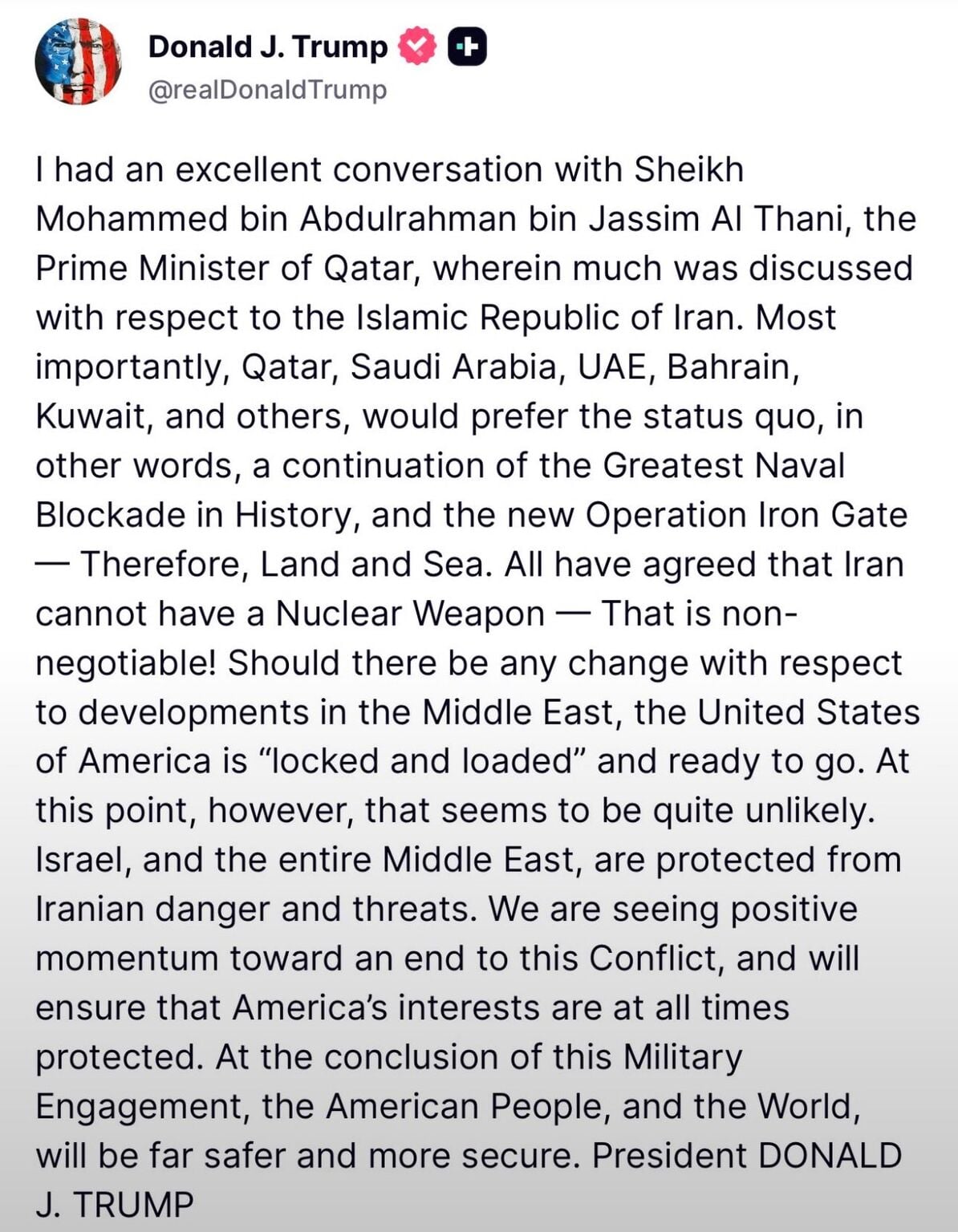
Yesterday evening, the US and Iran were said to be considering an $8 billion deal to reopen the Strait of Hormuz.
Under the proposal: 1. The US releases $8 billion in frozen Iranian funds. 2. The US lifts its naval blockade on Iran. 3. Iran reopens the Strait of Hormuz. 4. Iran stops attacks on Gulf shipping. But after meeting 🇶🇦 Qatar's prime minister, Trump poured some cold water writing that Qatar, 🇸🇦 Saudi Arabia, 🇦🇪 the UAE, 🇧🇭 Bahrain and 🇰🇼 Kuwait "would prefer the status quo". In his words, that's "a continuation of the Greatest Naval Blockade in History, and the new Operation Iron Gate. Therefore, Land and Sea." Trump said the Gulf wants the blockade kept, by sea and by land. He also said: 🔹 A nuclear weapon for Iran is "non-negotiable" 🔹 The US is "locked and loaded", though new action is "quite unlikely" 🔹 There's "positive momentum" toward ending the conflict Peace talk with the blockade still in place isn't a reopened strait. The Iran war situation remains fluid. Source: Jack Prandelli on x
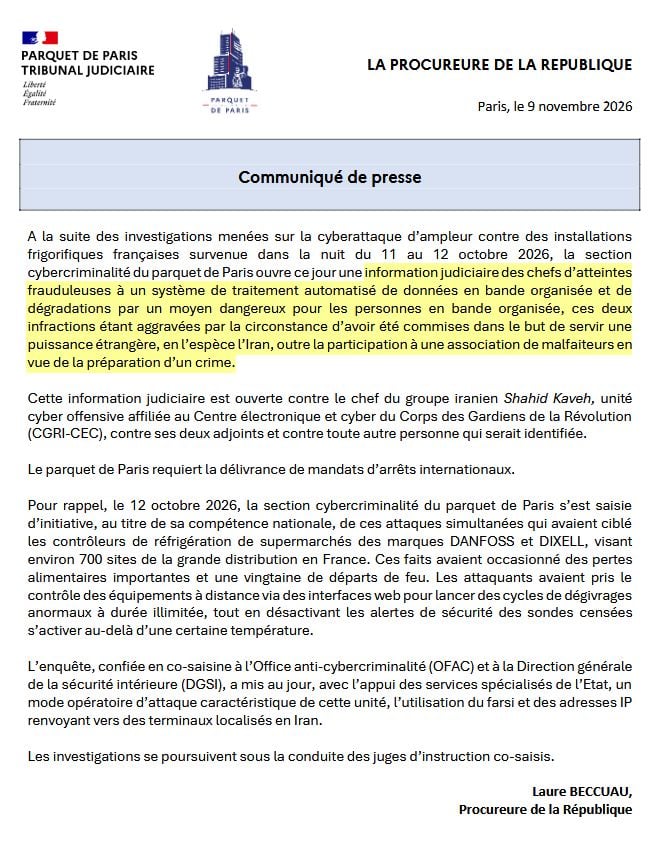
Iran is now officially accused of being behind the massive cyberattack on supermarket refrigerators a month ago.
The Paris prosecutor’s office has therefore opened an investigation into offenses “aggravated by the fact that they were committed to serve a foreign power.” The investigation specifically targets “the head of the Iranian group Shahid Kaveh, an offensive cyber unit affiliated with the Cyber and Electronic Command of the Islamic Revolutionary Guard Corps (IRGC-CEC), his two deputies and any other person who may be identified.” Source: Nicolas Berrod
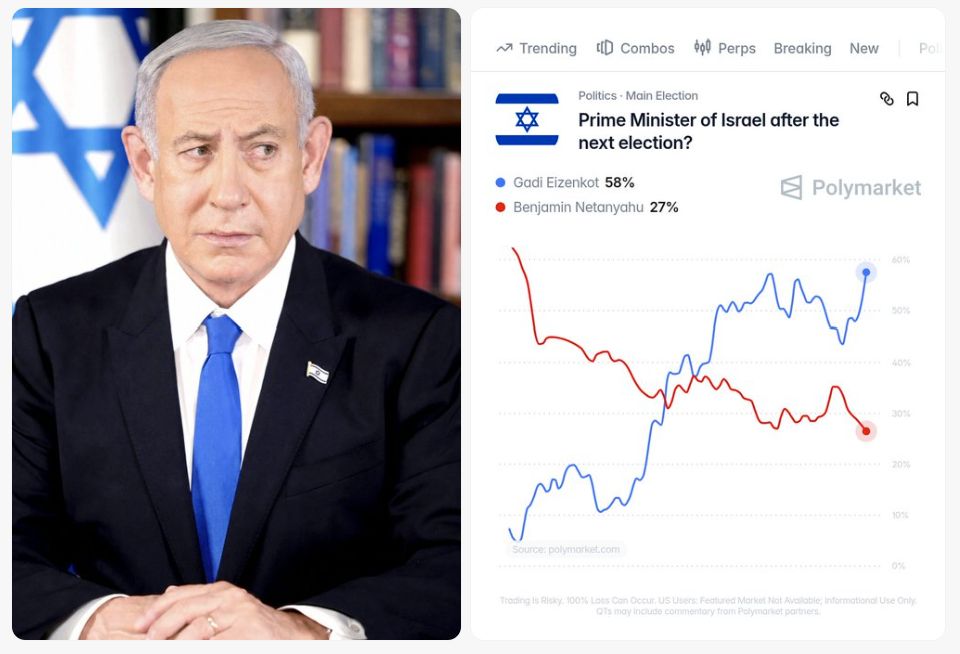
Netanyahu crashes to all-time low in odds to remain Prime Minister
Netanyahu crashes to all-time low in odds to remain Prime Minister of Israel after tomorrow's election, as centrist former IDF chief Eisenkot surges. Source: Polymarket
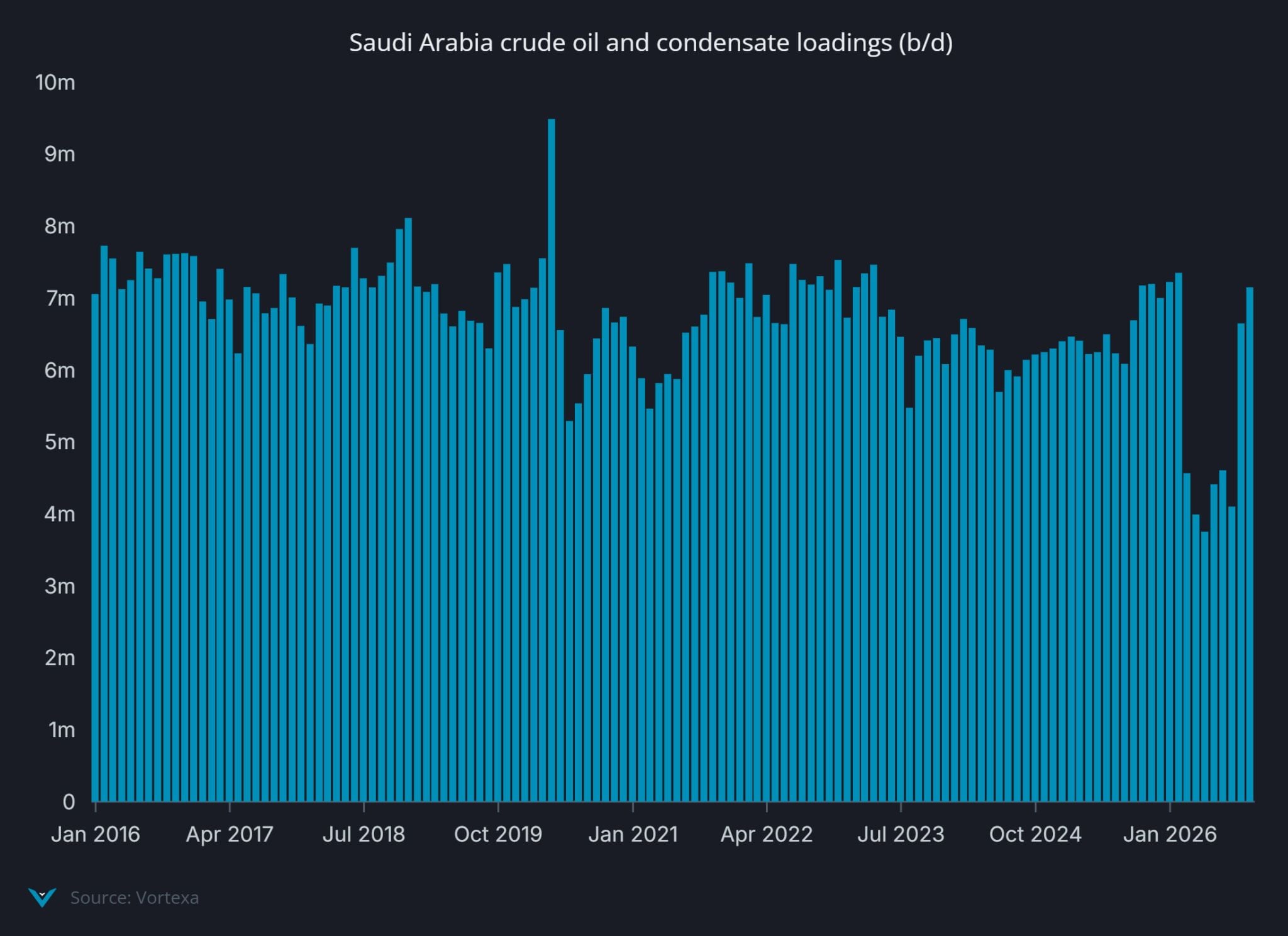
Saudi oil exports are back to pre-war levels.
During the first 22 days of October, Saudi Arabia exported more than 7 million barrels of crude per day, according to Vortexa data. Add refined products, and total exports reached roughly 8.5 million barrels per day—still slightly below the pre-war level of more than 9 million. The figures suggest Saudi production has climbed towards 9–10 million barrels per day, with the Red Sea route playing a crucial role. Why the surge? One possible explanation: Riyadh is pumping while it can, ahead of a potential renewed escalation after the US midterms or further attacks on oil infrastructure. For the oil market, the message is clear: supply is recovering, but geopolitical risks remain. Source: Javier Blas
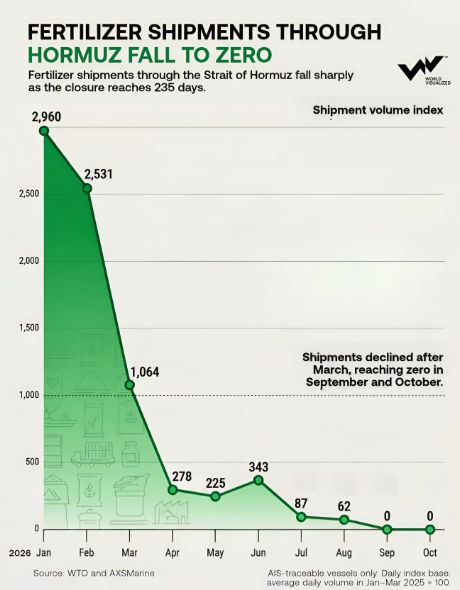
Hormuz’s hidden shock: fertilizer
No fertilizer cargoes crossed the strait in September or October, according to World Visualized. Before the war, it carried roughly 20% of globally traded nitrogen fertilizer. Yet urea prices recovered as China and America increased exports. The real bottleneck? Sulfur. The Gulf supplies around half of global sulfur trade. Prices have more than doubled, exceeding $1,000 per tonne. Sulfur is essential for phosphate fertilizer, whose prices have risen 25–30%. Mosaic has idled two plants. India’s subsidy bill could exceed budget dramatically. Oil found alternative routes. Sulfur hasn’t. The consequences could reach food prices worldwide next. Source: Jack Prandelli on X, World Visualized
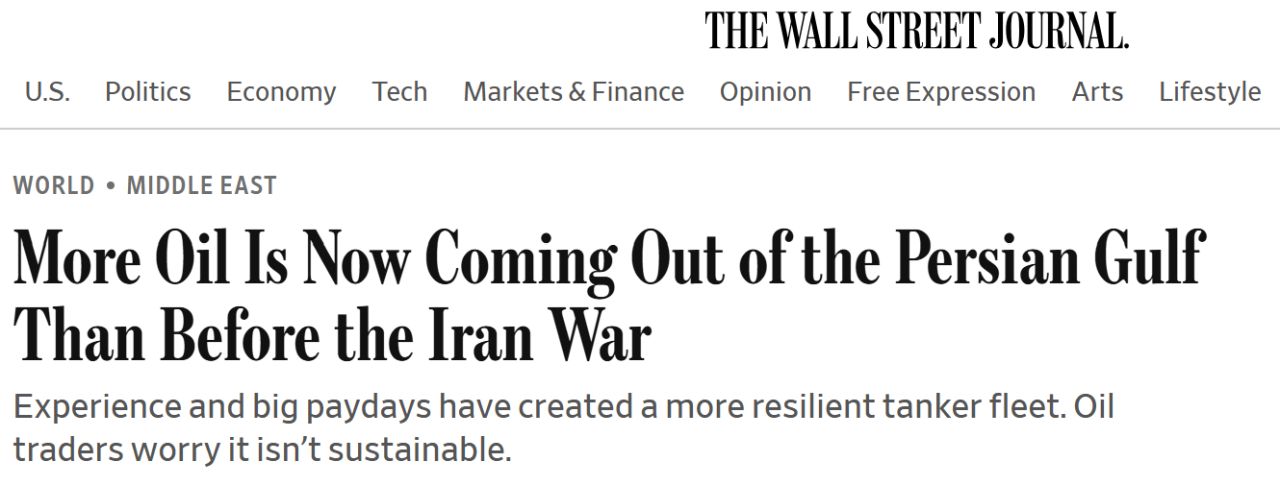
According to the WSJ, more oil is now coming out of the Gulf than before the Iran Wa
WSJ: "Persian Gulf oil exports have surpassed prewar levels, as an improvised shipping system under U.S. protection is helping tankers move oil through one of Iran’s fiercest waves of attacks in the Strait of Hormuz. Middle East oil flows, including shipments through Hormuz and alternative routes across the region, averaged more than 24 million barrels a day in the week through Oct. 18, surpassing prewar levels of 23.3 million, according to ship tracker Kpler".
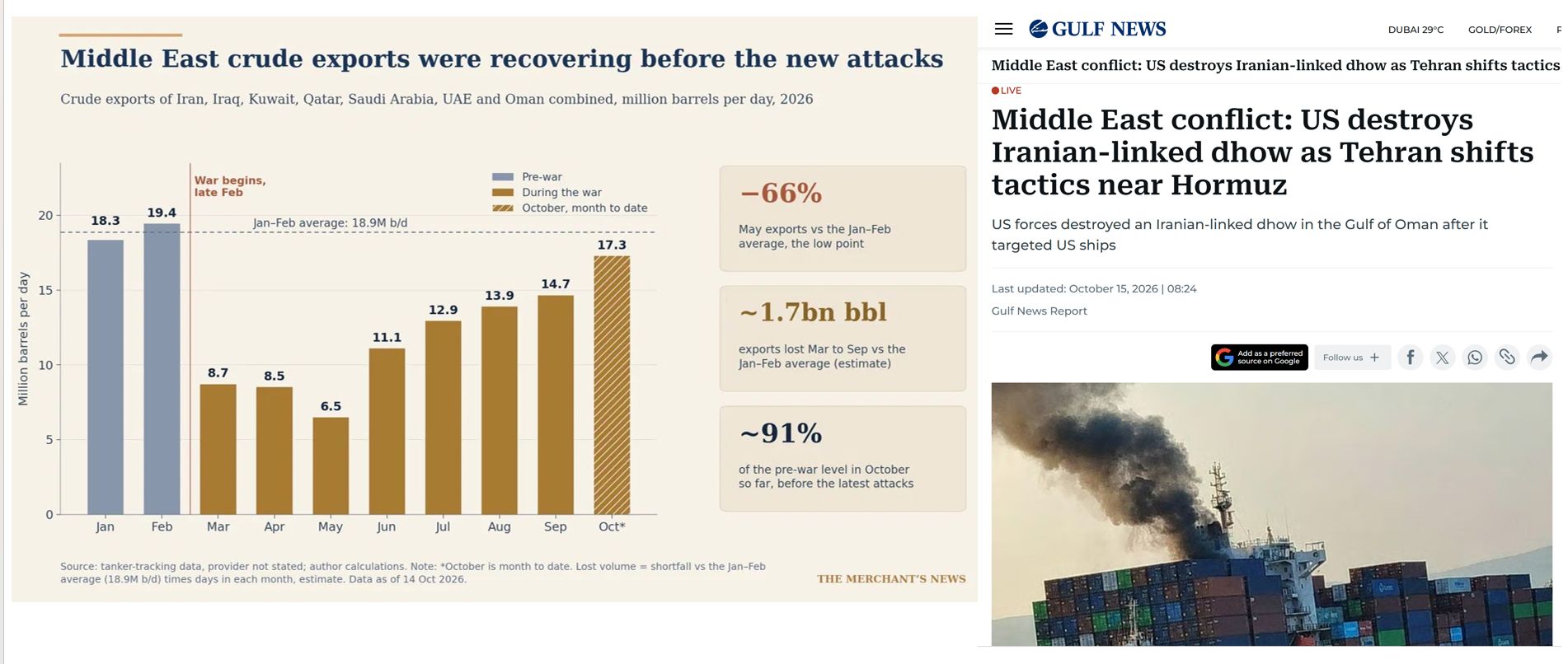
Middle East crude exports were approaching pre-war levels.
Then the attacks resumed. Combined exports from Saudi Arabia, Iraq, the UAE, Kuwait, Iran, Qatar and Oman tell the story: ▪️ Jan–Feb: 18.9 million barrels/day ▪️ May trough: 6.5 million — down 66% ▪️ September: 14.7 million ▪️ October so far: 17.3 million — 91% of pre-war levels The recovery relied on ingenuity: Saudi pipelines diverted crude to the Red Sea, while shuttle tankers carried barrels through Hormuz to supertankers waiting outside. But the cumulative damage remains enormous: 1.7 billion fewer barrels exported between March and September than at the pre-war pace. And October’s rebound is fragile. ⚠️ The figures cover only the first two weeks. Six ships were hit around Hormuz on 11 October. More than 10 empty supertankers have turned back near Fujairah. Export routes can adapt. A sustained recovery still requires security. Source: Jack Prandelli on X, Gulf News
Middle East oil flows are bending. But they haven’t broken.
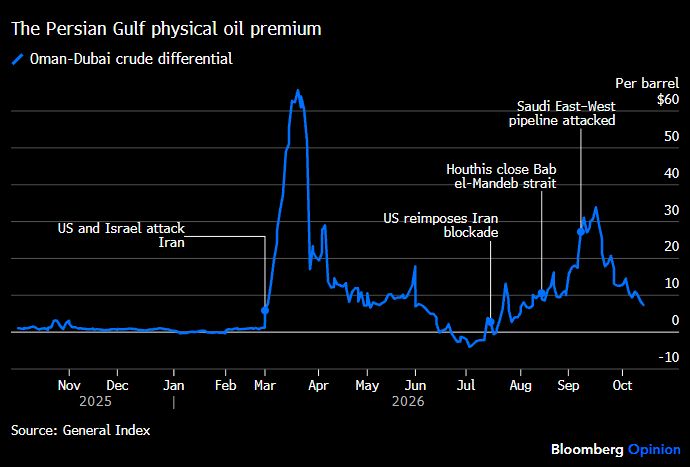
Despite renewed Iranian attacks, regional crude exports excluding Iran are holding at roughly 75% of pre-war levels, down from a late-September peak near 95%. Yet here’s the surprise: Average flows over October 1–10 remained above September’s average—and well above August’s. The disruption is making shipments more erratic: busy tanker crossings followed by quiet days. Kuwait is struggling most. Saudi Arabia, the UAE and Iraq are proving more resilient, with bypass routes providing crucial support. But the risks remain clear: continued attacks could disrupt both Hormuz and Red Sea traffic. The market signal to watch? Physical premiums for Middle Eastern crude have fallen to a near 2½-month low. For now, the physical market is signalling less scarcity—even as the security headlines worsen. Source: Javier Blas, Bloomberg