
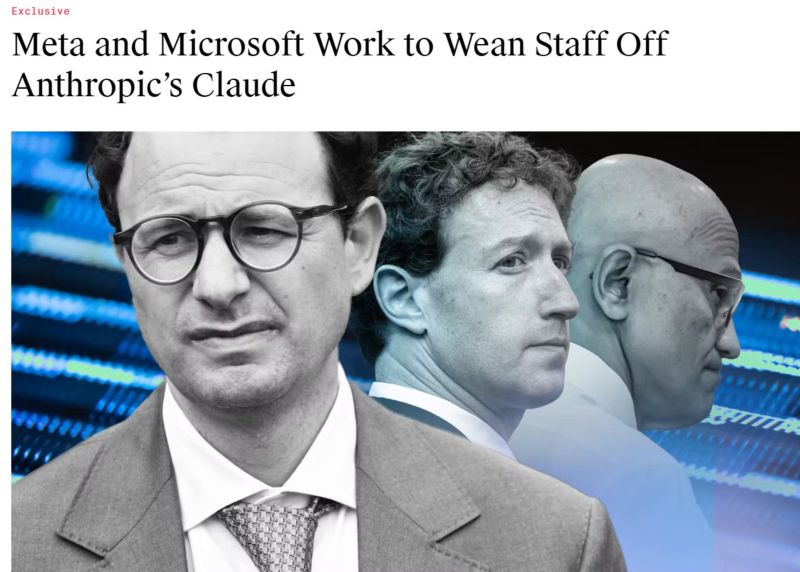
$META and $MSFT are cutting internal Claude use
$META and $MSFT are cutting internal Claude use as AI bills climb with Microsoft slashing per employee budgets from $100K to $10K a month and Meta pushing Muse Code even as Claude spend stays massive. More companies are going to start treating tokens like a real budget which keeps AI usage growing but puts a lot more pressure on OpenAI and Anthropic pricing. Source: Shay Boloor @StockSavvyShay
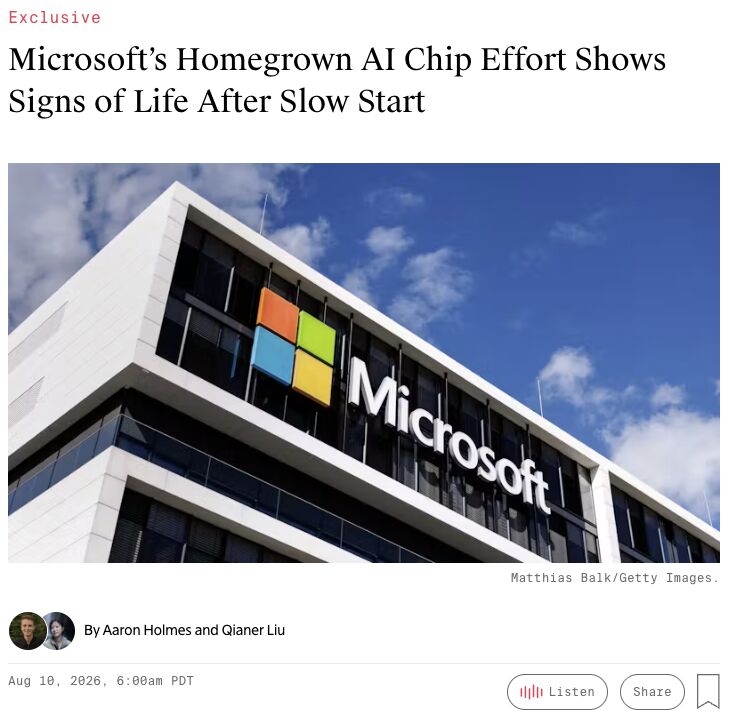
Microsoft $MSFT is planning a major ramp in its next-gen Maia 300 AI chips, with talks underway with TSMC to secure capacity for 300,000+ chips for 2027.
Microsoft plans to unveil Maia 300 as soon as September and ultimately wants capacity for 1M+ chips. The goal is to reduce reliance on Nvidia and win major Azure customers like Anthropic. Its current Maia 200 chips are already 30%-40% cheaper to operate than cutting-edge Nvidia chips for OpenAI and Microsoft models. Source: The Information, Wall St Engine
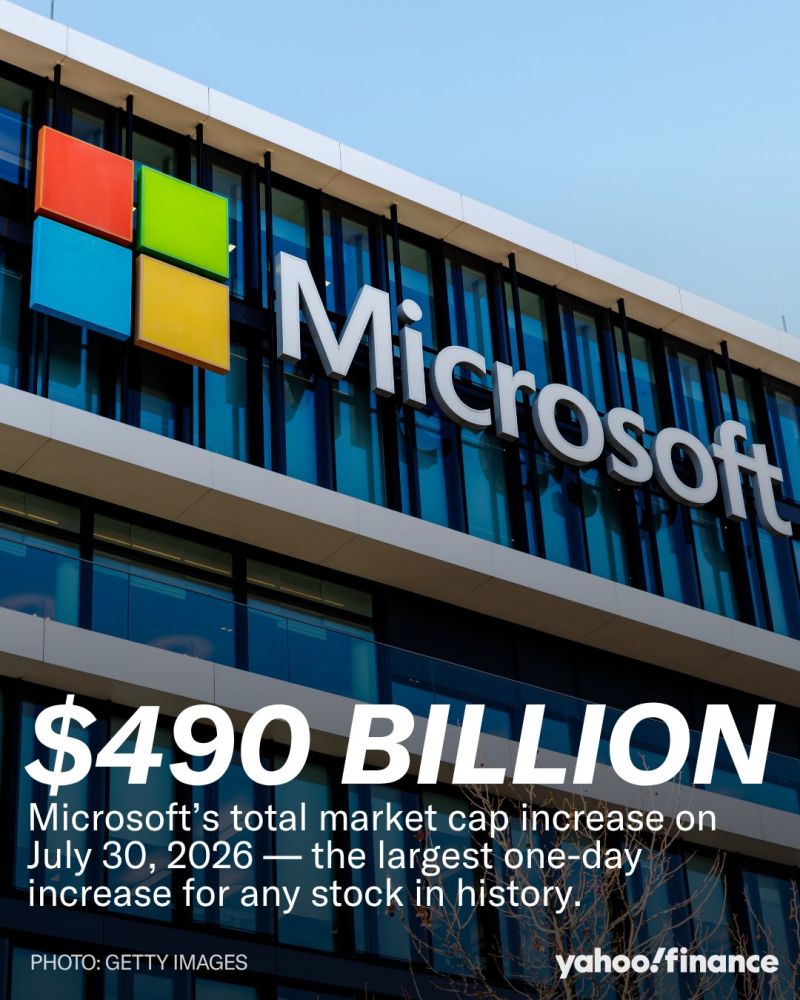
Yesterday, $MSFT just made history
The company just set a new record for the largest single-day-market-value increase in history. Source: Yahoo Finance
Earnings are out: $MSFT +8pct after-hours, $META -8pct after-hours
Microsoft beat on the top line and saw a gain from its Anthropic stake. The software company’s Azure cloud business now exceeds $100 billion. Customers other than large model builders helped to expand Microsoft’s backlog. Meta shares dropped after the company reported second-quarter earnings that missed on earnings per share. The company’s revenue forecast also came in light. Meta narrowed its guidance for capital expenditures, keeping the top end of the range. Source: Stocktwits
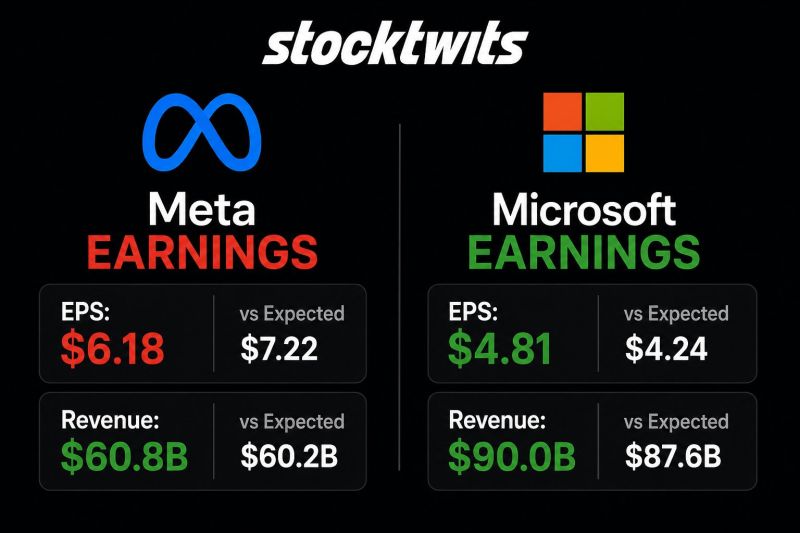
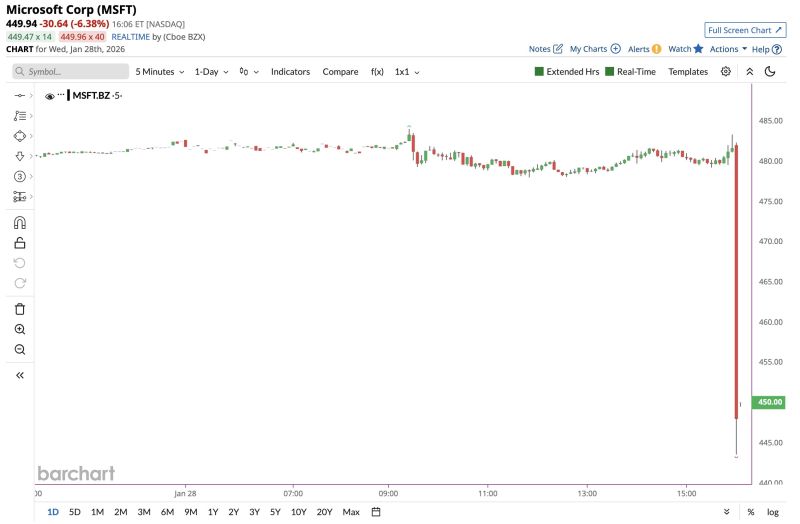
$MSFT with a strong double beat in Q4. The stock is down 6% despite the strong results due to heavy spending.
Microsoft delivered impressive headline numbers, with revenue jumping 17% to $81.3 billion and Azure cloud growth accelerating to 39%, driven by fierce AI demand. The Intelligent Cloud segment is now a massive engine, crossing $32.9 billion in sales. However, capital expenditure nearly doubled to ~$30 billion, raising fears about cash burn. Second, the massive 60% profit jump can be misleading as it includes a $7.6 billion paper gain from the OpenAI investment. Stripping that out, real profit growth was much lower, leaving investors worried that the costs of the AI boom are rising faster than the immediate cash returns. 🔹 EPS: $4.14 vs. $3.91 est. ✅ 🔹 Revenue: $81.27B vs. $80.31B est. ✅ Key takeaways: 🔸 Intelligent Cloud rev: +29% YoY 🔸 Productivity rev: +16% YoY 🔸 Computing rev: -3% YoY 🔸 MSFT Cloud rev: +26% YoY 🔸 Azure/Cloud: +39% YoY Source: KaizenInvestor @Kaizen_Investor Barchart
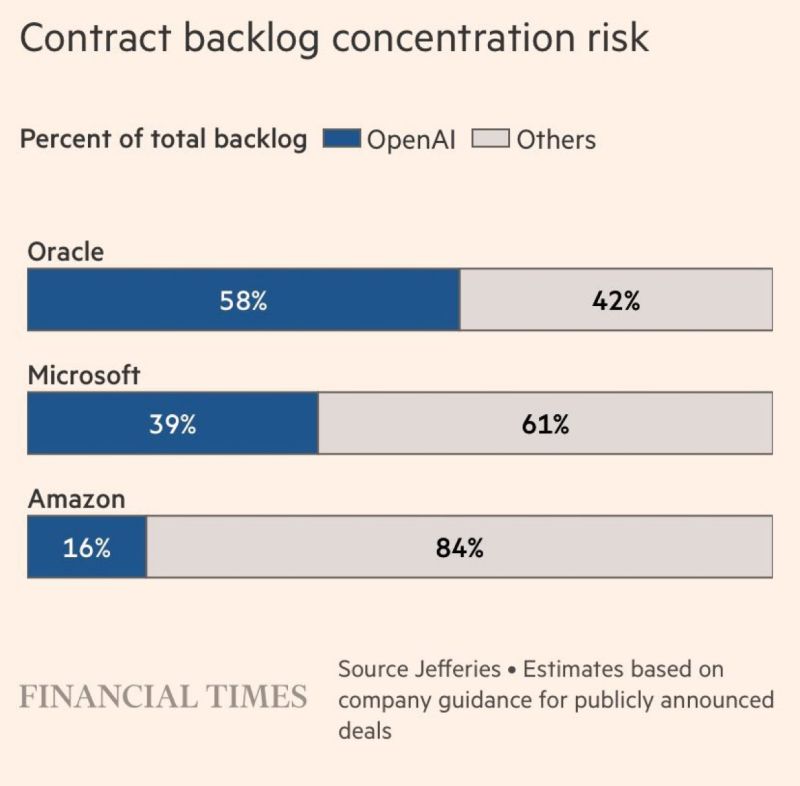
$MSFT & $ORCL are heavily tethered to OpenAI for their AI backlog.
$AMZN is building AI demand without that dependence which makes AWS growth cleaner while the other two look like a leveraged bet on OpenAI. Source: Shay Boloor @StockSavvyShay FT
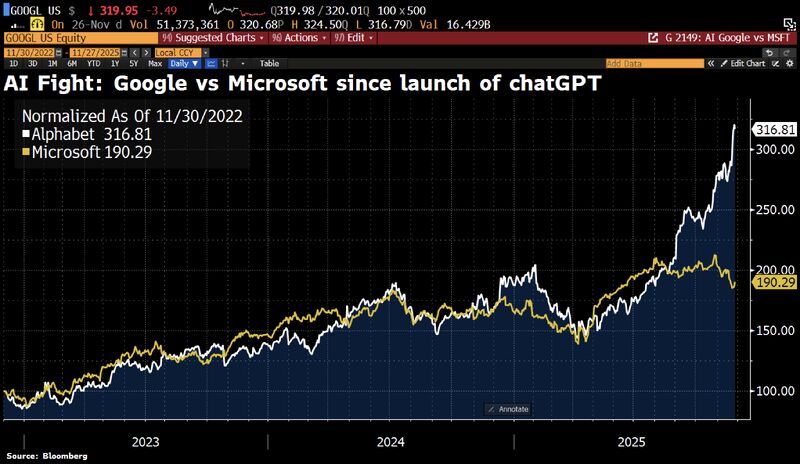
It now looks as if the race between Microsoft and Google for the best AI strategy has been decided
Source: HolgerZ, Bloomberg
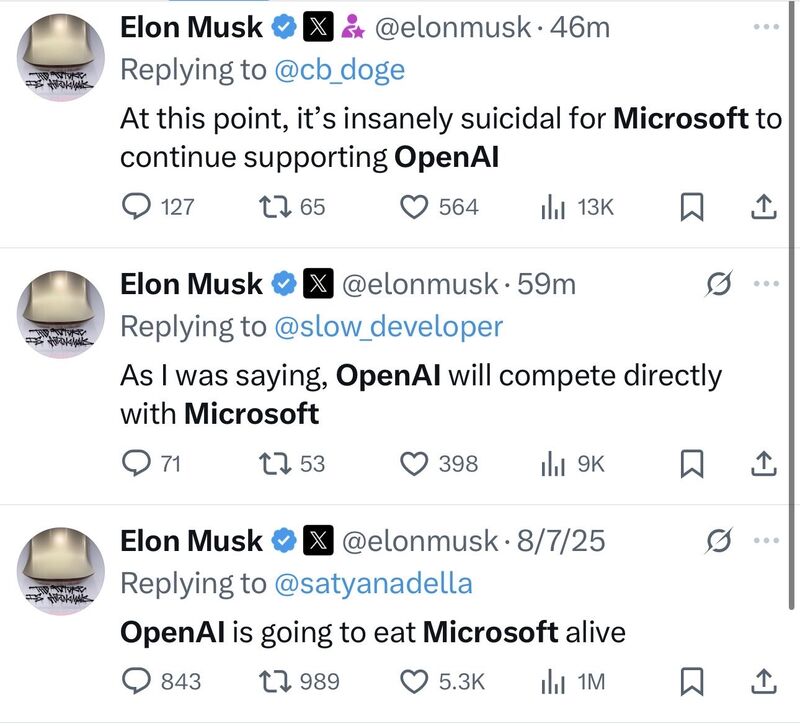
Elon predicts that OpenAI will eat Microsoft alive and believes MSFT should stop supporting it.
Source: The AI Investor @The_AI_Investor