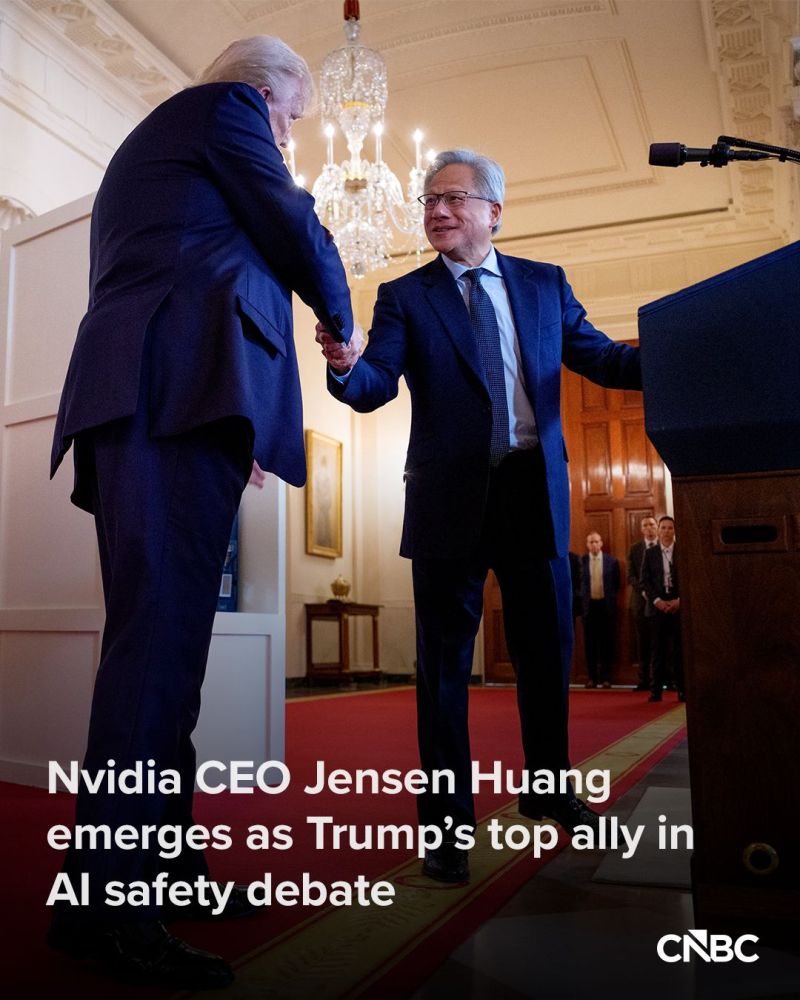

An AI credit spread chart tells you the price of risk. It doesn’t tell you the full story.
Behind several neocloud operators stand companies with trillion-dollar market capitalisations and exceptionally low financing costs. Consider the relationships → CoreWeave: NVIDIA holds approximately 10% of the equity and has committed to purchase unused capacity through 2032, worth up to $6.3 billion. → NScale, Lambda, Nebius and IREN: NVIDIA’s involvement includes equity investments and preferential commercial agreements. → IREN: Microsoft has signed a major contract, with 20% of its value prepaid. → NScale and Lambda: NVIDIA has provided backing for leases. → Hut 8 and TeraWulf: Google has provided lease-related guarantees. → Cipher: Amazon has provided lease guarantees. These arrangements matter. But equity ownership, customer prepayments, capacity commitments and lease guarantees offer different levels of protection. Strategic backing does not eliminate default risk. Equally, a widening credit spread alone does not establish that default is inevitable. Source: Boring_Business on X @BoringBiz_
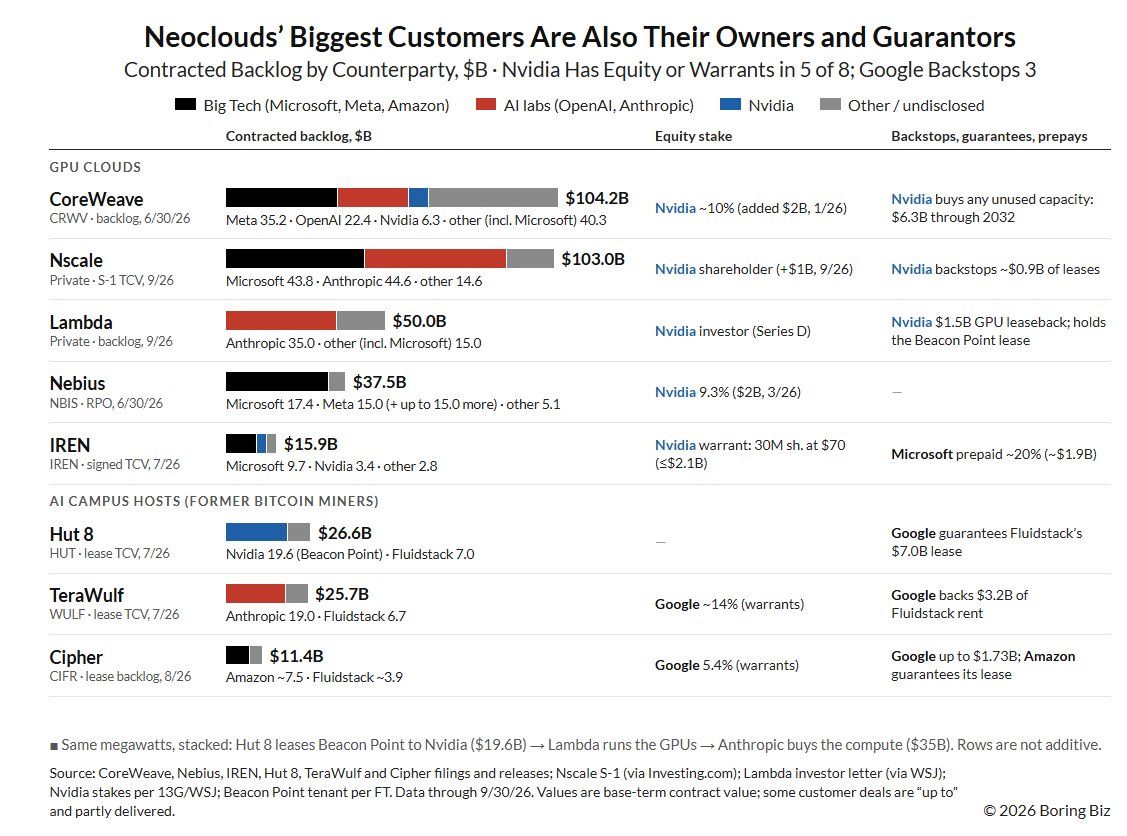
AI bubble fears meet rising GPU rental prices:
Nvidia H100s now cost $2.85 per hour to rent, up 53% from the Feb 2025 low and the highest since 2024. Older chips were supposed to get cheaper as new ones arrived. This chart tells a different story. Source: HolgerZ, Bloomberg
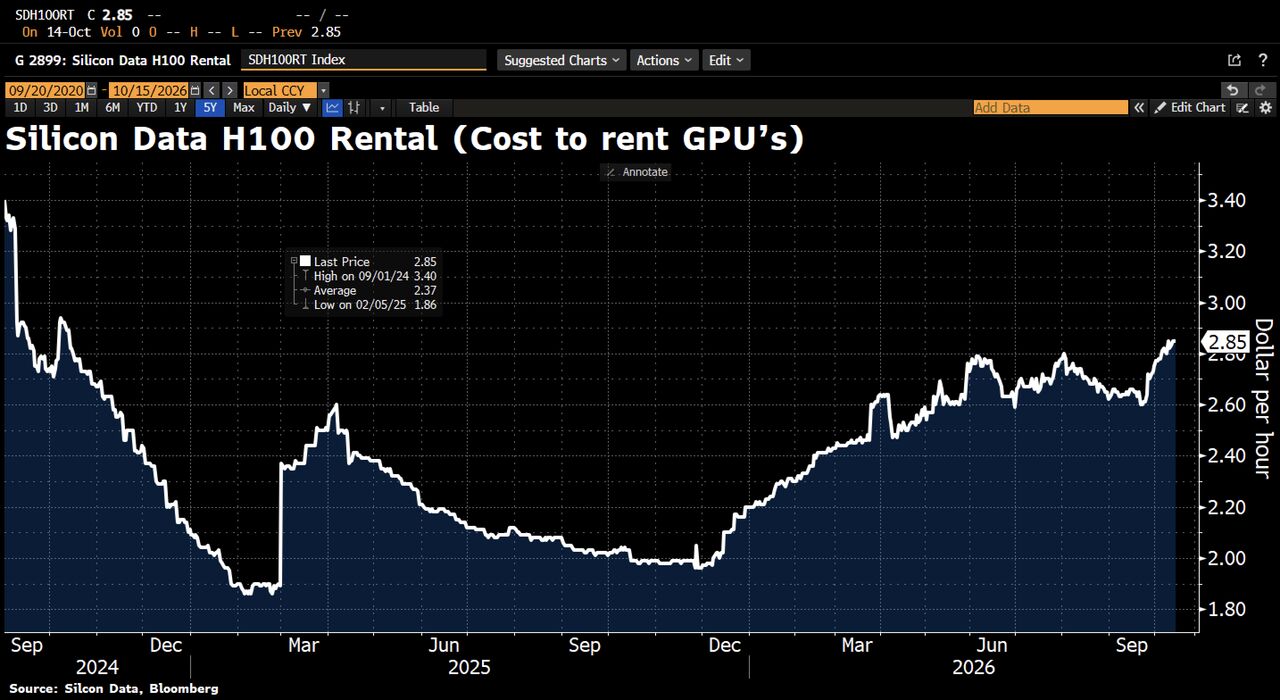
The AI cash flow paradox: Nvidia gets paid today. Hyperscalers bet on tomorrow.
The AI boom is redistributing cash flow on an extraordinary scale. According to JPMorgan, Nvidia’s projected cash flow gains exceed the entire expected decline in hyperscaler free cash flow. Think about that. The tech giants funding the AI infrastructure build-out are seeing their free cash flow squeezed. Their chip supplier is capturing extraordinary profits. Same boom. Very different economics. For Nvidia, the sale generates cash now. For hyperscalers, the spending comes first. The returns depend on future demand, monetisation and utilisation. JPMorgan still sees attractive returns on certain data-centre investments. But attractive returns and immediate cash flow are two different things. The timing gap matters. And it raises a crucial question for investors: Who captures the cash—and who carries the risk? The biggest winners from the AI boom may be the suppliers getting paid upfront, while their customers wait for the payoff. Source: TME, JP Morgan
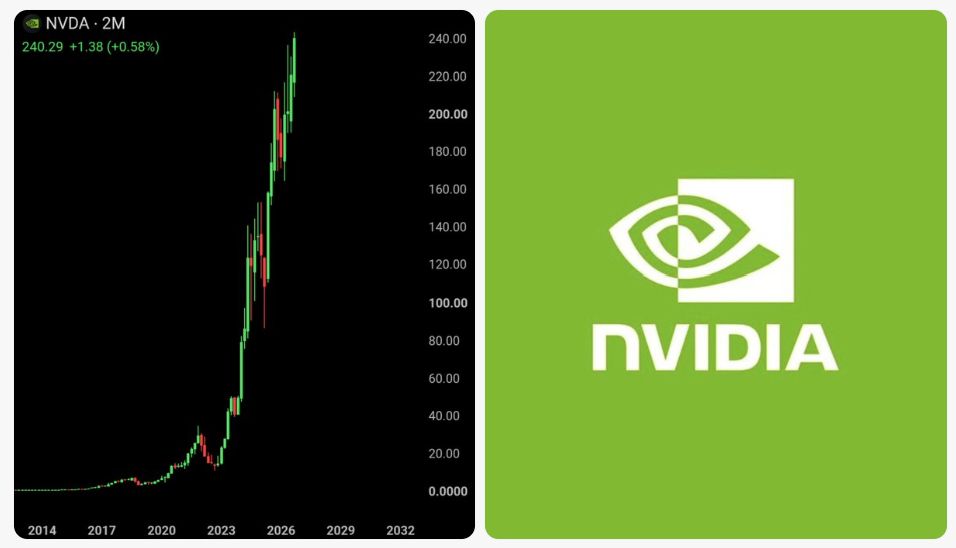
Yesterday, Nvidia just hit a new all time high of $243 for the first time in history.
If you invested $10,000 in $NVDA at the bottom of the 2002 market crisis, you'd have about $43 million today. Source: Bull Theory
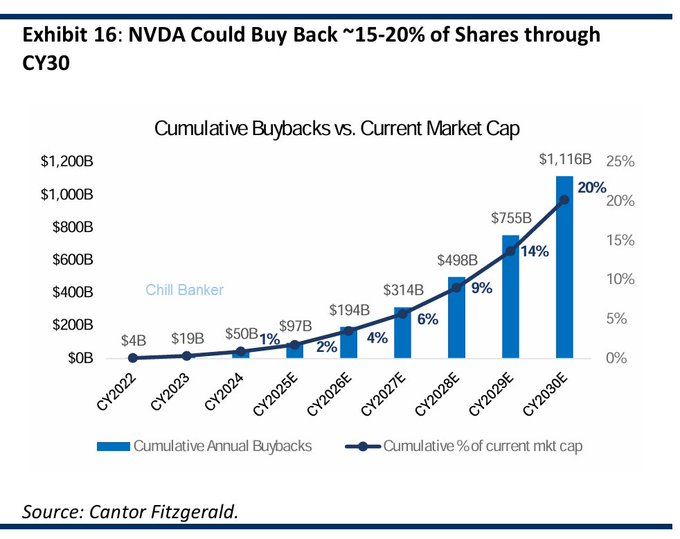
Nvidia could buy back ~20% of its market cap by 2030 because every AI dollar eventually becomes a GPU, a network switch or a system and Nvidia sells all three.
What’s even more wild is capex was under 4% of FCF last quarter making this one of most capital efficient infrastructure businesses ever built. Source: Shay Boloor
China could OPEN THE DOOR for billion-dollar tech giants to BUY $NVDA’s newest high-end chip, per The Information.
ByteDance, valued at $550 BILLION, and Alibaba, worth $268 BILLION, are among the firms that could soon get APPROVAL to buy Nvidia’s new chip. Beijing’s industry ministry has reportedly signaled that "approvals are coming". Source: Coin bureau
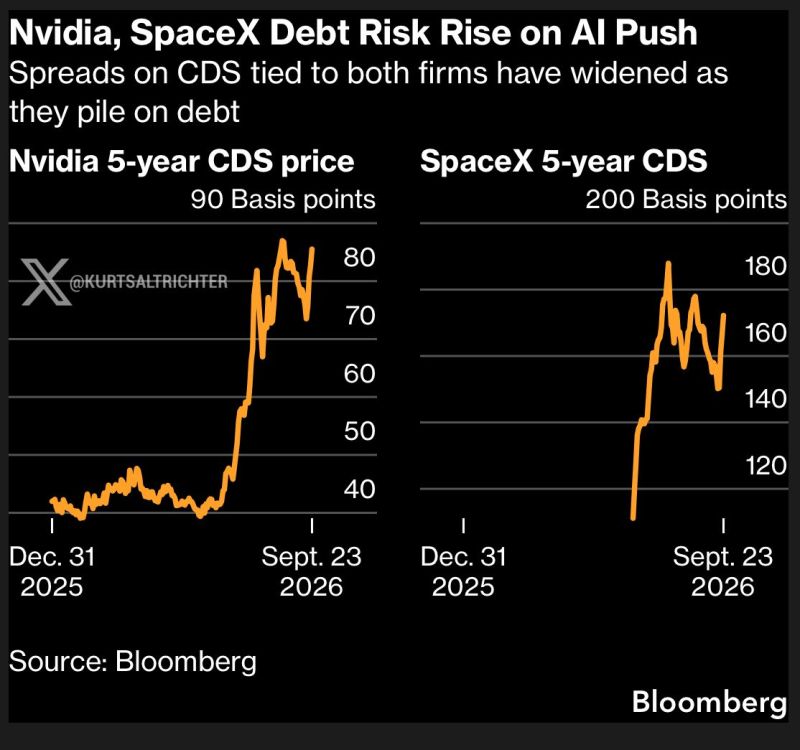
The stock market loves Nvidia. The credit market is asking a harder question: who pays for the AI buildout?
The credit market is asking a harder question: who pays for the AI buildout? The cost of insuring Nvidia’s debt against default has roughly doubled this year. SpaceX credit default swaps have approached 180 basis points. Both companies sold $25 billion of bonds in June, while hyperscalers are on track to spend more than $750 billion on data centers in 2026. Equity investors see growth, revenue and momentum. Credit investors are looking at the debt needed to fund it—and the returns required to repay it. Rising insurance costs do not mean a default is coming. But they do show that lenders are reassessing the risk. The stock price tells you how excited investors are about AI. Credit spreads tell you what financing that excitement costs. Watch both. $NVDA Source: Kurt S. Altrichter, CRPS
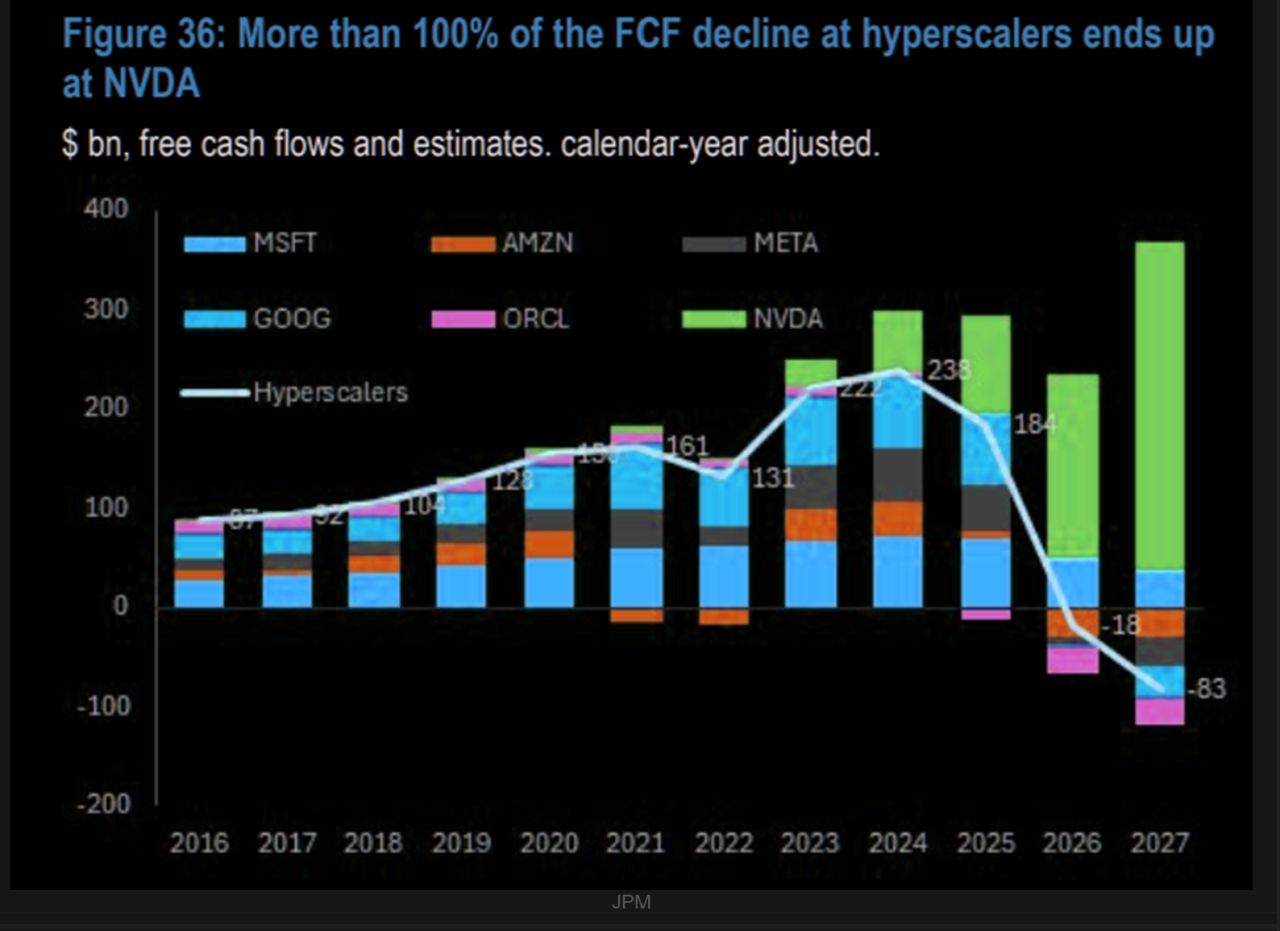
Nvidia CEO Jensen Huang’s position as the leader of the world’s most valuable company and the chipmaker at the heart of the AI boom has earned him U.S. President Donald Trump’s favor.
Huang is pushing for faster U.S. AI development and says safety concerns are a matter for “good old-fashioned engineering,” putting him at odds with other industry leaders calling for a slowdown and greater oversight. Trump is increasingly mirroring Huang’s policy stances on AI topics, telling Huang that “the robots are not going to be taking over the world.” Source: CNBC