

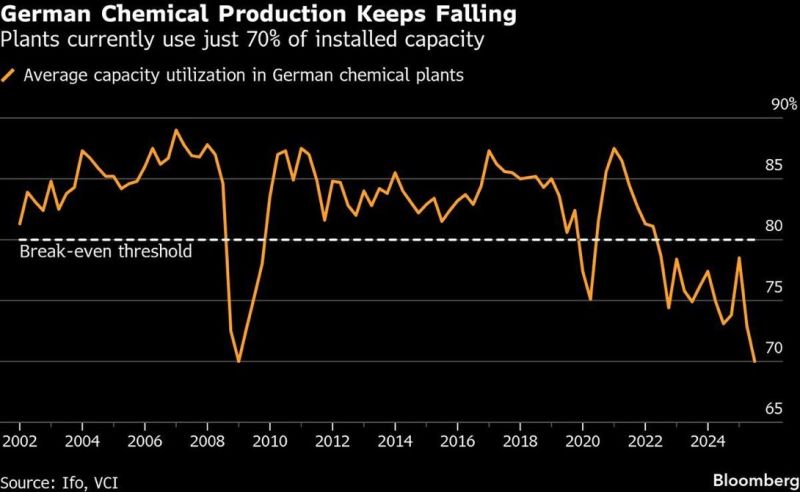
Everyone has heard about the German carmakers' crisis.
Disclaimer
This marketing document has been issued by Bank Syz Ltd. It is not intended for distribution to, publication, provision or use by individuals or legal entities that are citizens of or reside in a state, country or jurisdiction in which applicable laws and regulations prohibit its distribution, publication, provision or use. It is not directed to any person or entity to whom it would be illegal to send such marketing material. This document is intended for informational purposes only and should not be construed as an offer, solicitation or recommendation for the subscription, purchase, sale or safekeeping of any security or financial instrument or for the engagement in any other transaction, as the provision of any investment advice or service, or as a contractual document. Nothing in this document constitutes an investment, legal, tax or accounting advice or a representation that any investment or strategy is suitable or appropriate for an investor's particular and individual circumstances, nor does it constitute a personalized investment advice for any investor. This document reflects the information, opinions and comments of Bank Syz Ltd. as of the date of its publication, which are subject to change without notice. The opinions and comments of the authors in this document reflect their current views and may not coincide with those of other Syz Group entities or third parties, which may have reached different conclusions. The market valuations, terms and calculations contained herein are estimates only. The information provided comes from sources deemed reliable, but Bank Syz Ltd. does not guarantee its completeness, accuracy, reliability and actuality. Past performance gives no indication of nor guarantees current or future results. Bank Syz Ltd. accepts no liability for any loss arising from the use of this document.
Related Articles
In 2017, China bought 26% of Iran's oil. Last year? 90%. Every other buyer EU, India, Japan, Korea has been sanctioned out. So when Trump asks China to send warships to reopen the Strait of Hormuz, he’s asking the one country keeping Iran financially alive to help militarily contain it. China funds Iran's war chest, while Iran mines China’s oil supply. This is one of the most tangled relationships in geopolitics, and Beijing has to choose very carefully. Source: Giacomo Prandelli
Since the Iran war began, the Strait of Hormuz has been the focal point, as it accounts for ~20 million barrels of daily oil supply. On Thursday, Iran's Fars News Agency said Houthis in Yemen and other “resistance groups” may soon join the war against the US and Israel, per WSJ. Not too long ago, Yemen's Houthis, who are backed by Iran, were striking ships in the Red Sea, resulting in a major drop in shipping activity. Currently, ~12% of global seaborne oil passes through Bab al-Mandab, making it the world’s 4th-largest shipping chokepoint. If this passage is closed, another ~6 million barrels of daily oil supply would be halted. Total offline capacity between the two Straits would near 25 million barrels per day, or ~25% of global supply. We have another pivotal week ahead. Source: The Kobeissi Letter, EIA
The only reason why stocks have a higher long-term return than bonds and cash is to compensate investors for taking on the greater risk of uncertainty, volatility and drawdowns along the way. Without this risk there would be no higher reward. Source: Charlie Bilello @charliebilello