

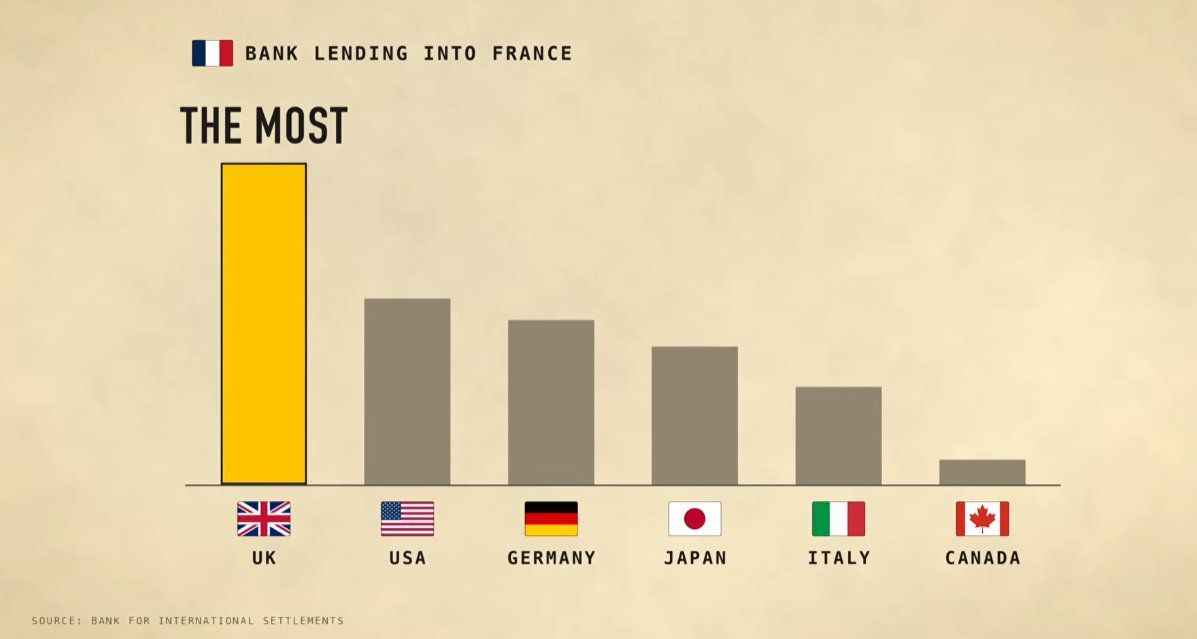
The United Kingdom has purchased the most amount of French bonds out of any nation.
Disclaimer
This marketing document has been issued by Bank Syz Ltd. It is not intended for distribution to, publication, provision or use by individuals or legal entities that are citizens of or reside in a state, country or jurisdiction in which applicable laws and regulations prohibit its distribution, publication, provision or use. It is not directed to any person or entity to whom it would be illegal to send such marketing material. This document is intended for informational purposes only and should not be construed as an offer, solicitation or recommendation for the subscription, purchase, sale or safekeeping of any security or financial instrument or for the engagement in any other transaction, as the provision of any investment advice or service, or as a contractual document. Nothing in this document constitutes an investment, legal, tax or accounting advice or a representation that any investment or strategy is suitable or appropriate for an investor's particular and individual circumstances, nor does it constitute a personalized investment advice for any investor. This document reflects the information, opinions and comments of Bank Syz Ltd. as of the date of its publication, which are subject to change without notice. The opinions and comments of the authors in this document reflect their current views and may not coincide with those of other Syz Group entities or third parties, which may have reached different conclusions. The market valuations, terms and calculations contained herein are estimates only. The information provided comes from sources deemed reliable, but Bank Syz Ltd. does not guarantee its completeness, accuracy, reliability and actuality. Past performance gives no indication of nor guarantees current or future results. Bank Syz Ltd. accepts no liability for any loss arising from the use of this document.
Related Articles
Those bonds were issued in June at 9.625%. That’s an increase of nearly 5 percentage points in four months in the yield investors demand to hold its unsecured debt. The figures behind the move: ▪️ More than $35 billion raised this year. ▪️ Around $52 billion in debt and lease obligations. ▪️ $640 million in net interest expense last quarter—roughly a quarter of revenue. ▪️ A $104 billion backlog, with revenue dependent on infrastructure delivery and customer payments. Venture capitalist Chamath Palihapitiya shared the yield chart, warning of a potential private credit bubble linked to AI. According to figures he cited, private lenders charge AI borrowers spreads of 6.2 percentage points, compared with 6.1 points for other borrowers. CoreWeave’s backlog has grown. So has the yield on its debt. Source: Hedgie
According to BofA’s Michael Hartnett, investors are waiting for higher yields before making the switch. The October Global Fund Manager Survey puts the average trigger at 5.9% on the 10-year Treasury—roughly 70 basis points above current levels. Where would they move? • 12% at a 5.5% yield • 37% at 6.0% • 14% at 6.5% • 8% at 7% or higher But some aren’t waiting. 19% say yields are already high enough, and October saw the biggest covering of bond shorts in a year, according to BofA. The competition for capital is intensifying. The higher Treasury yields climb, the harder equities have to work to justify the risk. Source: Neil Sethi NEW account
China can now borrow ~60% cheaper than the US. And through Panda bonds, foreign nations and corporations can access China’s cheap yuan funding. Brazil is preparing its first Panda bond... the largest-ever debut by a foreign sovereign. Issuers can raise yuan and use it directly to buy Chinese goods and fund operations in China instead of first raising USD. Source: Lukas Ekwueme @ekwufinance