


.png)
Source: Bloomberg, David Ingles
Chart #2 —
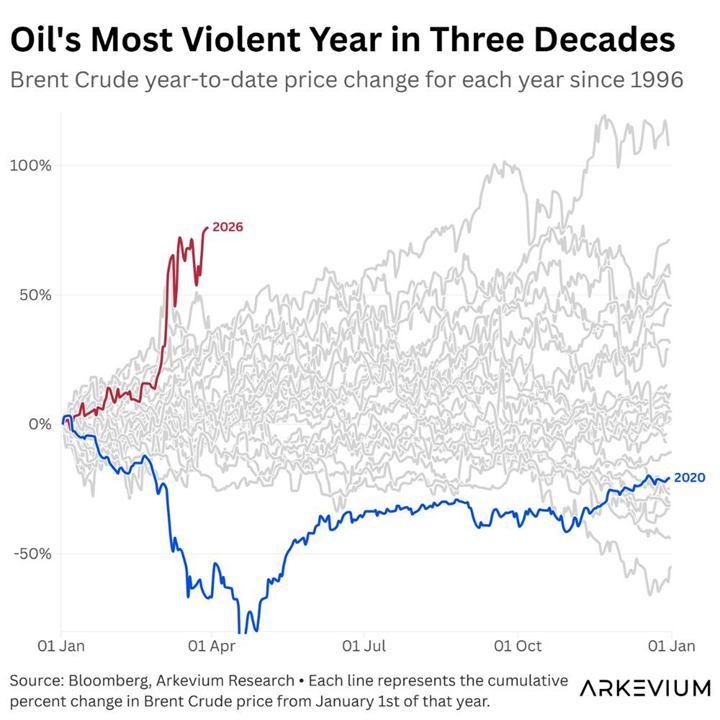
Oil’s most violent start of the year in 3 decades
Oil prices have surged 70% in just five weeks, the most extreme start to a year in three decades. The last comparable volatility occurred in 2020, when oversupply drove the market. Today, the situation is the opposite: tight supply is fuelling the dramatic price swings.
Source: Arkevium
Chart #3 —
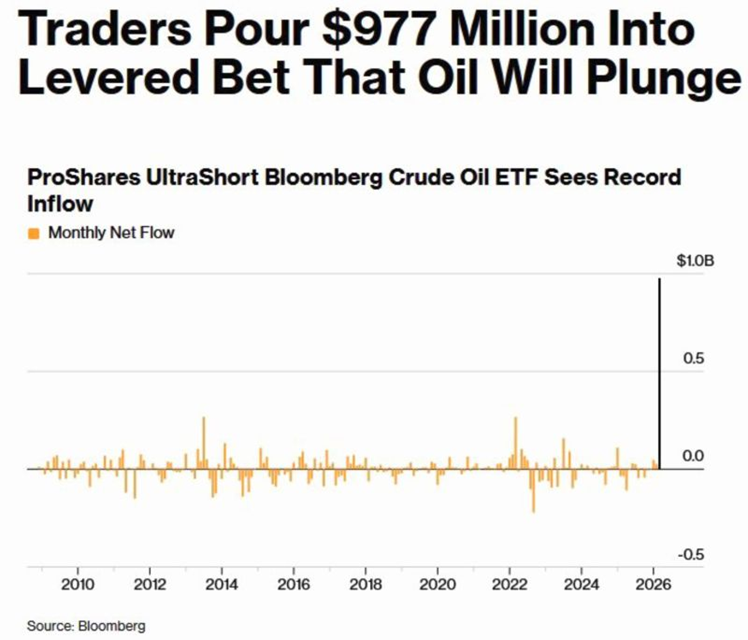
Traders pour $977 million into levered bet that oil will plunge
Investors placed a record leveraged short bet against oil, just before geopolitical tensions sent prices soaring. In March, $977 million flowed into the inverse oil ETF (SCO), aiming to profit from falling crude prices. Instead, the funds plunged 41% as oil climbed, only briefly rising after signals of de-escalation.
This trade depends on a rapid end to the conflict, but oil remains elevated, peaking near $119 and staying around $102, far above February levels. Continued supply disruptions, especially around the Strait of Hormuz, may keep prices high for months, meaning even a ceasefire may not help short traders recover.
Source: Markets & Mayhem, *Walter Bloomberg @DeItaone
Chart #4 —
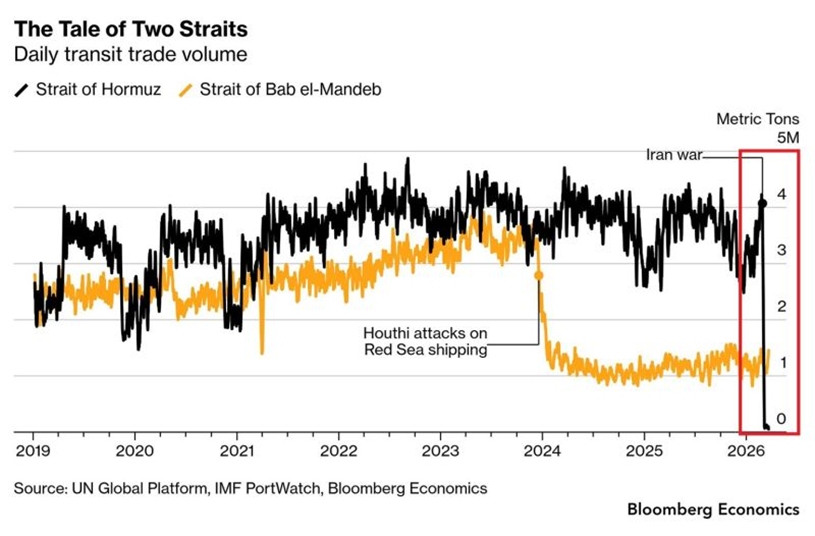
The tale of two straits
Two critical shipping chokepoints, the Strait of Hormuz and the Bab el-Mandeb are simultaneously under threat, creating serious risks for global trade and energy flows. Oil transit through the Strait of Hormuz has nearly come to a halt since the Iran conflict began, while the Bab el-Mandeb, a key Red Sea route responsible for roughly 12% of global trade, remains unstable due to ongoing Houthi threats. Saudi oil exports via the Red Sea are particularly vulnerable to potential attacks, and the Houthis’ increasing involvement in the Iran conflict further raises the risk of renewed shipping disruptions. Any escalation affecting Iranian oil infrastructure could exacerbate the situation, potentially causing widespread disruptions in global energy and trade networks.
Source: Bloomberg Economics
Chart #5 —
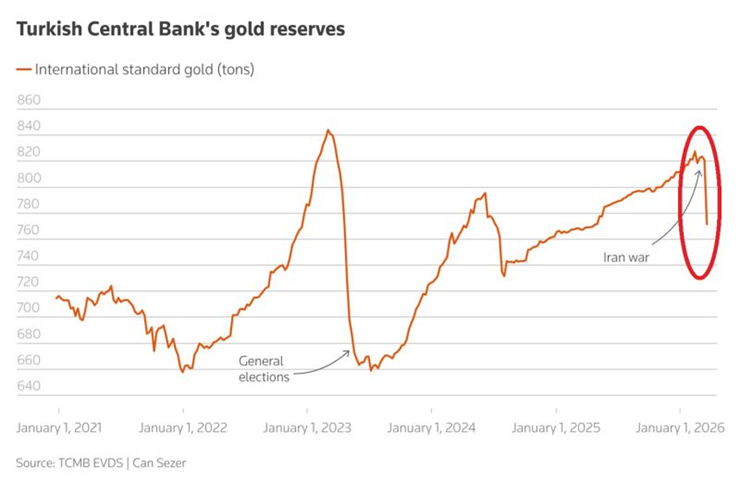
Turkey's central bank gold reserves are falling at the fastest pace in
7 years
Turkey’s gold reserves declined by 50 tonnes last week to 772 tonnes, marking the largest weekly drop since August 2018. Overall, total foreign exchange reserves have fallen $35 billion since the conflict began, down to $177.5 billion, as authorities aggressively defend the Turkish Lira amid historic FX volatility.
Additionally, a roughly 10% drop in gold prices last week caused an extra $8 billion loss in reserve value, bringing the total weekly decline to $18 billion. Turkey is burning through reserves at a historic rate.
Source: Global Markets Investor @GlobalMktObserv
Chart #6 —
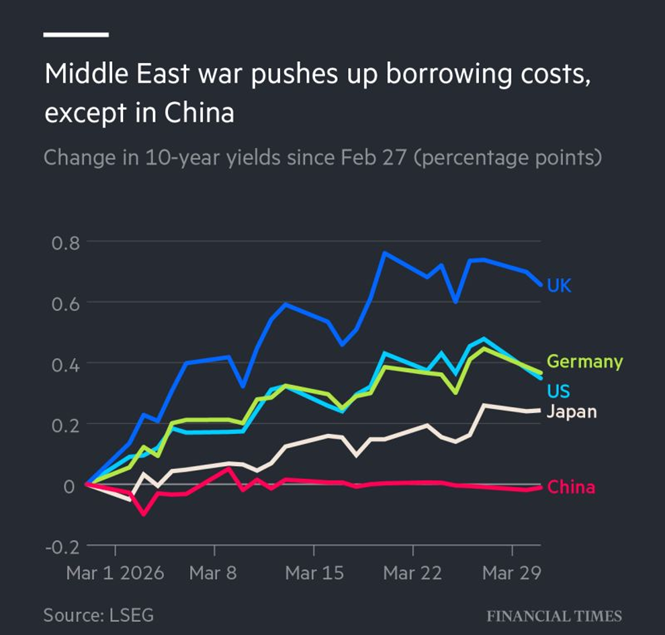
Middle East war pushes up borrowing costs, except in China
While global debt markets have been hit by rising energy prices and inflation since the start of the Iran conflict, Chinese government bonds have largely avoided the sell-off. They have emerged as a relative haven amid global uncertainty.
Source: FT
Chart #7 —
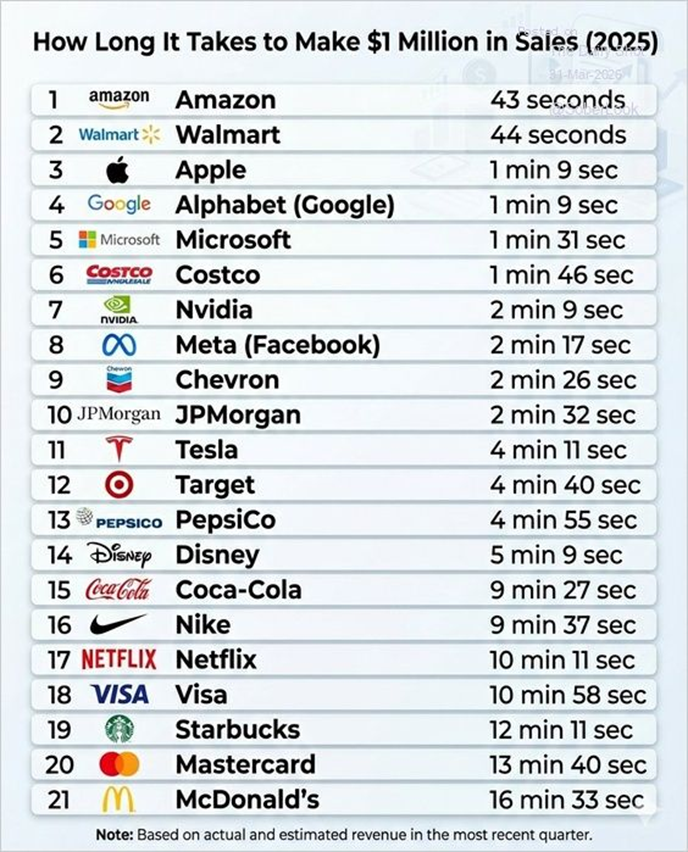
How long does it take to generate
$1 million in sales?
Some companies generate $1 million in revenue astonishingly fast. For example, both Amazon and Walmart can achieve this milestone in less than one minute.
Source: Lance Roberts
Disclaimer
This marketing document has been issued by Bank Syz Ltd. It is not intended for distribution to, publication, provision or use by individuals or legal entities that are citizens of or reside in a state, country or jurisdiction in which applicable laws and regulations prohibit its distribution, publication, provision or use. It is not directed to any person or entity to whom it would be illegal to send such marketing material. This document is intended for informational purposes only and should not be construed as an offer, solicitation or recommendation for the subscription, purchase, sale or safekeeping of any security or financial instrument or for the engagement in any other transaction, as the provision of any investment advice or service, or as a contractual document. Nothing in this document constitutes an investment, legal, tax or accounting advice or a representation that any investment or strategy is suitable or appropriate for an investor's particular and individual circumstances, nor does it constitute a personalized investment advice for any investor. This document reflects the information, opinions and comments of Bank Syz Ltd. as of the date of its publication, which are subject to change without notice. The opinions and comments of the authors in this document reflect their current views and may not coincide with those of other Syz Group entities or third parties, which may have reached different conclusions. The market valuations, terms and calculations contained herein are estimates only. The information provided comes from sources deemed reliable, but Bank Syz Ltd. does not guarantee its completeness, accuracy, reliability and actuality. Past performance gives no indication of nor guarantees current or future results. Bank Syz Ltd. accepts no liability for any loss arising from the use of this document.
Related Articles
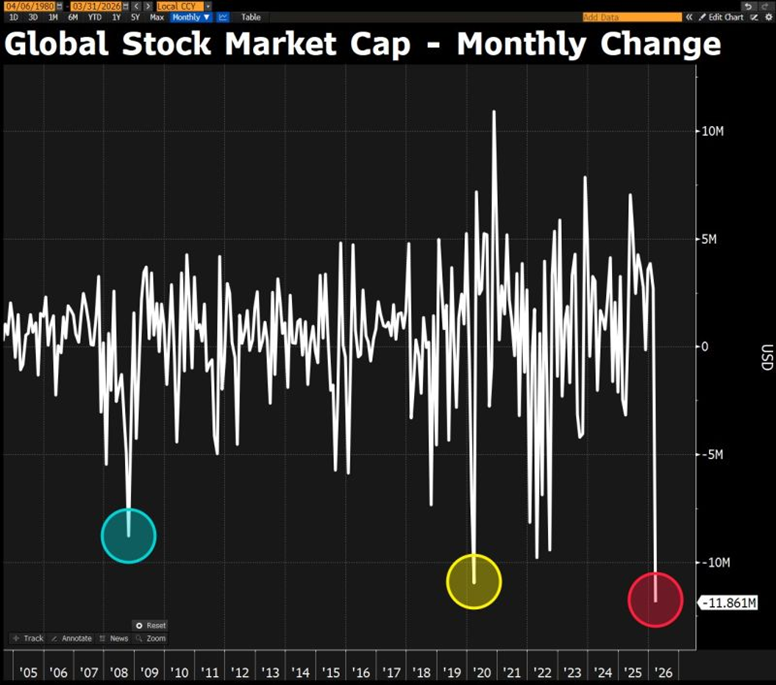
March saw the biggest monthly drop for global stocks, 2026 is oil’s worst start in 30 years, and traders pile $977m into leveraged bets on a sharp oil plunge. Each week, the Syz investment team takes you through the last seven days in seven charts.
Meanwhile, hedging allows oil producers to lock in profits. Each week, the Syz investment team takes you through the last seven days in seven charts.
Meanwhile, precious metals are plummeting. Each week, the Syz investment team takes you through the last seven days in seven charts.