

.png)
Chart #1 —
The oil market disruption is far worse than headline prices suggest
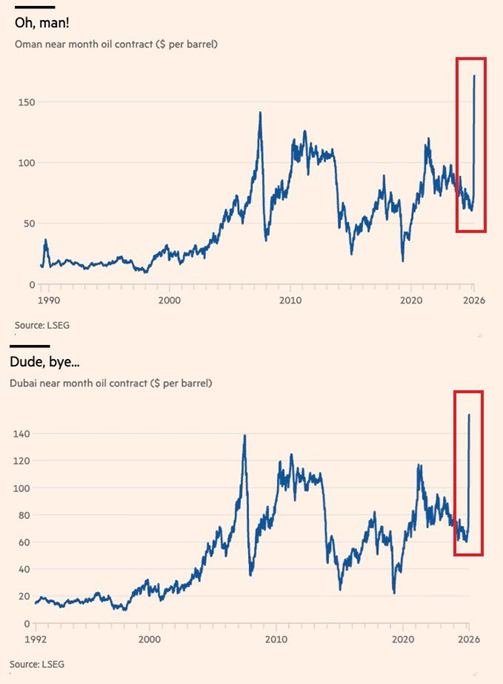
Oman crude oil surged to a record USD $173 per barrel on Wednesday, exceeding even the peak seen during the 2008 Financial Crisis. At the same time, Dubai crude oil rose above $150, as buyers rushed to replace supplies lost following the shutdown of the Strait of Hormuz.
This closure has effectively removed around 20% of global oil production from the market, creating the largest supply disruption in modern history. Yet benchmark prices tell a different story, Brent is trading near $115 and WTI around $95, significantly understating the severity of the shortage. As a result, the gap between Brent and WTI has widened to its largest level since 2013, reflecting how the war in Iran is hitting European supply more directly. The issue is that these benchmarks mainly reflect North Sea and US conditions, not the reality of the Middle East crisis. If the strait remains closed, Western oil prices will likely rise sharply as inventories in the US and Europe decline. In short, the full impact of the oil crisis has not yet reached Western markets.
 Source: Global Markets, FT