

.png)
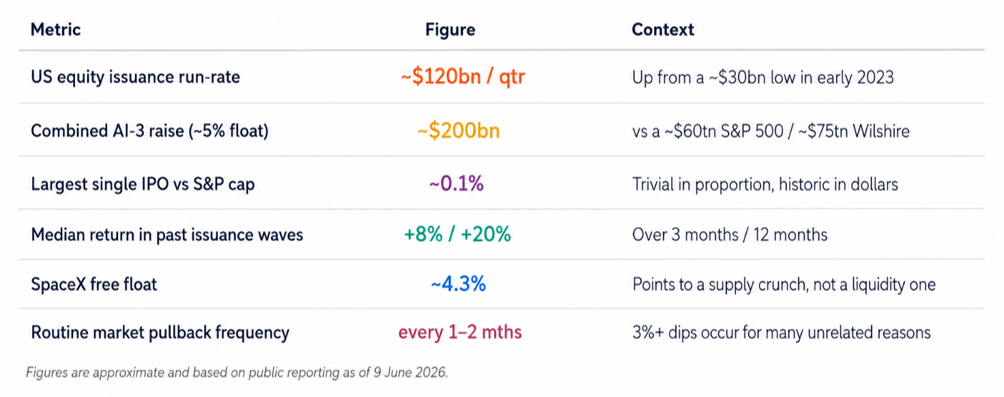
The “AI-3”, SpaceX, OpenAI and Anthropic, are each discussed at or above a trillion-dollar valuation. Based on headline estimates, their combined enterprise value could reach roughly $4tn, exceeding the entire 1995–2000 dot-com IPO wave. More grounded assumptions put the figure closer to $3tn. SpaceX is furthest along. The company has already publicly filed its IPO registration documents (S-1), Goldman Sachs is leading a syndicate of 21 banks, and the investor roadshow is underway. OpenAI is expected around September, and Anthropic is likely to follow around October.
The number that moves markets is not the valuation; it is the free float, the portion of shares actually made available for public trading. Assume a 5% free float across the board and the combined raise comes to roughly $200bn, modest in absolute terms compared with an S&P 500 worth approximately $60tn and a Wilshire 5000 closer to $75tn. This points to a supply crunch, not a liquidity crunch, with SpaceX floating only ~4.3% of its shares. Deutsche Bank reinforces the point from an index perspective. Even the single largest IPO in the wave accounts for just over 0.1% of S&P market capitalisation. The numbers are historic in absolute terms, but marginal in proportion.
Source: Deutsche Bank, Goldman Sachs
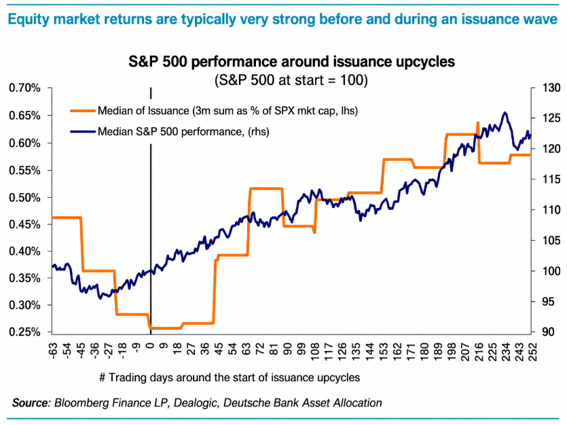
DB strategists read of three decades of issuance cycles inverts the popular intuition. Issuance waves do not cause sell-offs. They coincide with strong markets, because companies and their bankers time offerings to robust demand, healthy earnings momentum and elevated risk appetite. Causality runs market into issuance, not the reverse. The same dynamic plays out on the credit side, where supply floods in precisely when spreads are tight and appetite is deep.
Historically, equity markets have delivered median returns of around +8% over three months and more than +20% over twelve months during issuance upcycles. The only exception came in 2008–09, when issuance was forced by a systemic crisis. The distinction matters: distress-driven supply is bearish, while confidence-driven supply is not. Today is clearly the latter.
Deutsche Bank’s demand-supply model suggests that a large IPO could, in isolation, subtract around 1% from the market. While concentrated issuance can temporarily disrupt the balance between supply and demand, any resulting pressure is typically short-lived. In practice, pullbacks of 3% or more already occur every one to two months, often driven by factors unrelated to primary supply. The broader demand picture remains supportive. Inflows are strong, aggregate positioning is not yet stretched, buybacks continue to provide a steady bid, and household balance sheets still have capacity to absorb new equity issuance.
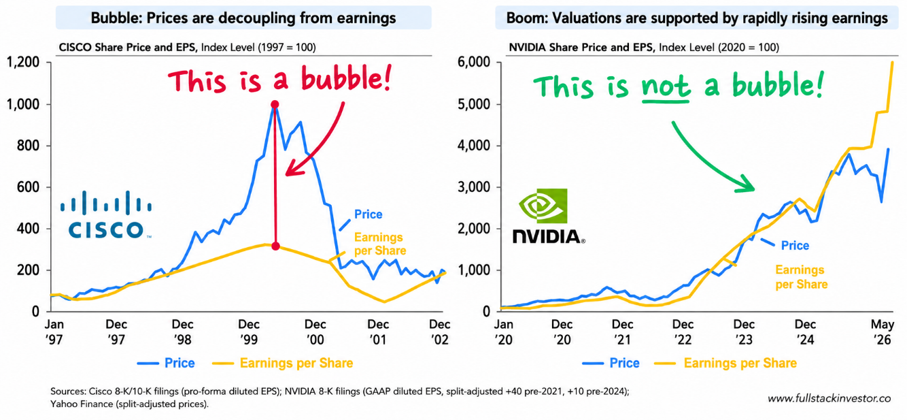
This is also where the IPO debate fits into our broader “boom, not bubble” framework. The earnings base remains solid. S&P 500 earnings grew by around 18.7% in Q1 2026, margins are at record highs, and AI capex is still being funded mainly through cash flow rather than leverage. On a price-to-earnings relative to growth (PEG) basis, large-cap tech valuations also remain well below dot-com extremes.
Earnings are still compounding. As long as the “E” continues to move higher, this is not where the cycle breaks.
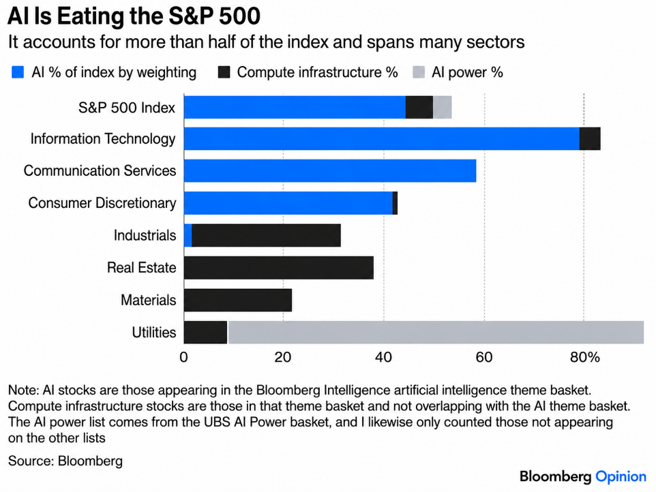
The risk is not absorption. It is concentration and rotation. With the top 10 stocks trading near 40x earnings and index concentration at record highs, a passive S&P 500 allocation is already a highly concentrated AI trade. The cyclically adjusted price-to-earnings (CAPE) ratio near40 only reinforces the point: outside the dot-com peak, valuations have rarely been this stretched.
The mechanical risk is that capital moving into the AI-3 is funded by trimming the very same mega-cap technology names that already dominate index performance. In some cases, those companies are also direct backers of the private AI leaders coming to market.
That means investors do not need to receive an IPO allocation to feel the impact. The pressure could show up through the positions they already own.
There is also a technical risk around the deal structure itself. SpaceX’s limited float, combined with potential index-inclusion demand, could create a scarcity premium that flatters the opening valuation without saying much about fair value.