

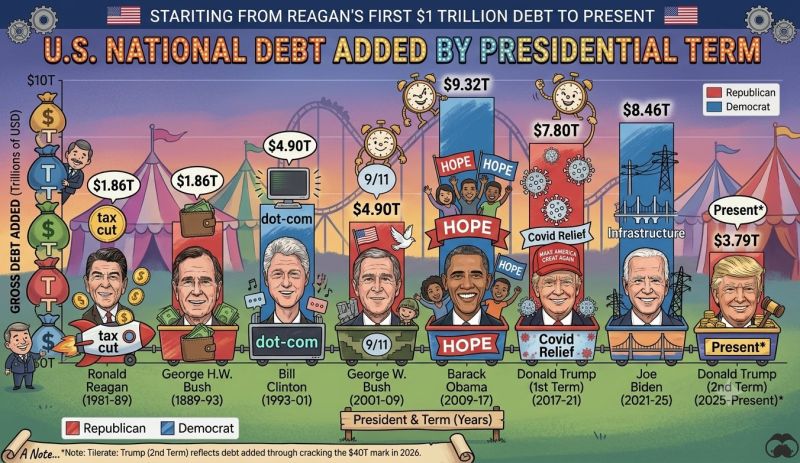
$40 trillion in debt
Disclaimer
This marketing document has been issued by Bank Syz Ltd. It is not intended for distribution to, publication, provision or use by individuals or legal entities that are citizens of or reside in a state, country or jurisdiction in which applicable laws and regulations prohibit its distribution, publication, provision or use. It is not directed to any person or entity to whom it would be illegal to send such marketing material. This document is intended for informational purposes only and should not be construed as an offer, solicitation or recommendation for the subscription, purchase, sale or safekeeping of any security or financial instrument or for the engagement in any other transaction, as the provision of any investment advice or service, or as a contractual document. Nothing in this document constitutes an investment, legal, tax or accounting advice or a representation that any investment or strategy is suitable or appropriate for an investor's particular and individual circumstances, nor does it constitute a personalized investment advice for any investor. This document reflects the information, opinions and comments of Bank Syz Ltd. as of the date of its publication, which are subject to change without notice. The opinions and comments of the authors in this document reflect their current views and may not coincide with those of other Syz Group entities or third parties, which may have reached different conclusions. The market valuations, terms and calculations contained herein are estimates only. The information provided comes from sources deemed reliable, but Bank Syz Ltd. does not guarantee its completeness, accuracy, reliability and actuality. Past performance gives no indication of nor guarantees current or future results. Bank Syz Ltd. accepts no liability for any loss arising from the use of this document.
Related Articles
Source: Barchart
More money printing. More debt. Higher prices. Source: Charlie Bilello
Here’s the mechanism: 1️⃣ The Treasury issues more short-term T-bills. 2️⃣ The Fed buys bills, injecting liquidity into the system. 3️⃣ The Treasury uses its cash and buyback program to retire longer-dated Treasuries. The result? 👉 More demand at the long end. 👉 Less duration risk in the market. 👉 Potential downward pressure on long-term yields. Technically, this isn't traditional QE because the Fed isn't directly buying 10Y or 30Y Treasuries. But economically, the distinction could become increasingly blurred. With US interest costs exploding and long-term yields above 5%, policymakers have a powerful incentive to prevent the long end from spiraling higher. Call it buybacks. Call it liquidity management. Call it maturity transformation. But if the objective increasingly becomes controlling long-term borrowing costs… We may eventually get Yield Curve Control—just with a different name tag Source: Lukas Ekwueme @ekwufinance Hoisington Investment Management