

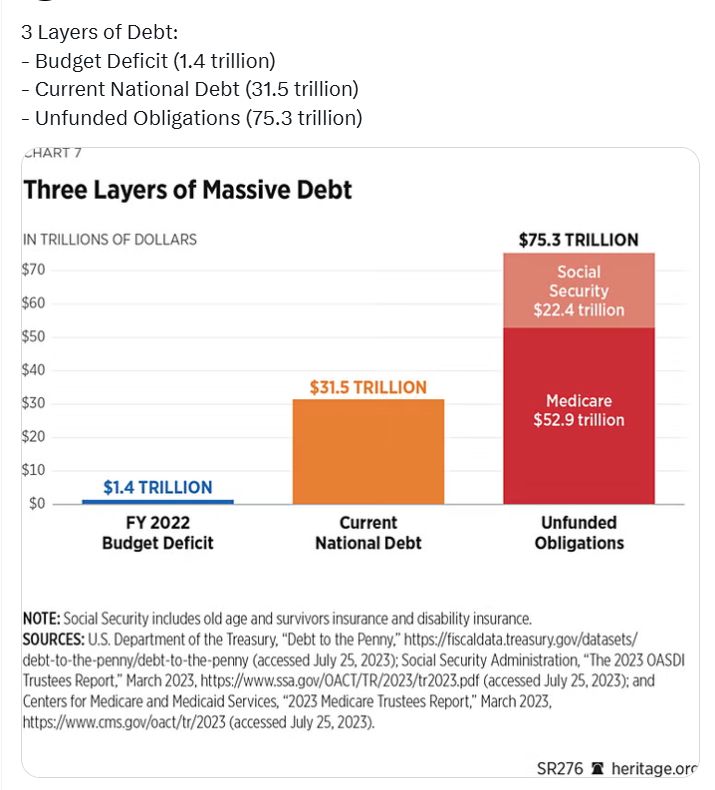
America's massive leverage summarized in one chart
Disclaimer
This marketing document has been issued by Bank Syz Ltd. It is not intended for distribution to, publication, provision or use by individuals or legal entities that are citizens of or reside in a state, country or jurisdiction in which applicable laws and regulations prohibit its distribution, publication, provision or use. It is not directed to any person or entity to whom it would be illegal to send such marketing material. This document is intended for informational purposes only and should not be construed as an offer, solicitation or recommendation for the subscription, purchase, sale or safekeeping of any security or financial instrument or for the engagement in any other transaction, as the provision of any investment advice or service, or as a contractual document. Nothing in this document constitutes an investment, legal, tax or accounting advice or a representation that any investment or strategy is suitable or appropriate for an investor's particular and individual circumstances, nor does it constitute a personalized investment advice for any investor. This document reflects the information, opinions and comments of Bank Syz Ltd. as of the date of its publication, which are subject to change without notice. The opinions and comments of the authors in this document reflect their current views and may not coincide with those of other Syz Group entities or third parties, which may have reached different conclusions. The market valuations, terms and calculations contained herein are estimates only. The information provided comes from sources deemed reliable, but Bank Syz Ltd. does not guarantee its completeness, accuracy, reliability and actuality. Past performance gives no indication of nor guarantees current or future results. Bank Syz Ltd. accepts no liability for any loss arising from the use of this document.
Related Articles
However, at the moment, he does NOT believe it will be necessary for the central bank to increase rates again in 2027. John Williams is widely considered a centrist on monetary policy, though he often tilts dovish compared to the rest of the market Source: Gregory Daco
Headline inflation jumped to 3.7% year-on-year in September, its highest level since May. Rising gasoline and diesel prices drove much of the increase. Higher airfares and used-car prices added pressure, pushing monthly inflation to 0.6%, the biggest gain since May. Even excluding food and energy, the picture deteriorated. Core inflation rose to 2.6%, up from 2.4% in August and above expectations. The squeeze on households is clear: prices rose 3.7% over the past year, outpacing average wage growth of 3%. Source: Heather Long on X, BLS