Straight from the Desk
Syz the moment
Live feeds, charts, breaking stories, all day long.
- All
- equities
- United States
- Macroeconomics
- Food for Thoughts
- markets
- Central banks
- Fixed Income
- bitcoin
- Asia
- europe
- investing
- technical analysis
- geopolitics
- gold
- Crypto
- AI
- Commodities
- Technology
- nvidia
- ETF
- earnings
- Forex
- china
- Real Estate
- banking
- oil
- Volatility
- energy
- magnificent-7
- apple
- Alternatives
- emerging-markets
- switzerland
- tesla
- United Kingdom
- Middle East
- assetmanagement
- amazon
- russia
- ethereum
- microsoft
- ESG
- meta
- Industrial-production
- bankruptcy
- Healthcare
- Turkey
- Global Markets Outlook
- africa
- Market Outlook
- brics
- performance
BREAKING: The yen falls near 150 after the Bank of Japan makes only modest tweaks to its yield control program, defying market expectations
Japan’s centralbank decided to make its yield curve control (YCC) policy more flexible, shifting the language used to describe the upper bound of the 10-year Japanese government bond yield. The BoJ said it will patiently continue monetary easing under YCC to support economic activities. BOJ makes the decisions on YCC by an 8-1 vote. The decision is sending the $USDJPY back to above 150.
The race to raise rates summarized in one chart
Source: LSEG Datastream, Reuters
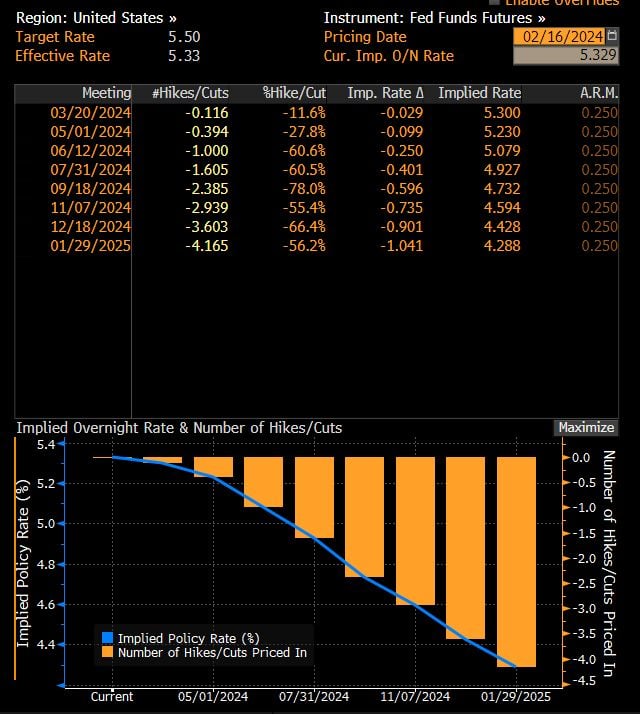
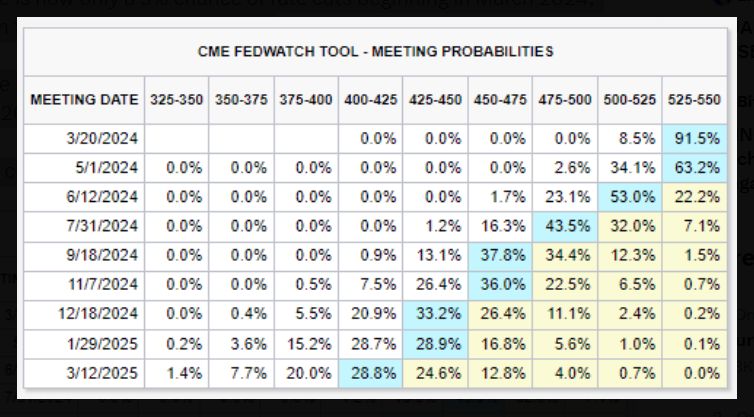
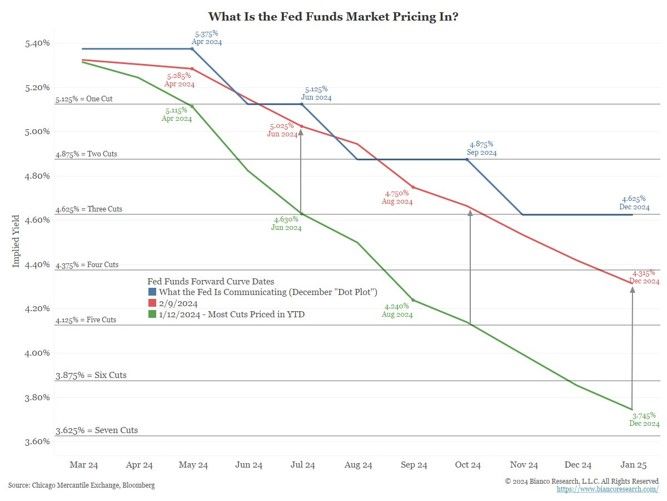
When will the Fed start cutting rates?
This chart from James Bianco is derived from market pricing. The first cut is currently priced for August 2024 (top panel), or 337 days away (bottom panel). Notice the first cut is always about 10 to 12 months away. It never gets any closer.
ECB's Lagarde: "Rate cuts weren't discussed, would be totally premature".
Meanwhile, markets see the first ECB cut at April 2024 meeting. Source: Bloomberg, HolgerZ
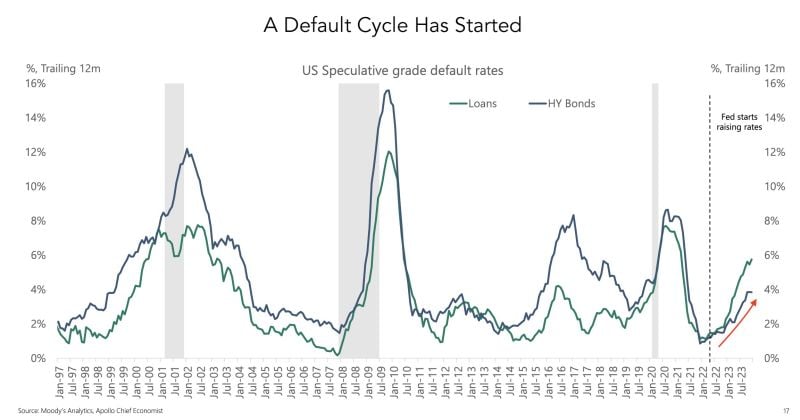
How long does it take for the FED to break the corporate bond market?
2008 : 1 year of plateau, resulted in credit event after another 1 full year. (Total 2 years) 2020 : 7 months of plateau, resulted in credit event after 6 months. (Total 13 months, 54% of 2008) 2023 : it's been 3 months into plateau so far. Chart made from MacroMicroMe - source: James Choi
Quantitative tightening (QT) may have taken a backseat in recent months, but is still very much in vogue
Source: BofA, TME
The SP500 has now lost $3.5 trillion in value since the Fed removed a recession from their forecast
The Fed marked the exact high in July 2023 with their "no recession" call. Since then, the S&P 500 is down 9% and just hit its lowest level since May 31st. We are also 1% away from entering correction territory just as earnings season begins. Source: The Kobeissi Letter
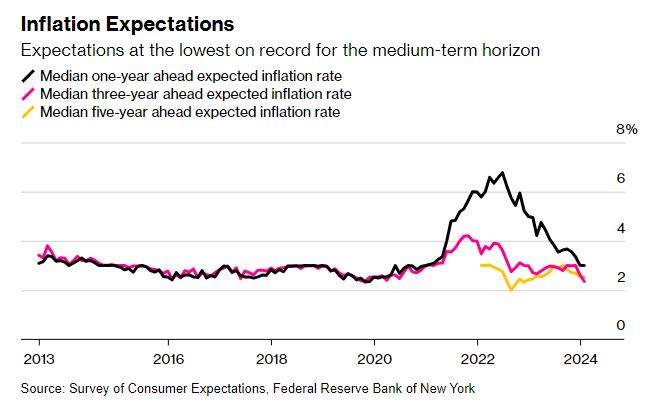
Fed Chair Jay Powell on why longer-term yields are moving higher: “It’s not apparently about expectations of higher inflation
And it’s also not mainly about shorter term policy moves.” He probably has a point as #realyields are surging toward 2.5%, the highest since 2008. So what else can explain the surge in bond yields? Hints: 1) 1. A resilient economy — Q3 REAL GDP growth is expected to be around 3% annualized, well above trend growth of 1.5% to 2%, driven in large part by a resilient labor market and a strong consumer 2) Supply/demand imbalances — Given the growing U.S. fiscal deficit, the Treasury Department has been increasing its auction sizes for U.S. Treasury bills and notes. This year, the total amount of Treasuries issued in auctions is expected to climb to over $3 trillion, higher than at any year over the past decade (excluding 2020). This figure is expected to increase next year. Meanwhile, some of the natural demand for these bonds has moderated: The Fed is undertaking QT (reducing its holding of Treasuries by about $650 billion over the last year) and some foreign buyers, such as China, have slowly been reducing their holdings of U.S. Treasuries as well. Source: Lisa Ambramowitz, Bloomberg, Edward Jones
Investing with intelligence
Our latest research, commentary and market outlooks