
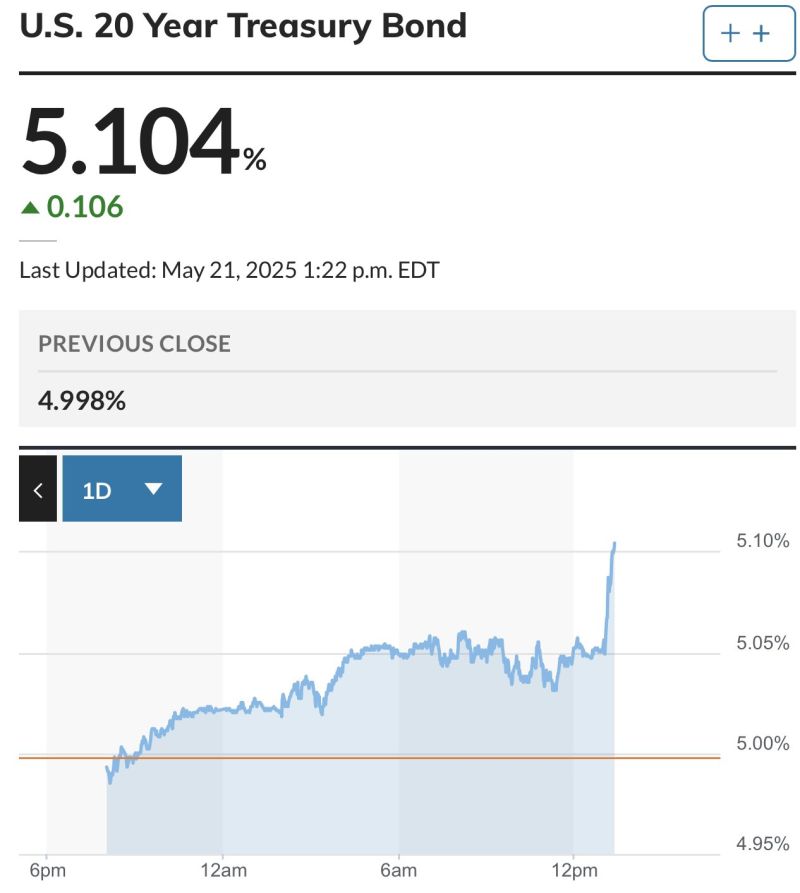
In case you wonder why stocks when down yesterday
BOND AUCTION FOR THE US 20-YEAR TREASURIES WAS UGLY Because of the lack of bidders…it caused the 20-year bond yield to surge to 5.1%. Stock markets didn't like it Source: amit @amitisinvesting
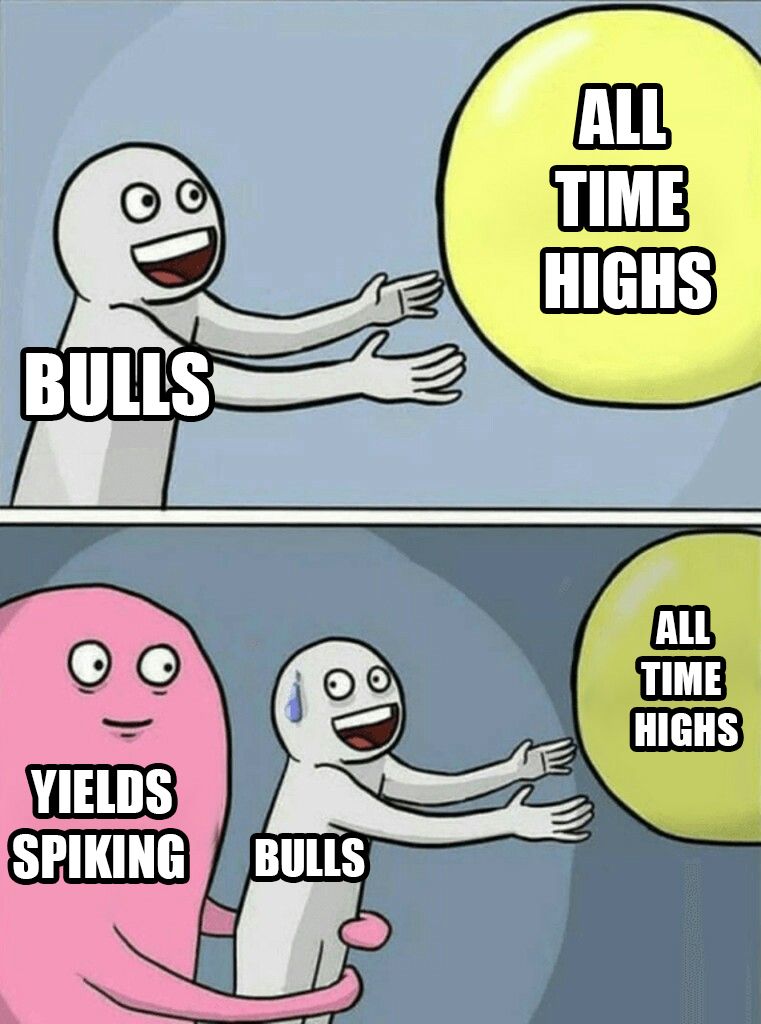
Are rising bond yields the elephant in the room for equities?
Source: Trend Spider
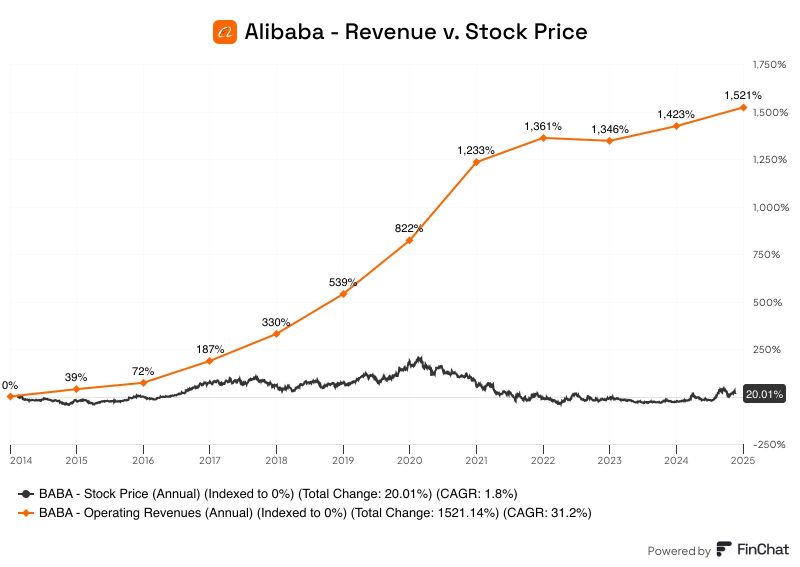
What a wild chart...
Alibaba Revenue v. Stock Price Revenue: +1,521% Stock Price: +20% $BABA Source: FinChat @finchat_ioRevenue v. Stock Price Revenue: +1,521% Stock Price: +20% $BABA Source: FinChat @finchat_io
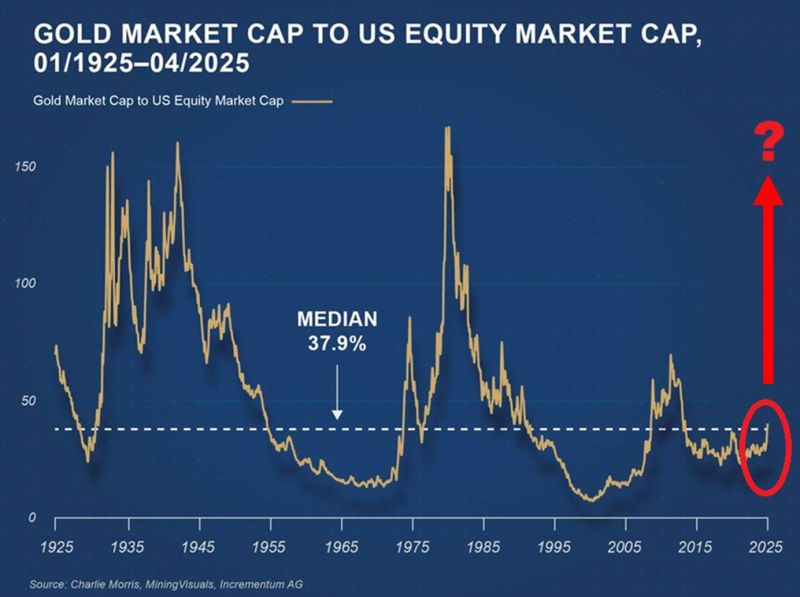
Gold market cap relative to the US equity market cap hit its highest level in 12 YEARS and is exactly at its long-term median.
Given the geopolitical and likely financial markets changes underway, will we see a repeat of the 1970s??? Source: Global Markets Investors, Incrementum AG
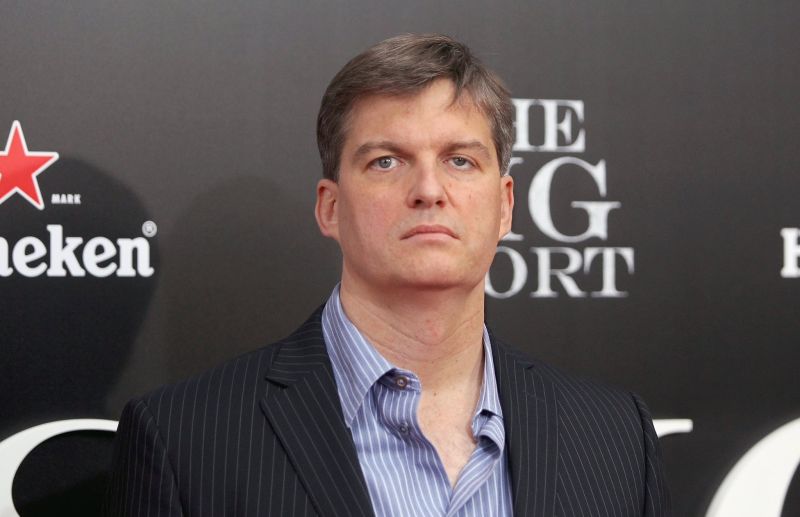
BREAKING 📢 Michael Burry says:
"The biggest financial crisis we've seen since 2008 will hit Wall Street next year, that’s why i sold 99% of my stocks"
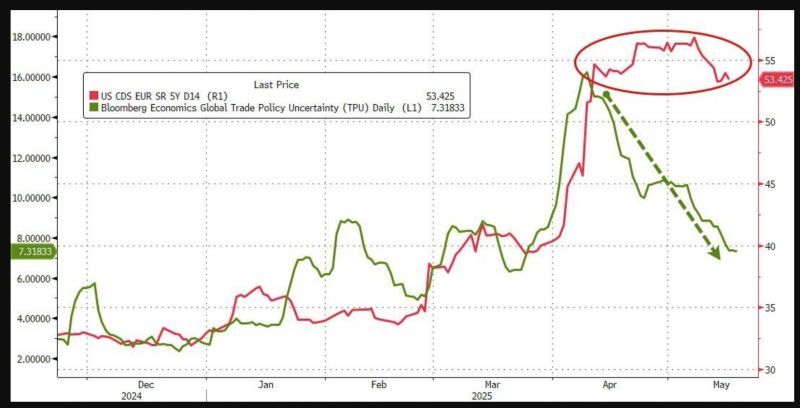
S&P 500 ekes out sixth winning day as investors look past U.S. credit downgrade.
As shown below, US CDS (red line) barely moved on the news. And any way, investors are more focus on the green line (global trade policy uncertainty) than anything else. Source: zerohedge
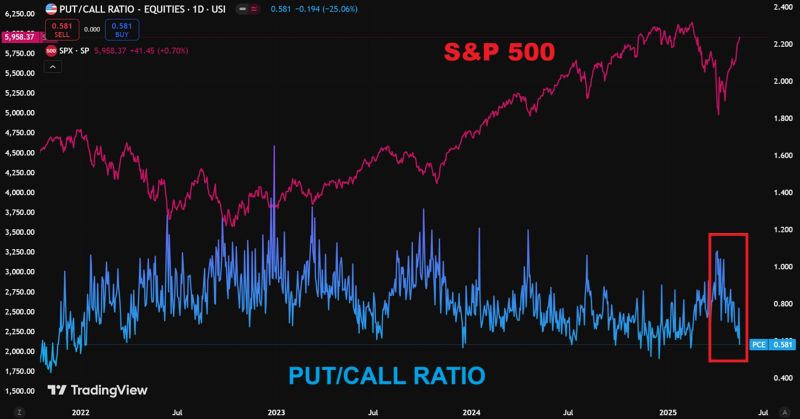
🚨Are investors too complacent?
The US equities put/call ratio fell from the highest level in 12 months to the 2nd-lowest level this year. Since the 2022 bear market, the put/call ratio has rarely been this low. Source: Global Markets Investor
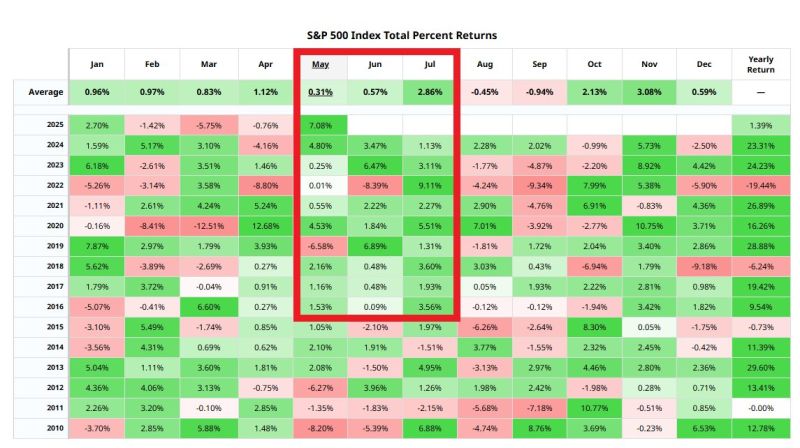
Since 2016, S&P 500 has only had 2 red months during the May-July period 📈📈📈
Source: barchart