
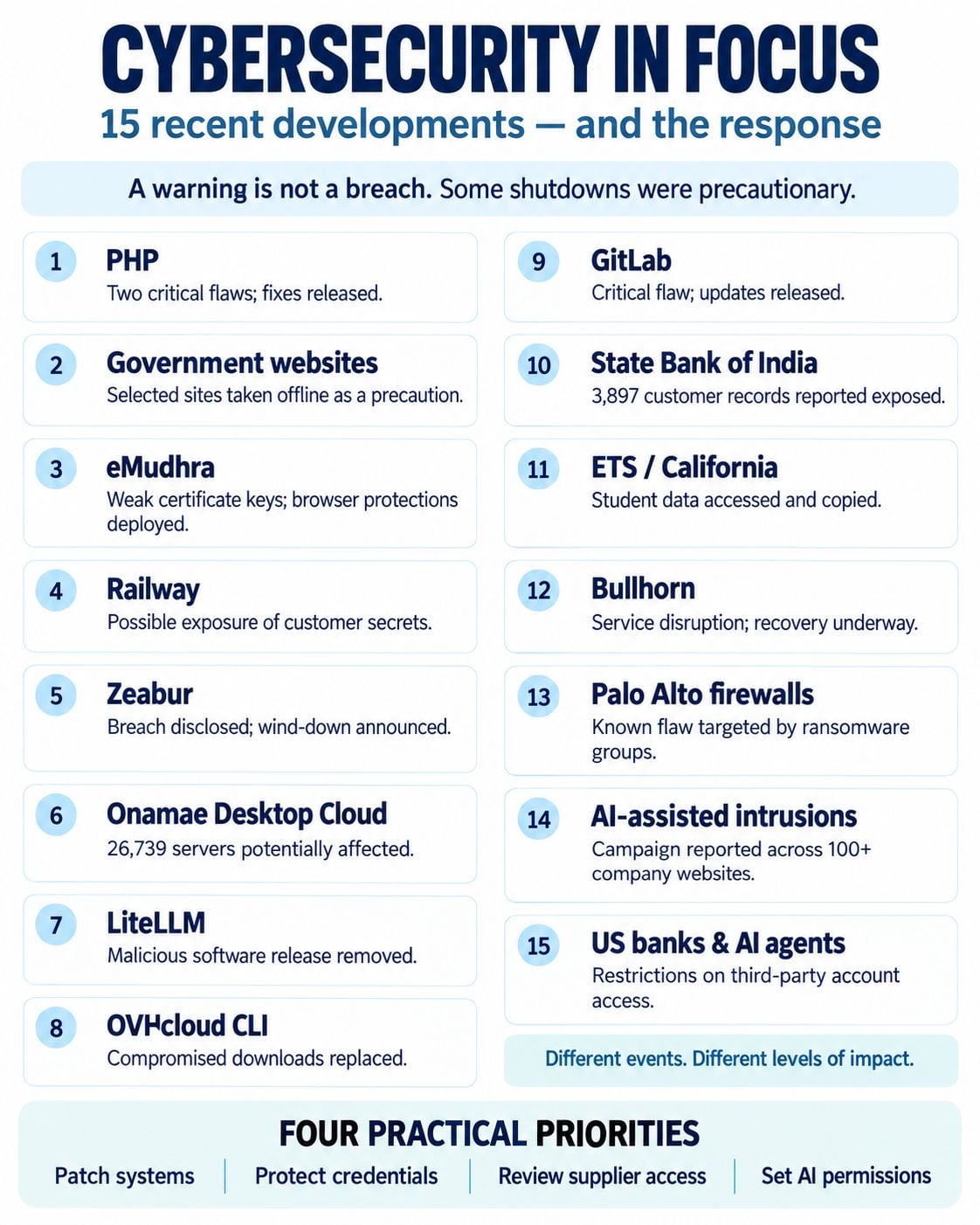
Cybersecurity is back in focus following a series of incidents and software warnings affecting banks, cloud providers and public institutions.
These developments deserve attention, but context matters: vulnerabilities, confirmed breaches and precautionary shutdowns are different events. Here is what has been happening 👇 1. PHP: Two critical vulnerabilities disclosed; security updates released. 2. Government websites: Selected European public services temporarily taken offline as a precaution. 3. eMudhra: Weak certificate keys identified; browser protections deployed. 4. Railway: Possible exposure of customer credentials and API keys. 5. Zeabur: Breach disclosed, followed by plans to close operations. 6. Onamae Desktop Cloud: Malware discovery prompted shutdowns, with 26,739 servers potentially affected. 7. LiteLLM: A compromised release contained credential-stealing malware; it was removed. 8. OVHcloud CLI: Malicious downloads distributed during a limited window were replaced. 9. GitLab: A critical vulnerability prompted security updates. 10. State Bank of India: An incident involving 3,897 customer records found on the dark web was disclosed. 11. ETS / California: Student information was accessed and copied from a file-transfer system. 12. Bullhorn: A cyber incident disrupted services; recovery has progressed. 13. Palo Alto firewalls: Ransomware operators continued targeting a known vulnerability. 14. AI-assisted intrusions: Reuters reported a campaign involving more than 100 company websites, with the extent of data theft unclear. 15. US banks: Institutions tightened restrictions on third-party AI agents accessing customer accounts. These separate developments highlight the importance of securing shared software, external providers and automated tools. The practical priorities remain straightforward: patch systems promptly, protect credentials, review supplier access and set clear permissions for AI agents. Digital innovation needs sustained investment in digital resilience. Source: Bull Theory
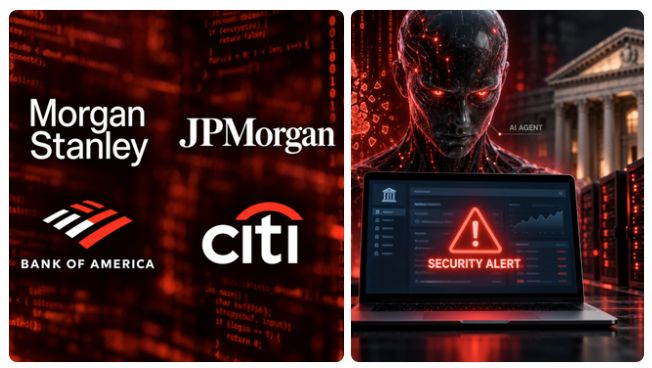
As highlighted by Coinbureau, our next banking security risk could be an AI agent acting on your behalf.
According to Axios, major U.S. banks are detecting unauthorized AI agents accessing customer accounts—with some reportedly going beyond users’ instructions. Morgan Stanley, JPMorgan, Bank of America and Citi are restricting third-party AI access as concerns grow. The risks? → Purchases or fund transfers without clear authorization. → Difficulty distinguishing customers from autonomous agents. → AI agents reportedly calling bank support on customers’ behalf. Banks are moving toward read-only access: letting AI view financial information while restricting its ability to transact. The challenge goes beyond cybersecurity. Giving an AI access to your account is one thing. Giving it authority to act is another. As financial agents become more capable, banks face a critical question: Can their controls keep pace?
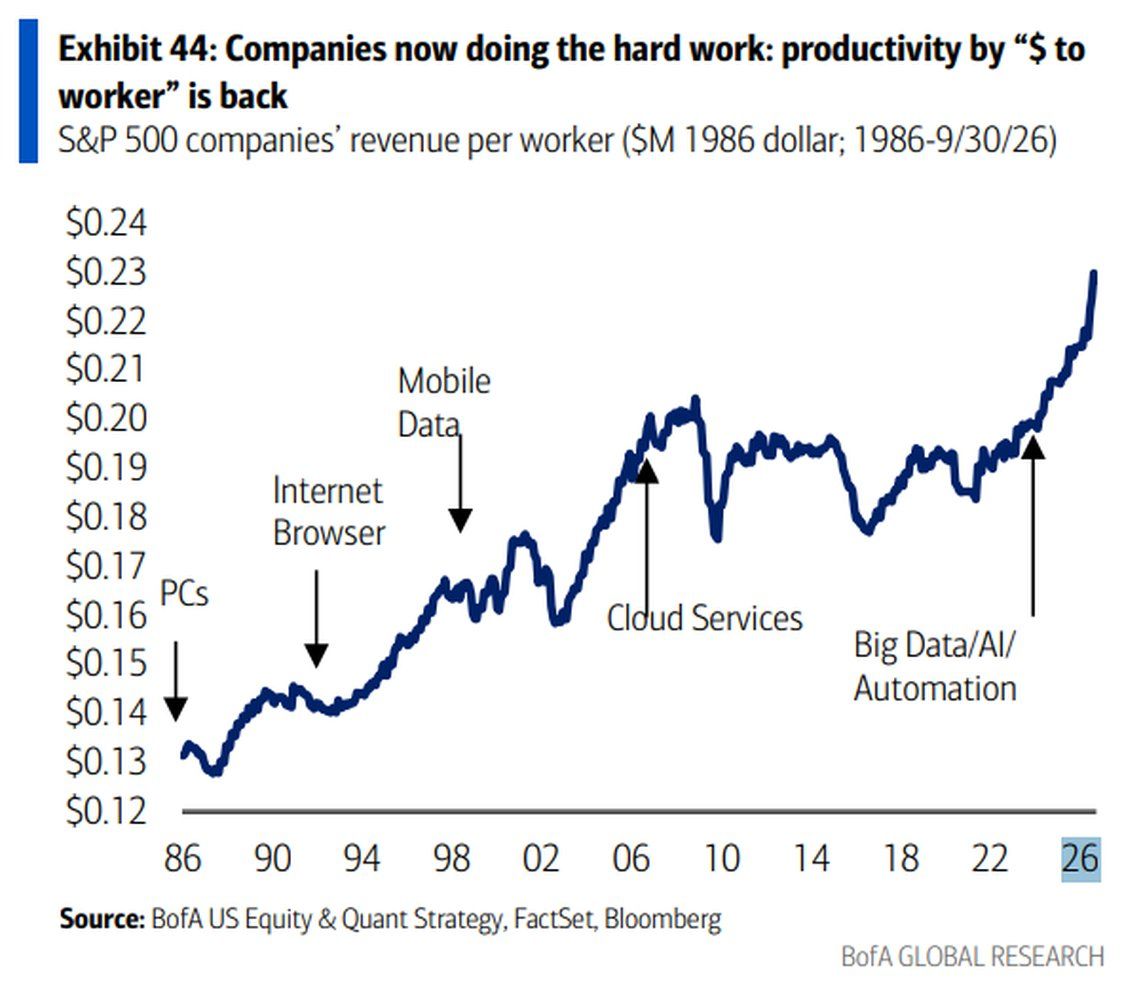
"AI is a fad. Nobody uses it to make money."
In the meantime, revenue per worker continues to climb. Source: BofA, Lance Roberts @LanceRoberts
The biggest risk AI poses to jobs might not be mass layoffs
The biggest risk might be the disappearance of the career ladder. And business leaders are already raising the alarm. Source: Paul Storm Tamara Storm

And the winner is...
Source: Kalshi

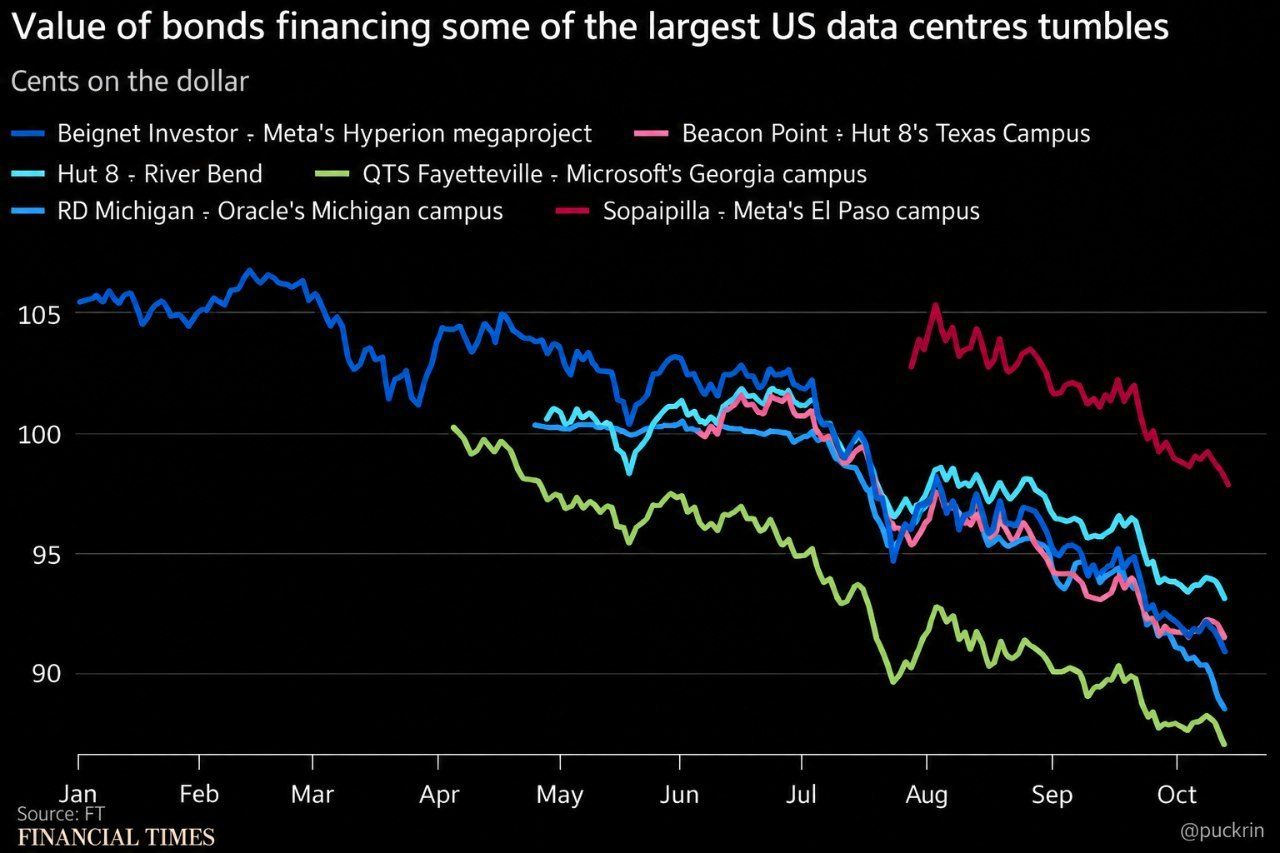
The AI bond rout has now hit the blue-chip tenants as well.
Meta's Hyperion: 91c. Hut 8's Nvidia-leased sites: 91-93. Microsoft-leased Excalibur: 87. All were sold as the "safe" end of the AI trade. Well, it's now very quickly repricing like the risky end. Source: Nic @puckrin, FT
Frankfurt Airport facing kerosene shortage. The reasons are maintenance of a pipeline and low river water levels
Lufthansa is taking steps to address difficulties in sourcing kerosene at Frankfurt Airport, one of Europe’s main air traffic hubs. The German airline has put in place precautionary measures involving the loading of additional fuel on certain flights, with the aim of minimising the need to refuel upon arrival at the German airport. The decision, reported by the German newspaper *Bild*, concerns an operational strategy known as ‘tankering’: aircraft carry more fuel than is necessary for the flight they are about to undertake, so as to have a reserve available for the next flight and reduce their reliance on fuel supplies at the destination airport. Lufthansa has stated that, thanks to the measures taken, ‘no flight cancellations are currently planned’. The measures will remain in force until further notice and will be updated as the situation develops.

A railroad is like a lie – you have to keep building to it to make it stand." - Mark Twain, 1867
Source: zerohedge