

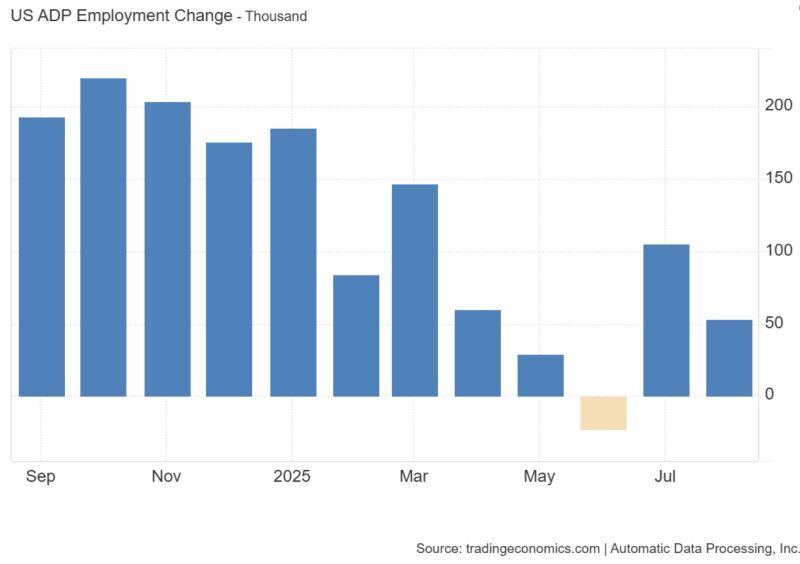
ADP: US private payrolls rose just 54K in August, down from 106K in July
That's below consensus estimates of 68k, that’s well below the 2010–2025 average of 148K. For context: the series hit a record 1.25M in Aug ’21 and plunged to -6.1M in April ’20.
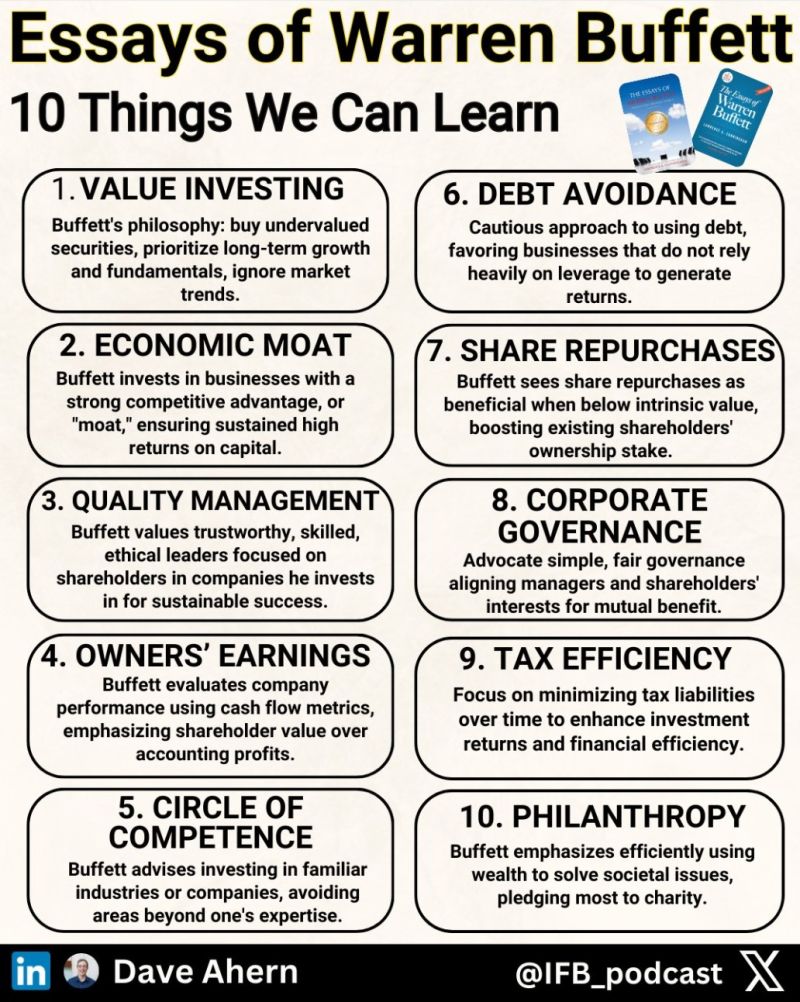
Essays of Warren Buffett
10 things we can learn. Source: The Investing for Beginners Podcast @IFB_podcast
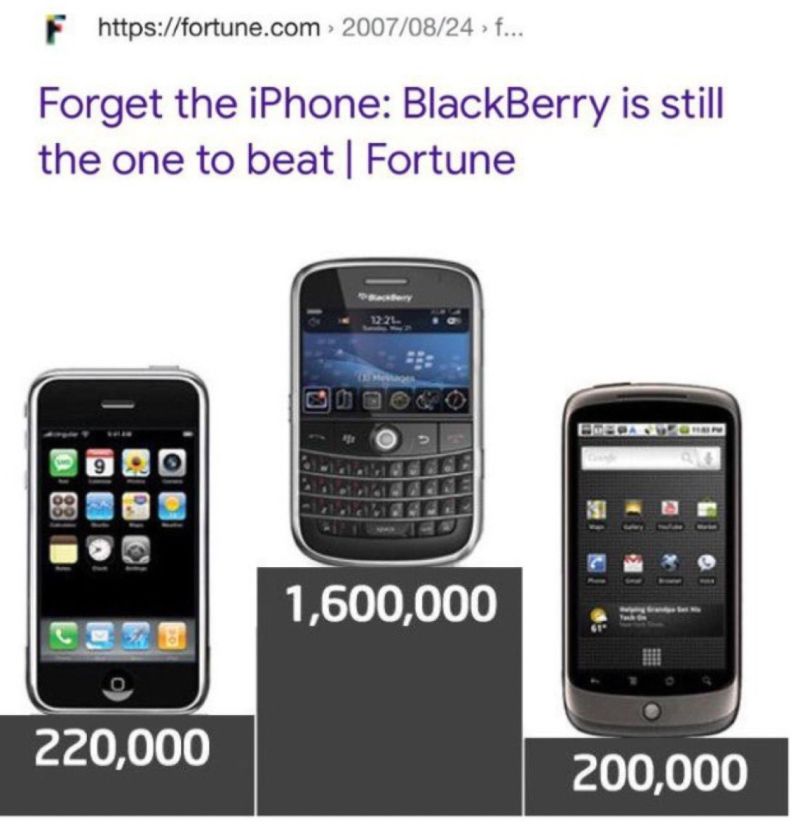
In 2007, BlackBerry was worth more than Amazon, AMD, Netflix, Nvidia and Salesforce combined
Barry Ritholtz: How little do we know about the future? A great way to figure that out is to look to our past, to see what we previously thought about what the future will hold. To wit: 26 years ago, the image above came from the cover story of Fortune magazine: “There’s a lot of buzz in the smartphone business lately, with Apple’s (AAPL) iPhone turning the mobile world upside down and Nokia’s (NOK) upcoming phone announcement providing a new challenge. Despite all the hype, though, Research in Motion’s (RIMM) BlackBerry is still the most formidable force in U.S. smartphones. This statement, of course, is gadget heresy. Popular opinion holds that the iPhone is today’s must-have device, and none of the others stand a chance. But while the iPhone is revolutionary, it’s not yet positioned to truly challenge RIM’s foothold in the smartphone market.” Source: Jon Erlichman @JonErlichman
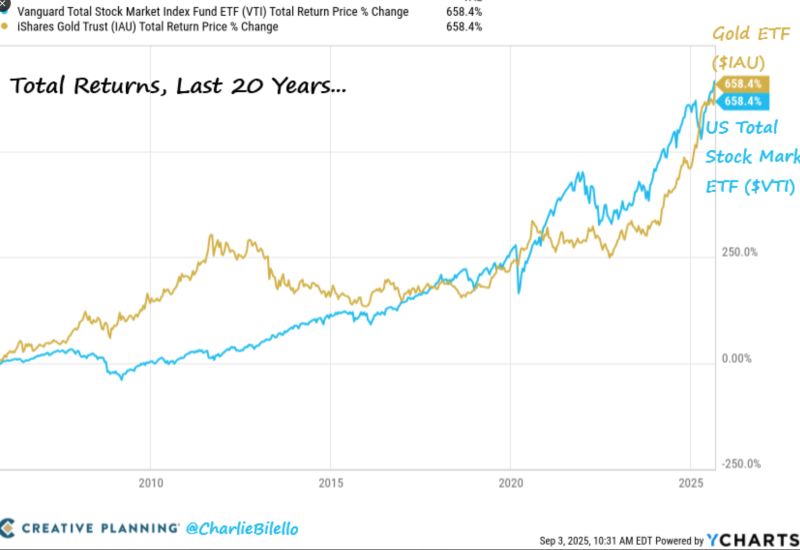
Total Returns over Last 20 Years:
US Stock Market $VTI: +658.4% / Gold $IAU: +658.4%, Source: Charlie Bilello
INSIGHT: India, the U.S. and Pakistan top Chainalysis’ 2025 Global Crypto Adoption Index, followed by Vietnam and Brazil
Source: Cointelegraph

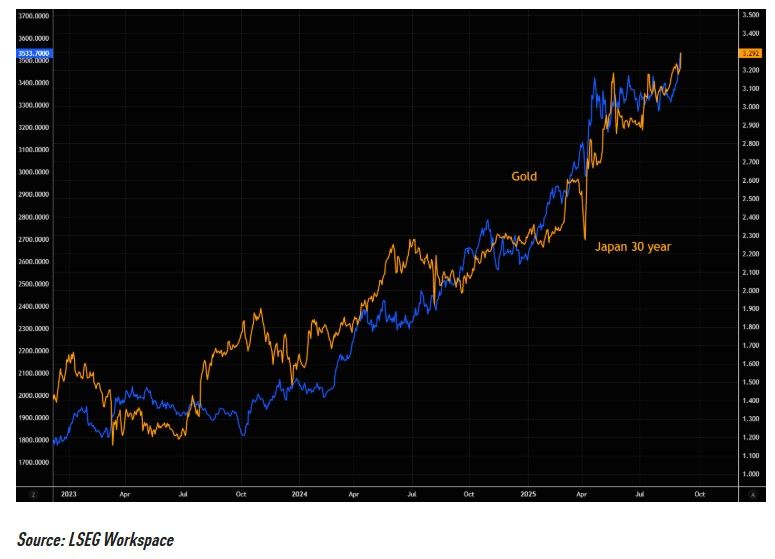
Gold knows
Gold is following the Japanese 30 year, pricing in "spillover" risks... Source: TME, LSEG workspace
U.S. Top 10 Tech Giants Reach $22 Trillion Market Cap in August 2025
As of August 29, 2025, the combined market capitalization of ten leading U.S. tech companies: Alphabet, Amazon, Apple, Broadcom, Meta, Microsoft, Netflix, Nvidia, Oracle, and Tesla, hit a record $21.95 trillion, representing roughly one-third of the U.S. equity market. From 2012 to 2025, their market cap grew at a 23% compound annual growth rate (CAGR), underscoring their dominant role in shaping market performance. Source: Econovis

In the AI race between Alphabet $GOOGL and Microsoft $MSFT, Alphabet is once again clearly ahead
Since the launch of ChatGPT, Alphabet stock has risen nearly 128%, while Microsoft's share price has only increased 98%. Source: HolgerZ, Bloomberg
