
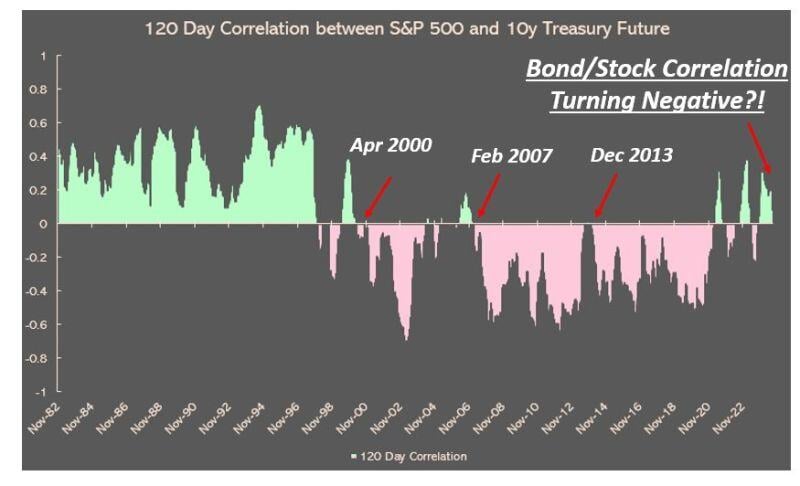
Is a massive regime change in markets taking place?
This week has again been volatile for stocks. But the big news for investors is for the first time in a few years, bonds are acting again as a hedge against stock market drawdowns. Or in other words: after a period of positive correlation which wrecked 60/40 portfolios, the stock/bond correlation is turning negative again. This is an important development. Source: Alfonso Peccatiello
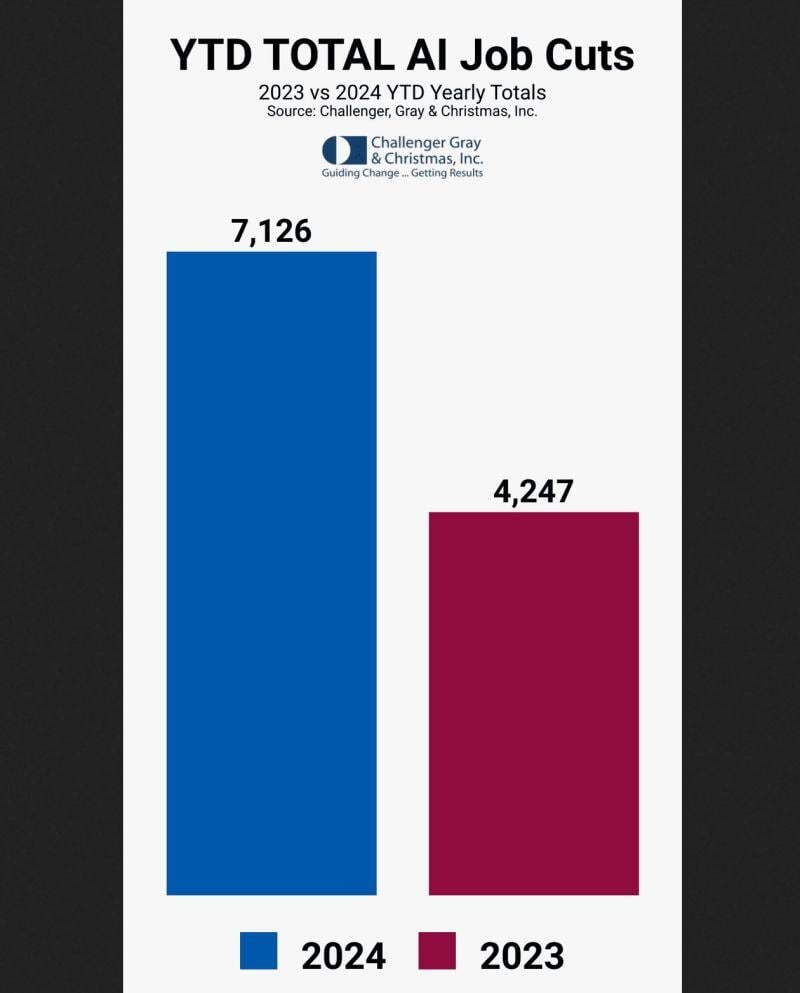
An increasing number of job cuts are also being attributed to AI in 2024 vs 2023
Source: Markets & Mayhem
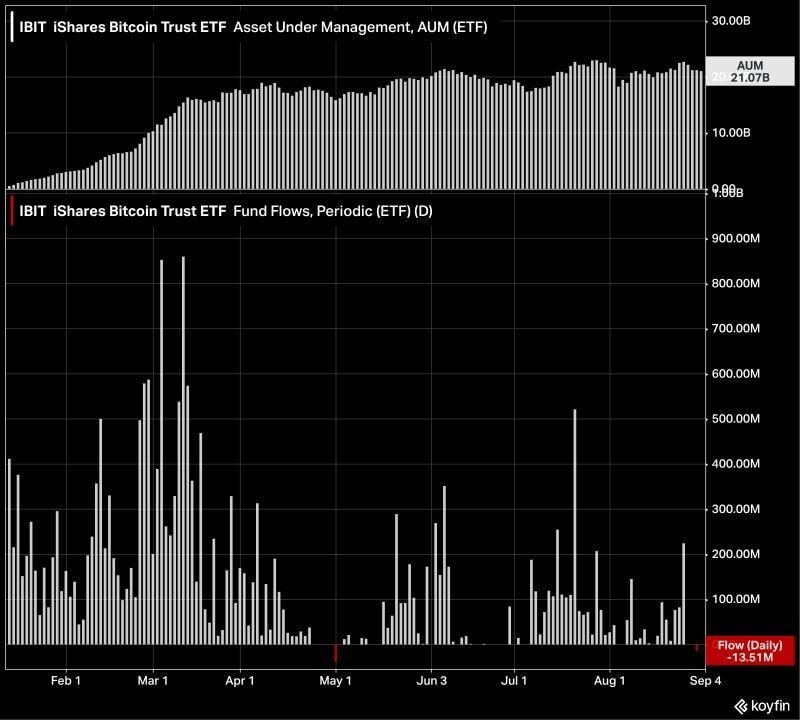
First negative outflow for Blackrock's $IBIT Bitcoin ETF since May.
Source: Koyfin
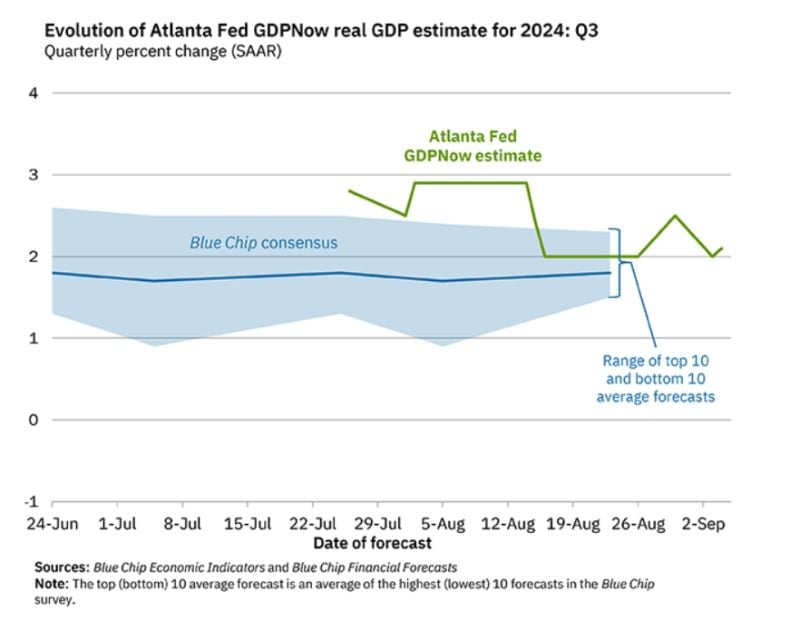
Ahead of today's Non-Farm-Payrolls print, Atlanta Fed GDPNow is forecasting just 2.1% US GDP growth for Q3
.
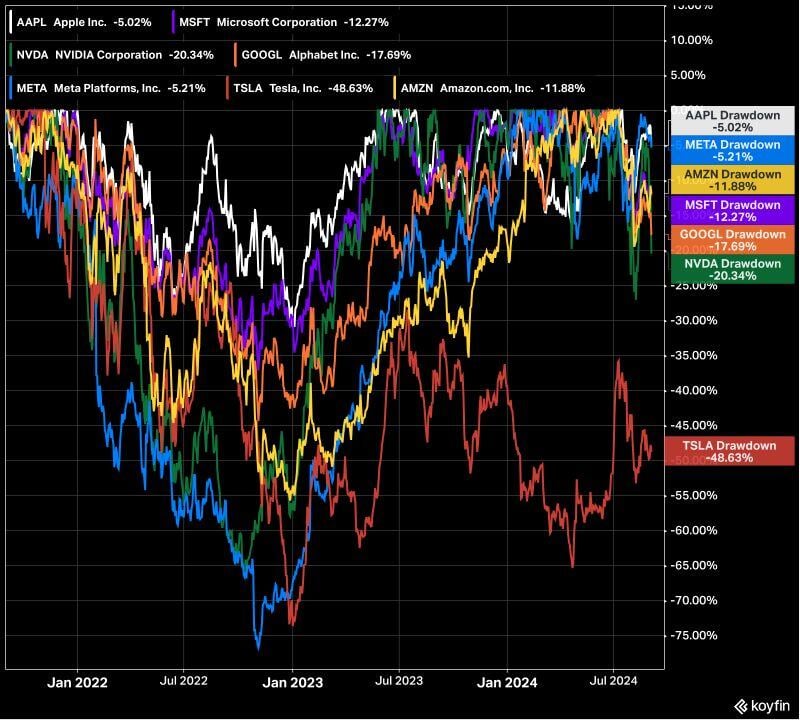
The current drawdowns across the Magnificent Seven:
• $AAPL Apple: 5.0% • $META Meta: 5.2% • $AMZN Amazon: 11.9% • $MSFT Microsoft: 12.3% • $GOOGL Alphabet: 17.7% • $NVDA Nvidia: 20.3% • $TSLA Tesla: 48.6% Source: Koyfin
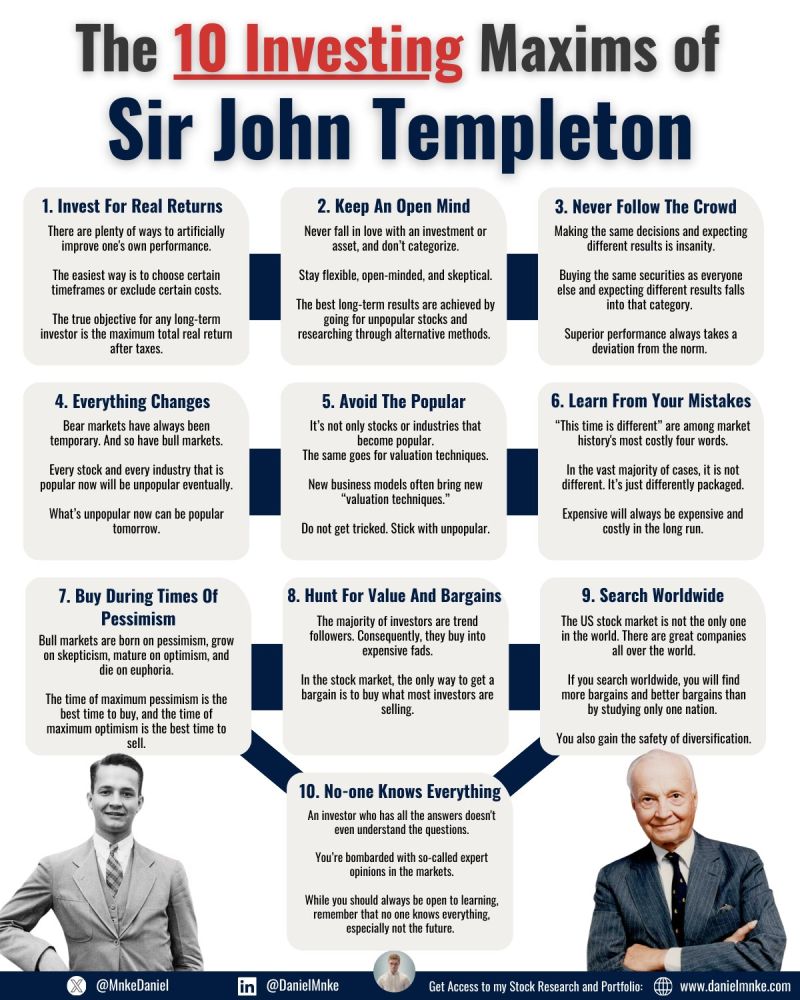
Sir John Templeton has been one of the most successful investors ever.
His investing career ranged over half a century. These were the 10 Maxims he invested by: Source: @MnkeDaniel on X
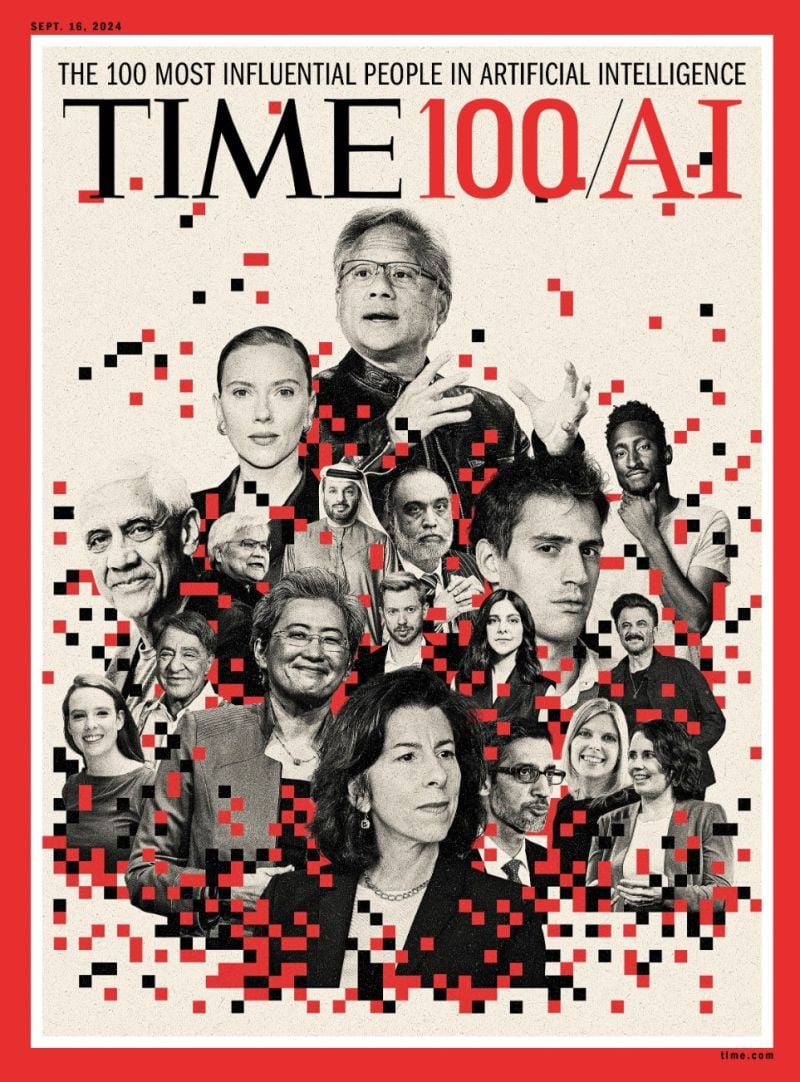
TIME's new cover: The 100 most influential people in AI
Note that Elon Musk is missing on this cover page while Scarlett Johansson appears nearby the CEO of Nvidia. Indeed, according to TIME, Scarlett Johansson is more influential in AI than Elon Musk...
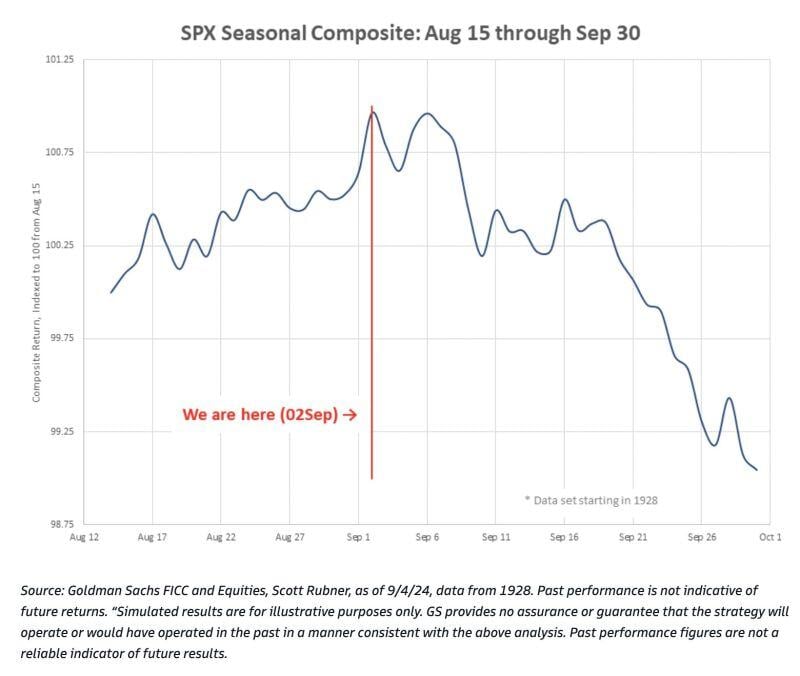
This Goldman chart shows that September is historically weak for global equities and risk assets w/avg return at -2.31%.
Sept 16th has been a seasonal turning point, w/2H Sept being the worst performing 2 weeks of the year, BUT maybe this seasonality gets pre-traded by market participants this year. Goldman says flow-of-funds, such as the quarter-end pension rebalancing can explain the annual weakness in September. Source: HolgerZ, GS