

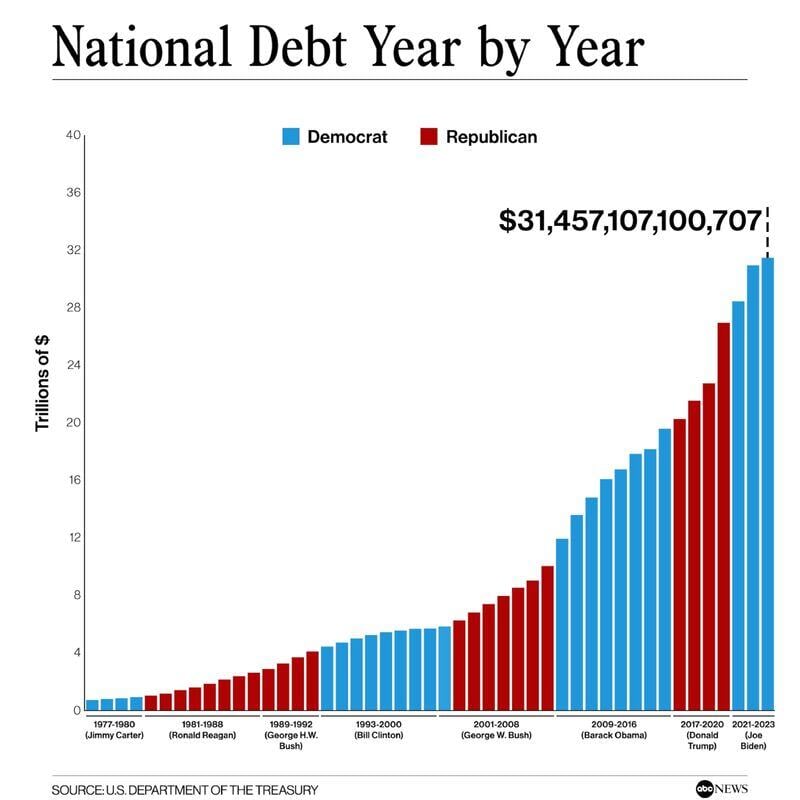
There are 3 sure things in life: death, taxes… and the rise of National debt (whoever is in the White House)
Source: EricOfRivia⚡️🍕
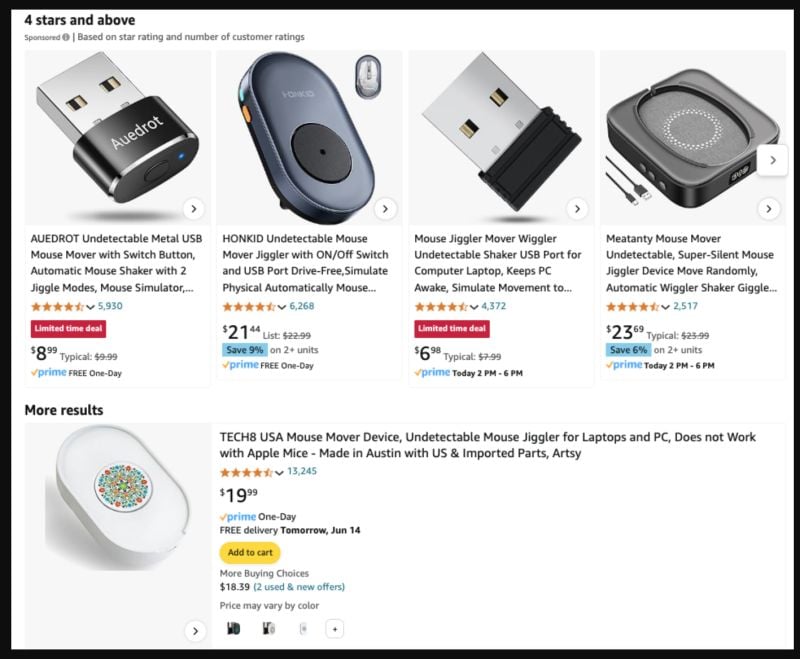
Wells Fargo Fires Employees Over "Mouse Jigglers"
In the era of hybrid work, with employees splitting their time between two days in the office and three days working remotely, employers have ramped up using productivity monitoring software. However, employees have outsmarted some of these surveillance programs with gadgets like mouse movers, otherwise known as 'mouse jigglers.' The popularity of mouse jigglers has exploded on TikTok in the last several years. Firms have been cracking down on these devices following a surge in fake work activity, which has weighed on productivity. Wells Fargo, in a new disclosure with the Financial Industry Regulatory Authority, first reported by Bloomberg, had terminated over a dozen employees in its wealth- and investment-management unit for their use of mouse jigglers. They were "discharged after review of allegations involving simulation of keyboard activity creating the impression of active work," according to the disclosures. On Amazon, some of the top-ranking mouse jigglers sold have thousands of reviews and range in price between $6 and $25. Google Trends shows a massive search spike for these devices in 2022. The bank's Finra disclosure does not indicate whether the employees were fired for faking work at home or in the office. It's unclear how the employees were caught, and if the bank opted to use other forms of surveillance to catch the employees faking work. Major banks, including JPMorgan Chase and Goldman Sachs, were among the most aggressive institutions in ordering workers back to the office after the government enforced lockdowns. The jiggler is just proof of the unintended consequences of remote working. Instead of employers micromanaging their workforce with mass surveillance, perhaps implementing baseline objectives for them... Source: www.zerohedge.com
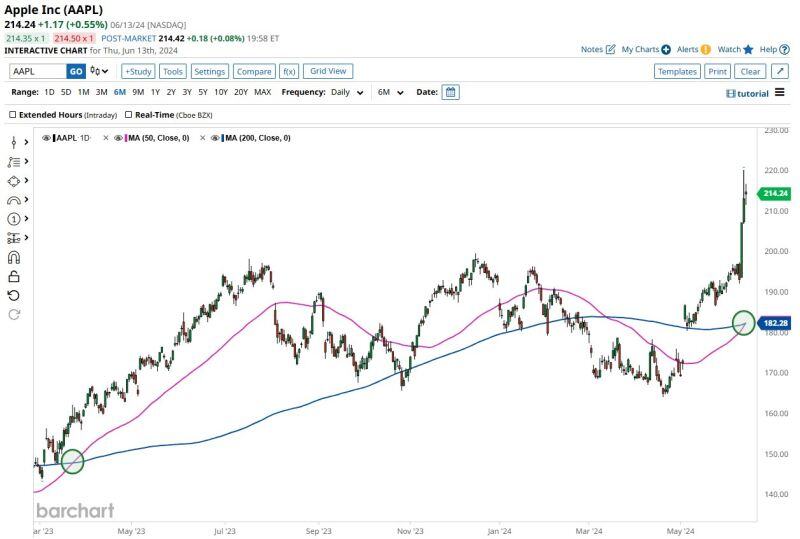
Apple $AAPL forms a Golden Cross for the first time since March 2023 🚨
The last Golden Cross sent shares soaring by 25% over the next 4 months! Source: Barchart
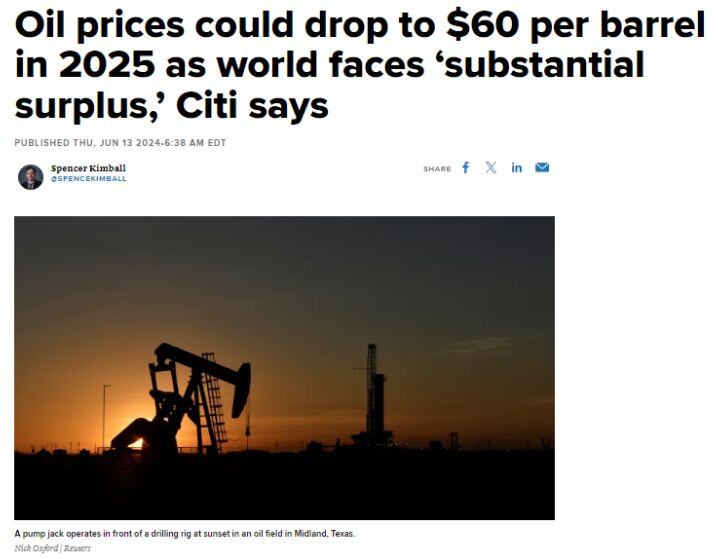
Brent Crude Oil could plummet to $60/barrel in 2025 warns Citi
Source. Barchart
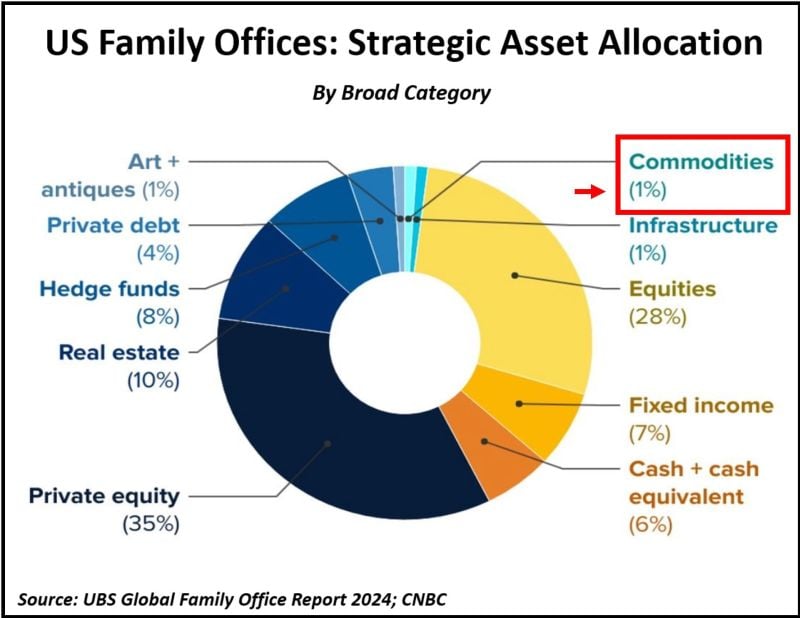
US family offices currently allocate just 1% of their assets to commodities, including gold.
Source: UBS, Tavi Costa
BREAKING >>> The Fed held rates unchanged as expected...
*FED HOLDS BENCHMARK RATE IN 5.25-5.5% TARGET RANGE And changed wording on inflation (from a "lack" of progress): *FED: INFLATION MADE MODEST FURTHER PROGRESS IN RECENT MONTHS BUT... The dot-plot was hawkish, adjust to just one 25bps cut in 2024 (and four 25bps cuts in 2025) *FOMC MEDIAN FORECAST SHOWS 25 BPS RATE CUTS IN '24 VS 75 BPS *FOMC MEDIAN FORECAST SHOWS 100 BPS RATE CUTS IN '25 VS 75 BPS There is another notable development: The longer-run estimate of the federal funds rate has gone up to 2.8% now, in the median forecast. That’s the second straight increase. Last time it had ticked up to 2.6% from 2.5%. So, in six months, policymakers have added more than a quarter percentage point to where they see the benchmark rate over the longer haul -- the so-called neutral rate. Additionally, The Fed increased its end-2024 expectations for inflation...but kept its unemployment expectations unchanged... There were 10 Fed members who saw rates at 4.625% or below by end 2024 in March... now there are none... There were NO dissents today, extending the streak of zero votes against the FOMC policy decision to 16 meetings, the longest period of no dissents since Alan Greenspan’s 17-meeting streak from August 2003 to September 2005. Today’s reassuring CPI report was relayed to FOMC members during the meeting, but many may be waiting for additional inputs (eg, PPI, PCE) before changing their forecasts. Bottom-line: The Fed re-arranged 2024-2025 dots from (2+3) to (1+4), and marked-to market their Core PCE forecast for year-end - signalling they are just being extra careful, and want some more evidence before committing to a cut. On our side, we still expect monetary policy to normalize in the months to come. We expect the Fed to continue their "meeting by meeting" approach with our base case being a cut in September. Indeed, it will take at least several more months of data to gain confidence that inflation is behaving in a manner the Fed finds acceptable. One key takeaway from today is that there’s a significant number of FOMC members that may prefer to wait even longer than September if upcoming data do not give them additional cover. Source: Bloomberg, www.zerohedge.com
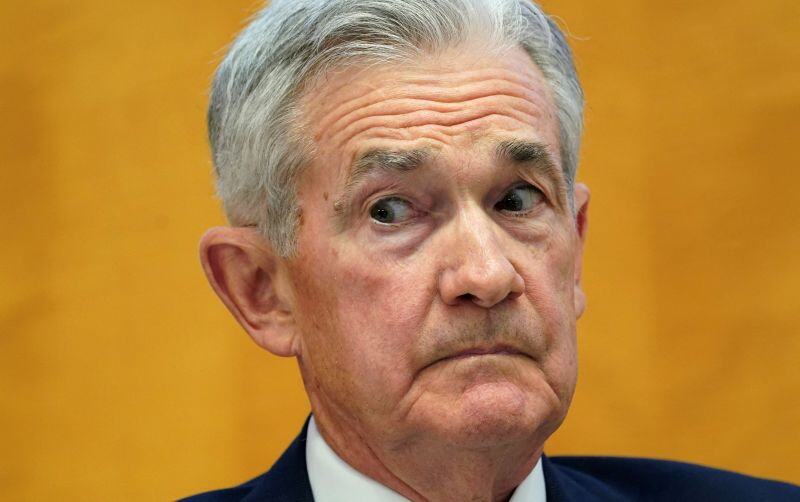
June FOMC decision >>>
The biggest surprise in the dot plot: 3 cuts in 2024 revised to just 1 cut Source: zerohedge

Brussels will impose tariffs of up to almost 50 per cent on Chinese electric vehicles, brushing aside German government warnings that the move could spark a trade war with Beijing.
https://on.ft.com/3yZxBnW