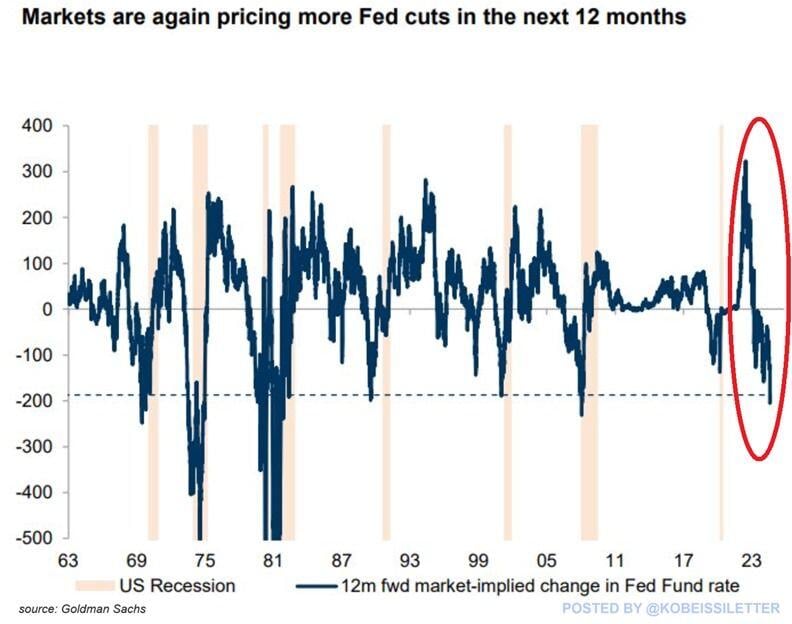

US government spending is expected to hit 24.2% of GDP in 2024, significantly above the previous 39-year average of 21.1%, according to the CBO.
At the same time, revenues are projected to reach 17.6% of GDP, just 0.4 percentage points above the 1984-2023 average. As a result, the US deficit is estimated to hit 6.6% of GDP, almost DOUBLE the 39-year average. In nominal terms, the deficit is set to hit $1.9 trillion in 2024, the highest level since 2021 when the deficit was $2.8 trillion in response to the pandemic. US government spending relative to GDP is expected to rise rapidly while revenue stagnates. Multi-trillion Dollar deficits are the new normal. Source: The Kobeissi Letter
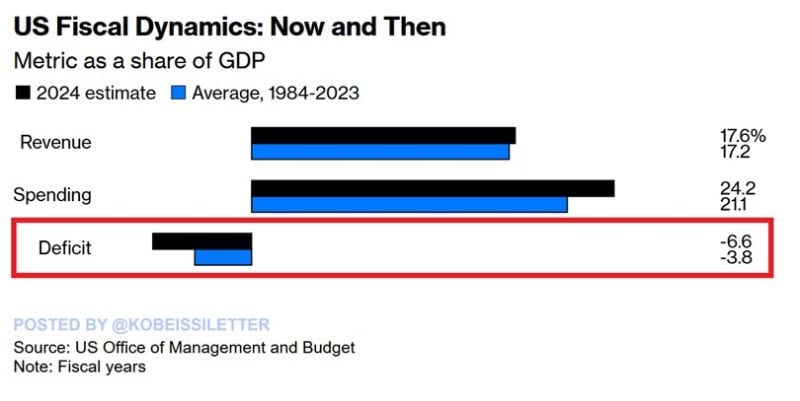
What’s the best explanation for why inflation has fallen so much more in the United States than any other G7 country?
Source: Erik Brynjolfsson @erikbryn on X
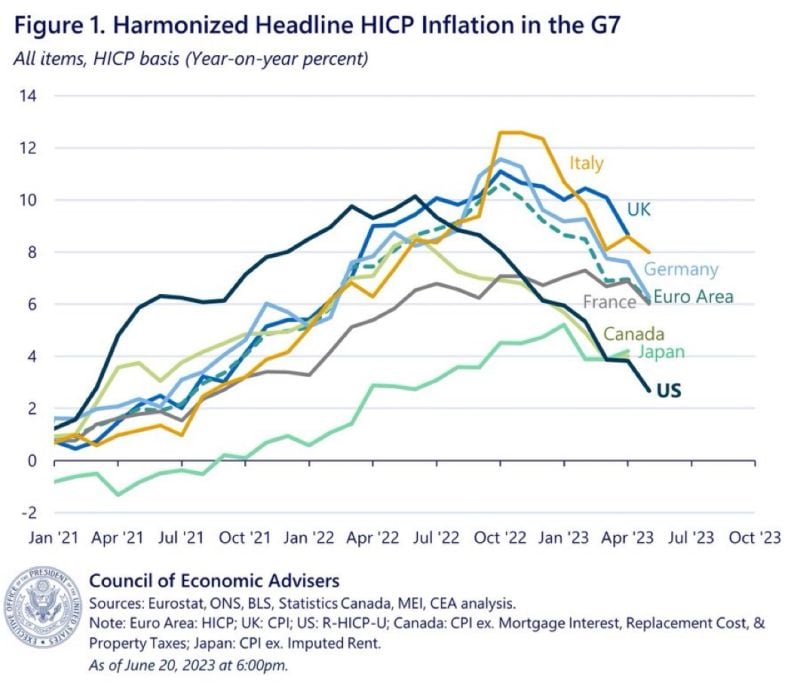
'While cyclicals have trailed defensives recently, they are still priced for an economic expansion.'
https://lnkd.in/eH8idMiZ ht @dailychartbook thru Jesse Felder on X, Bloomberg
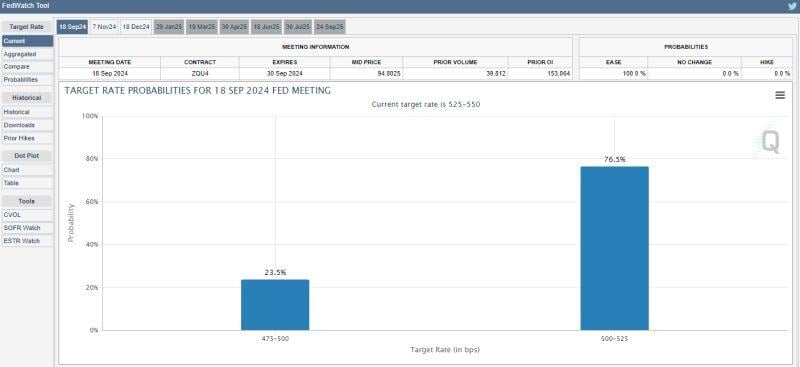
JUST IN 🚨: Odds of a 50 bps interest rate in September has plummeted to less than 25%
Source: Barchart
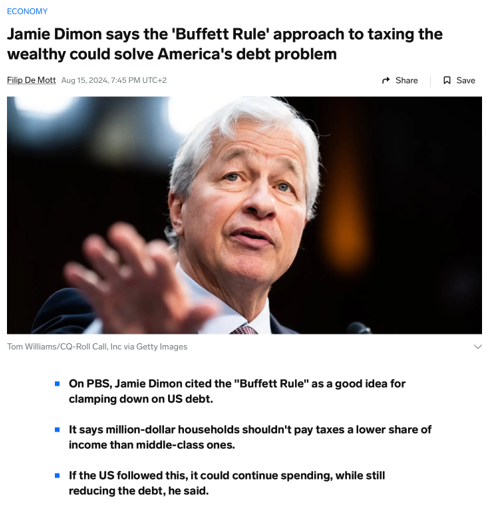
JP Morgan's Jamie Dimon wants to hit US millionaires with the "Buffet rule" to tackle the national debt
Source: Business Insider
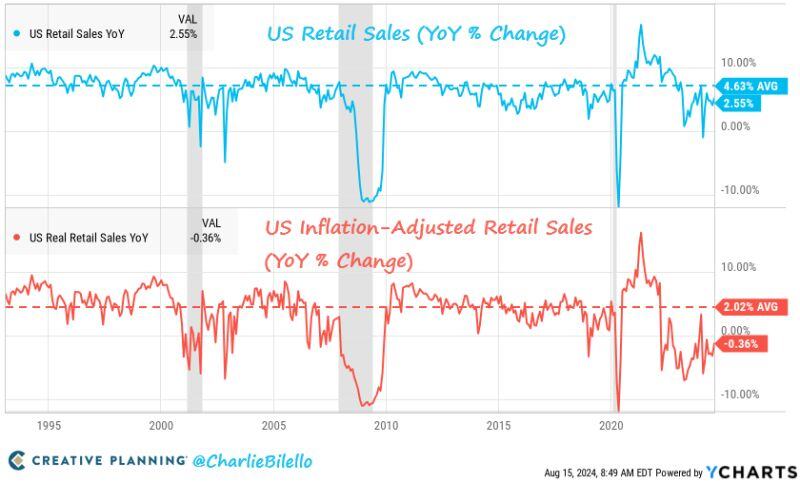
US Retail Sales increased 2.6% over the last year and this number is taken positively by markets
Retail sales came in better than expecting indicating that hashtag#consumers are still strong. Retail Sales month-over-month is the best number since January 2023. There are few caveats though: 1) After adjusting for higher prices they were down 0.4%. 2) Both of these numbers are well below the historical averages of +4.6% nominal and +2.0% real. 3) Previous numbers were revised downward Source: Charlie Bilello
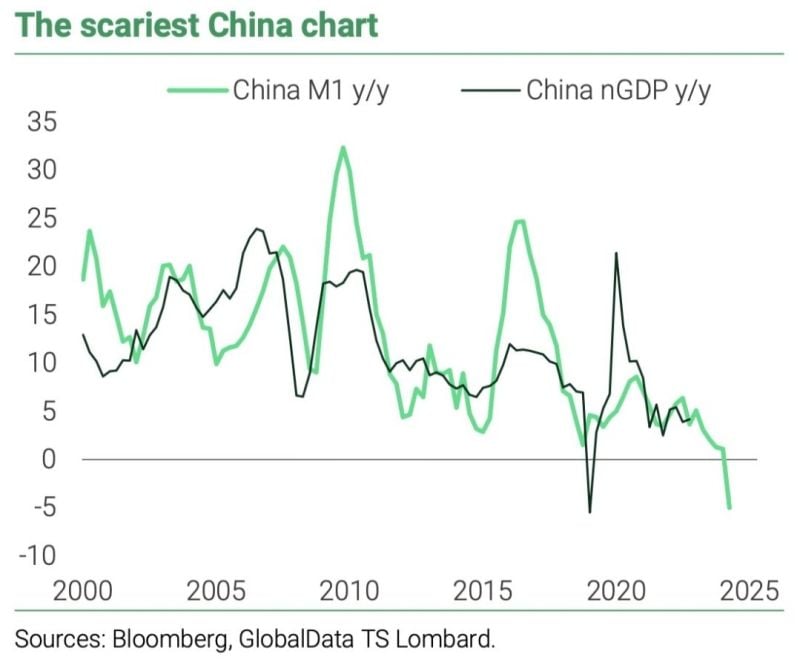
The scariest China chart
Source: TS Lombard, Bloomberg, Win Smart
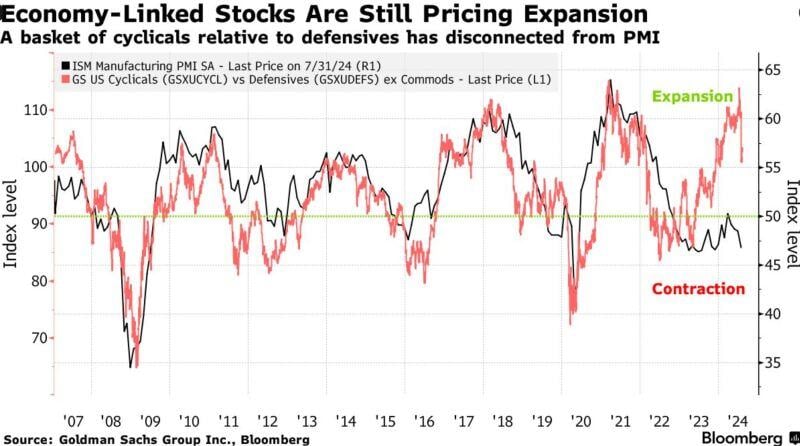
Interest rate futures are now pricing in 8 Fed rate cuts over the next 12 months, the most since the 2008 Financial Crisis.
Market expectations have sharply shifted over the last week toward more cuts in anticipation of economic weakness. Over the last 60 years, every time the market expected 200 basis points of rate cuts, a recession in the US followed within several months. Source: The Kobeissi Letter, Goldman Sachs