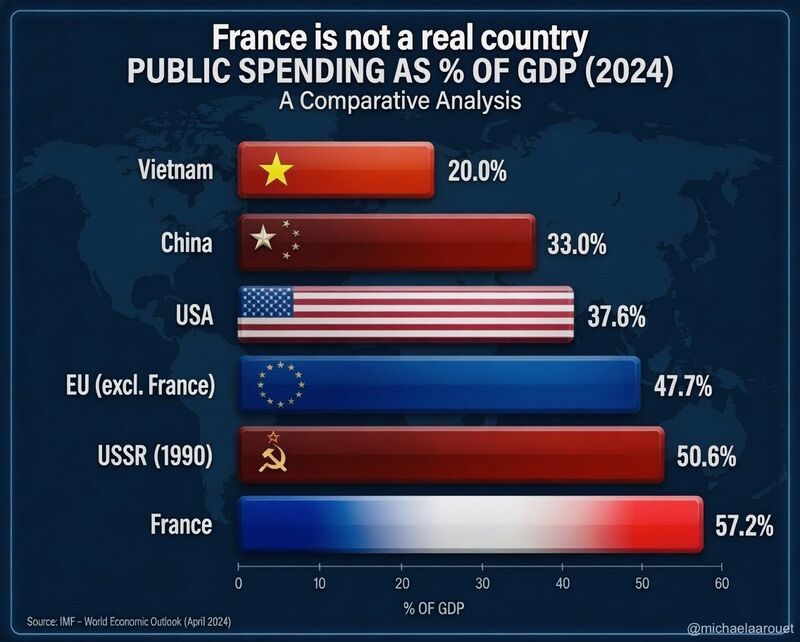

The US equity market is recording massive inflows
Source: EPFR, Goldman
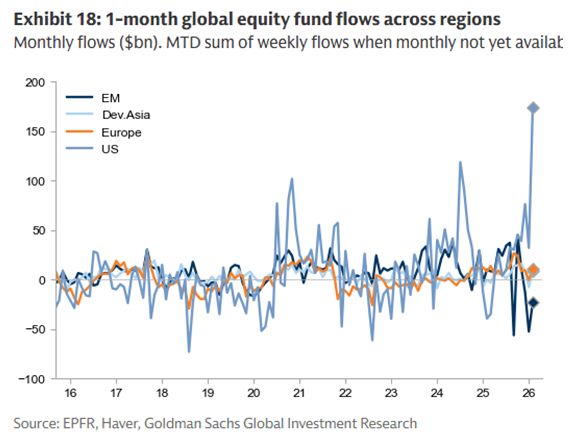
The end of US exceptionalism? really?
Source: Goldman, EPFR
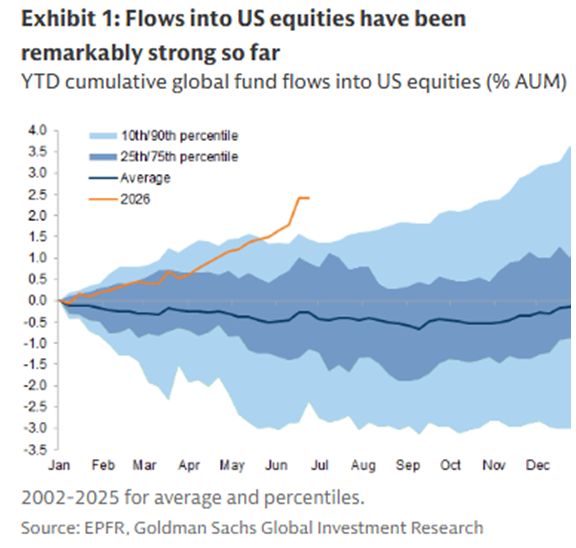
BREAKING: Gold is down -2% in the last 2 hours, falling below $3,950 and hitting a 34-week low.
Gold is now down -30% from its peak, wiping out over $12 trillion in market value. Source: Bull Theory @BullTheoryio
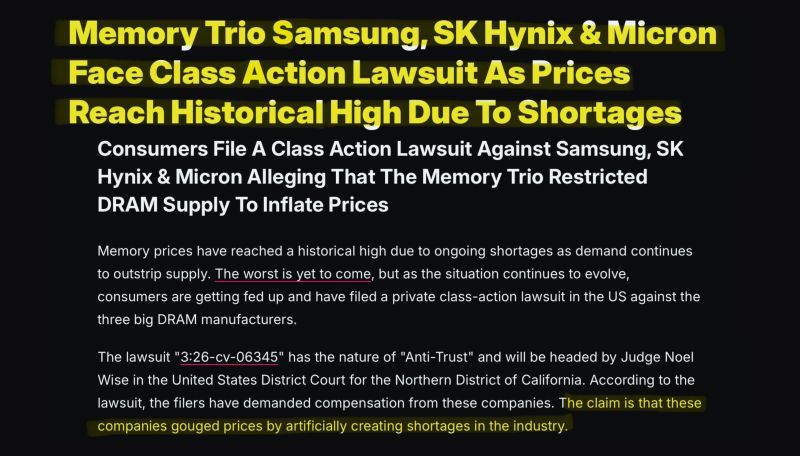
In case you missed it...Samsung Electronics, SK Hynix, and Micron Technology were sued on June 25 in federal court over allegations of collusion and price-fixing in the commodity memory market.
Filed in the Northern District of California, the complaint names 17 plaintiffs — a mix of individuals and small businesses — who claim the three chipmakers conspired to keep commodity DRAM artificially scarce in order to inflate prices, according to Wccftech Source. Yahoo Finance
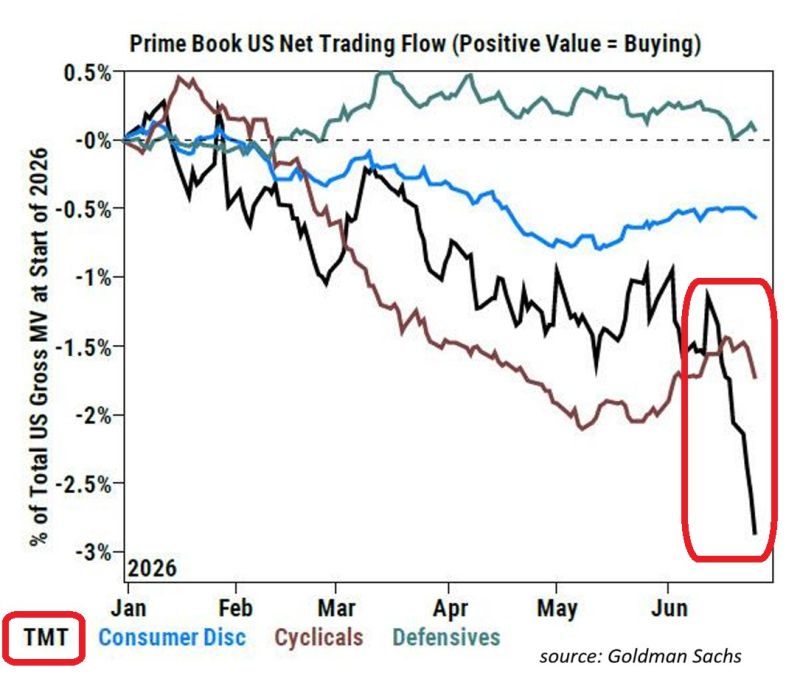
Hedge funds are abandoning US tech stocks at the fastest pace in over a decade:
The Technology, Media, and Telecom sector has seen the largest and most sustained outflows of any US sector in 2026. The net selling accelerated sharply in June to nearly -3% of total US gross market value, according to Goldman Sachs. Last week, hedge funds sold the most US Information Technology stocks in more than 10 years, in both dollar and percentage terms. This was driven by long and short sales at a ratio of roughly 1.3 to 1. Semiconductors and semiconductor equipment accounted for more than half of the total tech sales, having now been net sold for 8 consecutive sessions. Hedge funds are running to the exit in US tech. Source: Global Markets Investor, Goldman Sachs
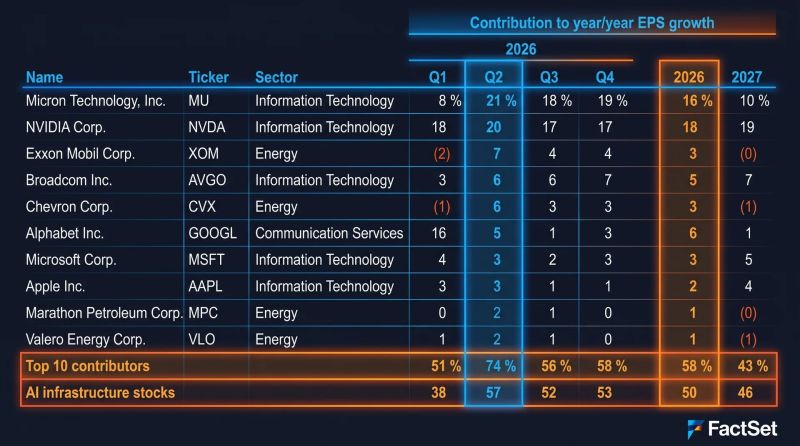
The top 10 contributors to S&P 500 earnings growth.
Source: Markets & Mayhem, Factset
The odds of the Clarity Act passing into law this year spikes up to 49% on Polymarket
Source: Bitcoin Magazine

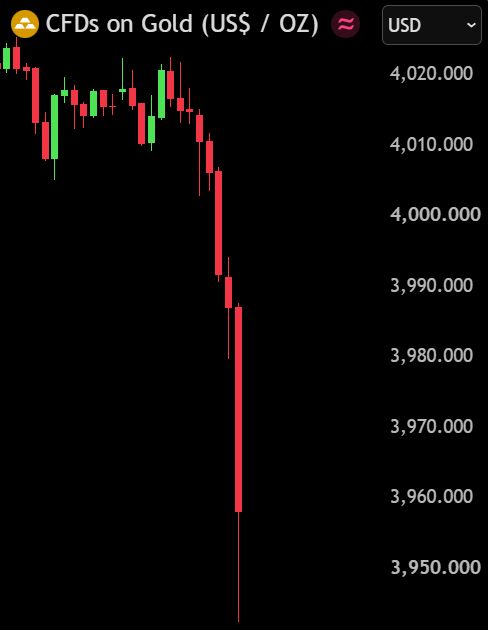
France has higher public spending as % of GDP than the Soviet Union, and now they seriously demand new taxes at the EU level to finance their absurd public spending?
Germans were just told that they need to work much longer before retiring, why should the French retire so early? Source: Michel A.Arouet