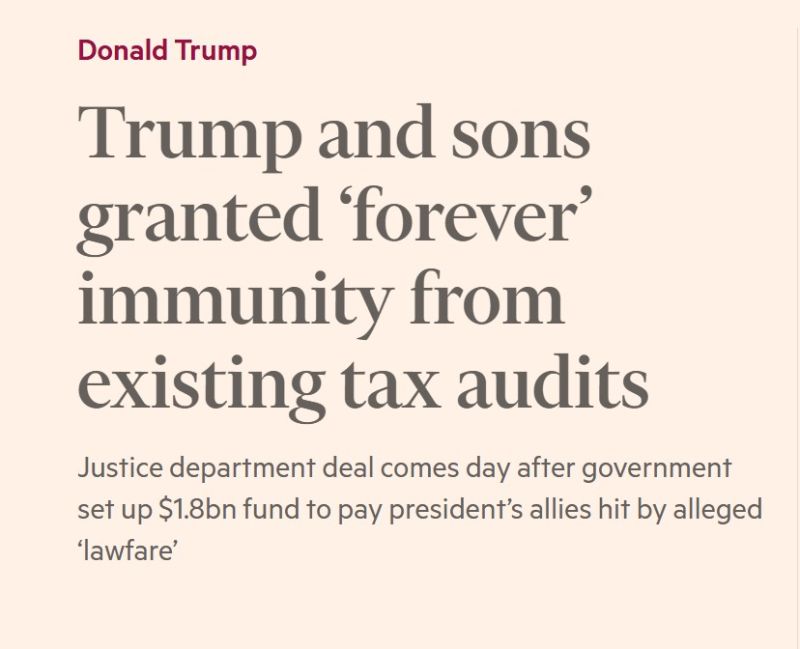

U.S. Margin Debt Hits Record $1.3 Trillion in April 2026
U.S. margin debt climbed to a record $1.3 trillion in April 2026, marking a 53% increase from a year earlier. The sharp rise reflects growing investor risk appetite and increased leverage amid surging equity valuations and strong stock market momentum. Historically, rapid expansions in margin borrowing have coincided with periods of elevated market optimism and heightened speculative activity. Source: Econovis
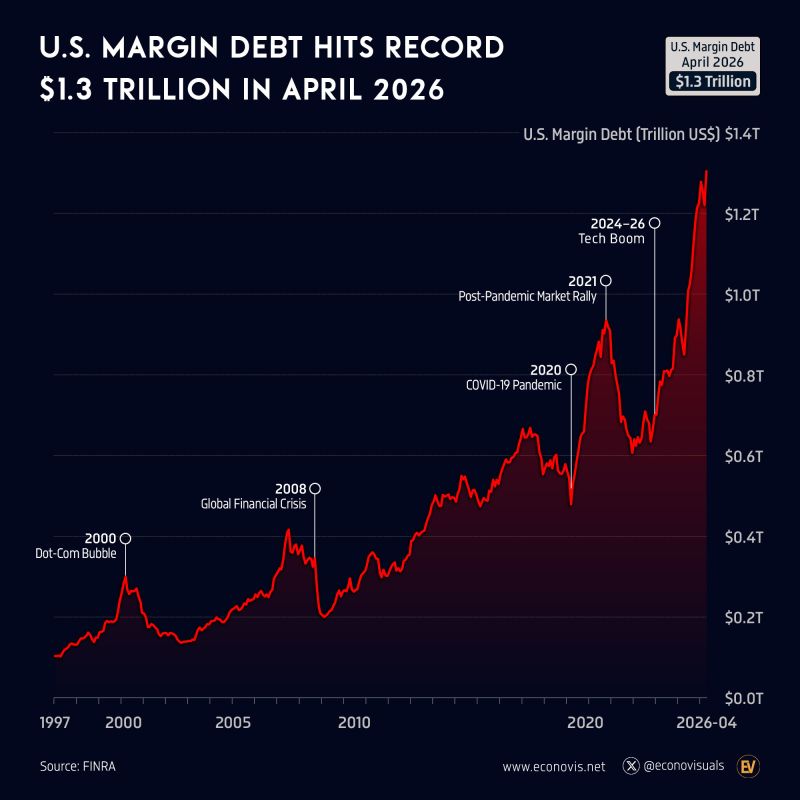
Russia is dumping its gold!
The country that was once the world's largest sovereign buyer has now sold over $4bn worth of its reserves this year. Its holdings are now at the lowest level since the day it invaded Ukraine. The reason: energy revenues are not covering the war's costs, and Russia is looking to plug the budget gap. The irony is that it's doing this at record gold prices. The only silver lining for Moscow is that it picked a good time to sell. Source: Bank of Russia, Bloomberg
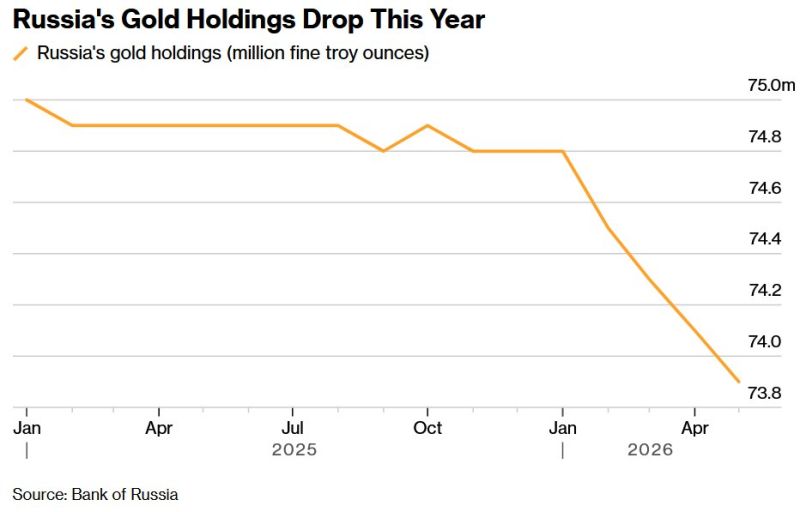
Year-to-date performance of the main asset classes
Source: Finviz
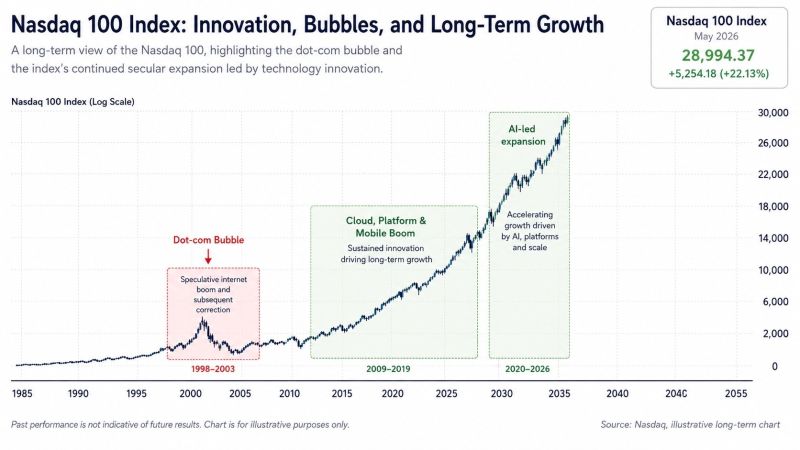
What a journey for the Nasdaq 100...
If you had invested $10,000 in the Nasdaq 100 ETF $QQQ at the PEAK of the dot-com bubble in March 2000, your investment would be worth around $61,650 today — a gain of +516%, or +7.2% annualised. And that’s despite navigating through 9/11, the 2001–2002 recession, the Global Financial Crisis, COVID-19, and major geopolitical conflicts including Russia-Ukraine and tensions in the Middle East. As Warren Buffett famously said: “Never bet against America.” Source chart: Rand Group
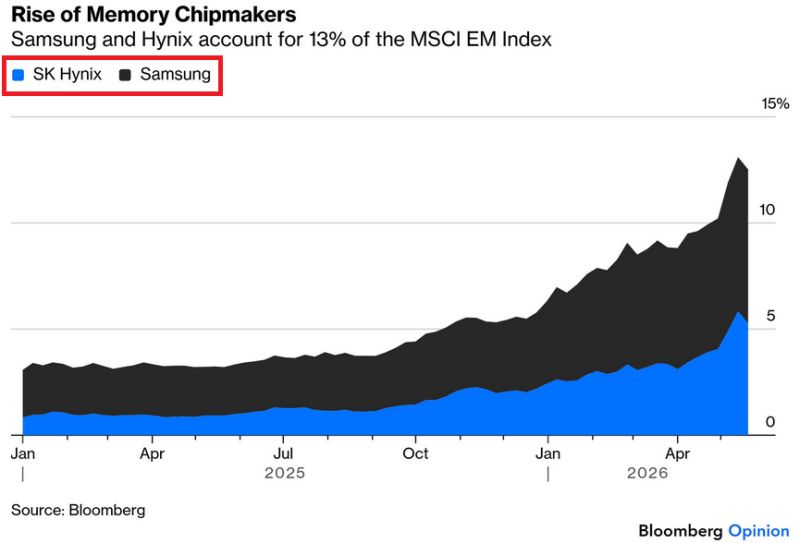
Samsung and SK Hynix now account for ~13% of the MSCI Emerging Markets Index, the benchmark for more than $1 TRILLION in assets under management.
SK Hynix alone now commands a weighting equivalent to Tencent and Alibaba combined, after more than doubling in market value this year. Together with TSMC, the 3 chipmakers account for more than 25% of the entire index and have contributed over 70% of its gains so far in 2026. This is reminiscent of late 2020, when Chinese companies accounted for more than 40% of the MSCI Emerging Markets Index. When Chinese stocks peaked in February 2021 and subsequently collapsed, the broader EM index entered a 15-16 month bear market, falling ~50% from peak to trough. Even emerging market indexes are extremely concentrated. Source: Global markets Investors, Bloomberg Opinion
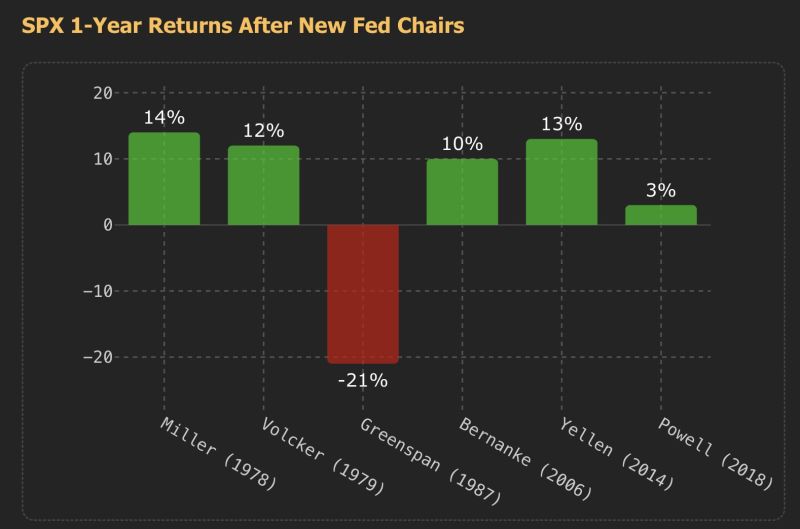
History has been kind to Fed Chairs in their first year. Besides Greenspan, who got handed Black Monday...
Source: TrendSpider
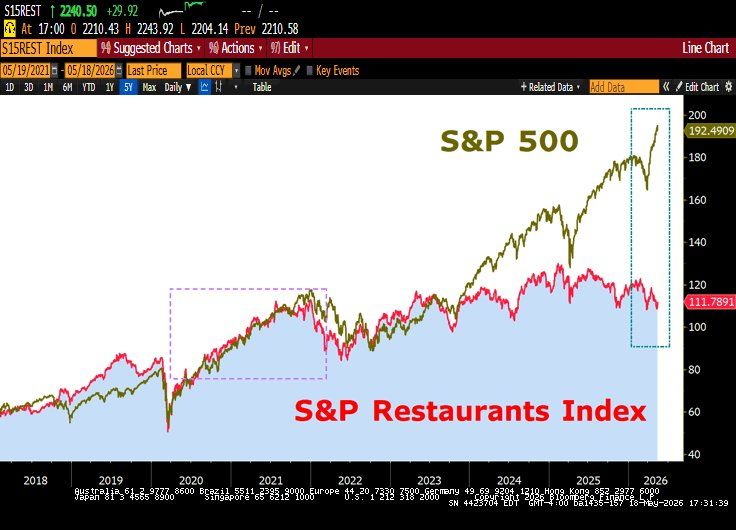
Another "K-shaped economy" chart
Source: Lawrence McDonald, Bloomberg
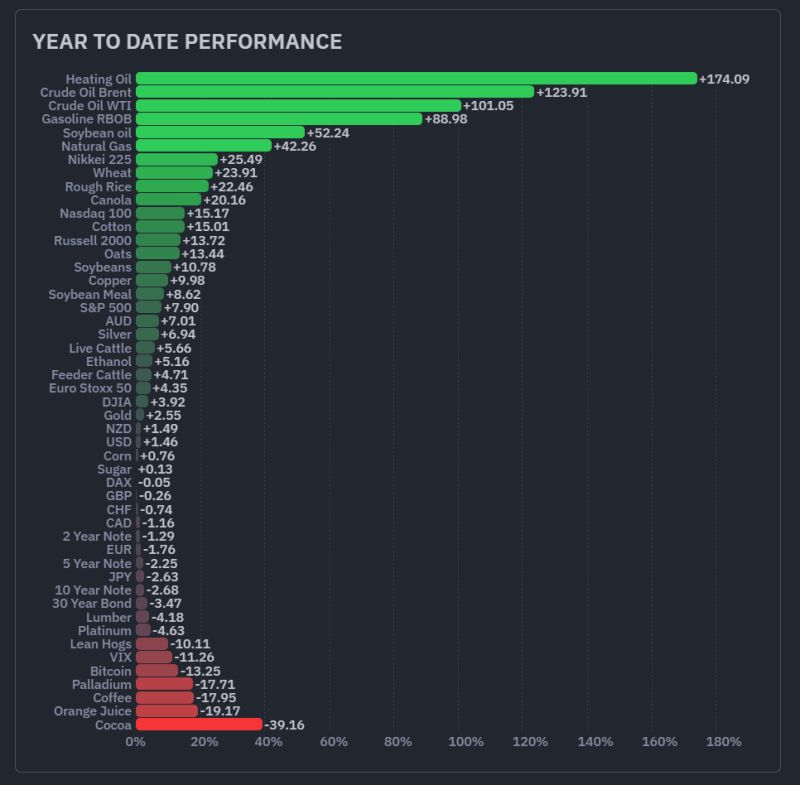
The IRS just agreed to never audit Trump again.
A one-page addition quietly attached to yesterday's $1.8 billion settlement permanently bars the IRS from examining Trump's tax returns, his family, and his companies. The original settlement said nothing about taxes. This showed up the next day. Former IRS commissioner Danny Werfel said he was "unaware of a single precedent where the IRS has agreed in advance to permanently forgo examination of previously filed tax returns for a specific person or business." The settlement was sold as accountability. The extra page is a lifetime audit exemption for the president. Source: POLITICO, FT