
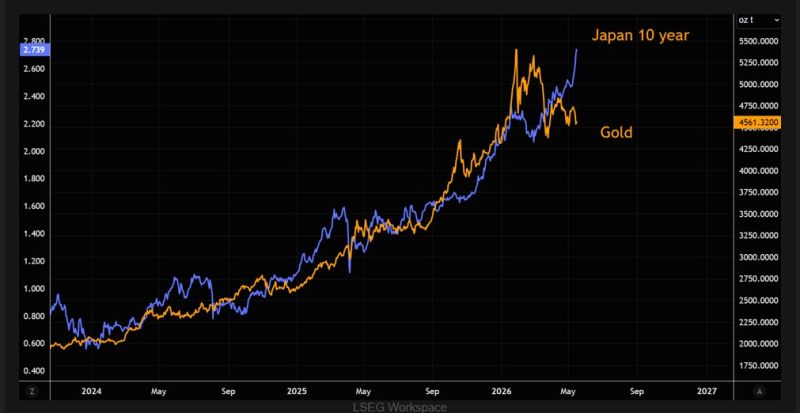
The "ultimate" hedge?
Gold followed the surge in Japanese rates throughout 2025. Gold started the year by materially overshooting the Japan 10-year, but we have since seen the Japanese long end explode higher and overshoot gold instead. Could this divergence finally trigger another squeeze higher in gold? Source: TME, LSEG
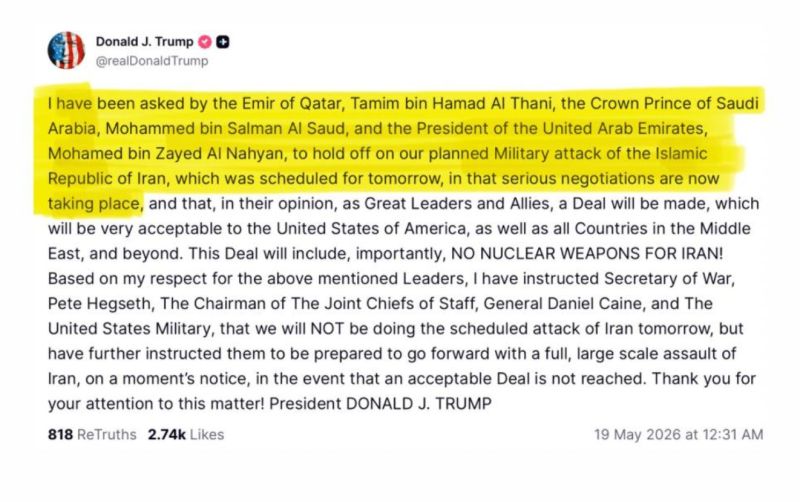
President Trump says serious negotiations with Iran are now taking place.
He has called off a planned military attack on Iran that was scheduled for tomorrow after the leaders of Qatar, Saudi Arabia, and the UAE personally asked him to pause, telling him a deal is within reach. Trump has ordered the military to be ready to launch a full scale attack on a moment's notice if an acceptable deal is not reached and The deal must include no nuclear weapons for Iran. Source: Bull Theory
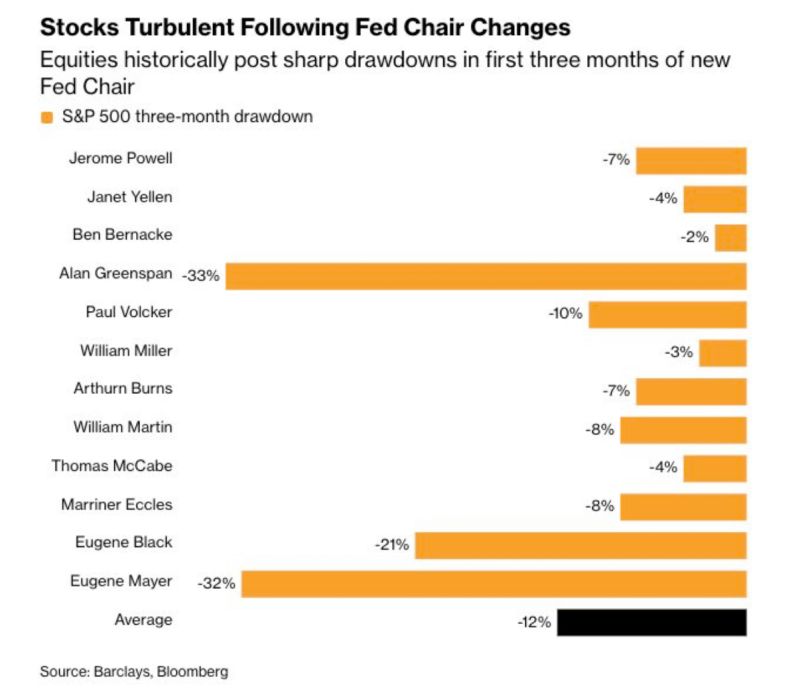
Today is officially Kevin Warsh's first day as the Fed chair.
Since 1930, the US stocks benchmark has seen an average 12% drawdown in the first 3 months after a new Fed chair has been elected. Source: Bloomberg, Barclays
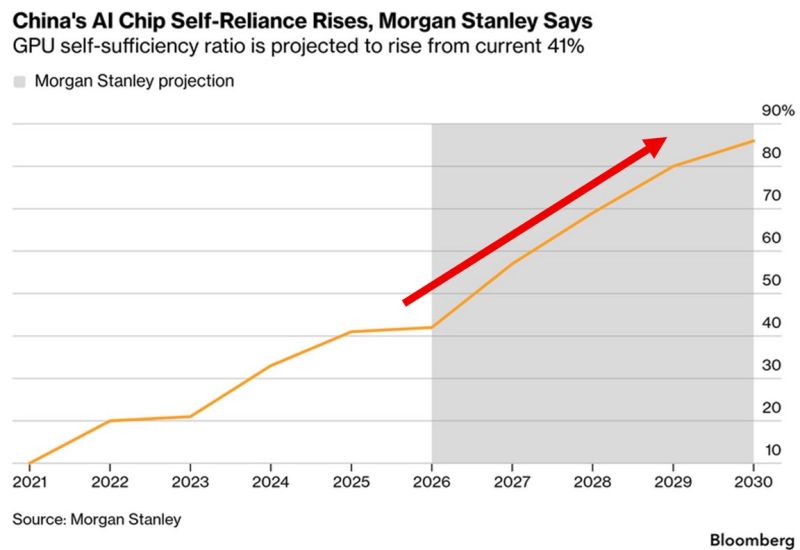
China is moving fast to replace foreign AI chips with domestic ones:
China's AI chip self-sufficiency ratio has risen from ~10% in 2021 to 41% in 2026, a more than 4 times increase in just 5 years, per Morgan Stanley. This ratio shows how much of China’s AI chip demand is filled by local production instead of imports. Morgan Stanley projects this ratio will rise further to ~86% by 2030, meaning China could meet nearly all of its AI chip demand domestically within 4 years. US export restrictions have accelerated China's push to develop domestic alternatives, and the results are advancing faster than most of the world expected. Source: Global Markets Investor
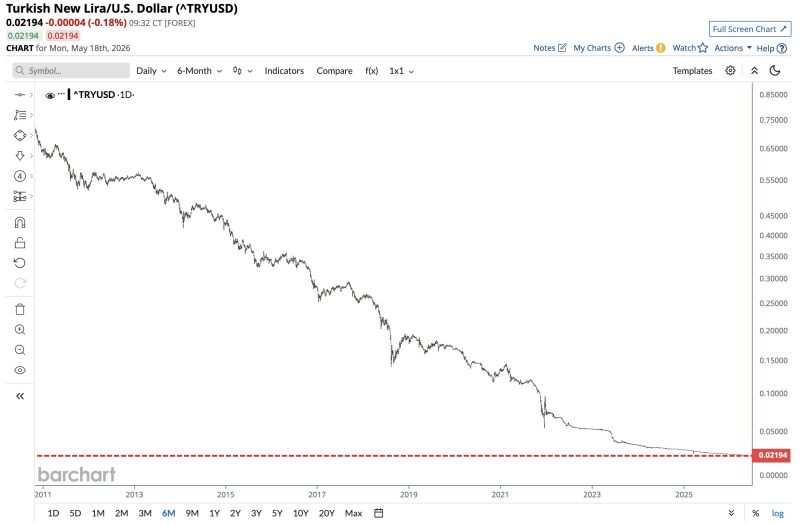
Turkish Lira falls to an all-time low against the U.S. Dollar
Now down 98% since 2010 Source: Barchart
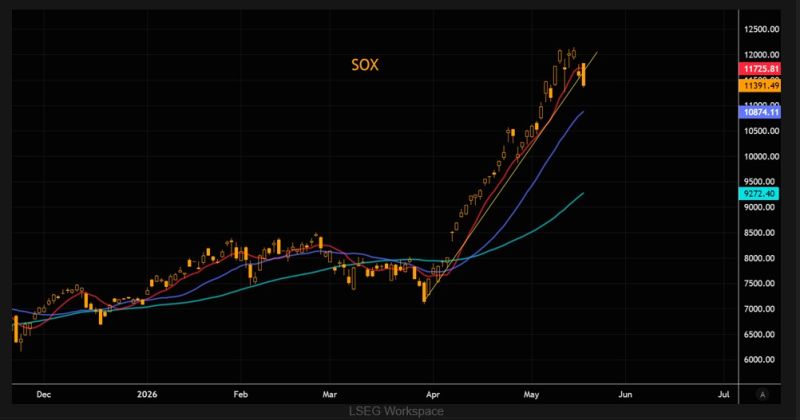
SOX cracks...
The semiconductors index SOX is printing its biggest downside candle since the melt-up began. The index is now breaking below the steep trend line while slipping under the 8 day moving average. The 21 day sits lower (next meaningful support), while the 50 day remains far below current levels. Source: TME, LSEG
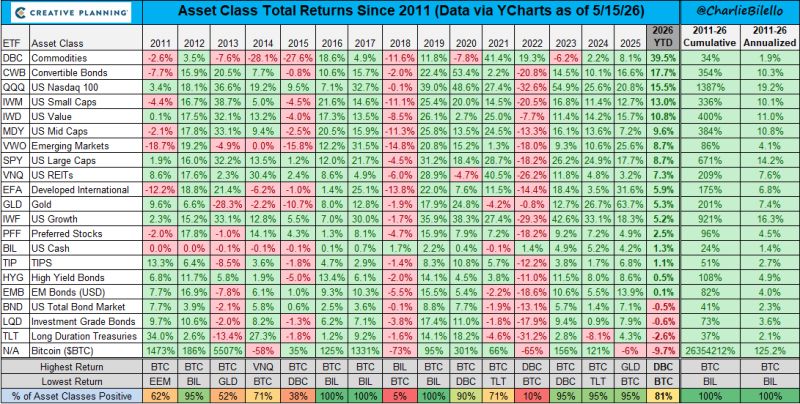
Cross asset returns as of 15/5/2026
Source: Charlie Bilello
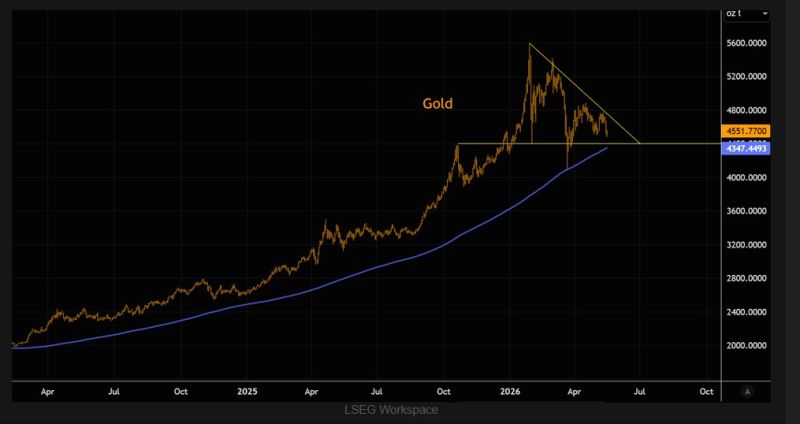
$4400 on gold: this support MUST hold
Gold has continued its huge consolidation phase following the violent pukes we saw earlier this year. The shorter-term trend line has survived several tests, but we are now approaching the major $4400 level, with the 200 day moving average coming in just below. That is the must hold area. Source: TME, LSEG Workspace