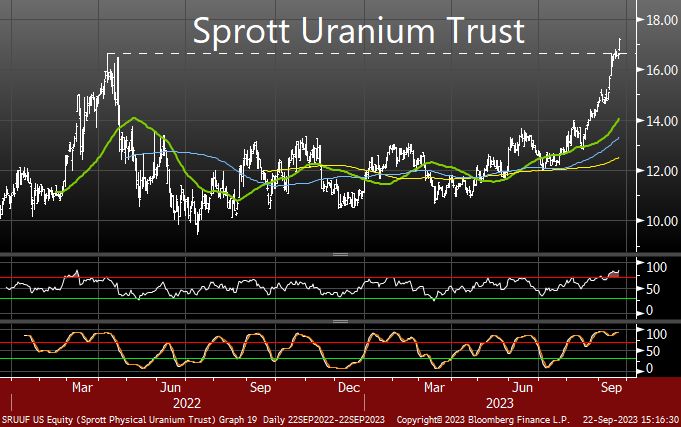

HIGH YIELD BONDS, THE BILL COMES DUE...
Global high yield bonds have been quite resilient so far in this cycle but the reality is that they will hit the maturity wall starting next year. And things will probably become more challenging whatever the economic scenario. If the economy does well and interest rates stay high for longer, the refinancing cost is likely to become more expensive. If the economy moves into recession, credit spreads are likely to go up hence still putting upward pressure on refinancing cost. So either way delinquencies are likely to increase. Source: Bloomberg
The main driver for stock returns
Source: BCG, Morgan Stanley Research thru Compounding Quality

According to Bloomberg chief economist Anna Wong, online betting markets see a 69% chance of a federal government shutdown starting Oct. 1st
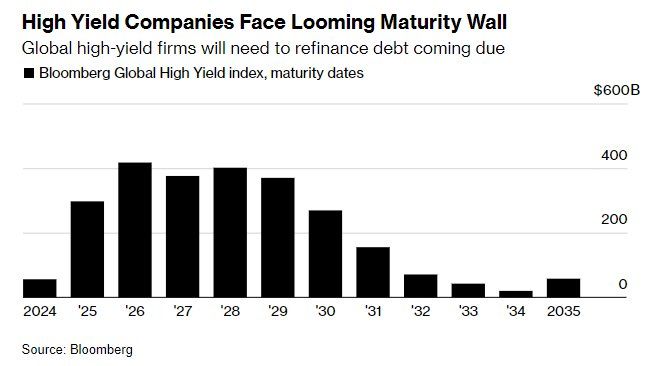
So what could be the effects on the US economy and job market? Below chart shows the effects on GDP depending on the duration of the shutdown. - According to Goldman, a government-wide shutdown would reduce quarterly annualized growth by around 0.2% for each week it lasted after accounting for modest private sector effects. Goldman's baseline is that a shutdown could last for 2-3 weeks (the Trump government shutdown, the longest in history, lasted 35 days, from Dec 22, 2018 to Jan 25, 2019). - Meanwhile, Bloomberg also speculates that in an extreme tail event, the maximum hit to 4Q GDP would be a drag of 2.8% if the shutdown lasts for the entire quarter. Source: Goldman Sachs, Bloomberg, www.zerohedge.com
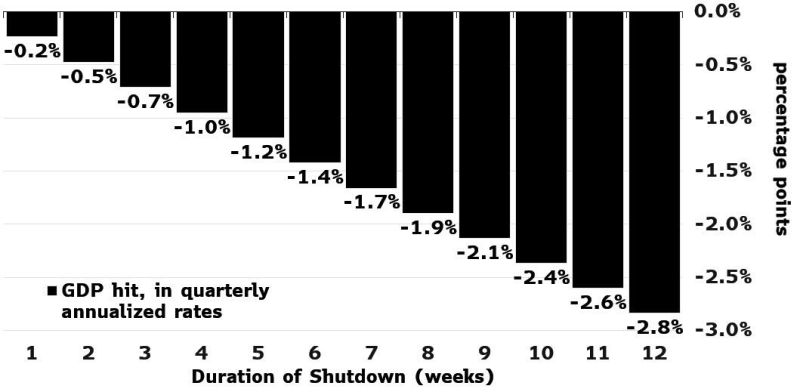
How to trade equity markets following the LAST FED rate hike?
BofA Harnett says it depends whether the economy is in inflationary or an inflationary period. When monetary policy needs to work harder to slow economy in inflationary era (e.g. 1970s/1980s), Dow Jones returns were most of the time negative in the 3 months and 6 months that followed the last Fed hike... However, in disinflationary period, markets returns were quite strong. So do you believe we are in an inflationary or disinflationary period? Source: BofA Global Research
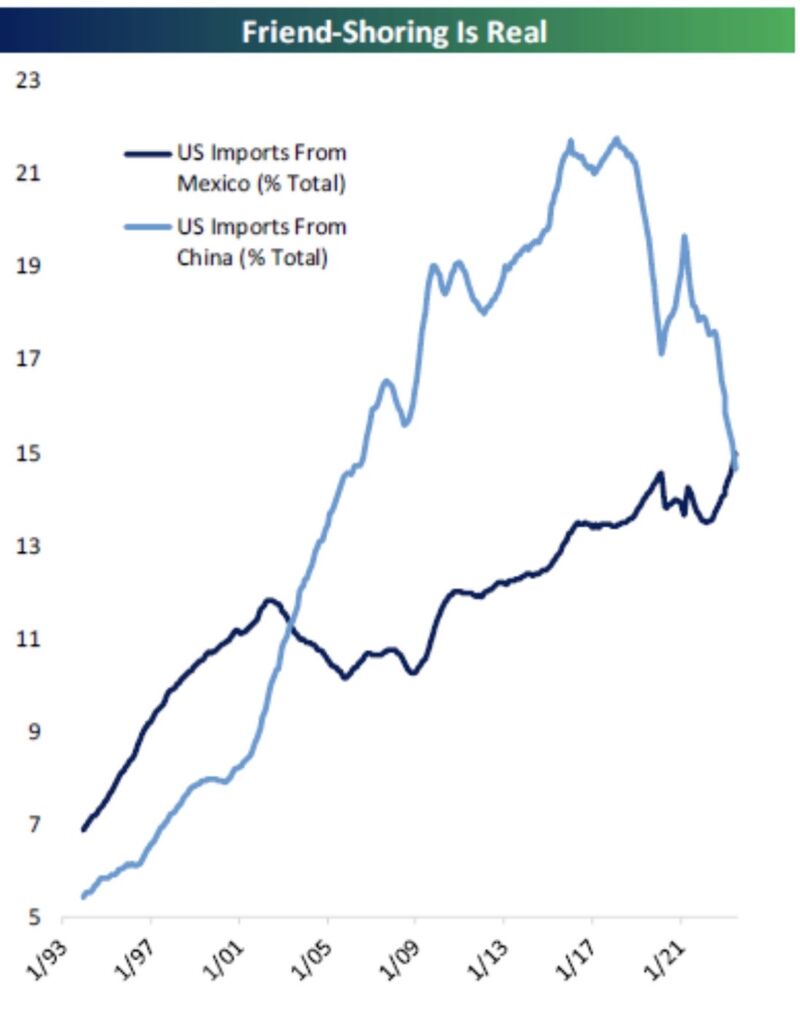
Friendshoring / nearshoring is indeed happening...After nearly 20 years, the US is once again importing more from Mexico than China
Source: Bespoke
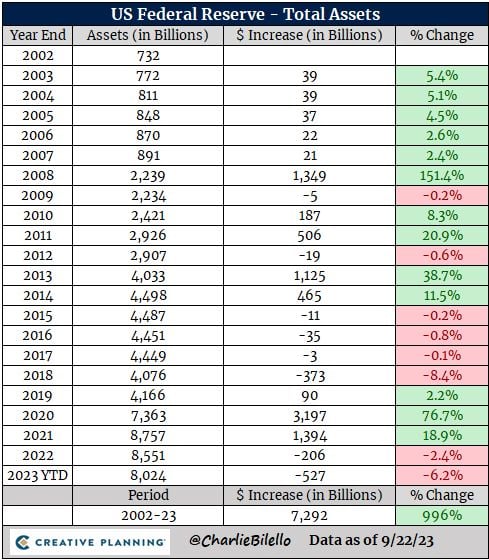
The Fed's balance sheet hit its lowest level since June 2021 this week, down $941 billion from the peak in April 2022
Changes in the Fed's balance sheet since 2002... Source: Charlie Bilello
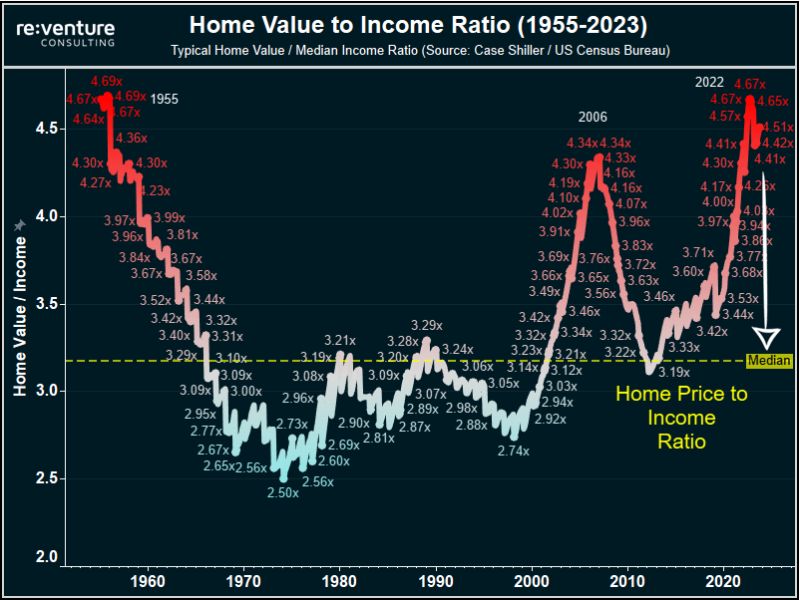
Home price to income ratios are now above 4.5x and at their highest levels since the 1950s
Even in the 2008 financial crisis, home price to income ratios did not cross 4.5x. This means that home price to income ratios are the same as the post-WW2 era in the US. The median home price to income ratio is 1.2x below current levels, at 3.2x. Either home values need to fall or income needs to rise. Source: The Kobeissi Letter
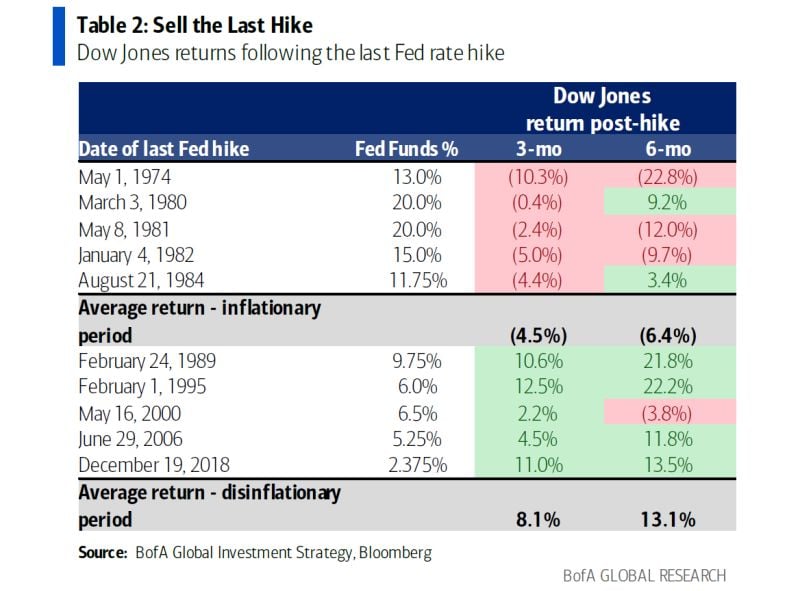
There is always a bull market somewhere... The Sprott Uranium Trust just broke a huge resistance
Source: Tony Greer