
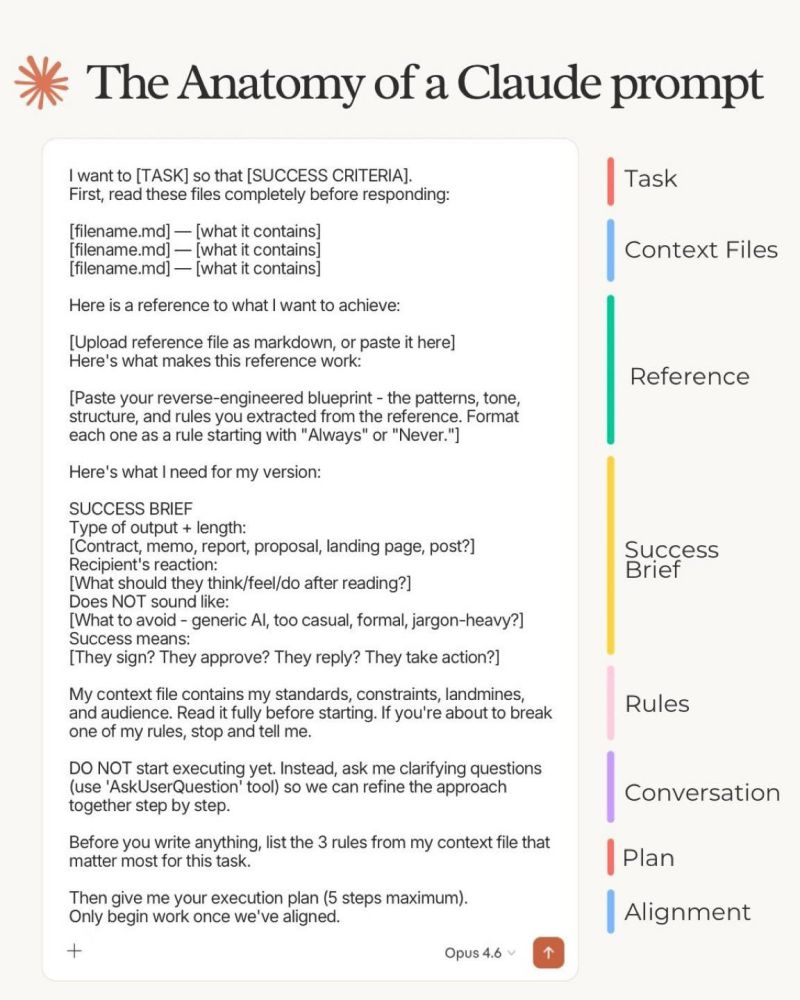
The Anatomy of a Claude prompt
Alif Hossain @alifcoder
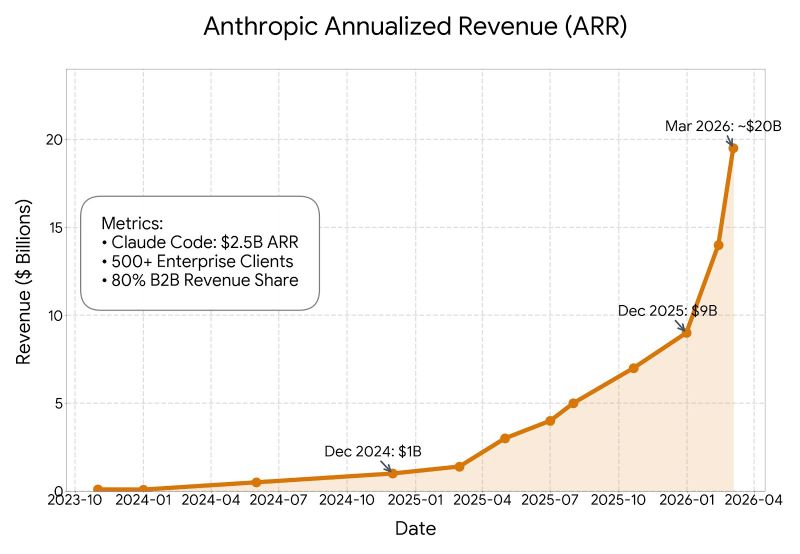
Everyone keeps saying AI is a bubble.
We hear it on repeat. “Hyperscalers are spending too much.” “AI demand isn’t real.” “This won’t justify the investment.” Maybe. But pause the debate for a second. Have you looked at Anthropic’s ARR chart recently? The company behind Claude is sprinting toward $20B in annual recurring revenue. And the curve is… absurd. Not steady growth. Not normal SaaS growth. This looks like a vertical takeoff. If the trajectory holds, it might become the fastest company in history to reach $20B ARR. Source: Andreas Steno Larsen
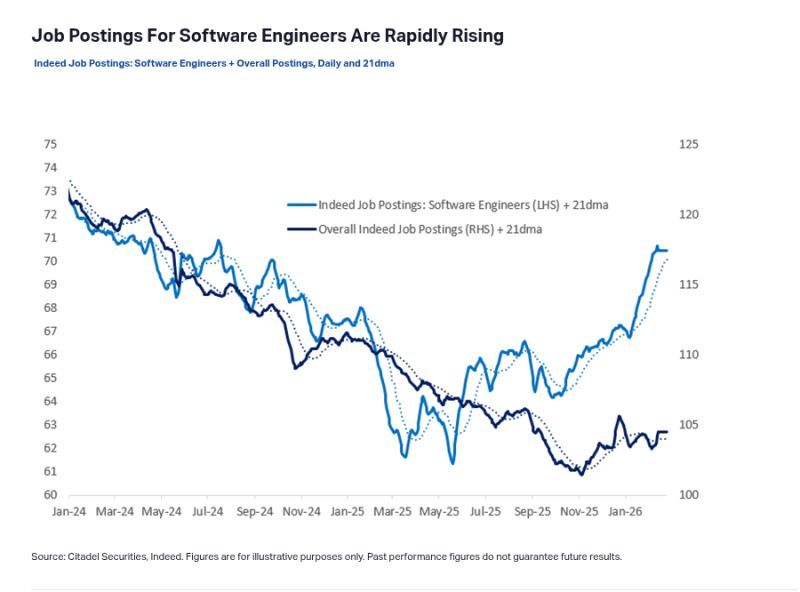
Citadel Securities shared a graph highlighting an interesting trend: job postings for software engineers are actually rising sharply.
This may be an example of the Jevons paradox. When AI makes coding faster and cheaper, demand for software development can increase rather than decrease. As the cost of building software drops, companies start creating far more of it. That means software gets embedded in industries, products, and internal tools where development used to be too expensive to justify. The result is that businesses may end up needing more software engineers, not fewer. Source: Rohan Paul, Chart from citadelsecurities .com/news-and-insights/2026-global-intelligence-crisis/
AI, power, and the Pentagon, things just got messy.
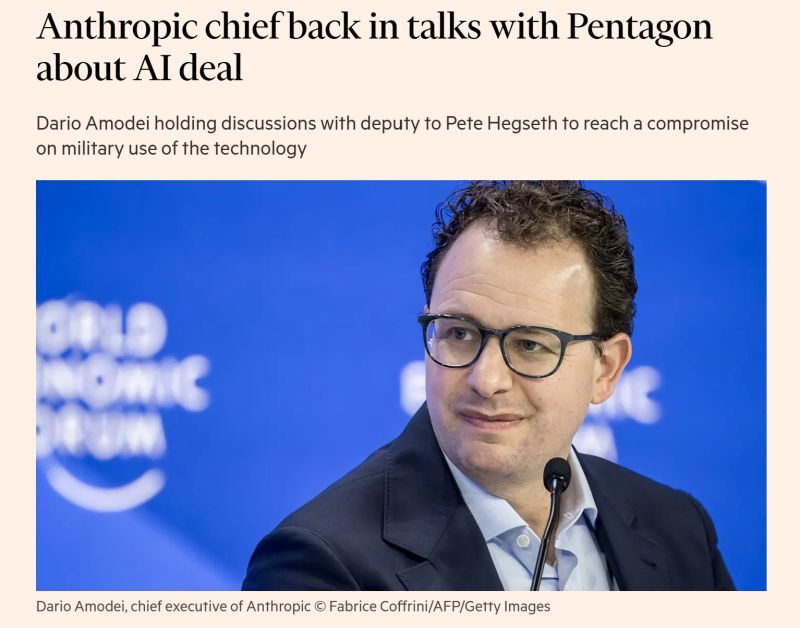
Last week, negotiations between Anthropic and the US Department of Defense collapsed. Now CEO Dario Amodei is racing to repair the relationship before the company is locked out of the military AI supply chain. Why this matters 👇 Anthropic’s models are already used by US national security agencies and were among the first AI systems approved for classified environments. But talks with the Pentagon broke down after a major disagreement: How far should AI be allowed to go? The US military wants the freedom to use AI for any “lawful purpose.” Anthropic drew a hard line. Two red lines: • ❌ Mass domestic surveillance • ❌ Lethal autonomous weapons During negotiations, the Pentagon reportedly asked Anthropic to remove a clause restricting “analysis of bulk acquired data.” That clause was specifically designed to prevent large-scale surveillance use cases. Anthropic refused. Things escalated quickly. A senior defense official publicly called Amodei: “A liar with a God complex.” The next day, talks collapsed. Now the stakes are enormous. The Pentagon is considering labeling Anthropic a “supply chain risk.” If that happens: • Military contractors would be forced to cut ties • Anthropic could lose major government access • The AI defense market could shift dramatically Meanwhile, OpenAI signed its own agreement with the Pentagon. Amodei hinted at something deeper in an internal memo: “Much of the messaging from the Pentagon and OpenAI is just straight up lies or attempts to confuse the issues.” He even suggested Anthropic may be at a disadvantage because it hasn’t given “dictator-style praise” to Trump — unlike rivals. Whether you agree with Anthropic or not, this moment reveals something critical: The real battle in AI isn’t just about technology. It’s about who controls how the technology is used. And governments are moving fast. The companies that set their principles today will shape how AI power is deployed tomorrow. Source: FT
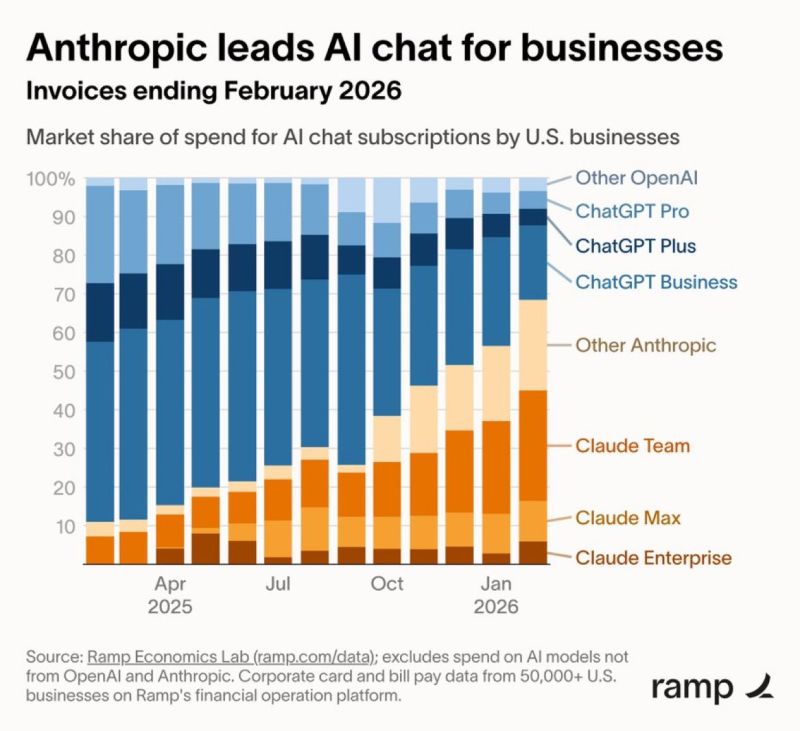
Feb 2025: ChatGPT held 90% of the US business market.
Feb 2026: Claude share has surged to ~70%. Absolutely insane growth of Anthropic. Their bet on coding and agents clearly paid off. Source: Yuchen Jin
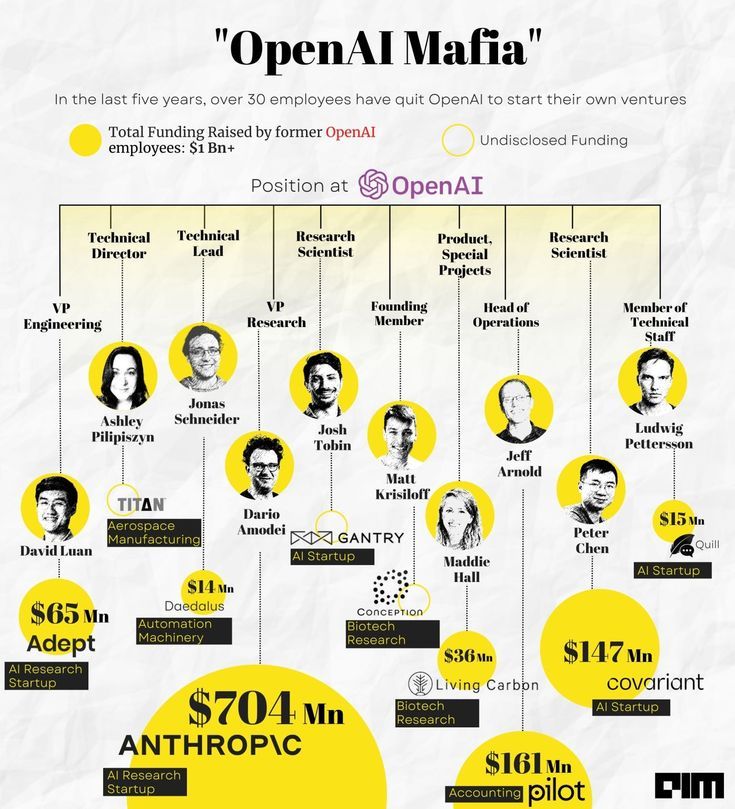
Open AI Mafia
In the last 5 years, over 30 employees have quit OpenAI to start their own ventures Source: The Market Mind
Norway’s $2.2T Oil Fund Uses AI to Monitor ESG Risks
Norges Bank Investment Management is now using AI to screen all 7,200+ portfolio companies for ethical and reputational risks. Anthropic’s Claude generates daily ESG reports, flags issues like forced labor or corruption, and allows early exits before markets react. This system is especially valuable for small or emerging-market companies. With sustainability and governance tied to financial performance, AI gives NBIM a competitive edge in capital allocation, showing that the future of investing combines returns with responsibility and speed. Source: CNBC

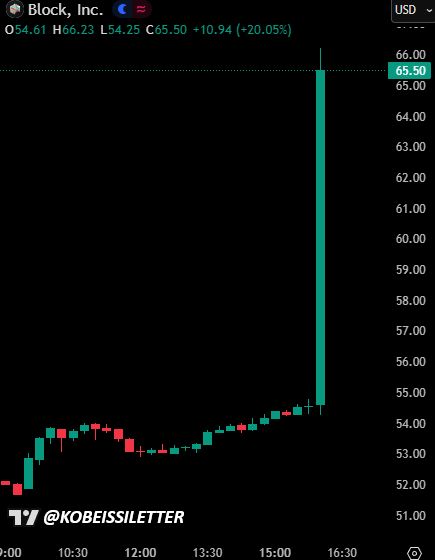
Jack Dorsey’s AI-Driven Workforce Revolution
Jack Dorsey’s Block Inc cut over 4,000 jobs, more than 40% of its workforce, as part of an AI-driven restructuring while reporting strong Q4 and full-year 2025 results. Revenue and profits are growing, EPS beat expectations, and AI tools have boosted productivity by 40%, making roles redundant. Wall Street rewarded the move with a 22% stock gain. This sets a new precedent for corporate America, showing that AI adoption can reshape incentives and workforce strategies faster than ever. Source: StockMarket.news