
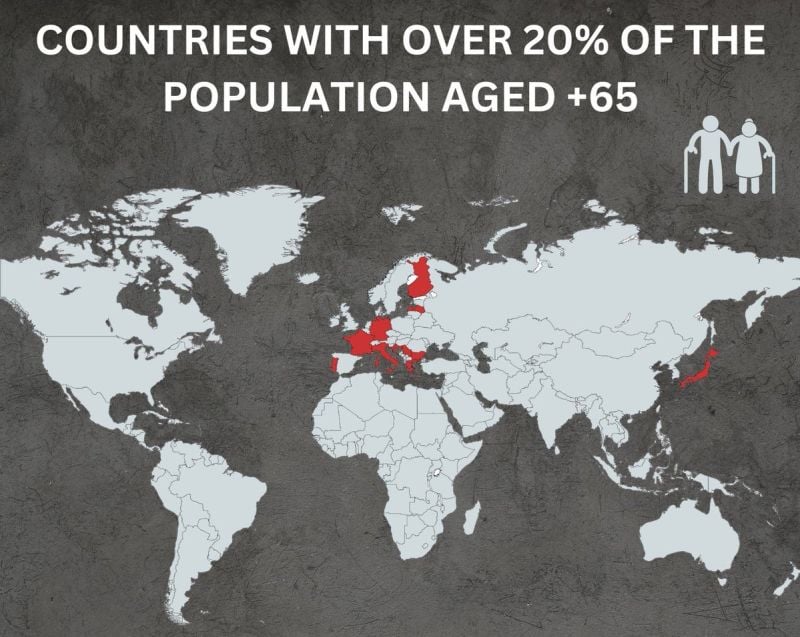
Europe on its way to become retirement home
There are just three options to avoid a collapse: 1. Drastically increase retirement age 2. Cut pensions and healthcare 3. Skilled, educated immigration Source: Michel A.Arouet
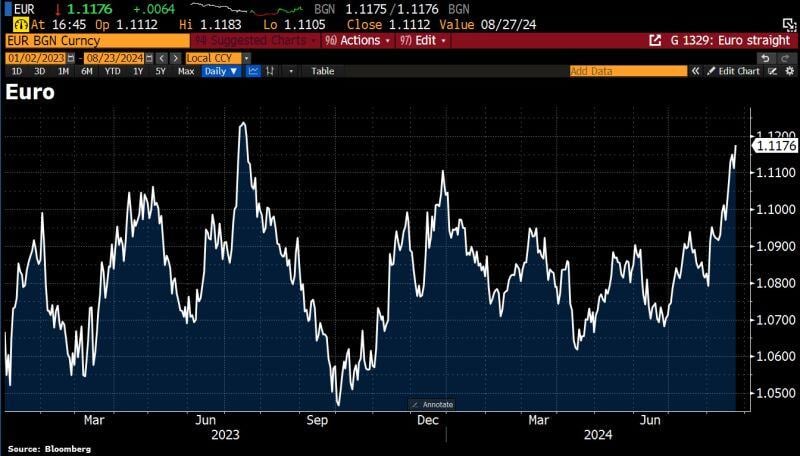
Euro jumps to highest since July 2023 following dovish Powell remarks
The most important statement in his speech: “We do not seek or welcome further cooling in labor market conditions.” Source: Bloomberg, HolgerZ
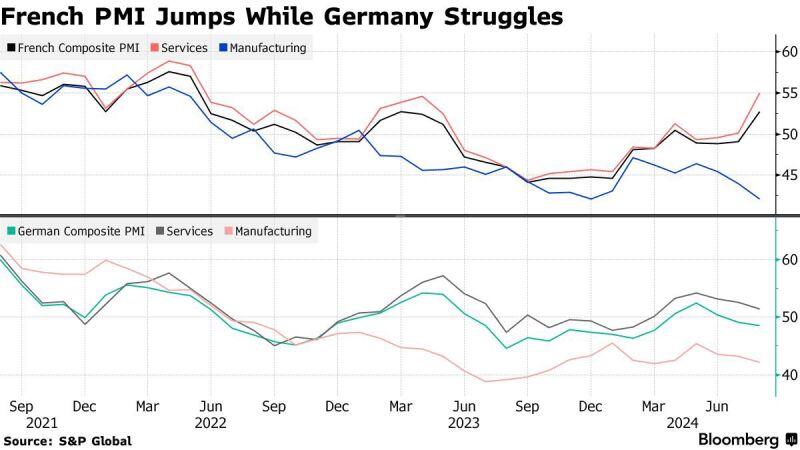
French Economy Gets Olympic Boost as Germany’s Malaise Deepens French composite PMI rises to 52.7; Germany’s down to 48.5.
‘August is likely an outlier due to the Olympic Games’ French services expanded at the fastest pace in more than two years, driving Europe’s second-biggest economy as visitors from around the world flocked to Paris for the Olympic Games. S&P Global’s Purchasing Managers’ Index for the sector surged to 55 in August from 50.1 in July, far above the 50 threshold that divides growth from contraction and the median estimate of 50.3 in a Bloomberg survey. Source: Bloomberg
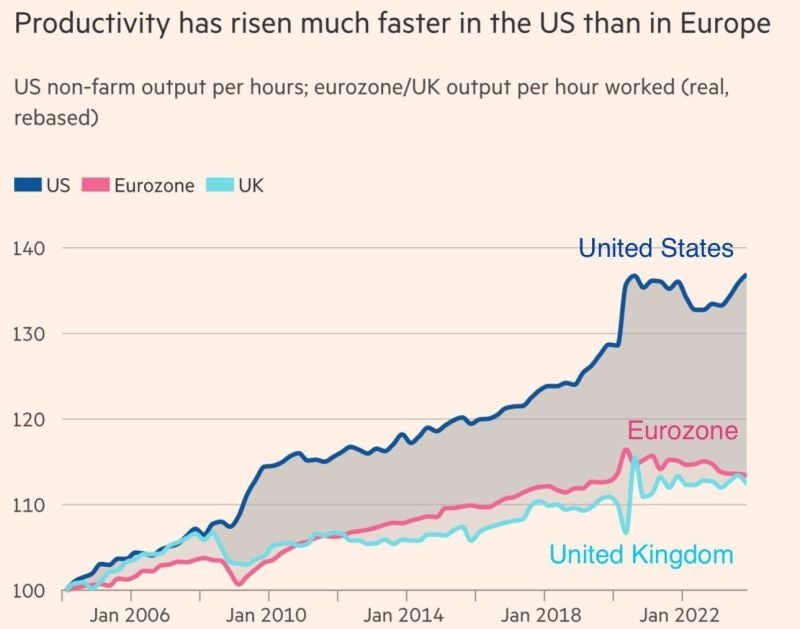
This is the reality the old continent needs to face: There is only one way to prosperity, hard work and higher productivity
UK and the eurozone have been lagging the US big time. Time for a wake-up call? Source: FT. Michel A.Arouet
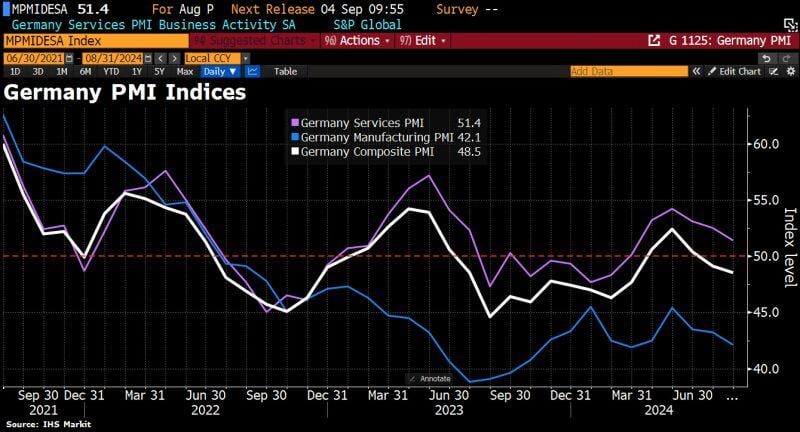
Economic malaise deepens in Germany
German private sector falls deeper into contraction, flash PMI shows. German Composite PMI Index dropped to 48.5 in August, a 5mth low, down from prior 49.1 and below the expected 49.2. Manufacturing PMI fell to 42.1 from 43.2, below the consensus estimate of 43.5. On the services side, the PMI also hit a 5mth low of 51.4, compared w/prev reading of 52.5 and analysts forecast of 52.3. The report adds to evidence that Germany's recovery has fizzled out. GDP unexpectedly contracted by 0.1% in Q2, and analysts polled by Bloomberg predict barely any expansion at all over the whole of 2024. Source: Bloomberg, HolgerZ
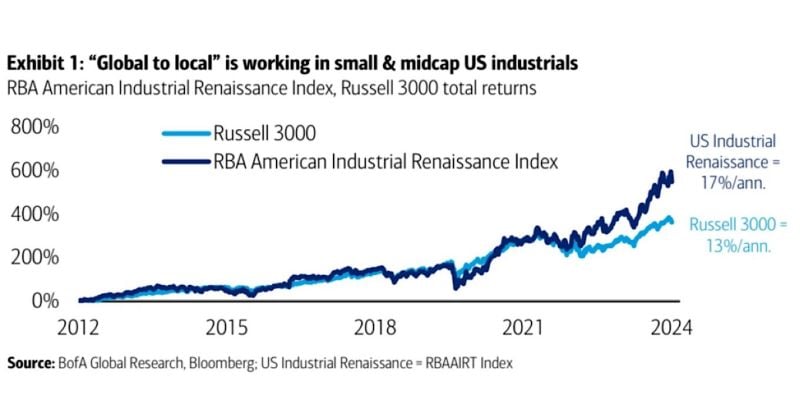
While Europe is deindustrializing, US industrial renaissance is in full swing
17% annual return anyone? Source: Michel A.Arouet, BofA
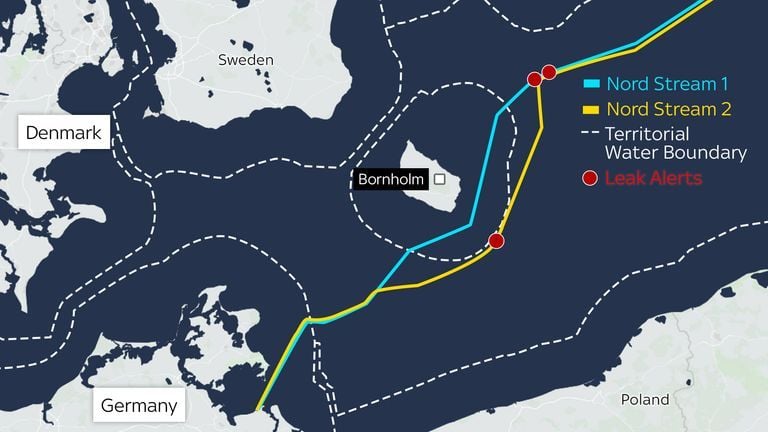
GERMAN MP: UKRAINE MUST PAY FOR DAMAGE TO NORD STREAM PIPELINES
Some major changes on Germany-Ukraine relationships took place over the recent days... Last week, Germany said it has frozen its military aid to Ukraine, claiming that a domestic budgetary crisis means it can no longer afford to supply Kyiv with new weapons. Olaf Scholz, the German chancellor, told his defence minister this month that there would be no money available for further military aid, according to a new report in the Frankfurter Allgemeine newspaper. Today, Alice Weidel has called for Ukraine to compensate Germany for the damage caused to its economy as a result of the attack: “The economic damage to our country caused by the demolition of Nord Stream presumably ordered by Zelensky - and not Putin as we were led to believe - should be "billed" to Ukraine.” Berlin-Kyiv relations were strained after the German Prosecutor General's Office issued an arrest warrant for a Ukrainian suspected of involvement in the pipeline sabotage. Source: Mario Nawfal on X
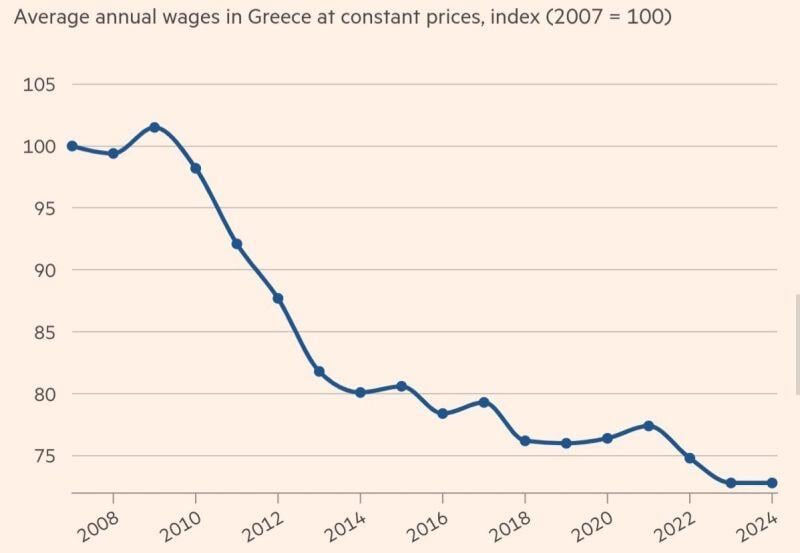
Before the euro, Greece, Italy, Spain were adjusting for their lower productivity via currency devaluations each year.
Within the European currency union the only avenue left is adjusting via real wages pushing many people into poverty. Source: FT, Michel A.Arouet