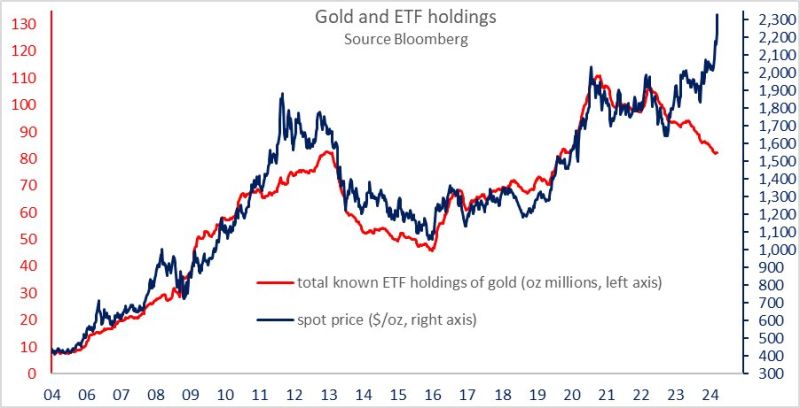
Gold is rallying despite retail and institutional investors dumping.
This is bullish. But who is buying by the way? Central banks... Do they know something investors don't know? Source: BofA
Gold as the ultimate macro hedge / diversifier within a multi-assets portfolio
This might be one of key investment theme of the current decade
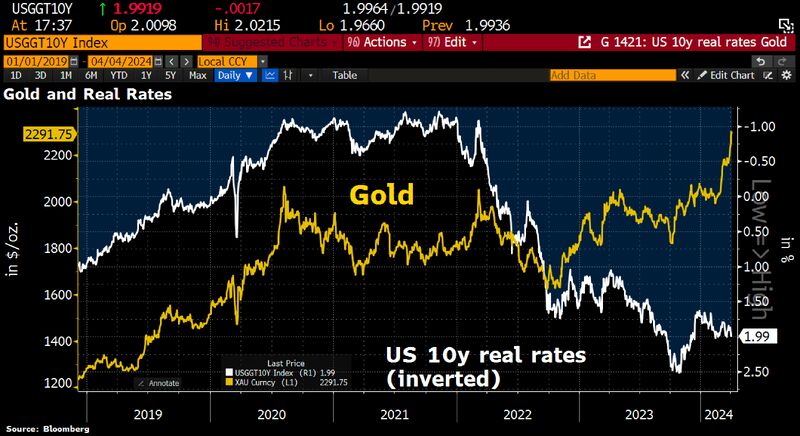
Mind the gap:
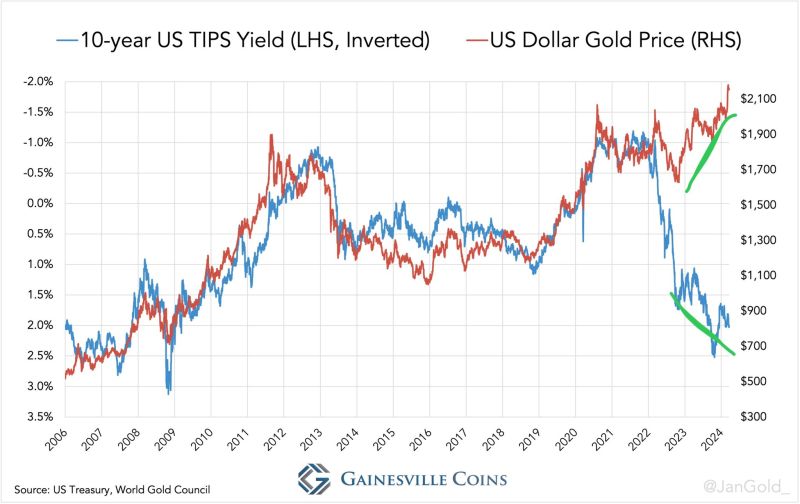
Gold has hit fresh ATH despite a rise in US real yields. At current 2% 10y real rate, Gold at $2,300/oz is ~$270/oz expensive, Jefferies has calculated. There are fundamental reasons: Increased government spending & indications of a willingness to accept higher inflation Source: HolgerZ, Bloomberg
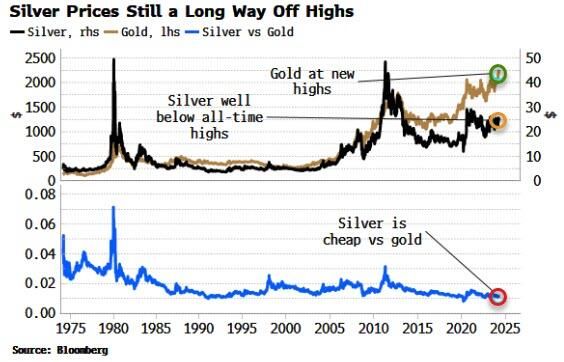
Despite recent surge in prices, Silver remains quite cheap compared to gold, and the price of silver is well away from its prior all-time highs.
The so-called "silver squeeze" have disappointed many and prior rallies faded. But this time could be different. Industrial utilization is increasing and investor interest is as well... Could silver catch up with Gold? Source: Bloomberg, Markets & Mayhem
Gold is soaring while Bitcoin – digital Gold – is slumping?
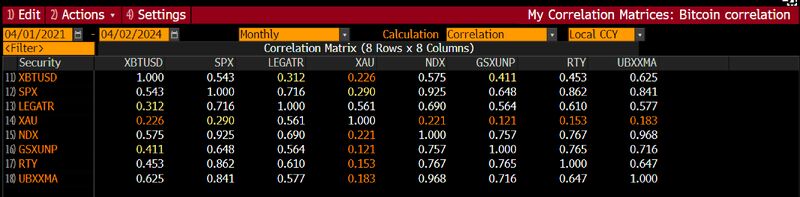
Bitcoin has shown itself to be more correlated w/risk-sensitive assets. Over the past 3yrs, Bitcoin has the highest monthly correlation w/Mag7 at 0.63. Correlation between Bitcoin and Nasdaq 100 is 0.58, between Bitcoin and S&P 500 is 0.54. Correlation between Bitcoin and Gold is very low at 0.23 - at 1 link would denote the two assets trade in sync. (HT @barronsonline) - HolgerZ, Bloomberg
Gold is going up together with real yields (inverted axis in the chart).
Who would have thought?!! Source: Jan Nieuwenhuijs
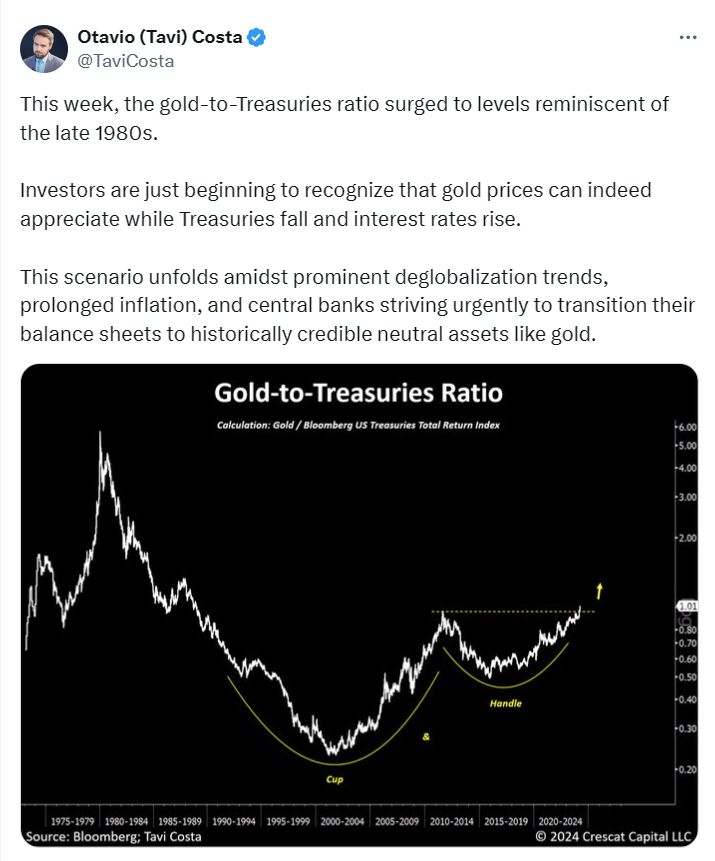
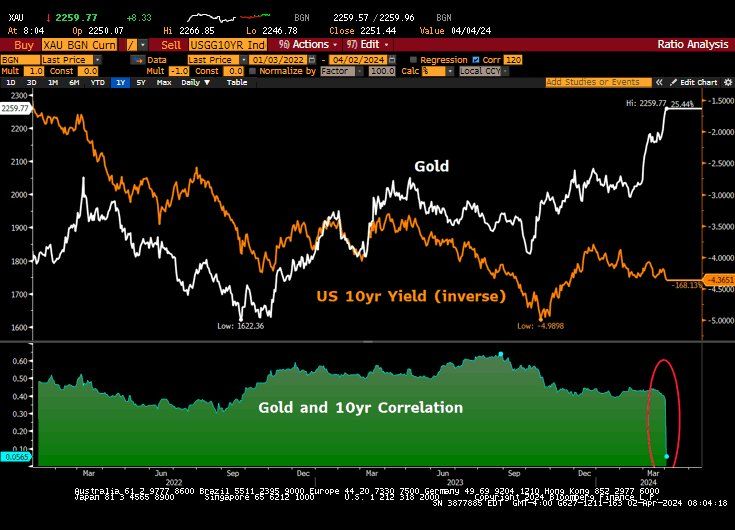
Bond yields up and gold up?
This looks like a classic 1970s action, with the inverse relationship between gold and 10-year Treasury yields starting to decouple. Gold is at all-time highs in the face of bond market weakness. This, coupled with the rise in commodity prices (especially oil / gasoline), could mean troubles for the Fed and the banks. Source: Bloomberg, Lawrence McDonald
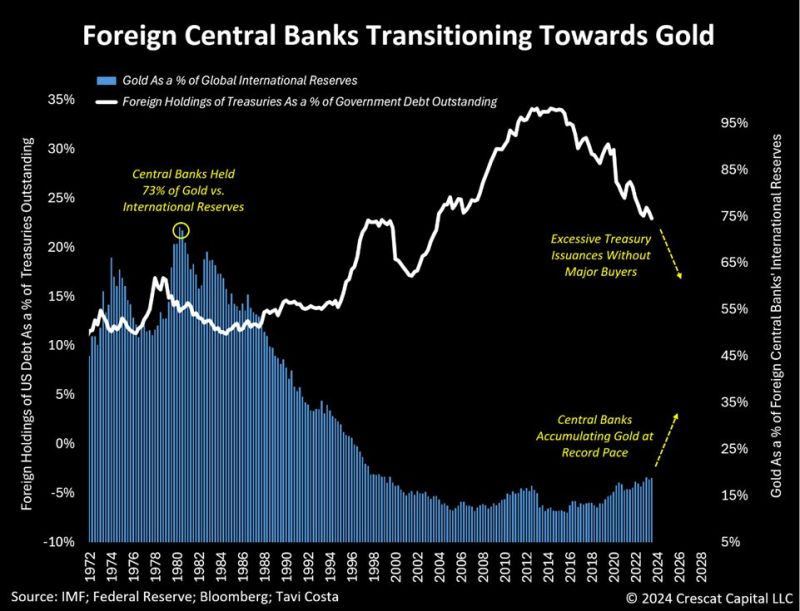
Gold's role as a neutral asset with millennia of history as money is experiencing a resurgence relative to US Treasuries for global central bank reserve accumulations.
Source: Tavi Costa, Bloomberg