Straight from the Desk
Syz the moment
Live feeds, charts, breaking stories, all day long.
- All
- equities
- United States
- Macroeconomics
- Food for Thoughts
- markets
- Central banks
- Fixed Income
- bitcoin
- Asia
- europe
- geopolitics
- investing
- gold
- Commodities
- technical analysis
- AI
- Crypto
- Technology
- nvidia
- ETF
- earnings
- Forex
- china
- oil
- Real Estate
- banking
- energy
- Volatility
- magnificent-7
- apple
- Alternatives
- emerging-markets
- switzerland
- tesla
- United Kingdom
- Middle East
- amazon
- assetmanagement
- microsoft
- russia
- ethereum
- ESG
- meta
- Industrial-production
- bankruptcy
- Healthcare
- Turkey
- Global Markets Outlook
- africa
- Market Outlook
- brics
- performance
Key U.S. Economic Indicators Hitting New Highs
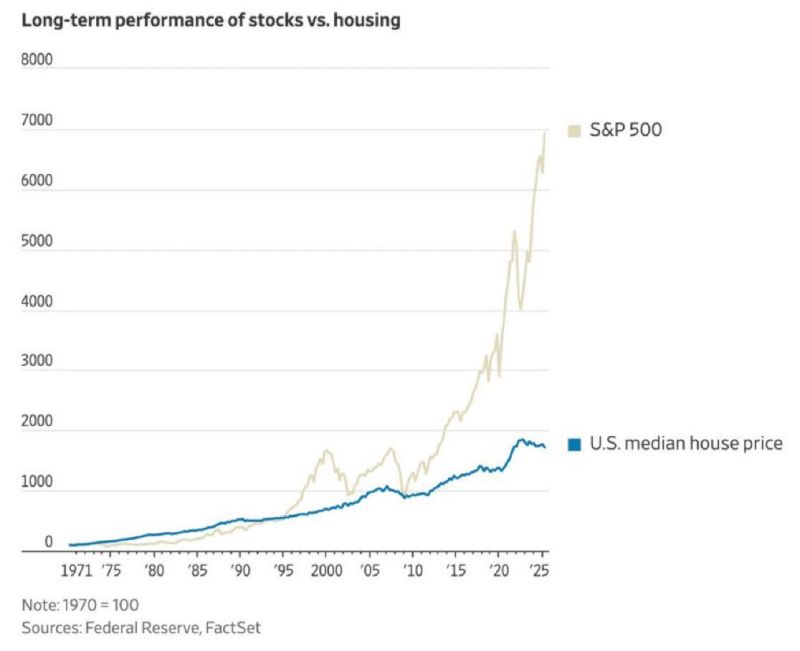
1. Stocks: all-time high 2. Home Prices: all-time high 3. Bitcoin: all-time high 4. Money Supply: all-time high 5. National Debt: all-time high 6. CPI Inflation: 4% per year since Jan 2020, 2x the Fed's "target" 7. Fed: expected to cut rates between 1x and 2x this year 8. The US Treasury is skewing issuance further to bills (Fiscal QE) Source. Charlie Bilello
Citi Research global commodities head sees gold tumbling to $2500
Max Layton, global commodities head at CITI Research, predicts gold will trade at about $2,500 to $2,700 in the second half of next year, down about $900 or so less than where it is today. Layton said CITI had been bullish on gold for the last couple of years as investors flocked to the precious metal. He said people are buying gold to hedge against a downside risks to their household wealth over fears of slowing economic growth and global uncertainty. “The move from $2,600 to $3,300 this year has been all about investors buying bars and coins, particularly bars because they’re hedging against a downside in U.S. and global growth, as well as a downside in equities related to that downside in U.S. and global growth, which has come about because of the combination of still extremely high interest rates in the U.S. by historical standards, and the tariffs.” He however expects a drop in prices due to weakening investment demand, anticipated U.S. interest rate cuts and improved economic prospects. “We’re getting close to this One Big Beautiful Bill Act passing Congress,” said Layton. “We think that is going to mark a shift in sentiment towards U.S. growth and basically a slight reduction, or even a moderate reduction, or even possibly by the end of next year, heading into the mid terms with lower interest rates as well.” Source: BN Bloomberg
‼️ The IBM revival. The stock has doubled over the past 18 months, breaking through its historic ~$250bn market cap ceiling from 1999 and 2012.
So how can we explain such a comeback for this iconic company? It is primarily due to its successful transformation into a leader in enterprise artificial intelligence (AI) and hybrid cloud solutions, which has driven strong financial performance and investor confidence. Key factors behind this surge include: ▶️ Strong AI and Cloud Growth: IBM's AI business bookings have surged to over $5 billion, growing nearly $2 billion quarter-over-quarter, and its Red Hat subsidiary, a major hybrid cloud platform, grew 17% in a recent quarter and is expected to contribute $3 billion in revenue this year. This software-led strategy and expanding AI capabilities have been pivotal. ▶️Robust Financial Results: IBM reported solid earnings beats and a bullish 2025 forecast with expected revenue growth exceeding 5% and free cash flow growing even faster, targeting about $13 billion in free cash flow.
In case you missed it... Copper is up +29% year-to-date.
Better than gold.
The usual quarterly review by JP Morgan
"The second quarter of 2025 saw significant volatility across markets as investors grappled with tariff policy uncertainty and war in the Middle East. In both cases, investors’ worst fears ultimately proved unfounded and in the absence of a meaningful weakening in the hard data, most major asset classes delivered positive returns over the quarter. The liberation day tariff announcement on 2 April caused a sharp selloff across markets. The reciprocal tariff package was larger than expected and both stock and bond markets reacted quickly. The S&P 500 fell 12% over the following week, while US 10-year Treasury yields rose 50 basis points between the 4 and 11 April. The US administration responded to market volatility and moved to soften its trade policy, pausing reciprocal tariffs for 90 days and agreeing the principles of a trade deal with China. This mollified investors and risk assets quickly recovered, with developed market equities delivering total returns of 11.6% over the quarter. A combination of renewed investor confidence, and a strong earnings season helped boost mega-cap tech stocks. After underperforming in the first quarter of 2025, the ‘Magnificent 7’ delivered price returns of 18.6% over the second, outperforming the remainder of the S&P 500 by 14 percentage points. This helped global growth stocks deliver total returns of 17.7% over the quarter to end the period as the top performing asset class.
Investing with intelligence
Our latest research, commentary and market outlooks