
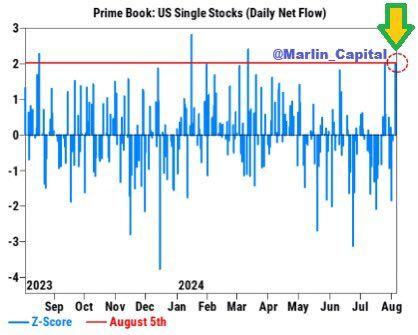
Hedge Funds bought the panic dip yesterday
US stocks saw their largest 1-day net buying in 5 months, according to GS Prime. 8 of 11 sectors were net bought, led by Tech and Defensives. $SPY $QQQ $IWM Source: David Marlin
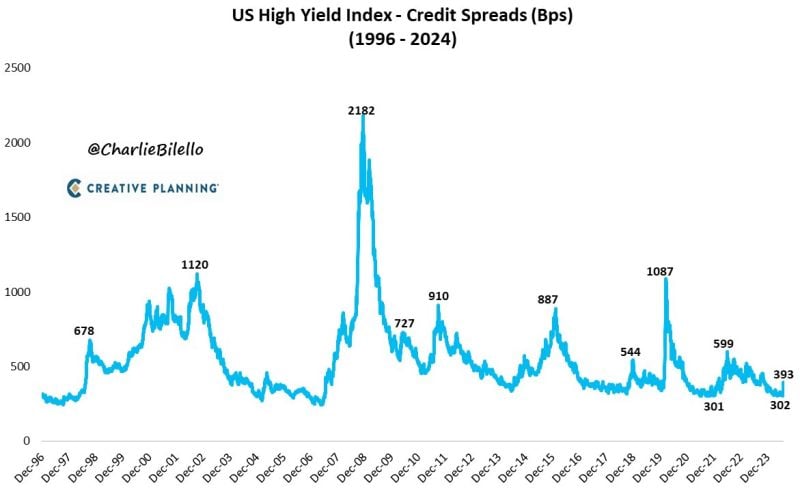
2 weeks ago, US High Yield credit spreads were nearly at their tightest levels since 2007 (302 bps).
Spreads have since increased 91 bps to their widest levels since Nov 2023 (393 bps). The last 3 recessions all saw spreads move over 1,000 bps at some point. We're not close to pricing in that scenario today. Source: Charlie Bilello
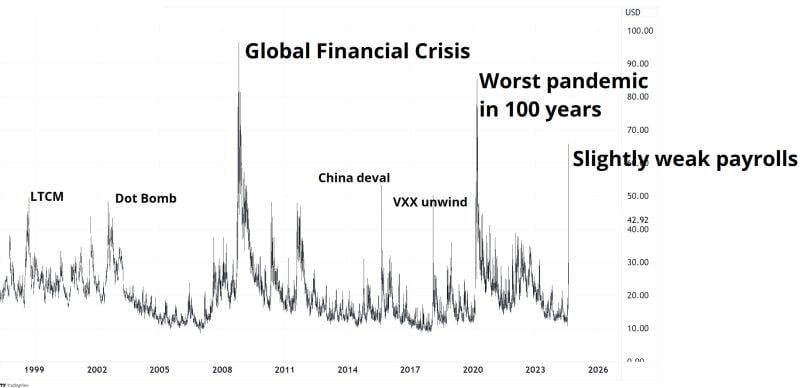
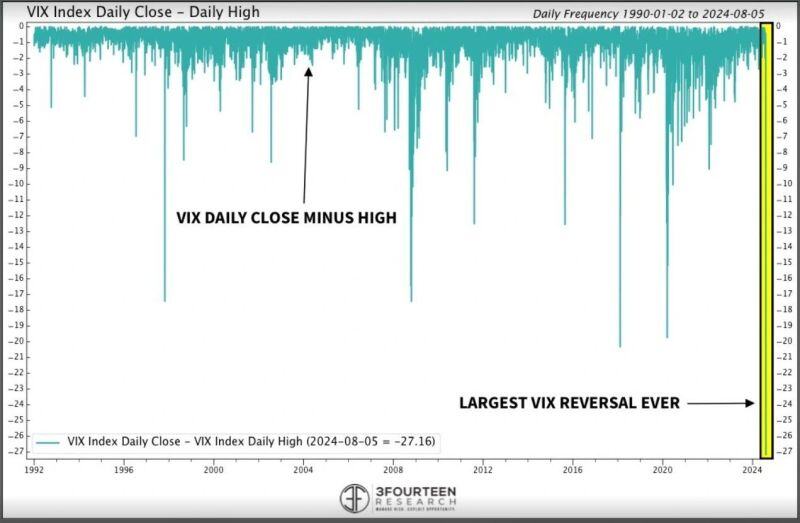
Putting yesterday's VIX intra-day high at 65 into historical perspective...
Source: Bloomberg, RBC
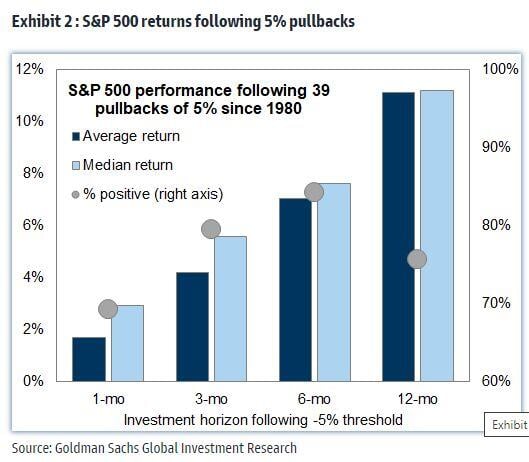
Buying the dip often pays off
Since 1980, an investor buying the sp500 index 5% below its recent high would have generated a median return of 6% over the subsequent 3 months, enjoying a positive return in 84% of episodes. Source: Goldman Sachs, Mike Z.
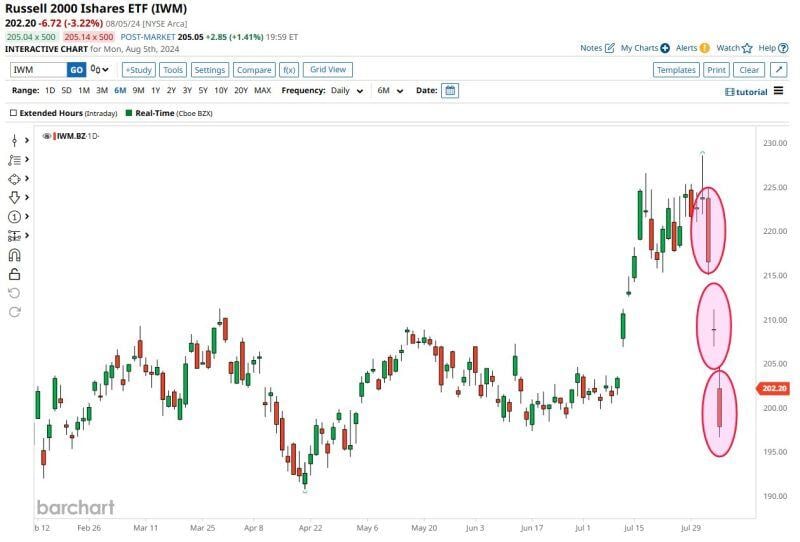
BREAKING: Small Caps $IWM post 3%+ declines for 3 consecutive trading days for the first time since October 1987
Source: Barchart
Historic day in volatility
The difference between the VIX's intra-day high (65) and close (38) was the highest EVER. Source: 3Fourteen Research thru Octavian Adrian Tanase
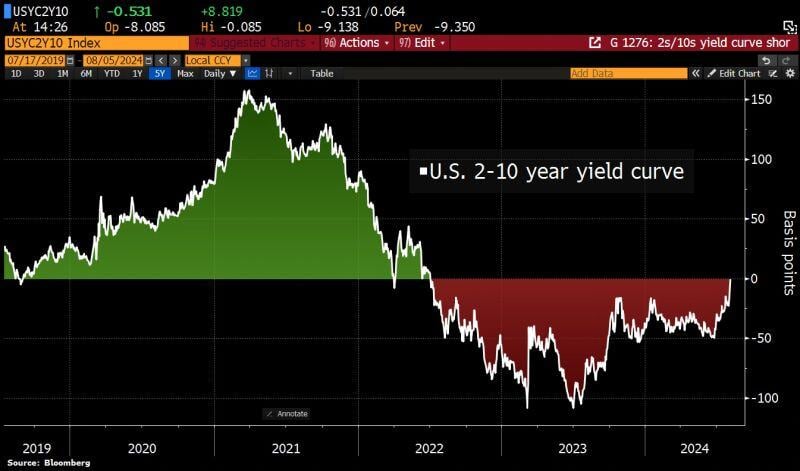
US 2s/10s yield spread is now flat for the 1st time since 2022 on aggressive repricing of Fed rate cuts
US 2y yields have plunged by 70bps to 3.69% since last Wed while US 10y yields only dropped by 40bps in the same time. Source: Bloomberg, holgerZ
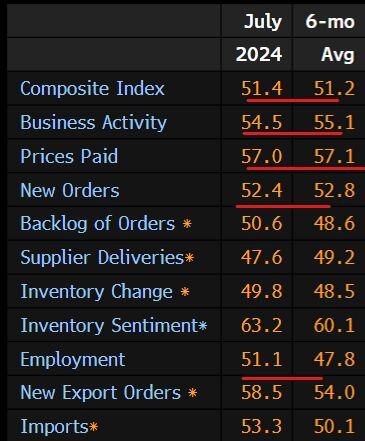
A solid rise in ISM Service dampens growth scare in markets a bit and is another sign that we are currently facing a technical
positioning driven correction instead of one led by hard landing fears. The main ISM services index and orders recorded solid bounce. Meanwhile, the Employment Index is up to highest level for the year. Note that the ISM has been quite volatile and should this not be overemphasized. Nevertheless, it seems premature to call a recession at this stage. Consider that earnings are up 12% YOY vs consensus of 9%. That doesn't happen at a Recession turning point. Source: Rishi Mishra, Ram Ahluwalia