
So Lisa Cook is fighting Trump by using his own rules
1) Attack; 2) Deny: 3) Never Show Defeat Will it work?

Has the dollar bottomed?
An interesting regularity is emerging for the Dollar. Payrolls revisions (Aug 1), CPI (Aug 12) and Powell's Jackson Hole speech drag the Dollar down, but each low after one of these hits is higher than the one before and the Dollar then resumes its rise. Source: Robin Brooks

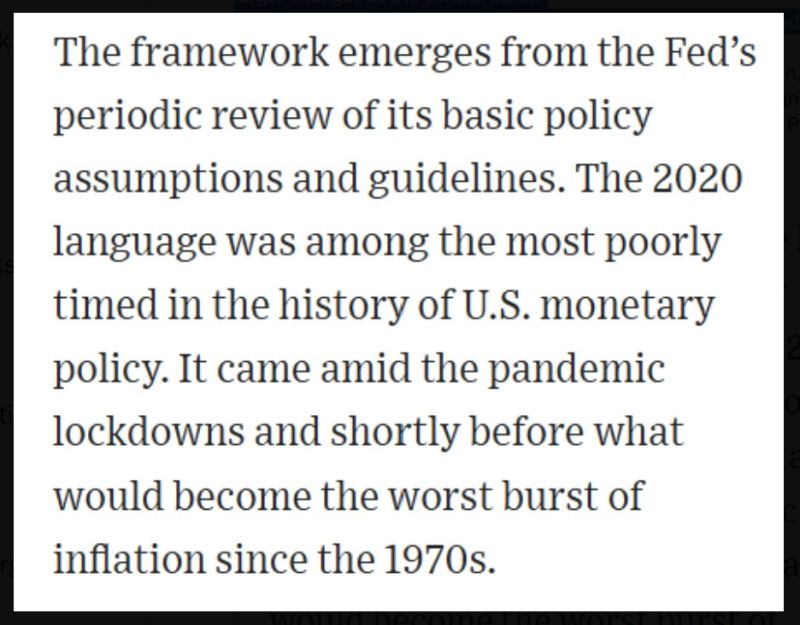
"The disappointment is that Mr. Powell and the Fed ignored the need for larger changes at the central bank."
This and the passage below are from the Wall Street Journal's editorial on Federal Reserve Chair Powell's Jackson Hole speech. Source: WSJ, Mo El Erian on X
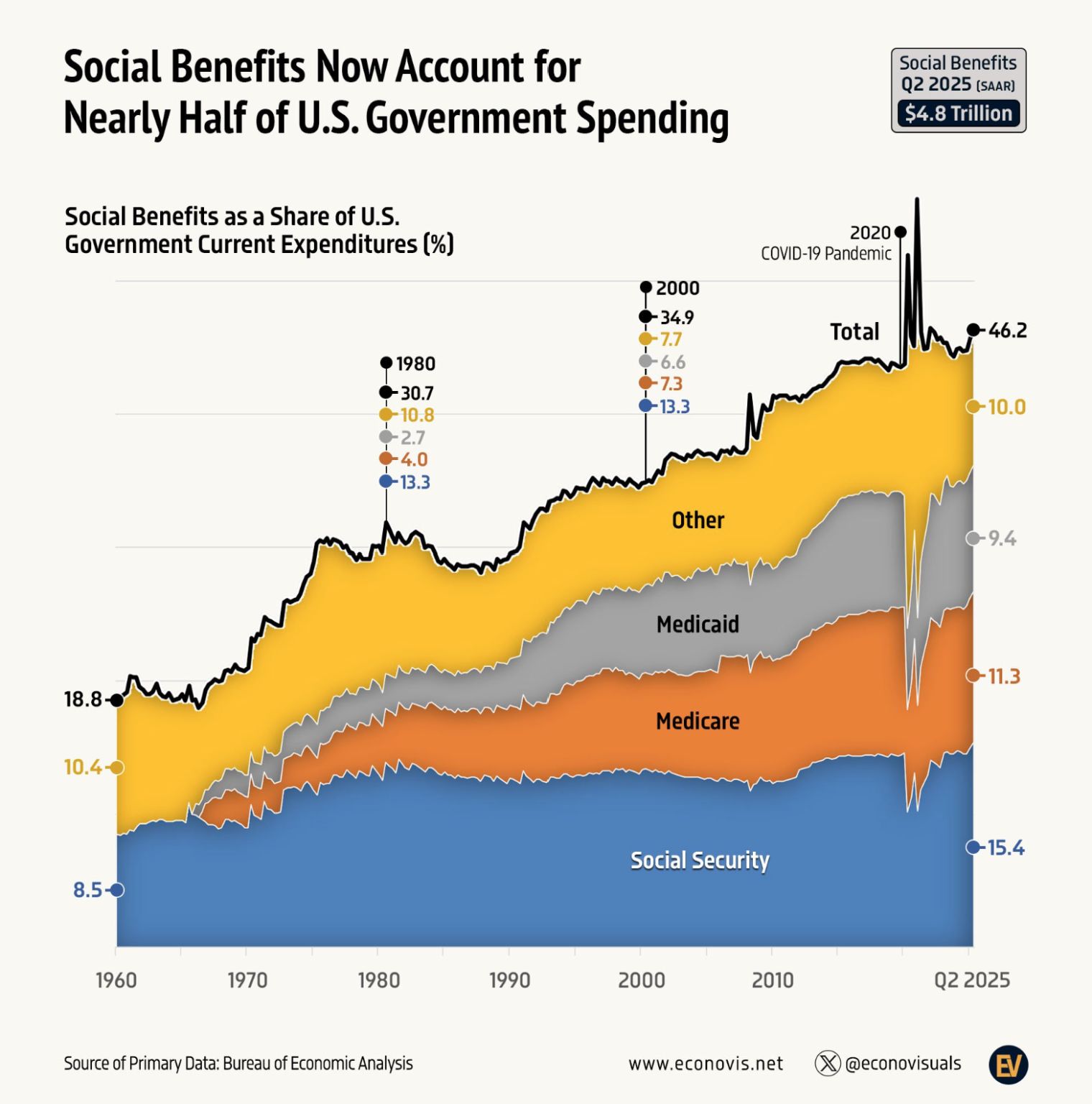
⚠️US government spending is constantly rising
Social benefits now reflect 46% of all US government expenditures, an all-time high, excluding the 2020-2021 crisis. Social Security alone is accounting for 15.4%. This will only rise further as the US population is aging. Source: Global Markets Investor
Nancy Pelosi's stock portfolio
Source: Sam Badawi @samsolid57, Carbon Finance

September rate cut odds have plunged to 57% on Polymarket over the past few days—did Powell’s speech leak?
Source: Tom @TradingThomas3

“Friendflation" is the growing cost of maintaining social connections and participating in our friends’ lives.
43% is the proportion of Americans who find it ‘difficult’ to have a wealthier friend 55% is the proportion of British adults who don’t feel comfortable talking about their financial situation, according to a study by the Money and Pensions Service "It may be true, as the adage goes, that money can’t buy you friends. But, it turns out, it comes in pretty handy if you want to keep them". Source: FT

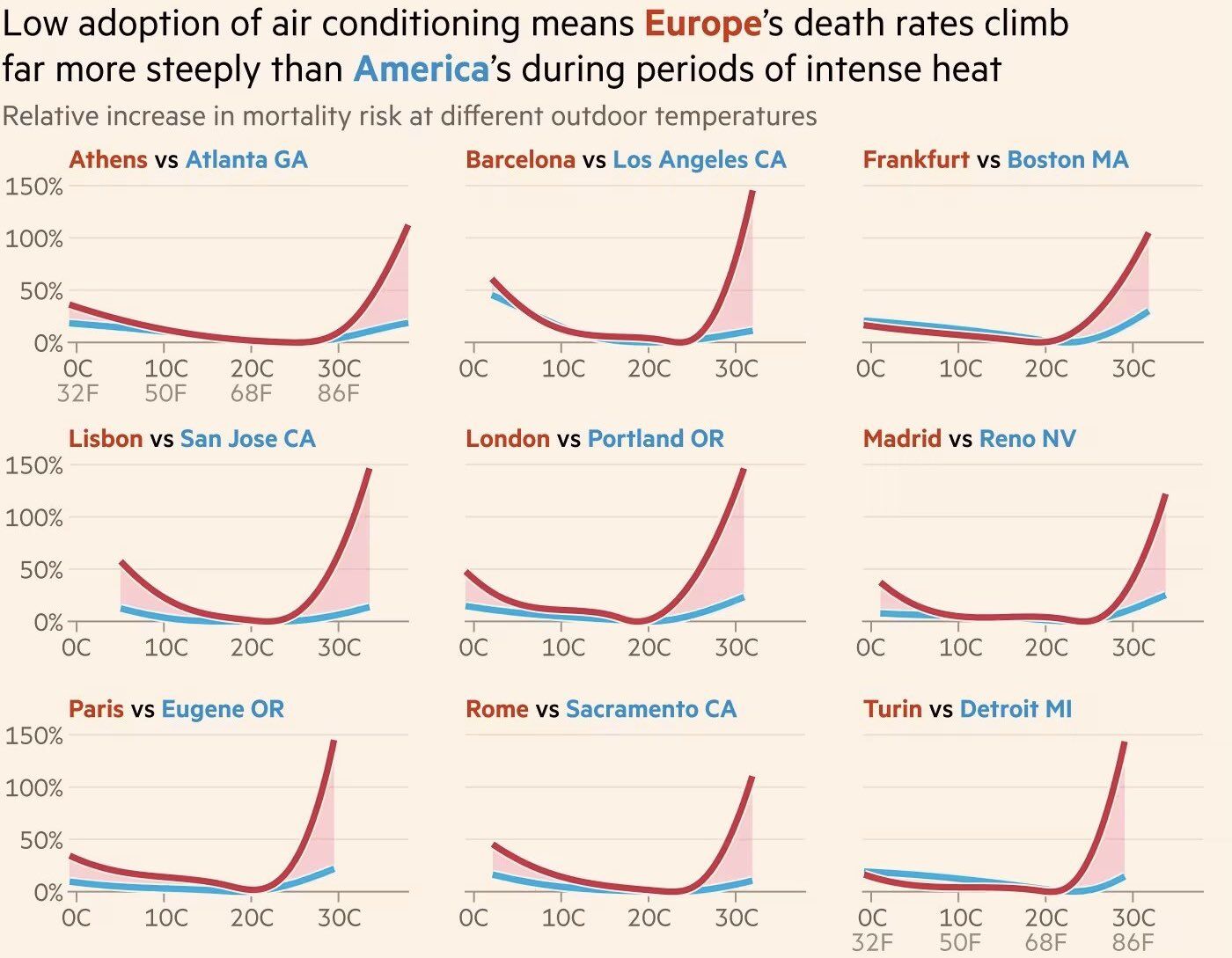
Interesting comparison between Europe vs US with regards to the use of air conditioning and the death rate during heatwaves.
EU commission: " The adoption of air conditioning in Europe has been a topic of concern due to its potential impact on health and safety during heatwaves. In Europe, the number of deaths during heatwaves has been significantly higher compared to the United States, with a mean of 83,000 deaths annually relative to 20,000 deaths in North America. This disparity is attributed to the lower adoption of air conditioning in Europe, which is less common than in the US. The lack of air conditioning in many European homes forces residents to rely on less effective cooling methods, such as electric fans, ice packs, and cold showers, which can lead to increased exposure to extreme heat and heat-related illnesses".