Straight from the Desk
Syz the moment
Live feeds, charts, breaking stories, all day long.
- All
- equities
- United States
- Macroeconomics
- Food for Thoughts
- markets
- bitcoin
- Central banks
- geopolitics
- Fixed Income
- gold
- europe
- Asia
- Commodities
- AI
- investing
- Technology
- technical analysis
- Crypto
- nvidia
- china
- ETF
- earnings
- oil
- Forex
- energy
- banking
- magnificent-7
- Real Estate
- Volatility
- Alternatives
- apple
- emerging-markets
- tesla
- switzerland
- Middle East
- United Kingdom
- amazon
- assetmanagement
- microsoft
- ethereum
- russia
- meta
- Industrial-production
- ESG
- Healthcare
- Global Markets Outlook
- bankruptcy
- Turkey
- brics
- Market Outlook
- africa
- performance
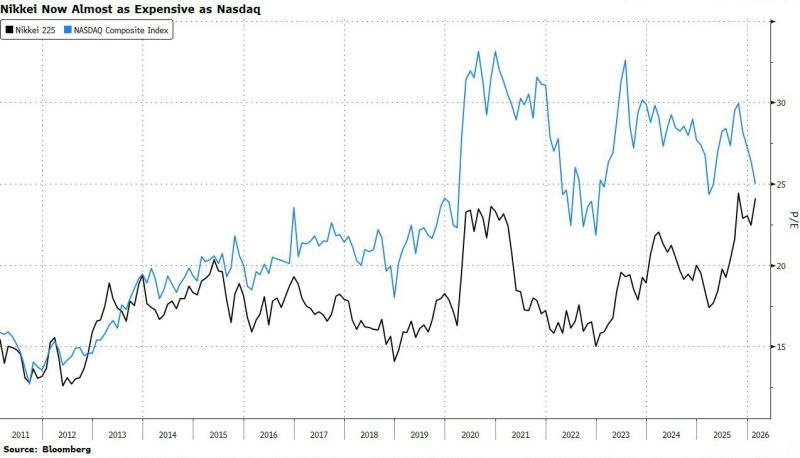
Japan just crossed the 50,000 mark — a psychological barrier decades in the making.
Three powerful forces are converging 👇 1️⃣ A predictable, pro-market policy mix PM Sanae Takaichi is doubling down on an Abenomics 2.0 formula — fiscal support, pro-growth industrial policy, and a still-dovish Bank of Japan. Add the Tokyo Stock Exchange’s campaign for better capital efficiency (P/B < 1 firms pushed to fix balance sheets, unwind cross-holdings, boost ROE) — and you get rising multiples, buybacks, and dividends. 2️⃣ Earnings turbocharged by a weak yen A softer yen means every dollar of global revenue converts into fatter yen profits. Exporters and tech suppliers — from semiconductors to automation — are posting margin resilience and beating guidance. Investors see that leverage extending into the AI, EV, and industrial digitization cycles ahead. 3️⃣ Foreign money chasing reform and value Japanese stocks still trade at discounts to U.S. peers but with cleaner balance sheets and credible governance reforms. Global allocators diversifying beyond U.S. mega-caps are pouring in — absorbing dips, fueling breakouts. 🌏 Geopolitics that add, not subtract With U.S.–Japan trade cooperation and easing U.S.–China tensions, Japan benefits from de-risking, not decoupling. New fabs, packaging, and chip equipment demand are landing in Japan — exactly where value accrues. ⚠️ But watch the pressure points A sharp yen rebound could hit exporters. Persistent inflation could force the BOJ’s hand. A slowdown in U.S. tech or China’s imports would hit Japan’s growth engines. 💡 Bottom line: Nikkei 50,000 isn’t just a number — it’s the market voting for Japan’s mix of easy money, corporate reform, and strategic positioning in the global AI and industrial build-out. The story holds as long as the yen stays weak, reforms keep unlocking ROE, and global capex keeps humming. Source: EndGame Macro
In case you missed it... The Shanghai Composite index is about to top 4,000 for the first time in 10 years
Source: David Ingles @DavidInglesTV Bloomberg
🐂 This Bull Market Isn’t Young… But It’s Far From Done.
It’s not a toddler finding its footing — and it’s not a retiree either. We’re mid-cycle, and that’s where things often get interesting. Yes, history gives us context. But it’s fundamentals — not birthdays — that decide how long a bull market lives. As the saying goes: “Bull markets don’t die of old age. They die from recessions or Fed tightening.” And right now, we see neither on the horizon for 2026. 📈 The takeaway: This run still has legs — just maybe a steadier, more mature stride. Do you think this bull still has room to run? 🐃👇 Source: Edward Jones
The cost of insuring against an Oracle default has surged following the company’s massive Q3 AI investment announcements – reaching levels not seen outside periods of major macro stress.
According to Goldman, Oracle’s CDS spreads have become a key sentiment indicator for the market’s appetite to finance large-scale AI spending. Source: HolgerZ, Bloomberg
Tough time for the young generation...
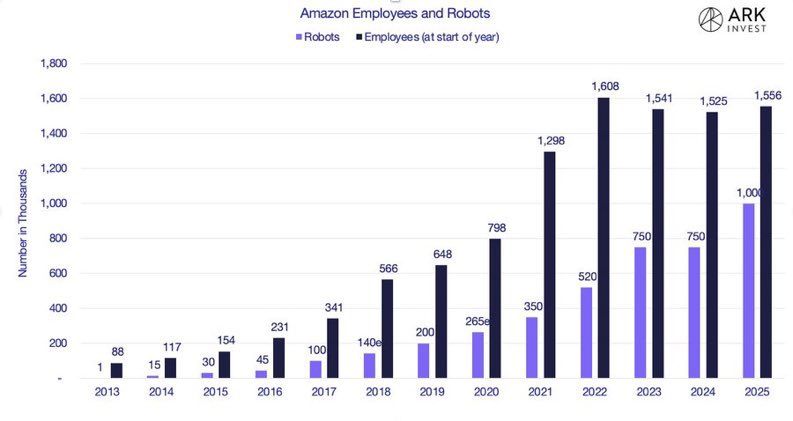
Companies that have adopted AI aren't hiring fewer senior employees, but they have cut back on hiring juniors ones. Source: Crémieux @cremieuxrecueil on X
Only 31% of companies started in 1998 were still alive in 2005.
Capitalism is brutal. Source: Brian Feroldi
China’s economy is hitting an imbalance wall. It keeps building, but people aren’t buying.
🧱 Investment eats up 42% of GDP — nearly double the global average. 🛒 Household spending? Just 37% — vs. 60% in most economies. The result: too many factories, not enough consumers. Property prices are still falling, savings rates are sky-high (20%+), and deflation has taken hold. Consumer prices are down, producer prices have been negative for years, and exports are doing all the heavy lifting — but even that’s cracking under U.S. tariffs. Instead of fixing the imbalance, Beijing is doubling down on the old playbook: more infrastructure, more state-led projects, little direct help for households. Economists say China needs a massive rebalancing — trillions in fiscal transfers to boost consumption and rebuild trust in the safety net. But that would mean loosening state control… and that’s not the direction things are heading. 📉 Without change, growth could slow to ~3% a year. 🧊 Deflation lingers. ⚙️ Factories hum, but consumers stay quiet. China’s still building the world’s factories — but it’s running out of people to sell to. Source: StockMarket.news
US Treasury yields are falling — but this time, it’s not about fear. It’s about confidence. 💡
The Trump–Bessent supply-side mix, tariff revenues, and AI-driven growth are reshaping the bond market story. 💵 Tariffs are turning out to be less inflationary than initially feared (at least for now) and deficit-friendly. 💰 Stablecoins now hold $180B+ in Treasuries, quietly anchoring the short end of the curve. 🚀 The U.S. productivity boom powered by AI is leaving others behind — while Europe unravels fiscally, Britain wrestles with debt, and China sinks deeper into deflation. As global credit stress rises, U.S. bonds are the safe haven again. The curve’s bull flattening isn’t a warning — it’s (almost) a vote of confidence. The U.S. is once again the "least worst" house in a bad neighborhood of indebted peers. Source: Bloomberg, James E. Thorne @DrJStrategy
Investing with intelligence
Our latest research, commentary and market outlooks