
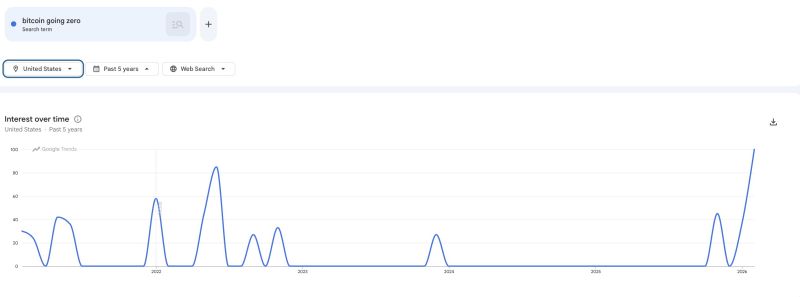
ALERT: Search interest for “Bitcoin going to zero” is now higher than it was in 2022.
Source: Cointelegraph @Cointelegraph
Blue Owl permanently halts redemptions at private credit fund aimed at retail investors
Blue Owl Capital Corp II (OBDC II) has halted regular withdrawals from its retail debt fund, shifting to "episodic payments" after redemptions surged 20% in early 2025. The firm sold $1.4B of assets at near-par to manage liquidity, highlighting strong underwriting despite fund pressures. The case shows that illiquid private loans in retail structures carry risks, and liquidity is crucial when markets tighten. Source: FT
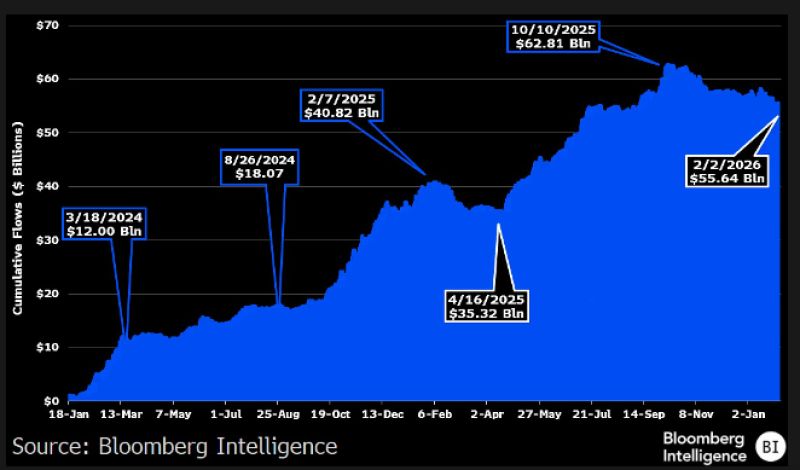
Bitcoin ETF's cumulative net inflows peaked at +$63B in October. Today (after the "massive" outflows) it's +$53B. That's NET NET +$53B in only two years.
Initially, most predictions were for $5-15B in the first year. This is an important context to consider when looking/writing about the $8B in outflows since 45% decline and/or the relationship between $BTC and Wall street, which has been overwhelmingly positive. h/t @JSeyff
THE BIG MONEY IS QUIETLY POSITIONING FOR A GOLD EXPLOSION.
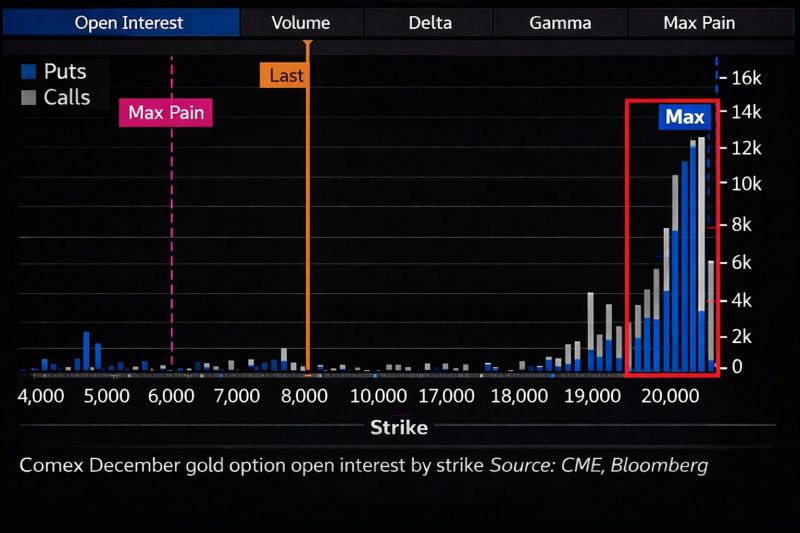
While retail investors are panic-selling the dip, the "smart money" is doing something absolutely radical. I’m looking at the COMEX data, and the numbers are staggering. The Strategy: Insiders are loading up on gold options with strike prices between $15,000 and $20,000 for December 2026. The Context: Current Gold Price: ~$4,961 The Target: A 3x to 4x increase in value. Here is the part most people missed: This buying spree didn't happen during the hype. It started right after gold hit $5,600 and "dumped" hard. When the price dipped below $5,000, retail investors ran for the exits. They saw a correction; the insiders saw a generational entry point. Right now, they are sitting on over 11,000 contracts. Why does this matter? Because you don’t place a bet that gold will triple out of "optimism." You do it because you see a fundamental shift in the global financial system that others are ignoring. Source: Alex Mason @AlexMasonCrypto
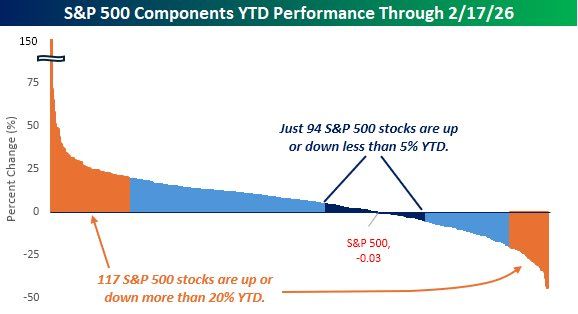
Crazy market stat: The S&P 500 is flat YTD, but there are just 94 stocks in the index up or down less than 5% YTD while there are 117 stocks up or down more than 20% YTD.
Source: Bespoke
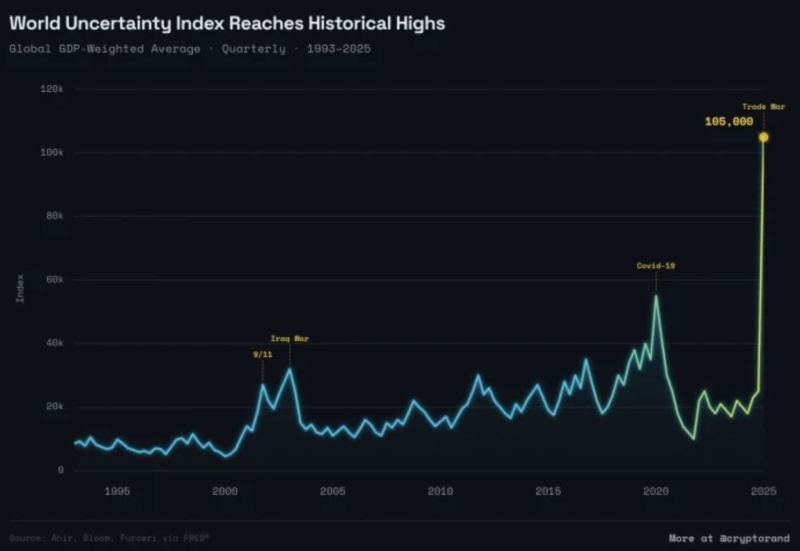
The World uncertainty index reaches the highest level in history, surpassing Covid, the Global Financial Crisis, and the Dot Com Bubble
Source: Barchart @Barchart
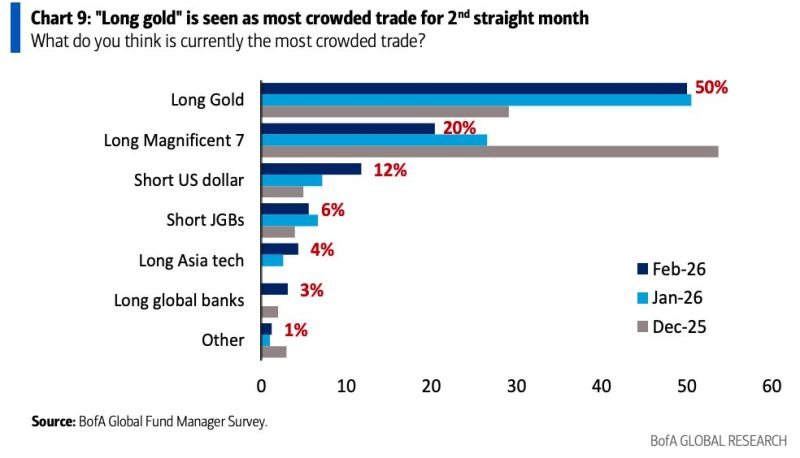
Long gold is by far the most overcrowded trade according to the latest BofA fund manager survey
Source: BofA Global Fund Manager Survey
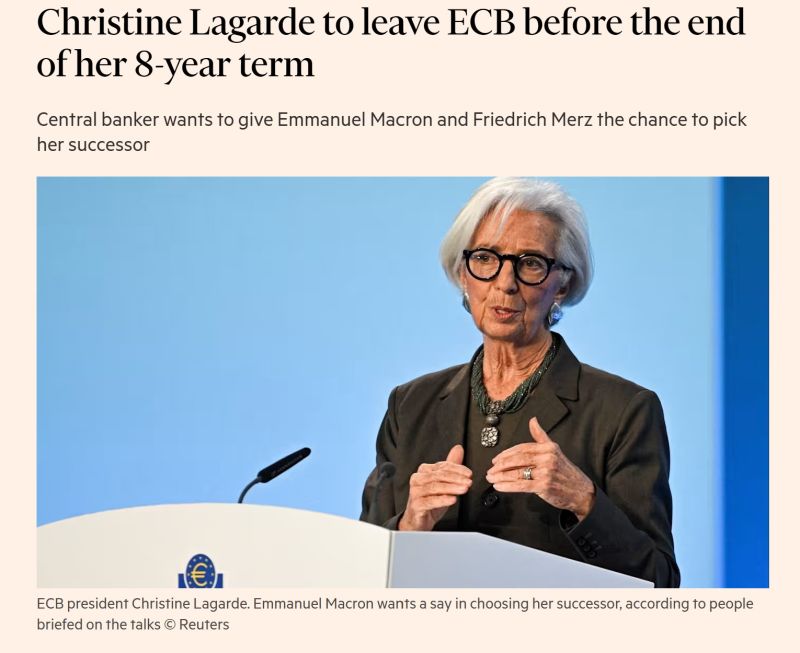
Christine Lagarde is expected to leave the ECB before her term ends in 2027, aiming to give Emmanuel Macron and Friedrich Merz the opportunity to choose her successor.
With the French presidential election approaching, Lagarde may step down early to let Macron and Merz influence her ECB successor. Key stakes: filling the power vacuum, deciding among top contenders like Hernández de Cos, Knot, Schnabel, and Nagel, and shaping the ECB’s post-crisis legacy.