
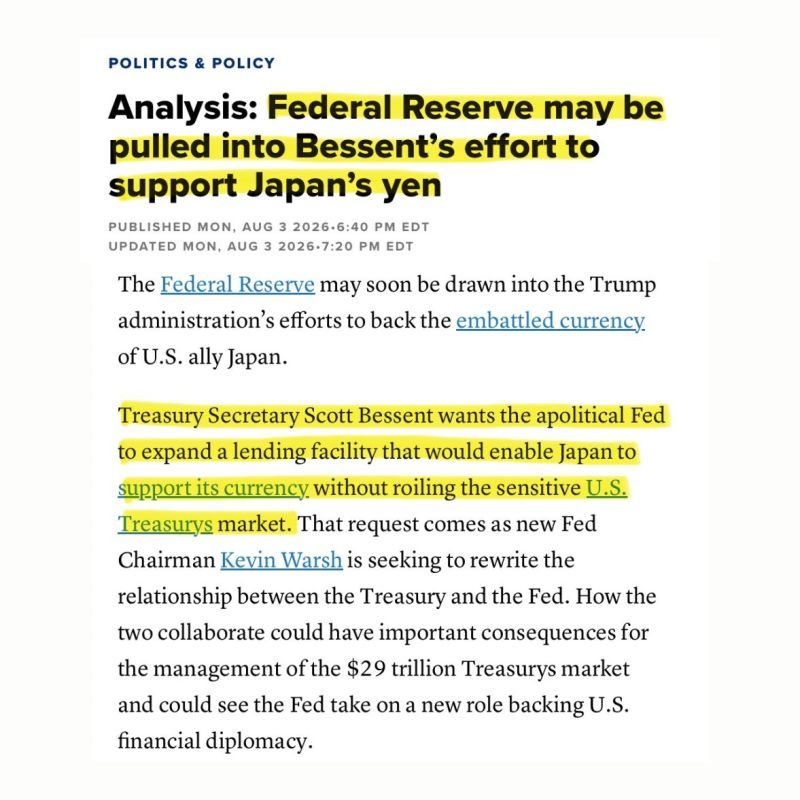
Treasury Secretary Scott Bessent is reportedly urging the Federal Reserve to expand support for Japan, allowing it to raise dollars without selling its massive holdings of US Treasuries.
Japan owns roughly $1.1 trillion in US government bonds. When it intervenes to support the yen, it needs dollars. Once its cash reserves are depleted, selling Treasuries becomes the most direct way to fund further intervention. That is a problem for the US. Large Treasury sales would increase bond supply, pushing prices lower and yields higher. With the 10-year Treasury yield recently climbing above 4.7%, Washington has strong incentives to avoid additional upward pressure. The solution is the Fed's FIMA Repo Facility. It allows foreign central banks to temporarily exchange Treasuries for dollars without selling the bonds into the market. Japan receives dollar liquidity, then later repays the funds and takes back its securities, leaving the bond market largely unaffected. The challenge is capacity. The facility is currently capped at $60 billion per day, while Japan is estimated to have spent $60–80 billion supporting the yen in just one week. According to reports, Bessent wants that limit increased. However, expanding the facility would require approval from the Federal Open Market Committee (FOMC), and the Federal Reserve has so far declined to comment. Source: Bull Theory
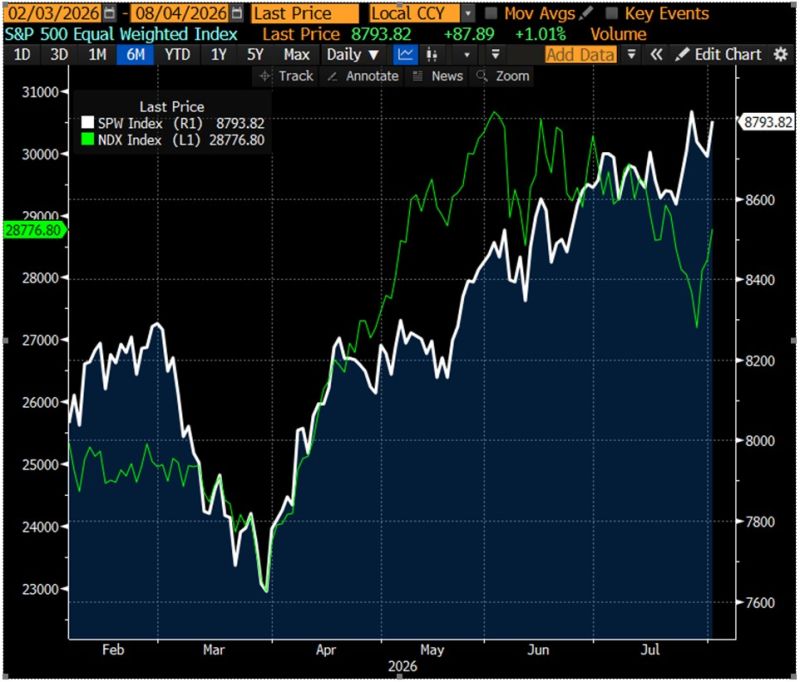
The market broadening in one chart
The S&P 500 Equal-weight index $SPY just hit new all-time high while the Nasdaq 100 $NDX is still over 8% below highs. Source: Bloomberg, RBC
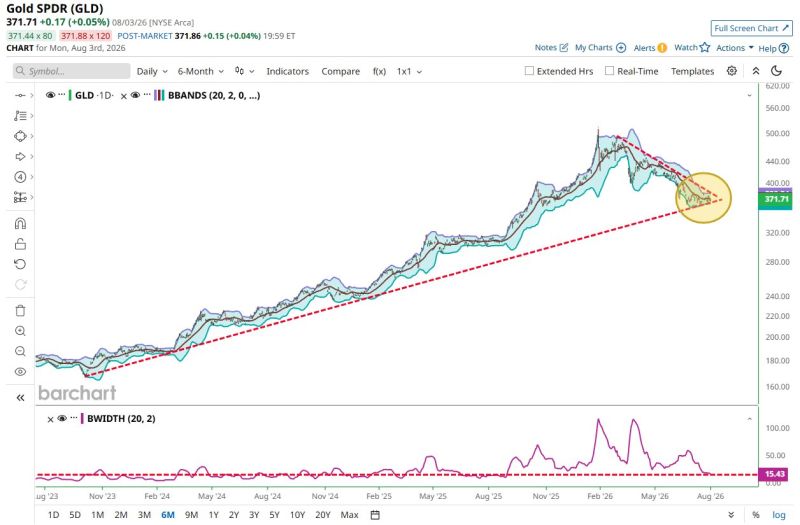
Gold is coiling and getting ready for a big move
Bollinger Bands are now the tightest since August 2025, right before Gold soared 60% over the next 5 months. Source: Barchart
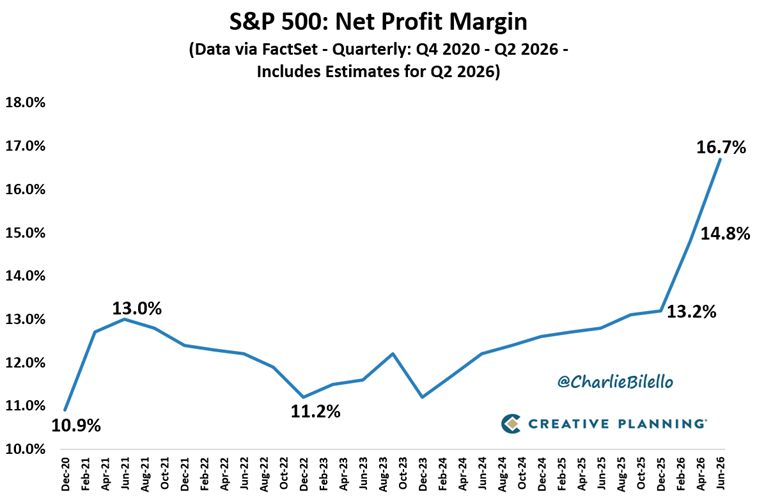
S&P 500 profit margins spiked to 16.7% in Q2, which is by far their highest level in history.
“Profit margins are probably the most mean-reverting series in finance, and if profit margins don't mean revert, then something has gone badly wrong with capitalism. If high profits don't attract competition, there's something wrong with the system.” - Jeremy Grantham Charlie Bilello
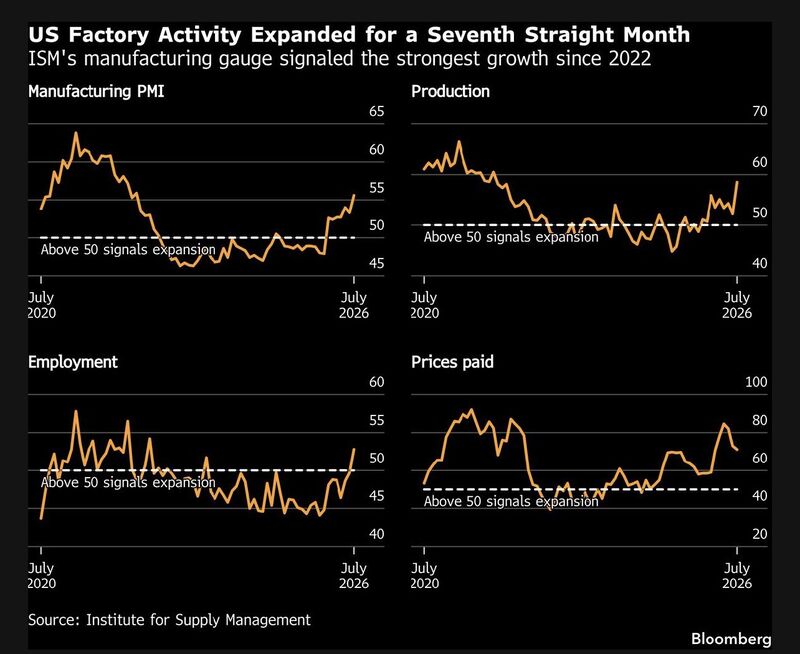
US manufacturing is booming, expanding at the fastest pace since 2022 and beating expectations in many metrics for the month of July.
Omar Sharif of Inflation Insights points out that the ISM production index rose by the most for any July since 1951. Source: Lisa Abramowicz
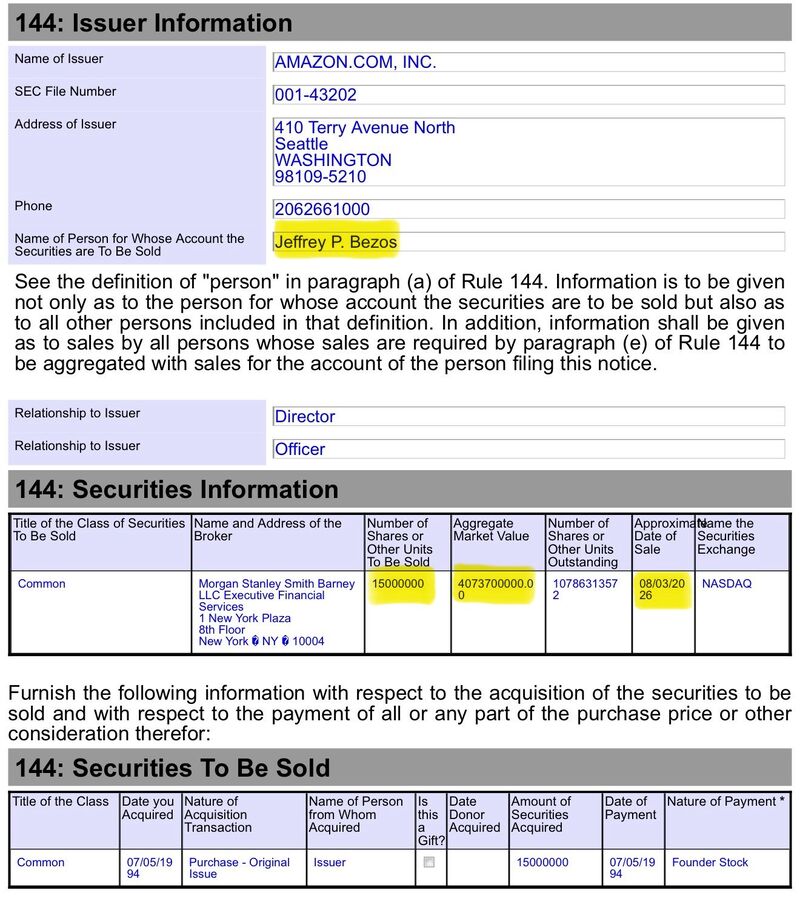
Jeff Bezos sold $4,073,700,000 worth in Amazon $AMZN stock today, his first sale of stock in over a year.
Source: Trend Spider
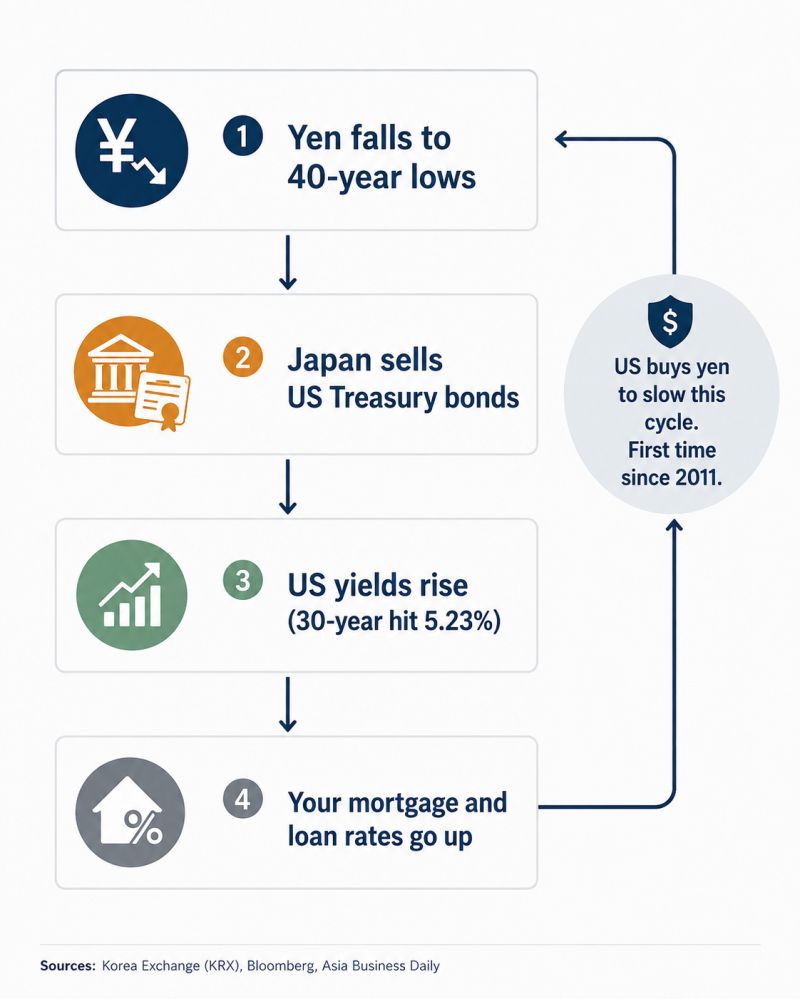
The US just stepped in to support Japan's currency—without selling dollars
The US Treasury reportedly bought Japanese yen for the first time since 2011, funding the move by selling euros rather than dollars. The goal: help stabilize the yen while avoiding downward pressure on the US dollar. Why does this matter? Japan owns about $1.19 trillion in US Treasuries, making it the largest foreign holder. If the yen weakens too much, Japan may need to sell Treasuries to raise dollars and defend its currency. More Treasury selling can push US bond yields higher, increasing borrowing costs across the economy—from mortgages to auto loans. Japan can also tap the Fed's FIMA Repo Facility, allowing it to borrow dollars against its Treasury holdings instead of selling them outright. That could reduce pressure on the US bond market. Reports suggest the US and Japan may announce a coordinated currency policy in the coming days. Source: Hedgie
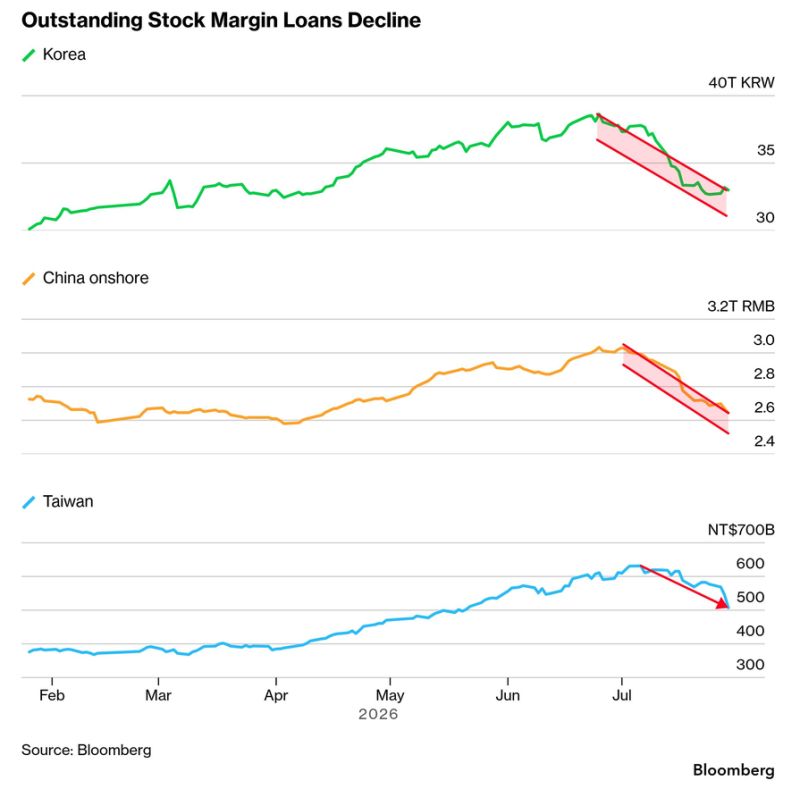
Leverage is unwinding across Asia
The borrowing that fueled this year's rally is now accelerating the selloff. In South Korea, margin debt has fallen by $4 billion since June, while leveraged ETF assets have plunged 70% (from $53 billion to $16 billion). Retail cash set aside for stock purchases has dropped 23%, and many Samsung and SK Hynix investors are now sitting on losses. The deleveraging is spreading across the region, with margin loans also falling sharply in China and Taiwan. As leveraged positions are unwound, forced selling is amplifying market volatility. Source: Global Markets Investor