
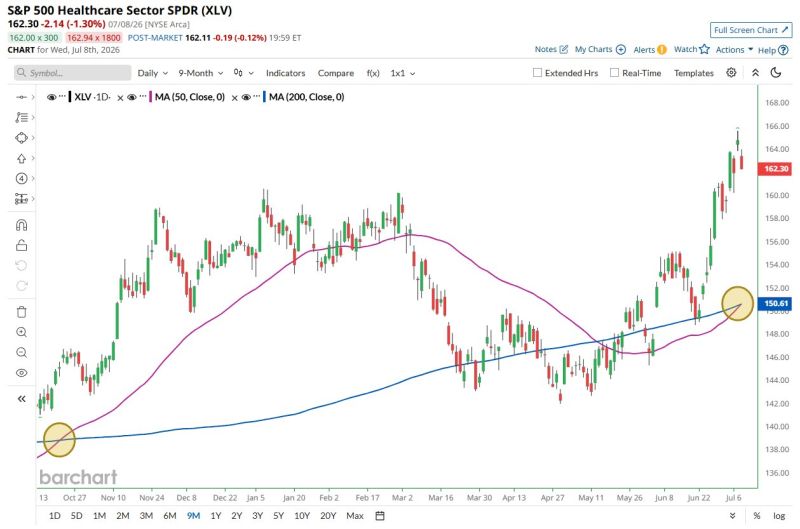
Healthcare Stocks just formed a Golden Cross for the first time since October 2025
The last one sent prices higher by 10% over the next 10 weeks Source: Barchart
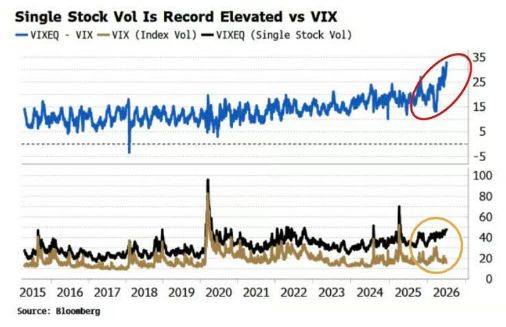
Single Stock Volatility relative to the CBOE Volatility Index $VIX has reached its largest gap in history
Source: Bloomberg, Barchart
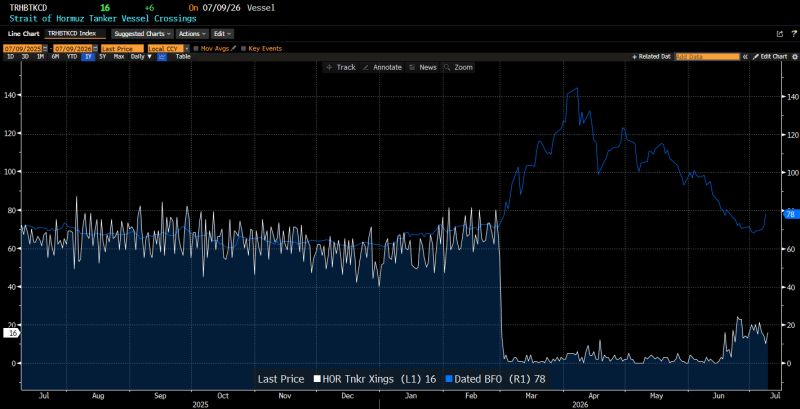
Strait of Hormuz 🇮🇷 oil crossings (in white) have not recovered, yet oil prices (in blue) are near the levels they were pre-war.
Source: Gordon Johnson
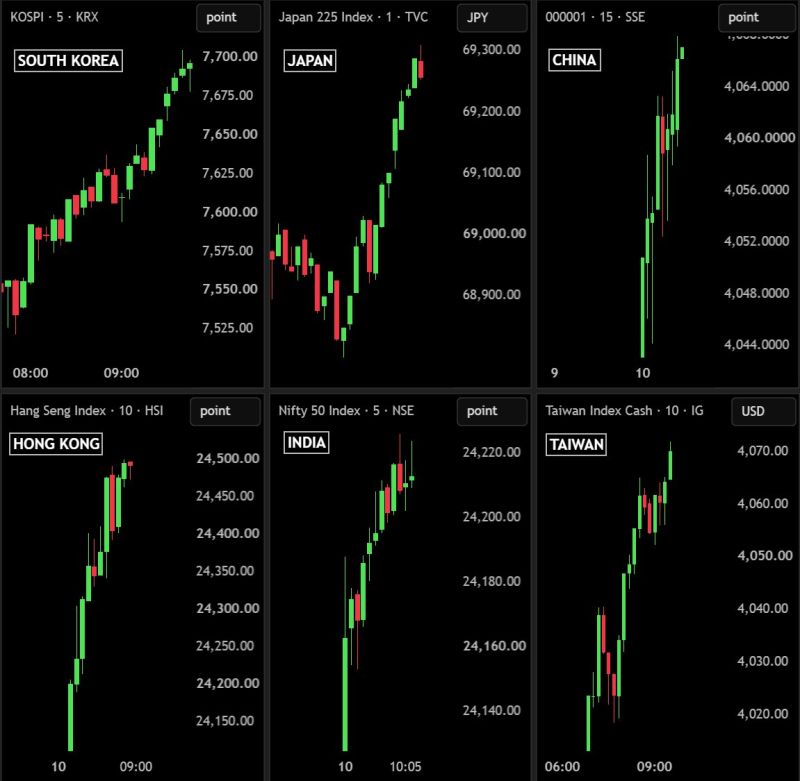
Massive Reversal in Asian Markets
Over $500 BILLION has been added to Asian stocks today as semiconductor and AI stocks rebounded after the recent sell-off, following a strong close on U.S. stocks. South Korea's KOSPI is up +4.6%, adding ₩280.6 trillion ($189B). Japan's NIKKEI is up +1.6%, adding ¥22.9 trillion ($139B). Taiwan is up +1.2%, adding NT4.1 trillion ($50B). China's SSE is up +0.8%, adding ¥520 billion ($73B). Hong Kong's HSI is up +1.5%, adding HK$131.6 billion ($17B). India's NIFTY is up +1.0%, adding ₹4.9 trillion ($57B). Source: Bull Theory
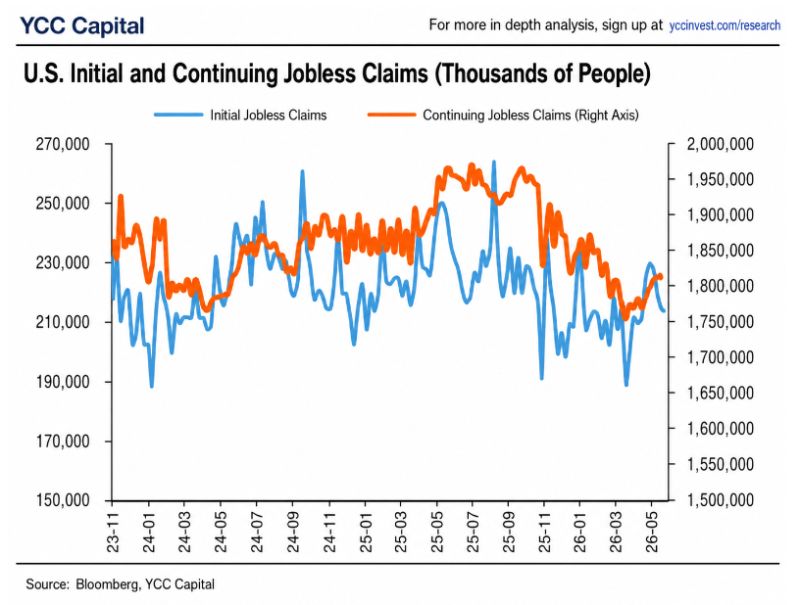
🚨 The labor market still refuses to crack.*
Initial jobless claims remain stuck in a remarkably stable range of 200,000–230,000, while continuing claims are hovering around 1.8 million. For more than two years, recession fears have dominated headlines. Yet the one indicator that typically flashes red before a downturn still isn't doing it. Yes, workers who lose their jobs are taking longer to find new ones, pushing continuing claims higher. But companies are not laying off employees at the pace you would expect ahead of a recession. That's the key distinction. 📌 The labor market is cooling, not collapsing. For the Federal Reserve, that's an important signal. As long as layoffs remain contained, policymakers can stay focused on inflation instead of rushing to support the economy. Jobless claims remain one of the strongest pieces of evidence that the U.S. economy is slowing—but not yet heading into an imminent recession. Source: YCC Macro
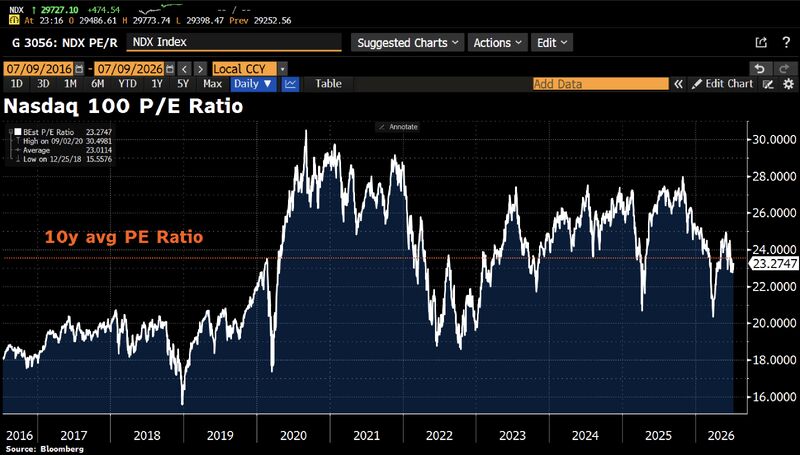
To put things into perspective: The Nasdaq 100 is currently trading at ~23x NTM P/E
which is broadly inline with its 10y average multiple and towards the lower end of its 3-4y range, Goldman says, Source: HolgerZ, Bloomberg
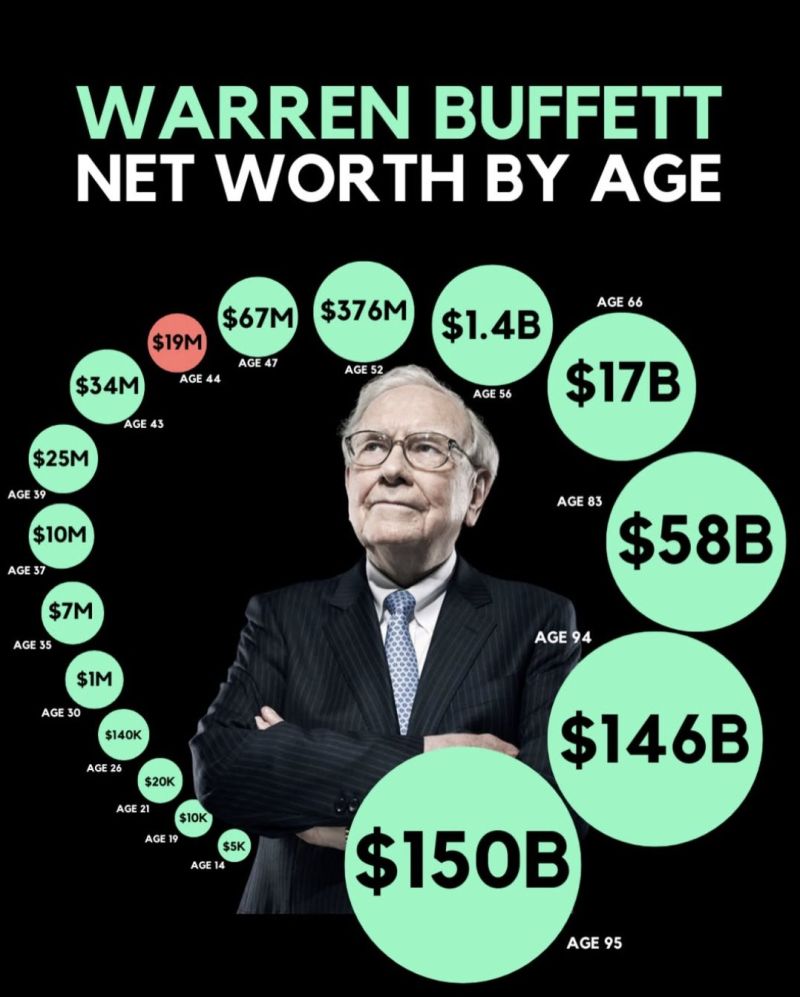
Buffett never caught a 100x.
His whole 60 year record averages 19.9% a year. The most boring number on this chart built on of the richest investors alive. Source: Rand Group
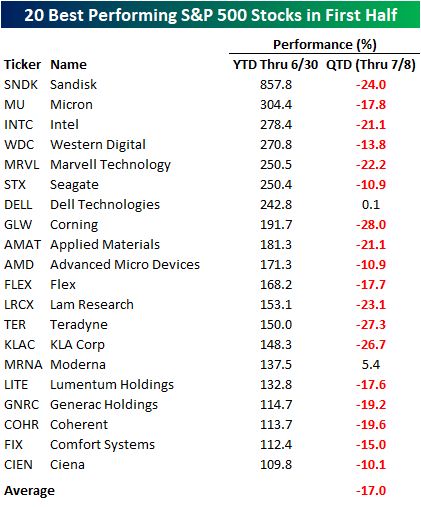
Of the 20 top performing stocks in the first half (nearly all tech), only two are up so far in Q3, and the average QTD decline is 17%.
Source: Bespoke @bespokeinvest