Straight from the Desk

Syz the moment

Live feeds, charts, breaking stories, all day long.

23 Mar 2026

Yen at a critical juncture intervention looms

The Japanese Yen is once again near 160 USD/JPY, the level that triggered massive government interventions in 2024, with trillions of yen spent to defend the currency. Top official Atsushi Mimura warns that “all possible measures” could be taken. Rising oil dependence and record gas prices are straining the economy, making a weak yen more than a market issue it threatens daily life and inflation. History shows that a break above 160 would likely trigger swift intervention. Source: Global Markets Investor, Bloomberg

20 Mar 2026

In the last 3 weeks, Gold is down -14%. Silver is down -28%. And yet… we have war, oil shocks, and extreme volatility. So what’s really going on?

This should be a perfect environment for precious metals to surge. But they’re falling. Here’s the truth most people are missing 👇 📉 Gold is NOT moving on fear (for now). It’s moving on global reserve flows. After 2022, when the US and Europe froze Russian reserves, something big changed: ➡️ Surplus countries stopped trusting Treasuries ➡️ They started buying gold instead Gold became a reserve asset of choice, not just a safe haven. 💥 Now comes the shock: The Strait of Hormuz blockade is crushing oil revenues. And that hits the exact countries that were buying gold: • Saudi Arabia • UAE • Kuwait Less oil revenue = less surplus Less surplus = less gold buying (or even selling) 🌏 The ripple effect doesn’t stop there: China — the world’s largest oil importer — is now facing slower growth. That means: ➡️ Smaller trade surpluses ➡️ Slower reserve accumulation ➡️ Less demand for gold ⚙️ And silver? It’s getting hit even harder. Why? Because ~50% of silver demand is industrial. So when global growth slows: ➡️ Demand drops ➡️ Prices fall faster than gold 🧠 The big takeaway: Gold isn’t reacting to fear right now. It’s reacting to global trade and capital flows. And those flows are weakening. 📌 The structural bull case for gold? Still intact. But in the short term… 👉 Gold follows liquidity and reserves 👉 Not headlines and fear Source: Global Markets Investor

20 Mar 2026

Goldman team is coming out with higher for longer for oil prices even after the "all clear" sounds and SoH is reopened.

Source: Open Square Capital

20 Mar 2026

The oil market disruption is far worse than headline prices suggest:

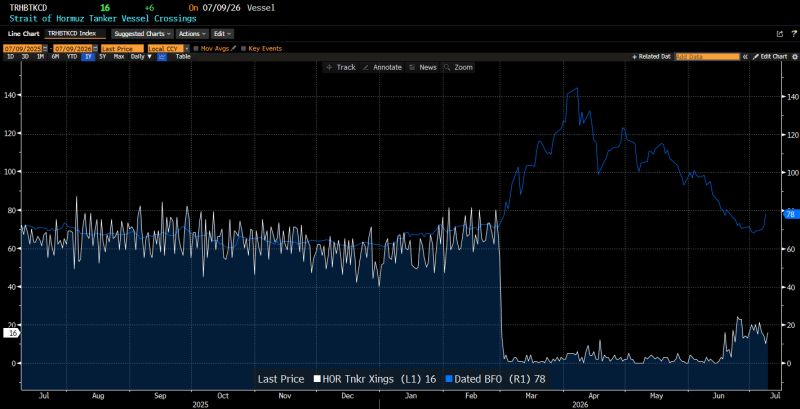
Oman crude hit a record $173 per barrel on Wednesday, surpassing even the 2008 Financial Crisis spike. Dubai crude also surged to an all-time high above $150, as buyers scramble to replace supplies cut off by the Strait of Hormuz shutdown. The Hormuz closure has severed ~20% of the world's oil production from global markets, triggering the largest supply disruption in modern history. By comparison, Brent is trading at ~$115 and WTI near ~$95, massively understating the severity of the physical shortage. As a result, the gap between Brent and WTI is now the widest since 2013, as the Iran War disproportionately hits European oil supply. The problem is that Brent and WTI are the most commonly quoted benchmarks, but they only reflect North Sea and US supply conditions, not the Middle Eastern crisis. If the Strait does not reopen, Western oil prices will inevitably catch up, as US and European inventories are depleted and global supply tightens further. The real oil crisis has not even reached Western markets yet. Source: Global Markets, FT

20 Mar 2026

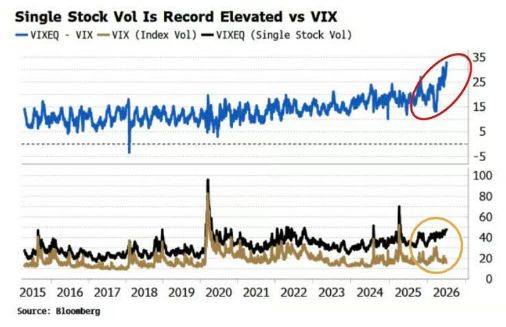
This is not good news for a market segment that is already challenged to separate signal from noise...

Source: Bloomberg, Mo El Erian

20 Mar 2026

Iran is RAMPING UP oil shipments:

Iran's oil exports spiked to ~4.5 million barrels on March 17, more than DOUBLE the 2025 average of ~2.2 million barrels per day. The surge came after exports nearly collapsed to zero on March 14 and 16, following US and Israeli military strikes near the Kharg Island export terminal. Iran is reportedly rushing to load as many tankers as possible when conditions allow, funnelling the revenue to fund military operations and keep the economy running. Iranian tankers continue to pass through the Strait of Hormuz, unlike many other vessels that remain blocked, particularly those from US-allied nations. Iran is exporting oil in bursts whenever it can. Source: Global Markets, Goldman Sachs

20 Mar 2026

SPX is pressing the lower end of the “eternal” range that has held since September.

The move lower hasn’t been a panic, it’s been a grind, the type of price action that slowly bleeds positioning rather than flushing it. We’re now below the 200-day, but without any real urgency in the tape. 6600 (futures) remains the line in the sand. Below 6600 → downside accelerates. Hold it → range survives. Source: The Market Ear, LSEG

20 Mar 2026

Soon, Europe is about to subsidise energy again. Sounds supportive. But the reality is far more paradoxical

Governments will step in as energy prices surge. But here’s the uncomfortable truth: 👉 Many of these same governments helped create the crisis 👉 By weakening their own energy security 💸 Now comes the real problem: Most European countries are already running structural deficits. They don’t have the fiscal room to absorb another shock. So what happens next? ➡️ Subsidies go up ➡️ Deficits widen ➡️ Policymakers panic And then the “solution” kicks in: 👉 Higher taxes 🧠 Think about the loop: • Governments subsidise households • Then raise taxes to fund it ➡️ Households end up paying for their own “relief” (with a bit of redistribution in between) 🔁 And this doesn’t stop here. The same cycle is playing out across: • Healthcare costs • Welfare expansion • Defence spending ⏳ Until the next crisis hits. And when it does, you’ll hear the same line again: “We must stabilise the economy.” 💥 Which really means: • Deficits explode • Debt issuance surges • Central banks step in 👉 Printing money 👉 Buying bonds 👉 Repeating the cycle 📌 Once you see the system, you can’t unsee it: It’s a loop of: Crisis → Spending → Debt → Money printing → Repeat ⚠️ Now here’s the part most people ignore: If your wealth is tied to assets that: • Don’t generate real returns • Can’t be moved easily • Are fully exposed to domestic policy 👉 You are far more vulnerable than you think (Yes, that includes a lot of real estate) 🧠 The uncomfortable conclusion: This isn’t about one crisis. It’s about a system. And if your portfolio isn’t positioned for it… 👉 It’s probably mispriced for reality Source: Financial Times

Thinking out loud

Sign up for our weekly email highlighting the most popular posts.

Follow us

Thinking out loud

Investing with intelligence

Our latest research, commentary and market outlooks