

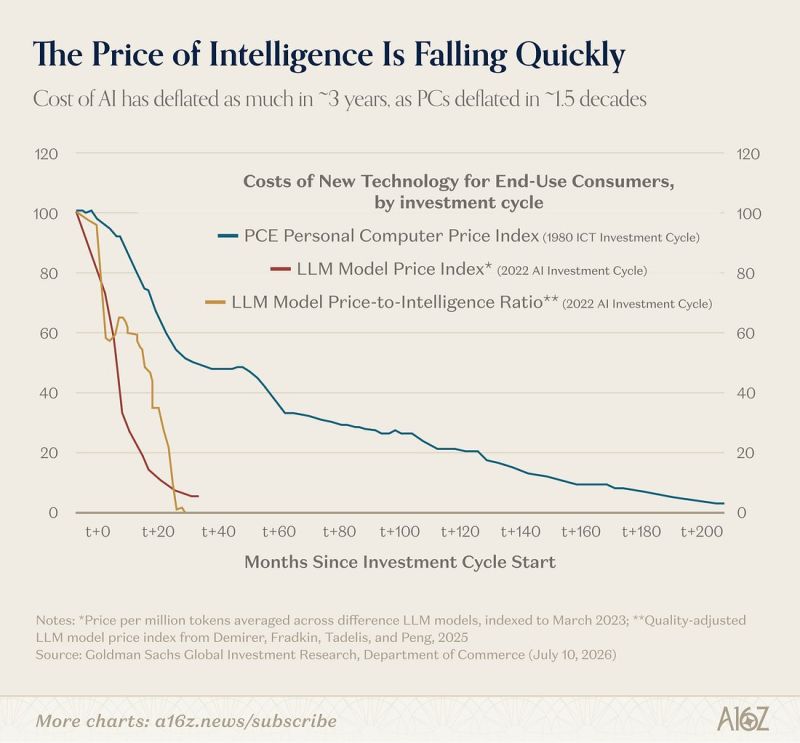
AI prices have plunged as much in 3 years as PC prices did in 15
Source: Barchart
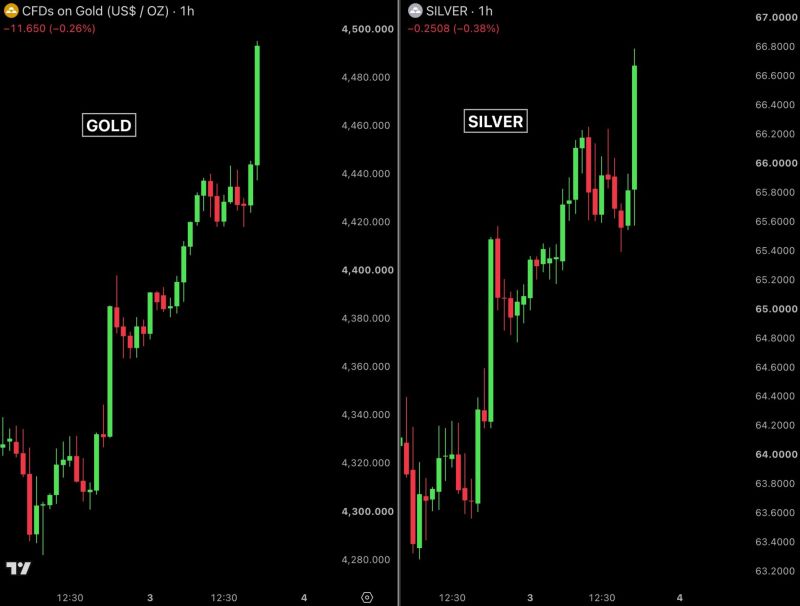
$1.80 TRILLION has been added to Gold and Silver Marketcap in the last 30 hours as Fed rate hike expectations drop to 50.4%.
Source: Bull Theory
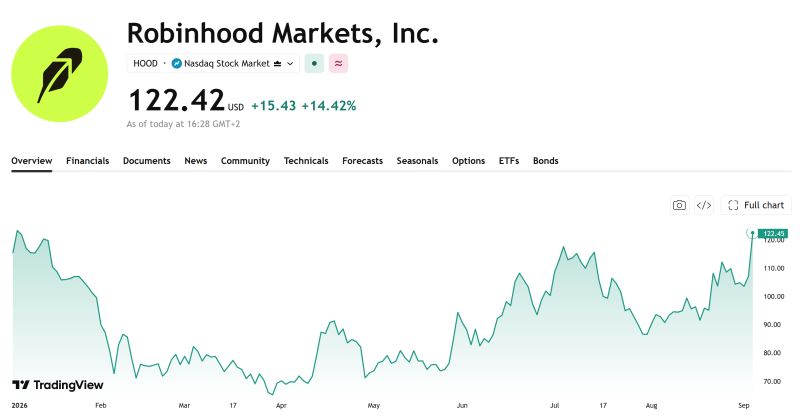
Robinhood is having a monster day.
$HOOD surged 13% as Robinhood Chain smashed its previous records, generating approximately $4 million in onchain revenue on September 2—more than any other blockchain that day. So, what exactly is Robinhood Chain? It is an Ethereum Layer 2 network built on Arbitrum and designed for tokenized finance. Its ambition is to bring stocks, ETFs, private assets and other real-world assets onchain—enabling 24/7 trading, self-custody, lending and integration with decentralized finance. The $4 million does not translate directly into $4 million of revenue for Robinhood’s financial statements. But the explosion in activity offers an early glimpse of the platform’s potential—and of Robinhood’s evolution from online broker to financial infrastructure provider. The timing could hardly be better. Morgan Stanley just upgraded $HOOD to Overweight with a $150 price target, while Scotiabank initiated coverage with a Sector Outperform rating. Robinhood is no longer just trying to democratize trading. It wants to rebuild the market infrastructure underneath it. Source: Bull Theory, TradingView
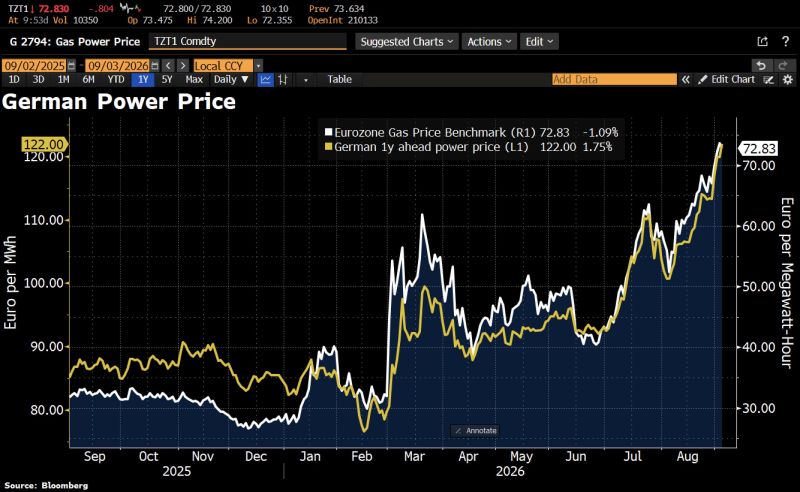
Germany’s electricity market is flashing another warning sign.
The country’s one-year forward power price has surged to €122/MWh—its highest level since 2023. This matters because the contract is a key benchmark for the procurement costs faced by household electricity suppliers. The main culprit? Surging natural gas prices. Under Europe’s merit-order system, the most expensive power plant required to meet demand sets the wholesale electricity price. And that plant is often gas-fired. So even when most electricity comes from cheaper sources, rising gas prices can lift the cost of the entire power market. The result: renewed pressure on households, businesses and Germany’s industrial competitiveness. Source: HolgerZ, Bloomberg
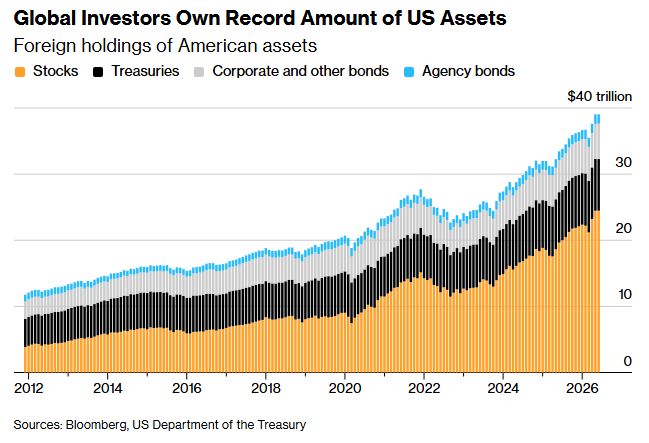
Global Investors now own close to $40 Trillion of U.S. Assets, the most in history
Source: Barchart
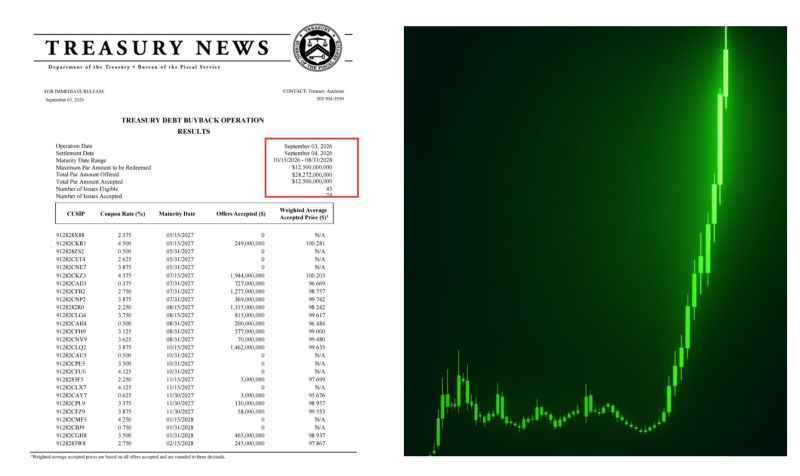
Yesterday, US Treasury bought back $12,500,000,000 of its own debt.
This is the largest buyback in over 3 months. Source: Bull Theory
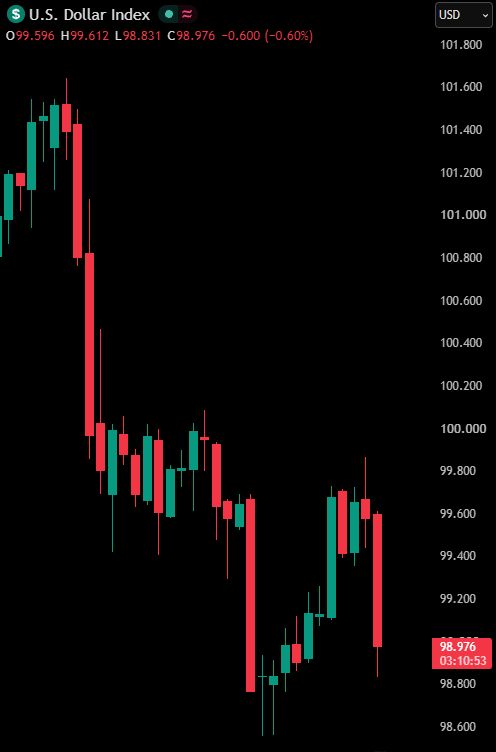
Something is breaking in the US dollar
The 30-year Treasury yield just hit its highest level in nearly two decades. Yet the dollar is falling. That is not how the playbook normally works. Higher yields should attract foreign capital and strengthen the currency. Instead, the DXY dropped from nearly 102 to below 99 in August. Meanwhile: → The Chinese yuan strengthened → The Japanese yen surged as BOJ rate-hike expectations increased → Investors demanded higher yields to hold long-term US debt The message from markets is increasingly uncomfortable: Higher Treasury yields may no longer reflect US economic strength. They may reflect growing concerns over America’s $40 trillion debt burden, widening deficits and expanding Treasury buybacks. Bond investors want more compensation. Currency investors want less exposure. Friday’s jobs report is the next major test for both the dollar and Treasury yields.
Reminder to stop overthinking what stocks to buy
Source: Nancy Pelosi Stock Tracker
