
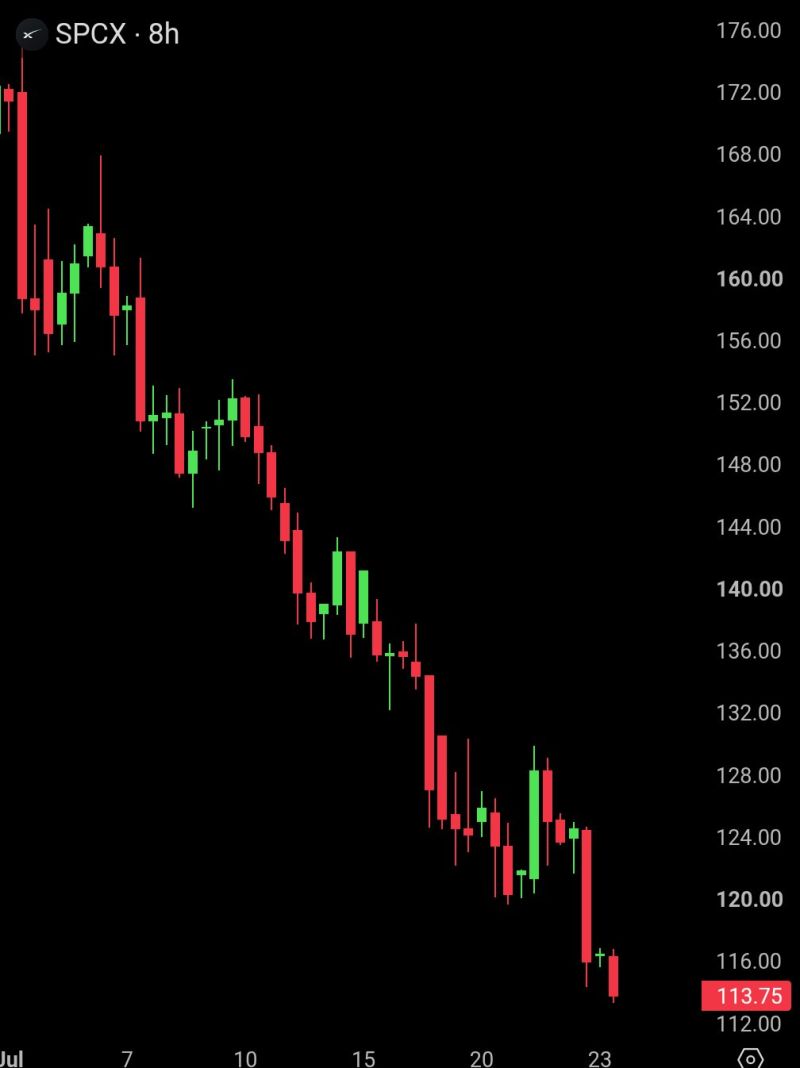
$1.48 TRILLION has been wiped out from SpaceX $SPCX in the last 37 days, as it hits a new all-time low.
Source: Bull Theory
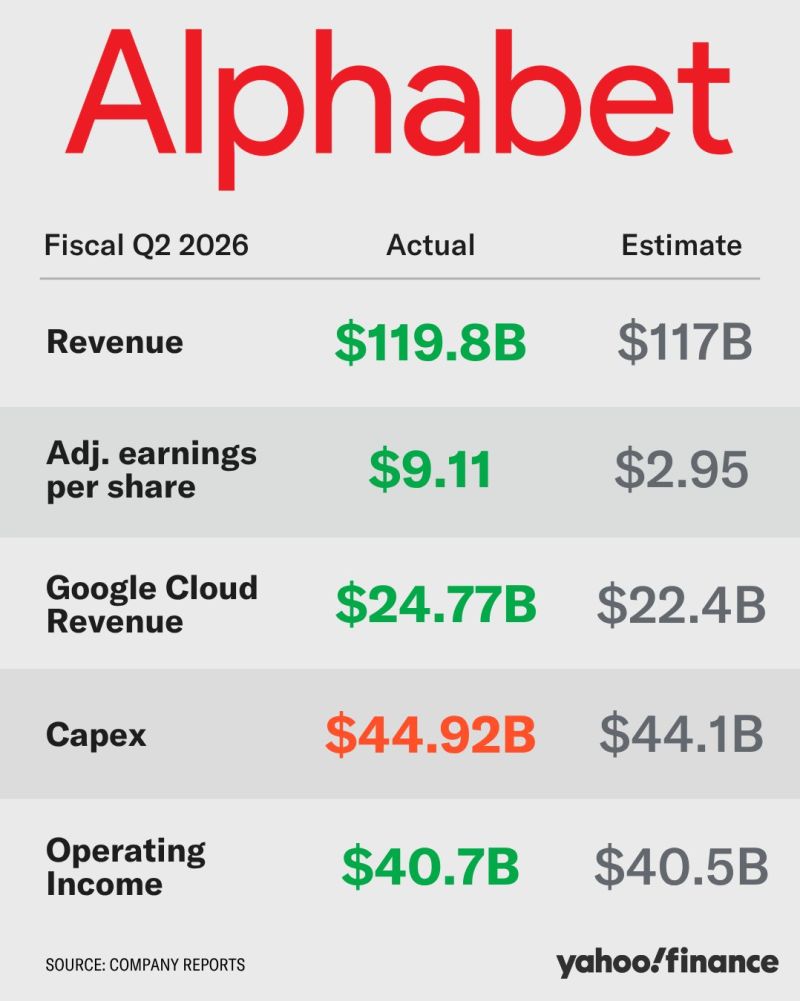
Alphabet beat Q2 revenue expectations, but missed on underlying earnings.
Revenue rose 24% to $119.8 billion, led by an 82% increase in Google Cloud revenue to $24.8 billion. Cloud operating margin reached 36%. Reported net income was boosted by roughly $99 billion in unrealised gains on investments including Anthropic and SpaceX. Excluding these gains, adjusted EPS was $2.85 versus $2.90 expected. The stock fell 3% after hours. Source: App Economy Insights @EconomyApp Bull Theory Yahoo Finance
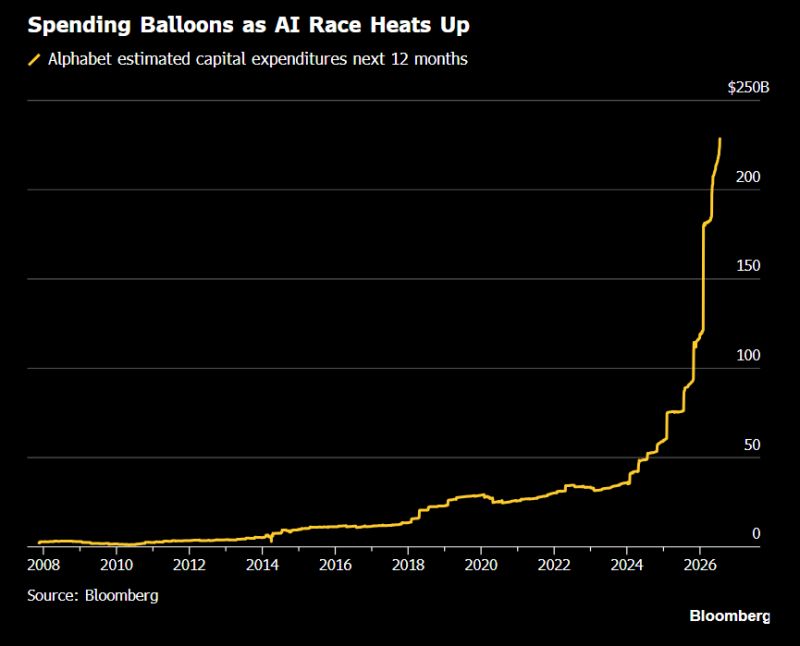
Google's capex is on track to nearly triple in two years
Source: Hedgeye @Hedgeye Bloomberg
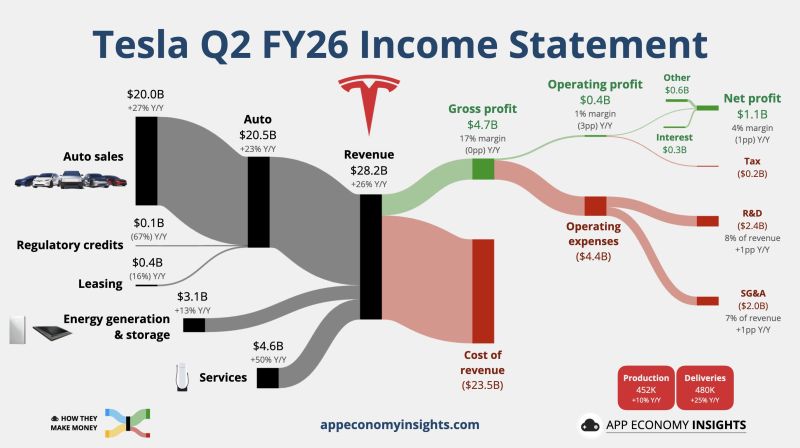
Tesla $TSLA is getting pounded after-hours after missing badly on earnings
Adjusted EPS came in at 33 cents, well below the 51 cent estimate. Gross margin fell to 16.8%, versus 19.4% expected. Tesla sold more cars than ever this quarter, but had to cut prices and lean on incentives to do it. More volume, less profit per car. $TSLA Tesla Q2 FY26: • Revenue +26% Y/Y to $28.2B ($1.8B beat) • Gross margin 17% (flat Y/Y) • Operating margin 1% (-3pp Y/Y) • CapEx +142% Y/Y to $5.8B • Free cash flow flips negative -$1.1B • Non-GAAP EPS $0.33 (versus $0.51 expected = MISS) Source: App Economy Insights Barc chart
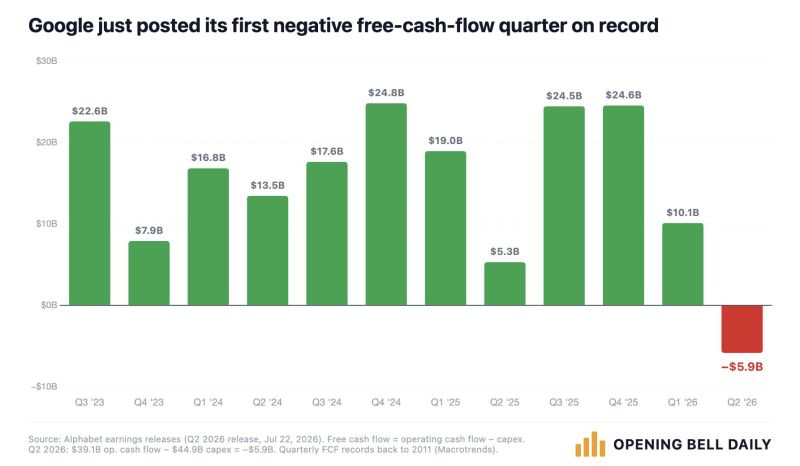
Alphabet $GOOG just reported NEGATIVE free cash flow for the first time in history.
And the story is not over; Alphabet projected full-year capital expenditures will be $195 billion to $205 billion in 2026, increasing its already sky-high spending estimate for the year as it works to secure an edge in the AI race. Source: Phil Rosen @philrosenn
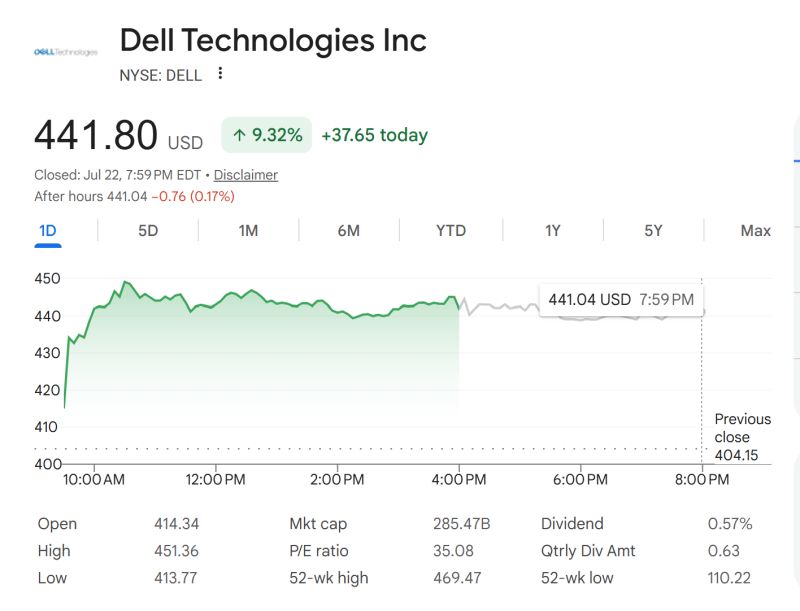
Dell is up +11% today after Super Micro's record AI server orders boosted confidence across the entire sector.
$DELL has already built a $51.3 billion AI server backlog and raised its own revenue guidance to $60 billion. Its partnership with Nvidia gives it integrated AI infrastructure that larger enterprises are increasingly betting on. Source: Bull Theory
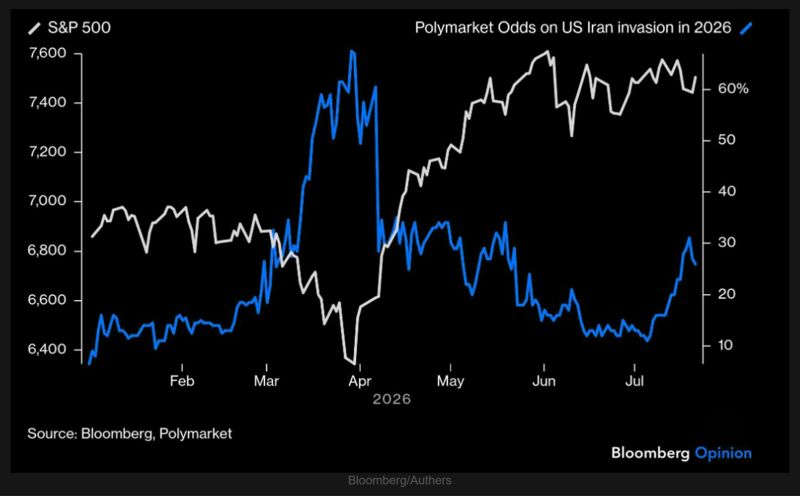
Prediction markets sharply lowered the perceived odds of a ground invasion, helping fuel a strong rally in the S&P 500.
Following conciliatory remarks from Iran and President Trump's announcement of a bombing pause earlier this year, investors concluded that neither side had the appetite for a prolonged ground conflict. Those odds have started to climb again, however, even as equities remain relatively resilient. Source: TME, Bloomberg/Authers
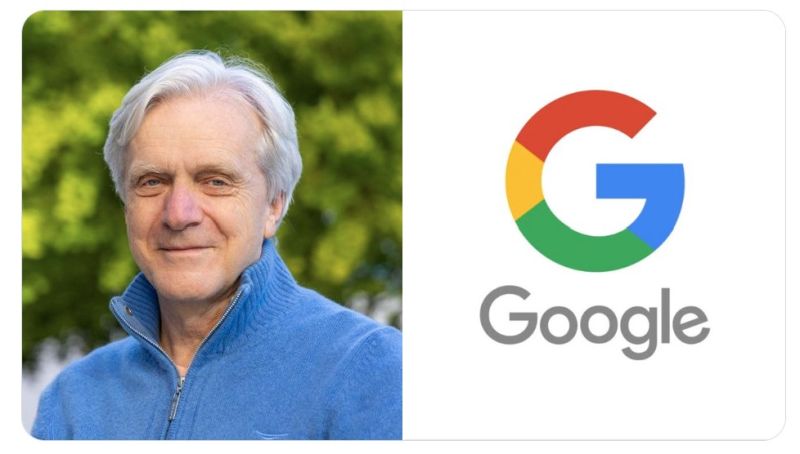
Andy Bechtolsheim wrote Google a $100,000 check before it even had a bank account.
That $100,000 check is worth $15 billion today. Andy Bechtolsheim is a billionaire German-American electrical engineer, investor, and tech entrepreneur. He co-founded Sun Microsystems in 1982 and Arista Networks in 2004. Source: Bull Theory