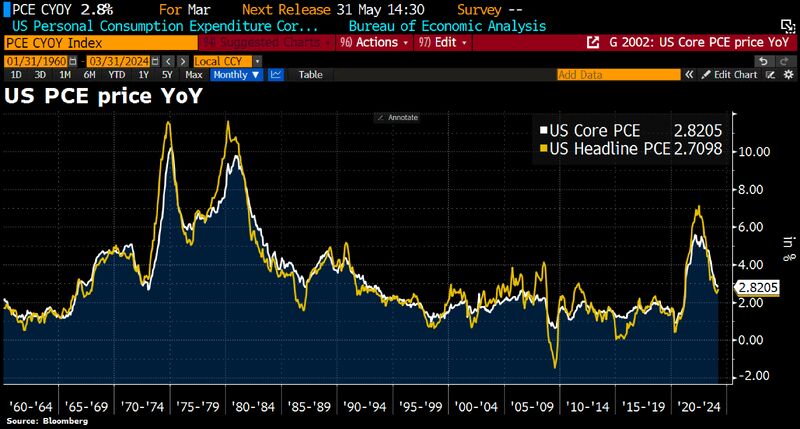
Bonds rally as the Fed’s preferred inflation metric cam out not as bad as feared.
PCE deflator rose to 2.7% in March from 2.5% in Feb vs 2.6% expected. Core PCE, the Fed's preferred measure of underlying price pressures, remained at 2.8%, compared with an anticipated fall to 2.7%. First full rate cut is now priced for November. Note that we now have CPI, PPI and PCE inflation RISING for 2 straight months. Source: HolgerZ, Bloomberg
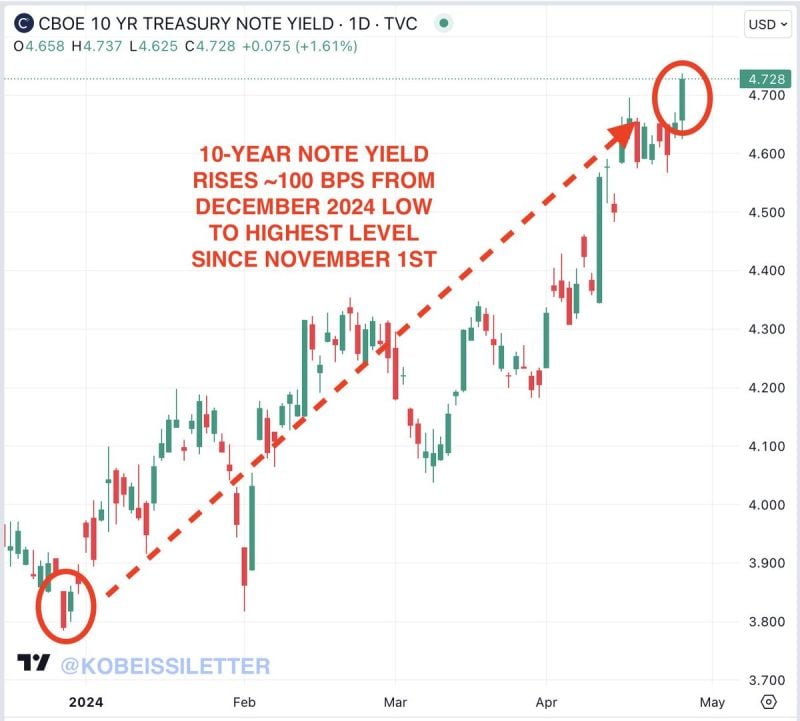
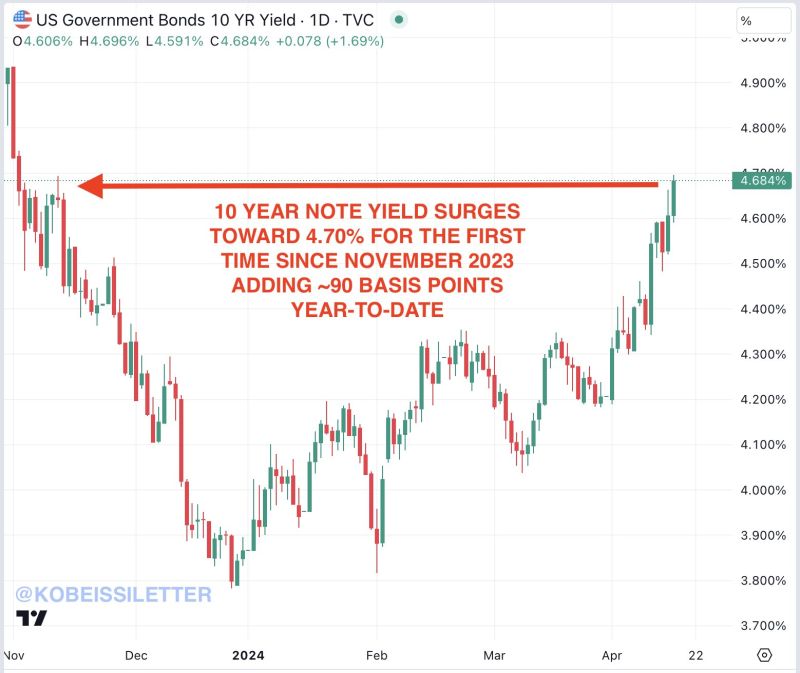
The us 10-year note yield rises to 4.73%, its highest level since November 1st, 2023.
This puts the 10-year note yield ~100 basis points above its December 2024 low. With just 1 interest rate cut now expected in 2024, discussions of more HIKES are back. If todays' PCE inflation data confirms that hashtag#inflation is back on the rise, we could see futures price out the last cut. Source: The Kobeissi Letter
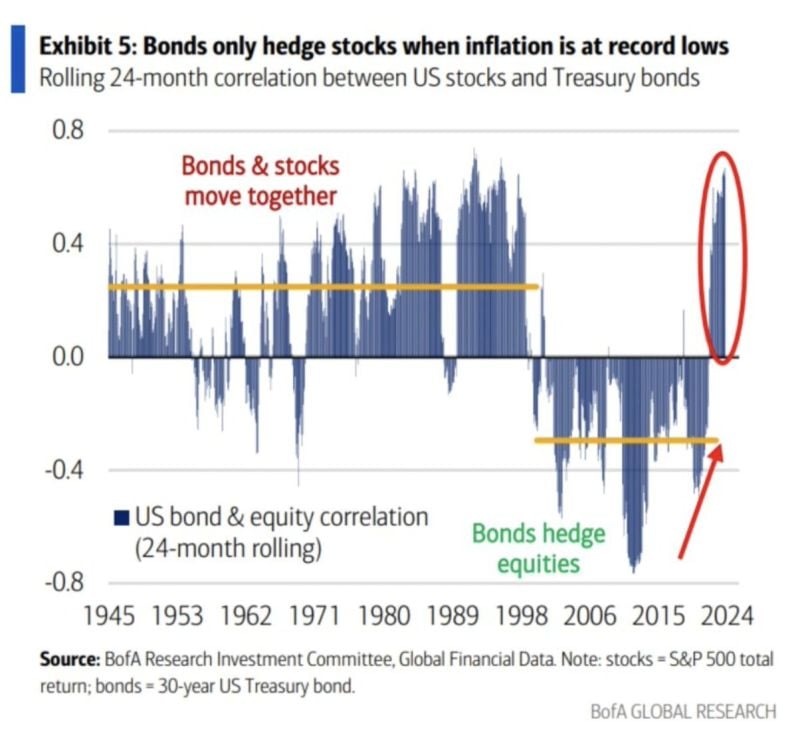
"The stock-bond correlation switch is the ultimate diversification regime shift."
"You don't have as great a need for alternatives when the correlation is negative. Investor search for diversification should be at a heightened level." Source: BofA, Darren
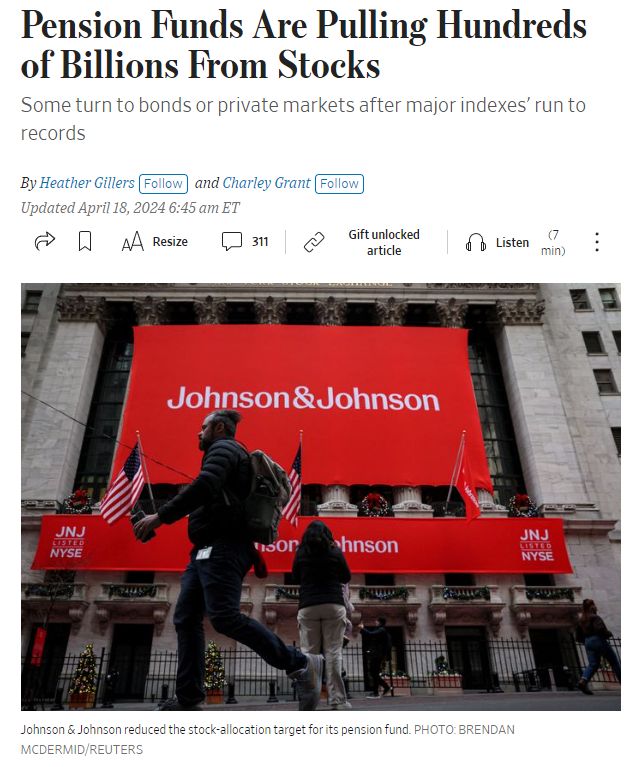
Pension Funds are now withdrawing billions of dollars from the stock market and instead allocating to bonds and private markets.
CalPERS, the country's largest public pension fund, is reportedly planning to withdraw $25 billion from stocks soon. Source: Barchart, Reuters
BREAKING: The 10-year note yield is now up 90 basis points YTD and nearing 4.70% for the first time since November 2023.
As treasury yields rise, we are seeing further pressure on stocks and other risky assets. Meanwhile, the base case now shows just 2 interest rate cuts in 2024. Higher for longer is officially back and interest rates are surging quickly. Source: The Kobeissi Letter
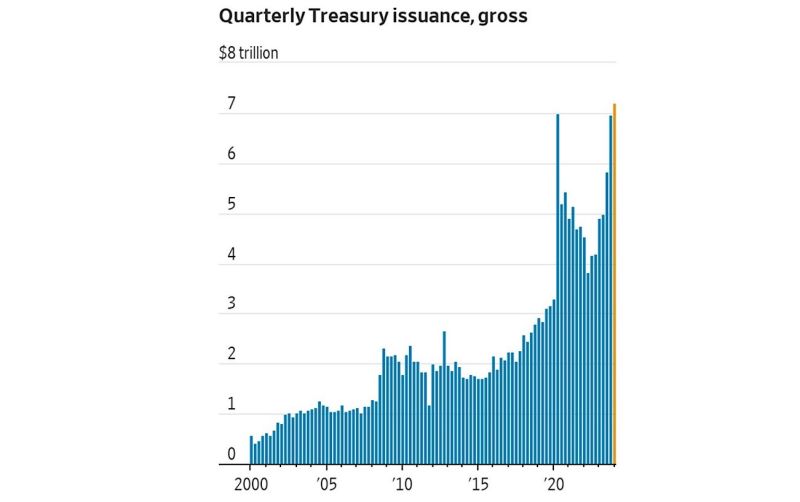
Current treasury issuance exceeded the level seen only during the deepest Covid lockdown.
At full employment, imagine what will happen during next recession. Source: Michel A.Arouet
According to Alfonso Peccatiello, a $1 trillion worth liquidity wave is about to be unleashed on the US economy!
He is not talking about Powell or the Fed. He is talking about Treasury Secretary Yellen unleashing a large sum of stimulus further boosting the US economy right before elections! How? By almost emptying a $1 trillion+ Treasury General Account!
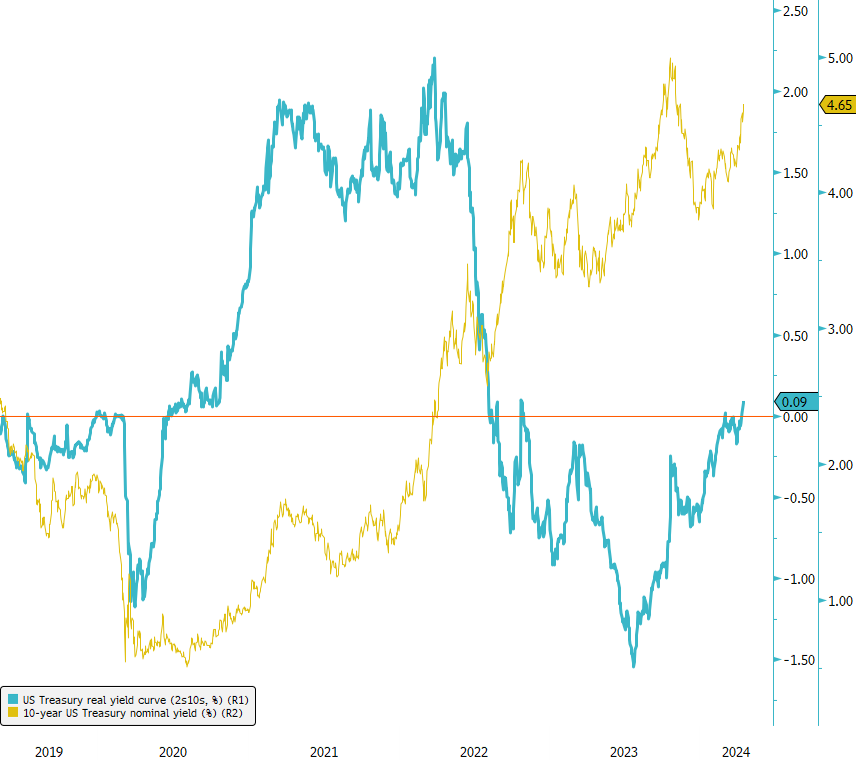
US Treasury Real Yield Curve Returns to Positive Territory!
The US Treasury real yield curve (2s10s) has shifted back into positive territory for the first time since 2022. This comes on the heels of a pronounced steepening trend that has unfolded since the beginning of the year. While this development is certainly noteworthy, it's essential to note that the current real yield curve level still trails its historical average, hovering around 0.6%. The recent uptick in interest rates, combined with the steepening of the real yield curve, raises questions about the potential implications for risky assets. Indeed, we're already witnessing some early signals in the High Yield market. The CDX HY index, which monitors single CDS of US HY companies, has shown notable widening from 310bps to 370bps over the past few weeks, indicating heightened risk perceptions among investors. With this in mind, how might further increases in interest rates, combined with a steeper real yield curve, impact risky assets moving forward? Source: Bloomberg