Straight from the Desk
Syz the moment
Live feeds, charts, breaking stories, all day long.
- All
- equities
- United States
- Macroeconomics
- Food for Thoughts
- markets
- bitcoin
- Central banks
- geopolitics
- Fixed Income
- gold
- europe
- Asia
- Commodities
- investing
- AI
- Technology
- technical analysis
- Crypto
- nvidia
- china
- ETF
- earnings
- oil
- Forex
- energy
- banking
- Volatility
- Real Estate
- magnificent-7
- Alternatives
- apple
- emerging-markets
- tesla
- switzerland
- Middle East
- amazon
- United Kingdom
- assetmanagement
- microsoft
- ethereum
- russia
- meta
- Industrial-production
- ESG
- Healthcare
- Global Markets Outlook
- bankruptcy
- Turkey
- brics
- Market Outlook
- africa
- performance
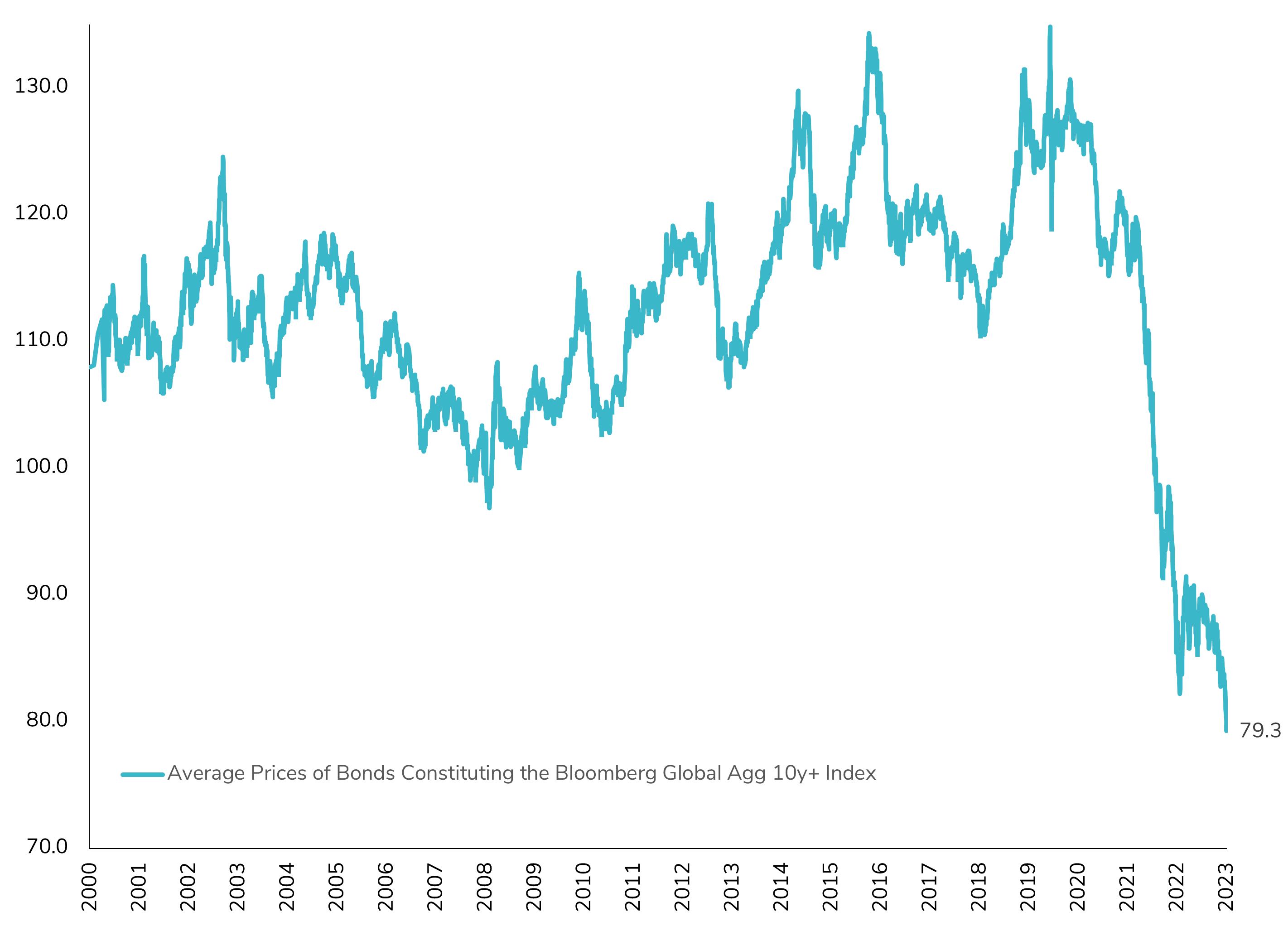
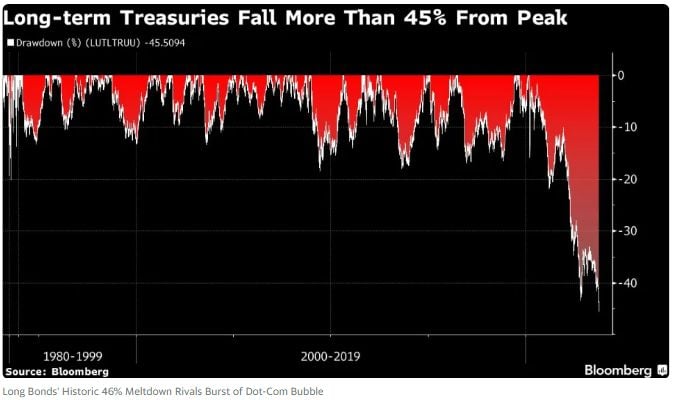
Yes you can lose a lot of money with bonds...
The Pimco 25+ Year Zero Coupon US Treasury ETF is off more than 60% from its high
If US Treasuries would the stock market, the current drawdown for long for the stock market in history
Source: Michael Gayed
US 10 year yields keep rising in tandem with oil
WTI oil now trades at $93.5/bbl. So is oil & inflation fears the only reason for bond yields to move upward? Probably not. The fact that real yields are also on the rise shows that inflation is not the only culprit. Investors are adjusting to the reality of rates staying high for longer than expected. They are also requesting positive real yield to get compensated for being invested in US treasuries at the time the US Treasury is issuing massive amount of debt while the FED keeps shrinking its balance sheet through QT. Source chart: Bloomberg
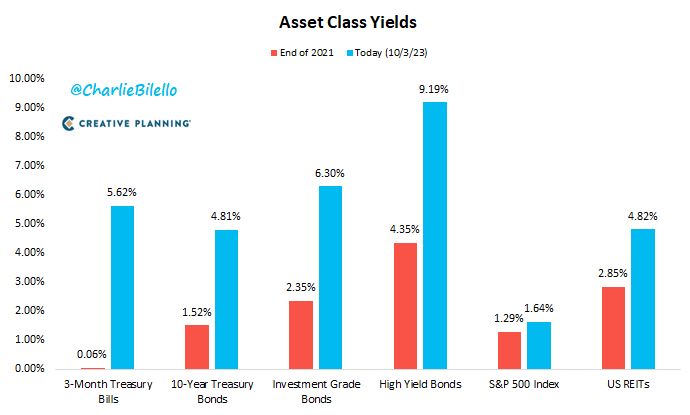
US HY: watch out for take-off!
The disparity between cash and synthetic in High Yield (HY) has recently hit levels not witnessed since October 2022. While HY credit spreads in the cash bond market appear more resilient in response to the rapid increase in real rates, the CDX HY index, comprised of 5-year CDS of HY companies, has expanded by over 60 bps in just two weeks. The question now is, how long will this disconnect between the two markets persist? Source: Bloomberg #HighYield #CreditMarkets #Finance #Investing
TIPS - A Revival in Focus!
Long-term U.S. Treasury Inflation Protection Securities (TIPS) have witnessed a significant double-digit decline since the start of 2022, despite the presence of high U.S. inflation. While the inflation-linked component has acted as a safety net, providing a cushion of around 10% over 20 months, the surge in the 10-year real rate from -1.0% to 2.2% over the same period has had a marked and negative impact on the total TIPS yield (-14%). Yet, the question lingers: Is now the opportune moment to contemplate TIPS? We are currently at a level of LT real rates (2.23%) not seen since 2008. Interestingly, TIPS exhibit a lower beta compared to U.S. Treasuries (currently standing at 0.8). This attribute becomes especially valuable in light of the considerable volatility in U.S. interest rates (with the MOVE index still >100). hould we delve into the realm of inflation-linked bonds, which constitute a global market valued at over $3.5 trillion? This consideration gains significance as uncertainties surrounding inflation persist, driven by factors like de-globalization, supply shocks, increased fiscal spending, and the ongoing transition to renewable energy sources. Source: Bloomberg
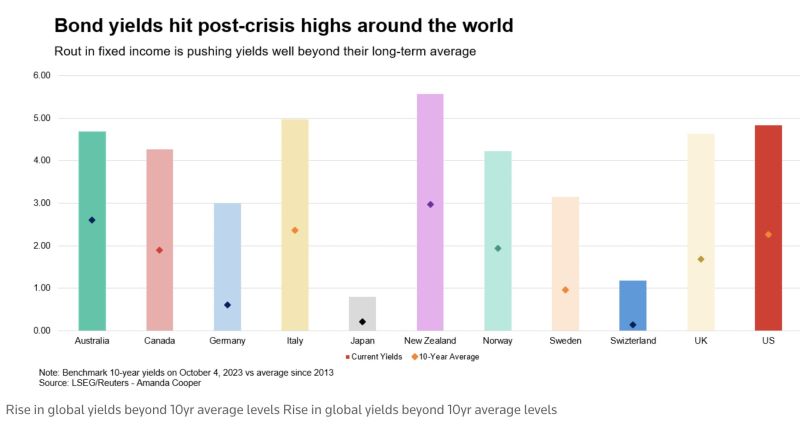
Rising Italian Yields and the Looming Debt Question: What Lies Ahead for Eurozone?
The 10-year Italian yield has reached its highest level since March, while the difference between the 10-year Italian and German yields is trading above 180bps for the first time since June. Beyond speculating on whether the ECB will raise interest rates to 4% or not, the significance of Italy's debt burden should be a fundamental concern, especially if they announce a new tightening of their monetary policy by ending reinvestments in their PEPP program or, worse still, making further disinvestments under the APP program.
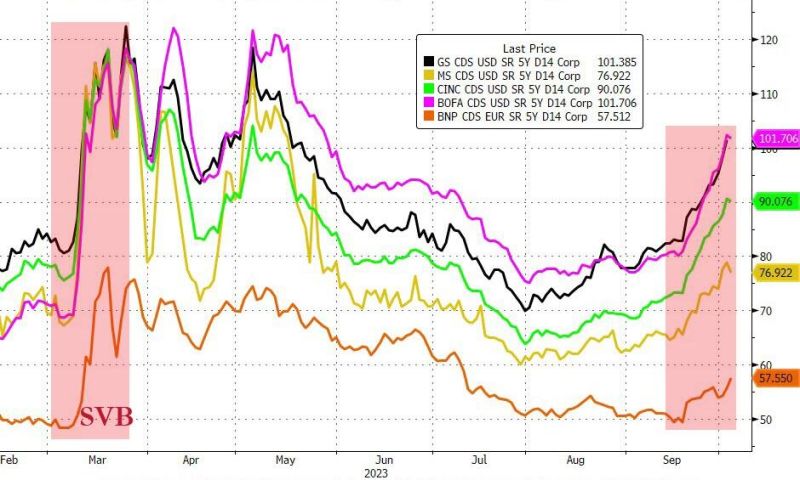
Recent Developments in the AT1/CoCo Bond Market: ZKB Unexpectedly Skips an AT1 Call!
After the Credit Suisse turmoil, the AT1/CoCo bond market is witnessing intriguing dynamics as Zürcher Kantonal Bank (ZKB) takes an unexpected turn by choosing to bypass an AT1 call. In a landscape where banks are carefully navigating refinancing challenges, this move adds a new layer of complexity to the market. ZKB's decision to forego the AT1 call comes in the wake of Banco Santander's similar choice, signaling a trend toward cautious financial strategies in the face of fluctuating market conditions. These recent developments are shedding light on the intricate decision-making processes that banks are employing to balance their financial stability and growth prospects.
These charts by Bank of America show that every single episode of a local peak in UST 2yr yield was followed by some risk-negative event over the past 40 years.
These #charts by Bank of America show that every single episode of a local peak in UST 2yr yield was followed by some risk-negative event over the past 40 years. Such episodes ranged from mild (Mexican peso crisis in Dec 1995; HY +95bp) to moderate (Asia FX crisis in Oct 1997; HY +350bp ) to severe (GFC; HY all-time wides). The lag between the peak in 2yr yield and subsequent event varies from just a couple of weeks to just over a year, with an average being 7 months. Source: BofA, www.zerohedge.com
Investing with intelligence
Our latest research, commentary and market outlooks