
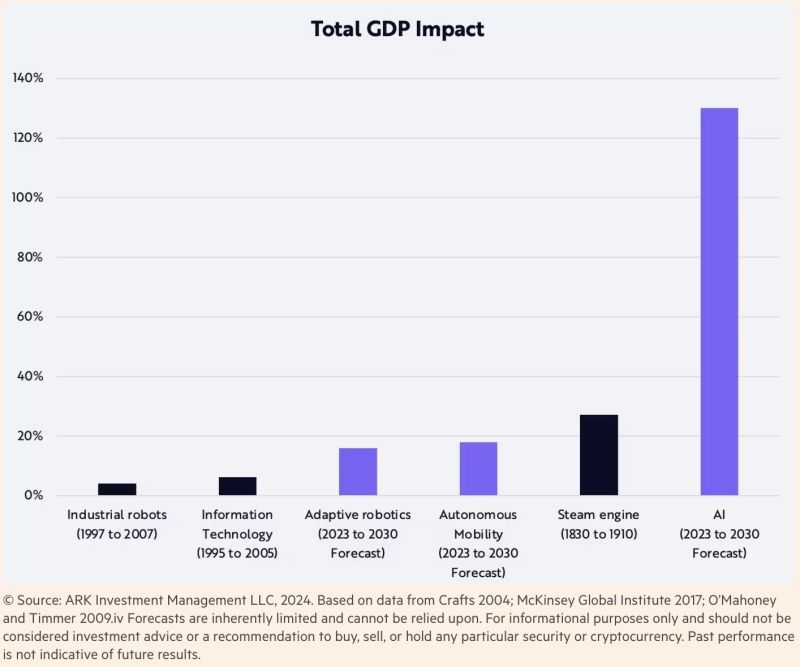
Artificial Intelligence is projected to increase the GDP by 130% according to Cathie Wood's Ark Investment Management
This is significantly higher than all major advances in technology including the Steam Engine and the Internet. Source: Barchart, Ark Invest
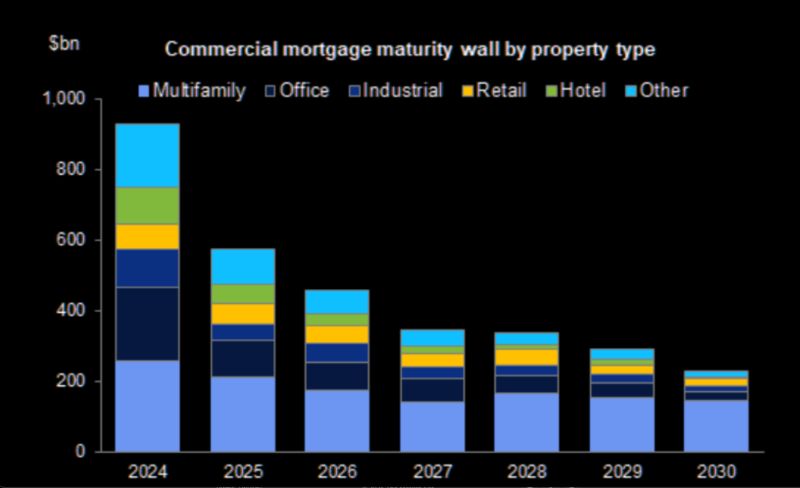
Maturity Wall
Roughly $930 billion in commercial mortgage loans are scheduled to mature in 2024. source : tme
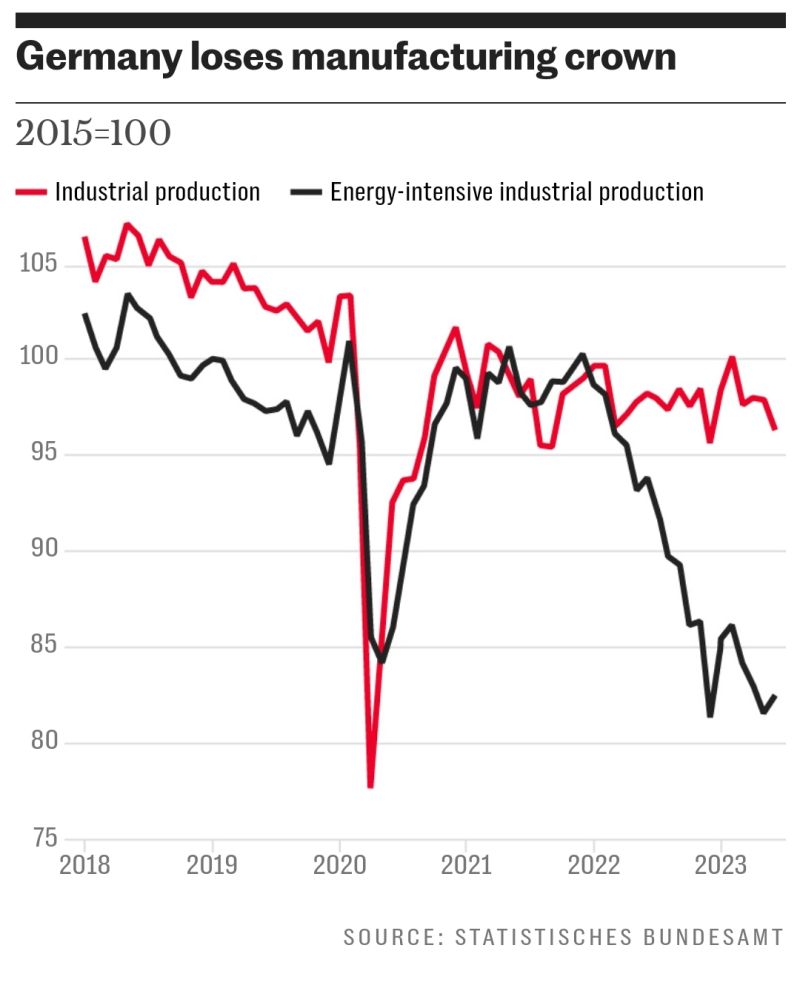
Germany economic challenges in one chart
Source: Statistisches Bundesamt
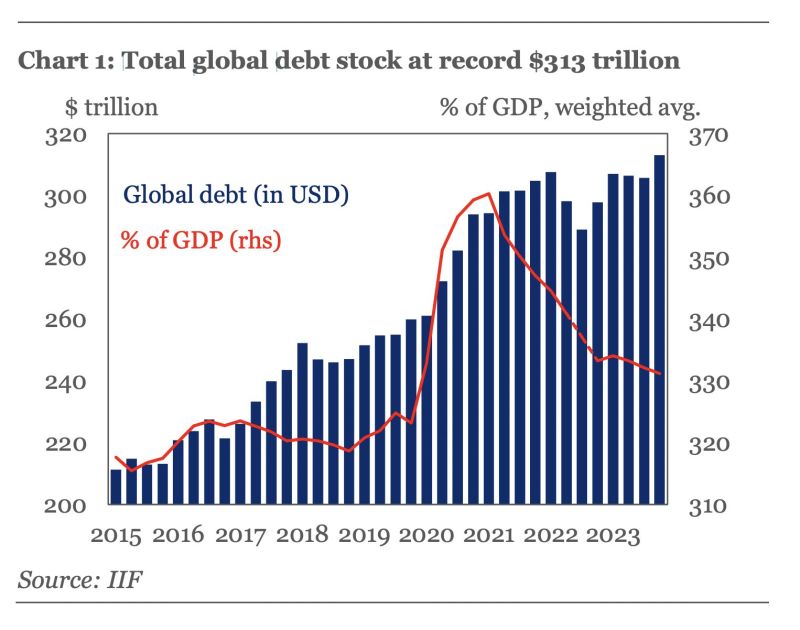
In case you missed it: Global debt surged by >$15tn in 2023 reaching a new record high of $313tn.
55% of this rise originated from mature markets, mainly driven by US, France, & Germany. BUT global debt-to-GDP ratio saw a decline of ~2ppts to 330% in 2023, acc to IIF. This marked the third consecutive annual drop. Source: HolgerZ, IIF
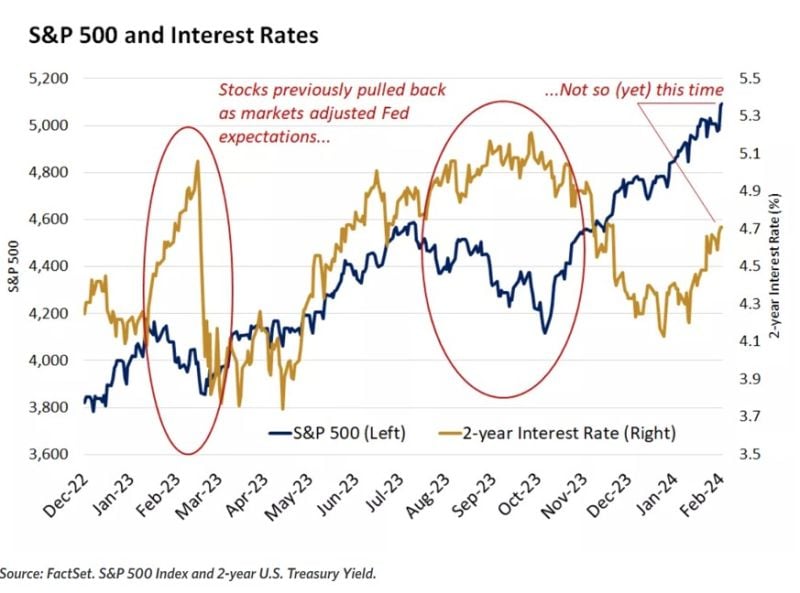
US equities are shrugging off higher rates.
The chart below shows the level of the S&P 500 Index and the 2-year U.S. Treasury yield. Yields have risen in 2024 but unlike prior episodes of rising yields last year, the S&P 500 has moved higher as well. Past performance does not guarantee future results. Source: Edward Jones
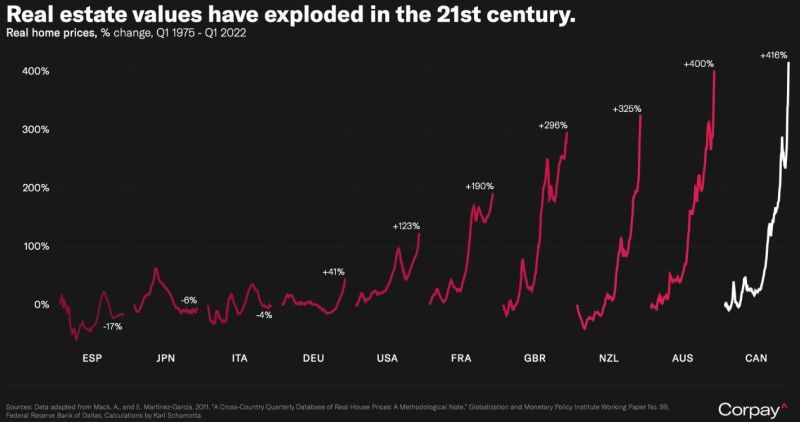
House prices adjusted for inflation since 1975.
The charts for Canada, Australia, New Zealand, and the UK look like a s**tcoin during a pump. The Japanese real estate bubble of the 1990s is barely visible as a comparison... Source: Bloomberg, MacroAlf
Goldman Sachs' analysts no longer expect a U.S. interest rate cut in May and see four 25 basis point cuts this year.
"Because there are only two rounds of inflation data and a little over two months until the May (Fed) meeting, the comments suggest to us that a rate cut as early as May, which we had previously expected, is unlikely," Goldman Sachs analysts said in a note. They now forecast an extra cut next year instead, with an unchanged terminal rate forecast of 3.25-3.5%." source : goldmansachs, reuters

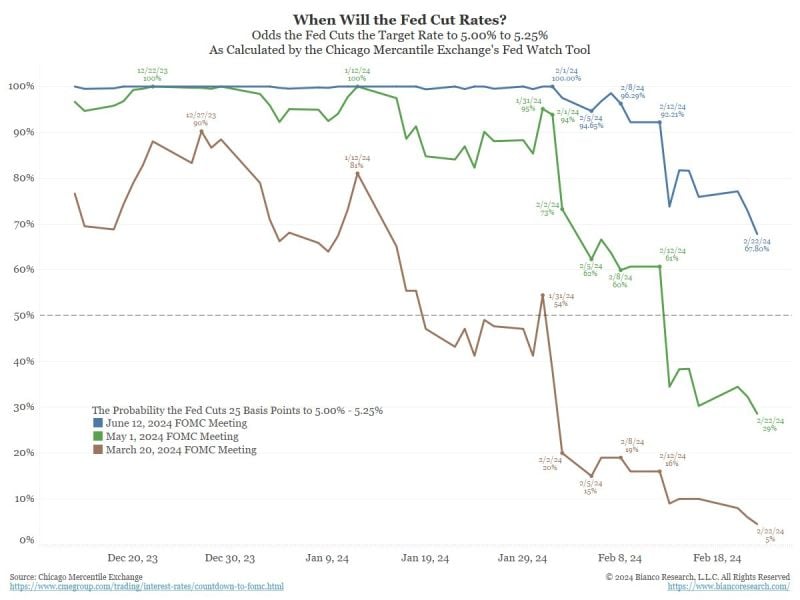
This chart shows the market pricing of a rate cut over the next three FOMC meetings.
March probability = 5% (was 80% at the start of the year) May probability = 29% (was 100% at the start of the year) June probability = 67% (was 100% at the start of the year) Source: Bianco Research