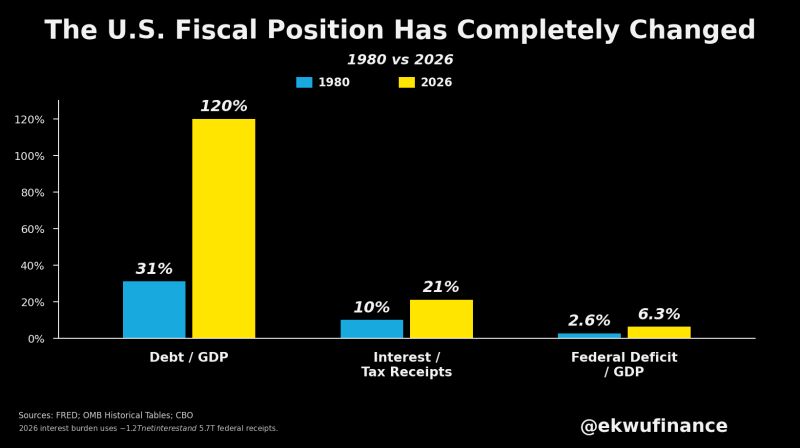

The Nasdaq 100 has surged +9.3% in just 4 sessions since last Thursday.
The rally already ranks among Tech’s sharpest 4d rebounds around major market shocks of the past decades; from the GFC and Covid to the 2022 hiking cycle and Liberation Day. Source: HolgerZ, Goldman, Bloomberg
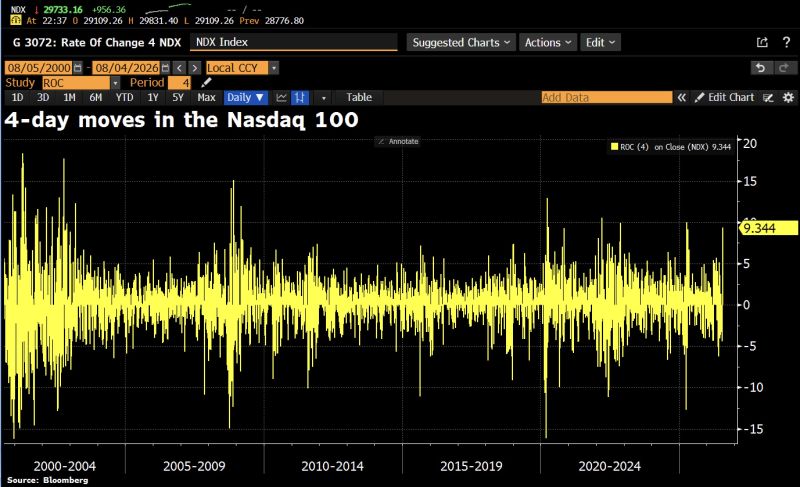
An AI U-turn ?
JP Morgan's Mark Schilsky argues that investors are becoming increasingly convinced that hyperscalers' massive AI investments are generating returns well above their cost of capital. After reading the latest quarterly earnings transcripts from Amazon, Microsoft, Alphabet, and Meta, that view is becoming difficult to dismiss. Management teams sounded more confident than ever that today's unprecedented AI spending will translate into sustainable, long-term earnings growth. If Schilsky is correct, the valuation multiples of the Magnificent Seven may have already reached their lows. As confidence builds that AI capex is creating durable value rather than simply driving higher costs, investors could once again be willing to pay premium valuations, potentially well before free cash flow bottoms and begins to accelerate. Source: TME
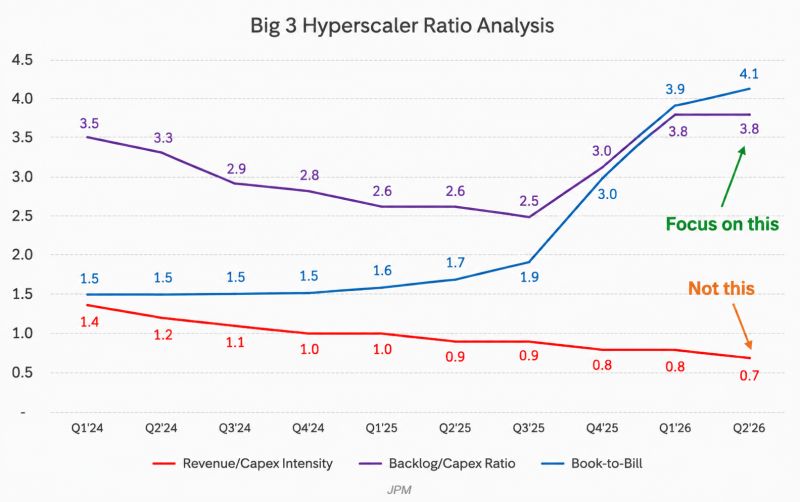
US manufacturing is booming, expanding at the fastest pace since 2022 and beating expectations in many metrics for the month of July.
Omar Sharif of Inflation Insights points out that the ISM production index rose by the most for any July since 1951. Source: Lisa Abramowicz
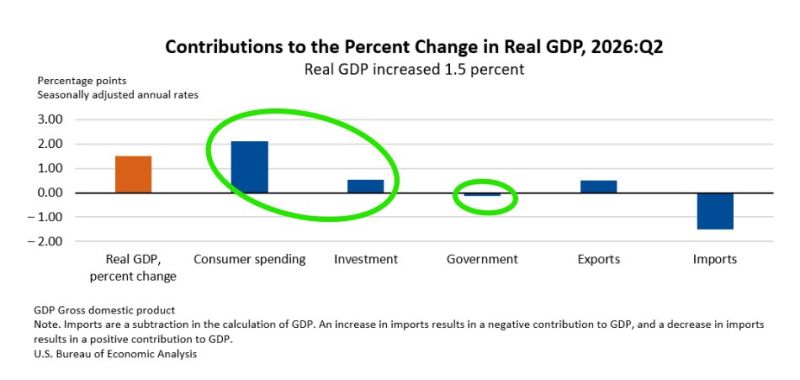
In case you missed it... US Q2 GDP came in at +1.5% vs. expectations of +2.1%
While it looks as a miss, let's keep in mind that underlying private domestic demand was strong, with real final sales to private domestic purchasers rising 3.9 percent in Q2 from 1.7 percent in Q1, showing solid private-sector momentum despite the "softer" headline GDP. More importantly, government spending fell. Source: Daniel Lacalle
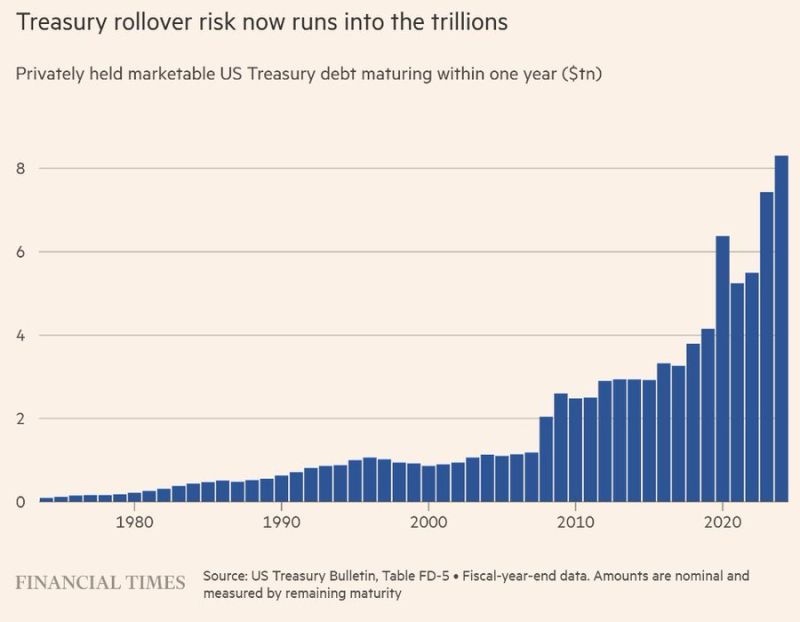
The US can't afford much higher interest rates.
Here's why: Around $8 trillion of US Treasuries must be refinanced over the next 12 months. The average coupon on that debt is roughly 3.3%. The 2-year Treasury yield is now around 4.3%. Refinancing $8 trillion at today's rates would add roughly $80 billion in annual interest costs before accounting for the financing needs of an ongoing $2 trillion annual deficit. This is why today's environment is fundamentally different from the Volcker era. In the early 1980s, inflation had already eroded the real value of government debt, helping push US debt-to-GDP down from roughly 120% after WWII to around 30%. That gave policymakers room to raise rates aggressively. Today, US debt is back near 120% of GDP. The sequence matters: inflate the debt away first, then raise rates to bring inflation under control. Doing it in reverse risks making the debt burden even harder to sustain. Source: Lukas Ekwueme, FT
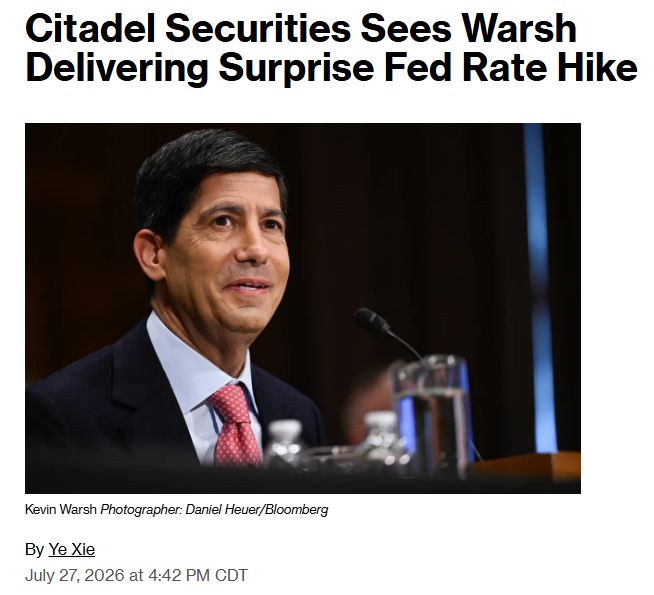
Fed will deliver surprise rate hike this week, says Citadel
Source: Barchart
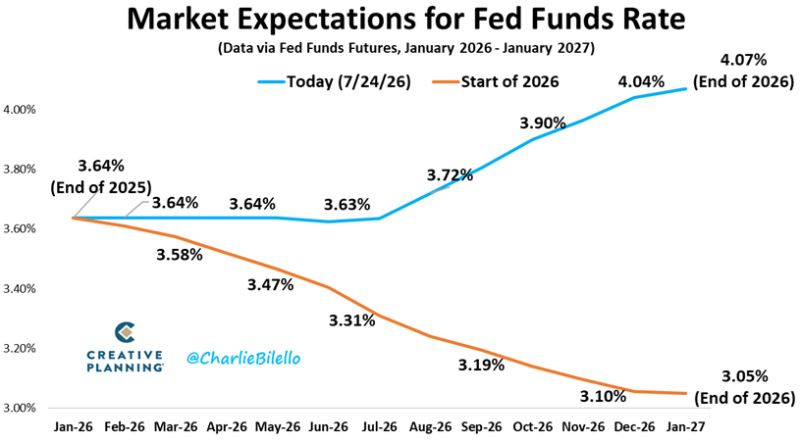
At the start of the year, the bond market was pricing in 2 Fed rate CUTS.
Today it's pricing in 1 to 2 Fed rate HIKES. That's a 1% swing in expectations. Source: Charlie Bilello
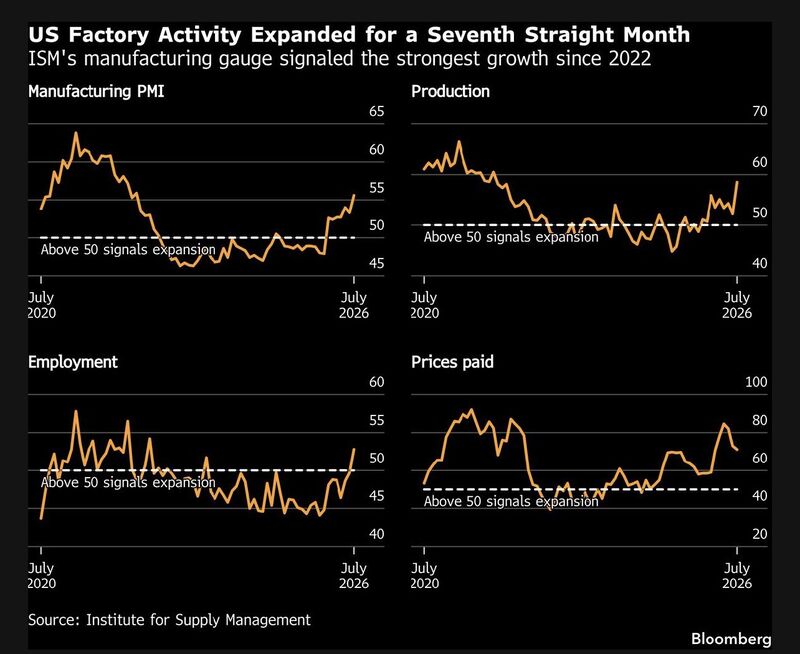
Stephen Warsh can sound like Volcker. The US fiscal position means he can't easily govern like Volcker.
The backdrop has completely changed: • Debt-to-GDP: 31% in 1980 → ~120% today • Interest costs: 10% → 21% of federal tax receipts • Budget deficit: 2.6% → 6.3% of GDP That leaves the Fed facing a much tougher trade-off than it did in the early 1980s. Raise rates aggressively to crush inflation, and you risk destabilising the Treasury market and sharply increasing government financing costs. Prioritise financial stability instead, and inflation remains higher for longer, putting continued pressure on the US dollar. The Volcker playbook was built for a very different fiscal world. Today's debt burden makes every rate decision far more consequential. Source: Lukas Ekwueme @ekwufinance